
Phu Thuong is a working sticky-rice neighborhood in northern Hanoi where a food visit can connect breakfast with village heritage. The useful distinction is between tasting xoi, visiting the communal house and pagoda, and joining an arranged session with a rice maker. These are different experiences; buying a portion of rice does not include access to the kitchen that prepared it.
Choose Phu Thuong if you are interested in how a familiar Hanoi food is made and how a village tradition continues within a changing city. A tasting can fit into a wider half-day outing. For a maker visit, agree on the household, activity and time before traveling rather than arriving at an arbitrary early hour and hoping to join production.
What “Phu Thuong sticky rice” means
Xoi is steamed sticky rice, served in several forms rather than as one fixed recipe. Phu Thuong’s cooks supply ordinary breakfasts as well as rice for family celebrations, worship and community events. The craft was added to Vietnam’s national intangible cultural heritage list in 2024, recognizing the community’s knowledge and practice.
You may also encounter the names Phu Gia and lang Ga. Phu Gia, traditionally known as Ga village, forms part of the area’s food and heritage story. Use the specific communal house, pagoda or agreed host’s address for navigation instead of treating every place labeled Phu Thuong as the same destination.
The neighborhood is not an open-air museum with continuous demonstrations. Makers are preparing orders, families live beside their workplaces, and sellers carry rice to customers elsewhere in Hanoi. Modern steamers, electric equipment and online ordering are part of that living tradition.
Start with a small tasting
Ask which varieties are ready rather than expecting a complete menu at every stop. A useful comparison is a few small portions with different textures and toppings:
- Xoi xeo: sticky rice with mung bean and fried shallots. Notice the contrast between the rice, soft bean layer and crisp topping.
- Xoi vo: rice coated with finely crumbled mung bean. Its separated, bean-covered grains give a different texture from a slice of mung-bean topping.
- Xoi gac: rice colored with gac fruit, often associated with celebrations and offerings.
- Xoi lac: sticky rice with peanuts. Coconut, corn and black-bean versions may also be available, depending on the maker.
Specify whether you want a small portion to eat now or a larger tray for a group. A ceremonial display is not the standard size of breakfast. Ask the total price before the seller adds toppings or packs several varieties together.
For vegetarian or vegan eating, ask about the cooking fat and every topping, not just the rice. Peanuts, mung beans, sesame and coconut can appear in different preparations; explain ingredient restrictions before tasting. A dish’s color or lack of visible meat does not settle its full composition.
A hosted tasting within a Hanoi half-day
Hanoi Army Car Tours offers Echoes of Hanoi – Urban Tales & Outskirts Life, a broader Jeep outing that includes a Phu Thuong sticky-rice stop and lotus tea with a local host. The itinerary also visits a recycling art workshop and Dong Ngac village, with lunch. Its advertised duration is about four and a half hours for the whole outing, not four and a half hours at a rice kitchen.
Contact the operator. Ask for the named itinerary and make the rice tasting explicit in your confirmation. The program lists an English-speaking guide; confirm the date, pickup point, final price and any dietary arrangements for your booking.
This suits a traveler who wants a hosted taste of the neighborhood within a wider Hanoi excursion. It does not, by itself, promise a sticky-rice cooking lesson, a visit to a particular artisan’s home, or entry to Phu Gia communal house and Ba Gia Pagoda. Arrange those separately if they are the main reason for your trip.
What to arrange for a visit with a rice maker
The local heritage itinerary, Mot ngay cung Di san Phu Thuong, or “A Day with Phu Thuong Heritage,” connects Phu Gia communal house and Ba Gia Pagoda with artisan households. Rice-making activities have included selecting the grain, preparing it for steaming and learning how flavor is developed. This is a hosted format, not permission to walk into any working home.
For this kind of visit, ask your local guide or organizer to identify the receiving household and confirm what the cook has agreed to show. Be precise about whether you want to observe, try a preparation stage or learn a method you can reproduce at home. A short demonstration and a complete cooking lesson are not interchangeable.
Production begins before many visitors are awake, and some preparation takes place the previous day. A later appointment may therefore focus on explanation, assembly or tasting rather than the whole process from dry grain. Let the host set a useful time around the actual batch instead of choosing a sunrise visit solely for photographs.
If learning is your priority, follow the grain through the process: which sticky-rice variety is used, how the cook judges soaking and draining, how steam is managed, and when beans or other ingredients are added. Ask to see the texture at different stages. A recipe makes more sense when the maker explains what they are looking for.
Stay where the host directs you around hot steamers, keep bags and phones off food surfaces, and ask before photographing people or household rooms. If you need a scheduled teaching kitchen with a defined menu, compare the Hanoi cooking-class options instead of assuming that a village visit provides the same facilities.
Phu Gia communal house and Ba Gia Pagoda
Dinh Phu Gia is the communal house associated with the village’s guardian worship. When the hall is open, look at its timber structure and the dragon and cloud carvings rather than expecting a room of museum labels. The building helps explain the community setting behind the food tradition.
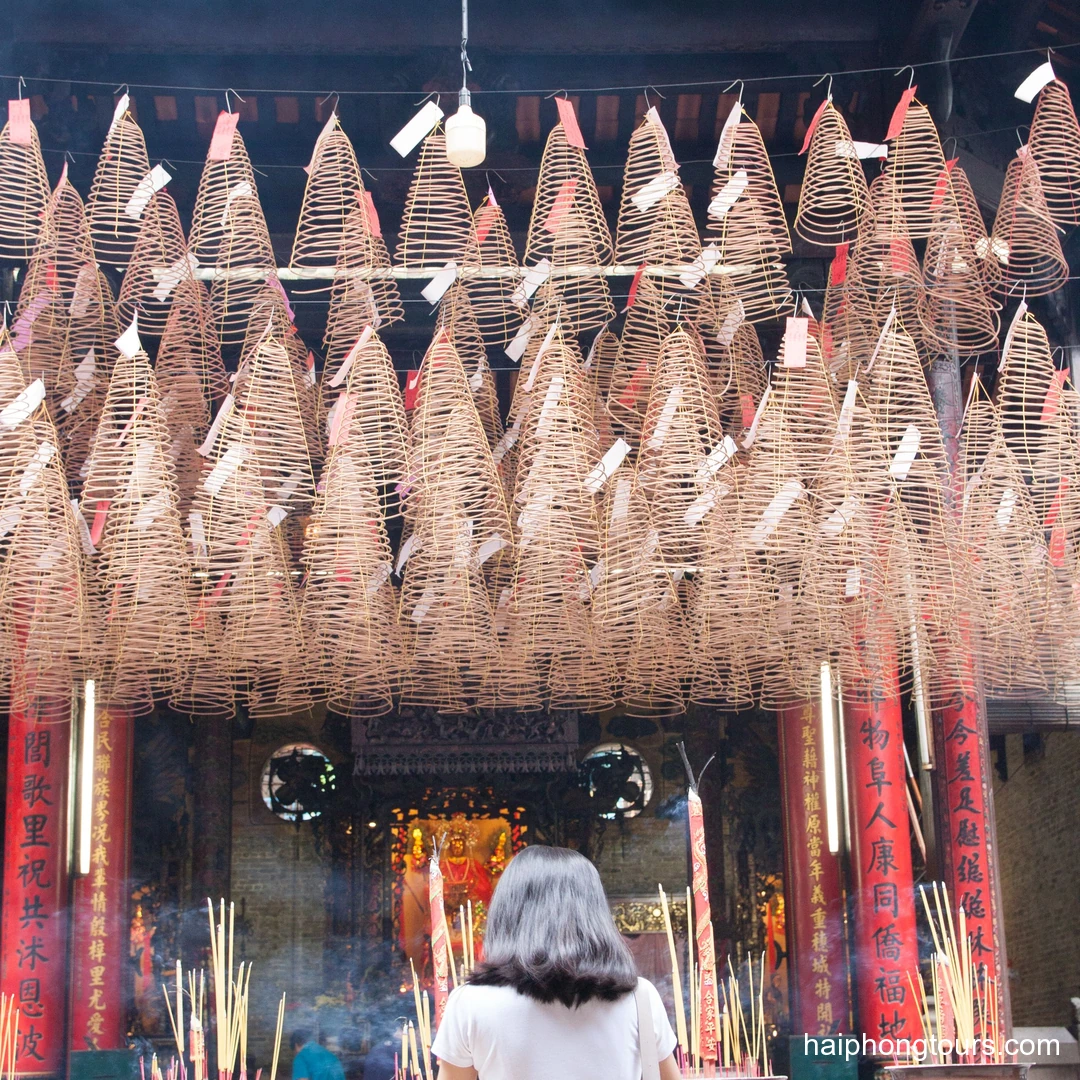
Chua Ba Gia adds a Buddhist place of worship to the route. Keep it distinct from the communal house: the two places serve different religious and community purposes. A guide can make that difference clearer than a quick stop for exterior photographs.
Confirm interior access if either building is essential to your visit. Dress with shoulders and knees covered, keep voices low and follow local instructions on shoes and photographs. Do not use altars or offering areas as a setting for a food photograph, and give worshippers space.
Choose an ordinary morning or the festival deliberately
An ordinary visit focuses on food, the neighborhood and the activity agreed with a host. The sticky-rice festival belongs to the first lunar month, when offerings, decorated trays and community events bring a different atmosphere. Check that year’s local announcement for the actual public program; a photograph of a cooking competition does not mean the same display will be present on a normal weekday.
For a compact independent plan, arrange the tasting or maker appointment first, then fit the communal house and pagoda around the confirmed access. Give a driver the exact meeting point and agree on where to collect you afterward. Avoid leaving luggage in a working kitchen or expecting a large vehicle to stop at a household doorway.

For a wider trip, the North Vietnam villages guide helps compare a short food-craft visit with a full day in an ancient settlement or a rural overnight. Phu Thuong works best when you choose one clear purpose: taste the rice, understand the village, or spend agreed time with a maker.
Would you like help fitting this experience into your trip? Contact us with your travel dates, starting point, available time and group size. Tell us about walking limits or special interests so we can suggest a practical itinerary.