
If you want a genuinely private overnight cruise in Bai Tu Long Bay, book a whole-vessel charter whose written confirmation gives your party exclusive use of the entire main boat. Buying every cabin may remove other overnight guests, but it is not automatically a charter. A private cabin on a scheduled departure keeps only your room private, while a small scheduled boat still carries unrelated travelers.
For most couples and small families, a small shared boat is the practical choice when atmosphere matters more than complete exclusivity. A charter makes more sense when privacy is the reason for the trip, your group needs a dedicated pace, or you would otherwise occupy most of the cabins. Whichever model you choose, define the main vessel, support boats, route, crew, meals, activities and cancellation terms before paying a deposit.
Four booking models that can sound “private”
1. Full-vessel charter
A true charter reserves the entire operating vessel for your named group. No unrelated guests should be accommodated on the main boat during your cruise. The captain, crew, chef and any required guide remain onboard because exclusivity applies to the guest party, not to the people needed to operate the trip.
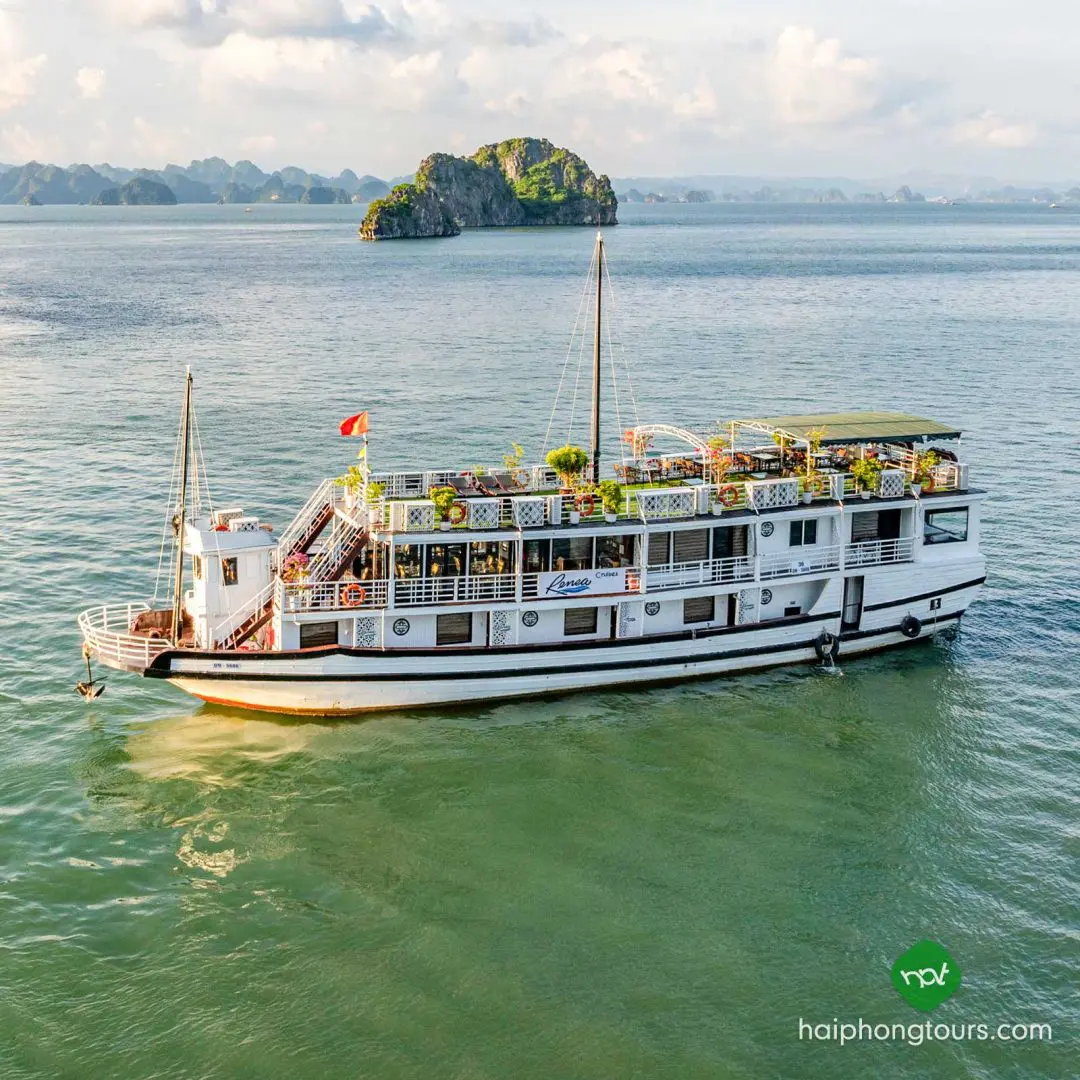
This is the clearest choice for a couple who wants a one-cabin private boat, a family that needs common areas to itself, or a group planning a celebration. The charter agreement should name the vessel and state that your group has exclusive use of its cabins, restaurant or dining area, lounge and sundeck.
A charter does not give you unrestricted control over the bay. The boat still follows permitted routes and operating conditions, and the captain must respond to weather, tide, navigation, port instructions and safety concerns.
2. Cabin buyout
“Cabin buyout” is a useful description, but it is not a universal booking category. It usually means that one group pays for every saleable cabin on a scheduled departure. This can prevent other overnight guests from booking those rooms, yet the reservation may remain a cabin-based booking rather than a charter contract.
Do not assume a buyout includes route customization, exclusive use of a tender or day boat, a private guide, a private transfer, or charter cancellation terms. Ask the seller to convert the promise into one sentence: “Our party has exclusive use of the entire named vessel, and no unrelated guests will join.” If the confirmation will not say that, treat the arrangement as something less than a full charter.
3. Private cabin on a shared sailing
This is the standard overnight-cruise model. Your bedroom and en-suite bathroom are private, and some cabins add a private balcony, terrace or tub. The restaurant, sundeck, lounge, tender, activities and excursion schedule are shared with other passengers.
This model often suits a couple, solo traveler or small family that wants a comfortable room without paying for unused cabins. A product label such as “private balcony” or “private Jacuzzi” describes a cabin feature; it does not mean the boat is private.
4. Small scheduled shared boat
A small scheduled boat has fewer cabins or a lower passenger limit than a larger cruise, but strangers can still book the same departure. It can provide a more intimate onboard atmosphere without the cost of a charter.
Ask for both the cabin count and the maximum number of overnight guests. These are different measurements because cabin layouts, family rooms, triple occupancy and extra beds can change the passenger total. Also ask whether the seller is describing the exact vessel for your date or a fleet containing several boat sizes.
Check privacy in four separate layers
The word “private” is only useful when it names the space or service that is exclusive. Check these four layers separately:
- Cabin: who can enter, whether the balcony or terrace belongs only to your room, and whether connecting doors remain locked;
- Main vessel: whether any unrelated overnight or day guests can board, including during port calls or a repositioning segment;
- Support craft: whether the tender, middle-day boat, local rowing boat or speedboat is reserved for your party;
- Excursions: whether your guide, kayak session, cave visit and shore stop are private or combined with other groups.
A whole-vessel charter can still use a shared local rowing boat or visit a cave at the same time as other cruises. It gives your party control of the contracted vessel, not exclusive access to the bay, an anchorage or a public attraction.
A private boat may still follow a fixed route
Do not pay a charter premium based on “flexible itinerary” alone. Some private boats follow a fixed Bai Tu Long route but allow changes to activity timing, meal times or the pace of an excursion. Other charters offer a choice among approved programs. The difference should be clear before confirmation.
Request the embarkation port, named stops, overnight anchorage area and day-by-day route. Then ask which elements are fixed, which can be requested in advance and which may change because of weather, tide, navigation, safety or instructions from the authorities.
A broad “Bai Tu Long Bay” label is not a substitute for named places. If a cave, village area, beach stop or kayaking location matters to you, require it in the proposed itinerary together with the permitted alternative when conditions prevent the visit.
Confirm the exact vessel and overnight capacity
Your quote should name the operating vessel, not only the cruise brand. This matters when a fleet contains boats with different cabin counts, layouts or facilities. Ask for a current deck plan and confirm which cabins and common areas your group will use.
Also request the maximum overnight guest count for that vessel. A technical passenger-capacity figure may cover a different operating use and should not be treated as the number of people who can sleep onboard. For families, confirm infant, child, extra-bed and connecting-room limits against the final guest list.
Read the vessel-substitution clause carefully. If the named boat becomes unavailable, the confirmation should explain whether the operator may use another vessel, what counts as comparable, whether exclusivity survives the change and what choices you have if the replacement does not suit your group.
Ask who shares the tender or middle-day boat
Some three-day cruises use a smaller boat for the middle-day program while the main vessel handles other operations. A tender may also carry guests between the port and the overnight boat, while a locally operated rowing boat may be used at an attraction.
For a charter or cabin buyout, ask whether each of these craft is exclusive to your party. If not, find out the maximum combined group size, who provides the guide and whether the excursion timing can still be adjusted. This detail can matter more than having an empty main vessel while your group is off the boat.
Define the crew, guide and meal service
A private cruise still requires a professional crew. Confirm whether an English-speaking guide is onboard for the complete cruise or joins only for excursions, and whether another requested language is available. If pace or accessibility is a reason for chartering, describe the assistance needed before the operator accepts the booking.
For meals, request the number and style of meals, a sample menu, included drinks and bottled water, the deadline for dietary requests, and the treatment of allergies. A private dining table is not the same as exclusive use of the restaurant, and a tailored menu is not guaranteed unless it appears in the confirmation.
Celebration cakes, room decoration, premium drinks, corkage, spa treatments and staff gratuities may be separate. Ask for an all-in total rather than relying on a list of highlights.
Make activities specific
List the activities your group actually wants, then confirm whether each one is included, private and suitable for every traveler. Useful questions include:
- How many single and double kayaks will be available for our group?
- Is a local rowing boat included, and will other visitors share it?
- Are entrance and sightseeing fees included for every named stop?
- Are swimming or kayaking locations conditional on season, tide or crew authorization?
- What footwear, stair climbing or transfers between boats are required?
- What happens if one activity cannot operate?
Private service can give a group more time and attention, but it cannot remove safety limits or guarantee a weather-dependent activity.
Compare cancellation terms before comparing prices
A charter can have an earlier deposit deadline and stricter cancellation conditions than a few cabins on a shared departure. A cabin buyout can also trigger group terms even when the reservation is not called a charter. Ask which policy applies to your exact arrangement and booking channel.
The written terms should cover the deposit, balance date, name changes, date changes, a reduction in group size, cancellation by you, cancellation by the operator, local-authority or weather suspension, a shortened trip after departure, services already used and the refund method. Keep independently booked flights or hotels flexible because a cruise refund does not normally cover those separate arrangements.
Questions to send before paying a deposit
- What is the exact vessel name for our departure date?
- Does our party have exclusive use of the entire vessel with no unrelated guests onboard?
- Which cabins and common areas are included in that exclusivity?
- What are the cabin count and maximum overnight guest count?
- Are the tender, day boat, speedboat and local rowing boat private or shared?
- Is the guide dedicated to our group, and which language is confirmed?
- What are the embarkation port, named stops, anchorage area and day-by-day route?
- Which route or timing changes can we request, and by what deadline?
- What route and activity substitutions apply if conditions change?
- Which meals, drinks, water, entrance fees, activities and transfers are included?
- How will dietary, allergy, mobility and child requirements be handled?
- Can any other guests or outside groups board during the cruise?
- What is the final total, including taxes, service charges and compulsory supplements?
- Which deposit, cancellation, date-change and group-reduction terms apply?
- What happens if the operator substitutes the vessel or shortens the cruise?
Which option fits your group?
- Couple: choose a one-cabin charter only when whole-boat privacy justifies the cost. Otherwise, a good private cabin on a small shared boat preserves comfort at a lower total commitment.
- Family or small group: compare a purpose-sized charter with a small shared boat. Give priority to cabin layout, child limits, support-craft access and the pace of excursions.
- Group that would fill most cabins: request both a whole-vessel charter quote and an all-cabin quote. Compare the contract, not only the total price.
- Solo traveler or social couple: a private cabin on a scheduled boat usually offers personal space without removing the chance to meet other travelers.
Compare current scheduled Bai Tu Long cruises
If you do not need exclusive use of a vessel, review the current Bai Tu Long Bay cruise comparison. It groups scheduled two-day and three-day products across different vessel scales, allowing you to compare cabins, facilities, activities, pickup points and itineraries.
The listed product pages do not currently advertise a whole-vessel charter. Treat them as scheduled cabin products unless your written quote explicitly changes the arrangement. If you want a charter, ask for a separate offer naming the vessel and stating every exclusive element.
Frequently asked questions
Is booking every cabin the same as chartering the boat?
No. It may leave your group as the only overnight guests, but a charter is confirmed by exclusive-use language and charter terms. A cabin buyout may still use a fixed scheduled program and shared support services.
Can two people book a private Bai Tu Long boat?
Yes, some operators offer one-cabin private vessels for couples. Availability is limited, and the route may still be fixed. Confirm the exact boat, crew, itinerary, total price and cancellation policy.
Does a private cruise let us go anywhere in Bai Tu Long Bay?
No. A charter can offer more control over pace or approved itinerary choices, but it remains subject to permitted routes, operating points, weather, tide, navigation and the captain’s safety decisions.
Will excursions be private if the main boat is private?
Only if the confirmation says so. Tenders, day boats, local rowing boats, guides and attraction visits may be organized separately from the main vessel.
Is a small shared cruise private enough for a couple?
It can be if your main need is a private cabin and a lower passenger count. Choose a charter when you also need exclusive common areas, a dedicated group pace or freedom from unrelated guests.
Make the contract match the experience
Choose the privacy model before choosing the boat. For true exclusivity, require a whole-vessel charter in writing. For a cabin buyout, identify every service that remains shared. If a smaller atmosphere is enough, compare scheduled boats by the exact vessel and maximum overnight capacity rather than relying on the word “private.”
Useful guides for your trip
Need help choosing the cruise or coordinating the shore transfer? Contact us with your date, preferred route, group size and starting point. Tell us about any dietary, mobility or onward-connection needs before booking.