
Sa Mu – U Bo is an overnight forest trek near Ta Xua, with a summit around 2,756 meters. Its attraction is the long walk through moss-covered trees and changing vegetation, rather than a quick stop above the clouds. Plan for two substantial walking days, a mountain shelter and separate road travel.
The most useful booking decision is the route: an approach returning to Xim Vang and a traverse from Tram Tau toward Hang Dong need different transport. This is also a different trip from the cafés and roadside viewpoints in the Ta Xua sightseeing guide. A reservation at a cloud-view homestay does not arrange a Sa Mu trek.
Xim Vang or Tram Tau: agree where the walk finishes
A trip based in Xim Vang
Umove Adventure offers a route starting from Xim Vang on the Son La side and returning to that base, with different paths used on the ascent and descent. Its program combines a homestay before walking, motorbike access, a mountain shelter and transport back to Hanoi.

This arrangement is worth considering when you want to return to the same base and collect stored luggage. Confirm which bags stay there and which travel with the porters. Returning to Xim Vang does not mean that the descent retraces every step of the climb.
A crossing from Tram Tau to Hang Dong
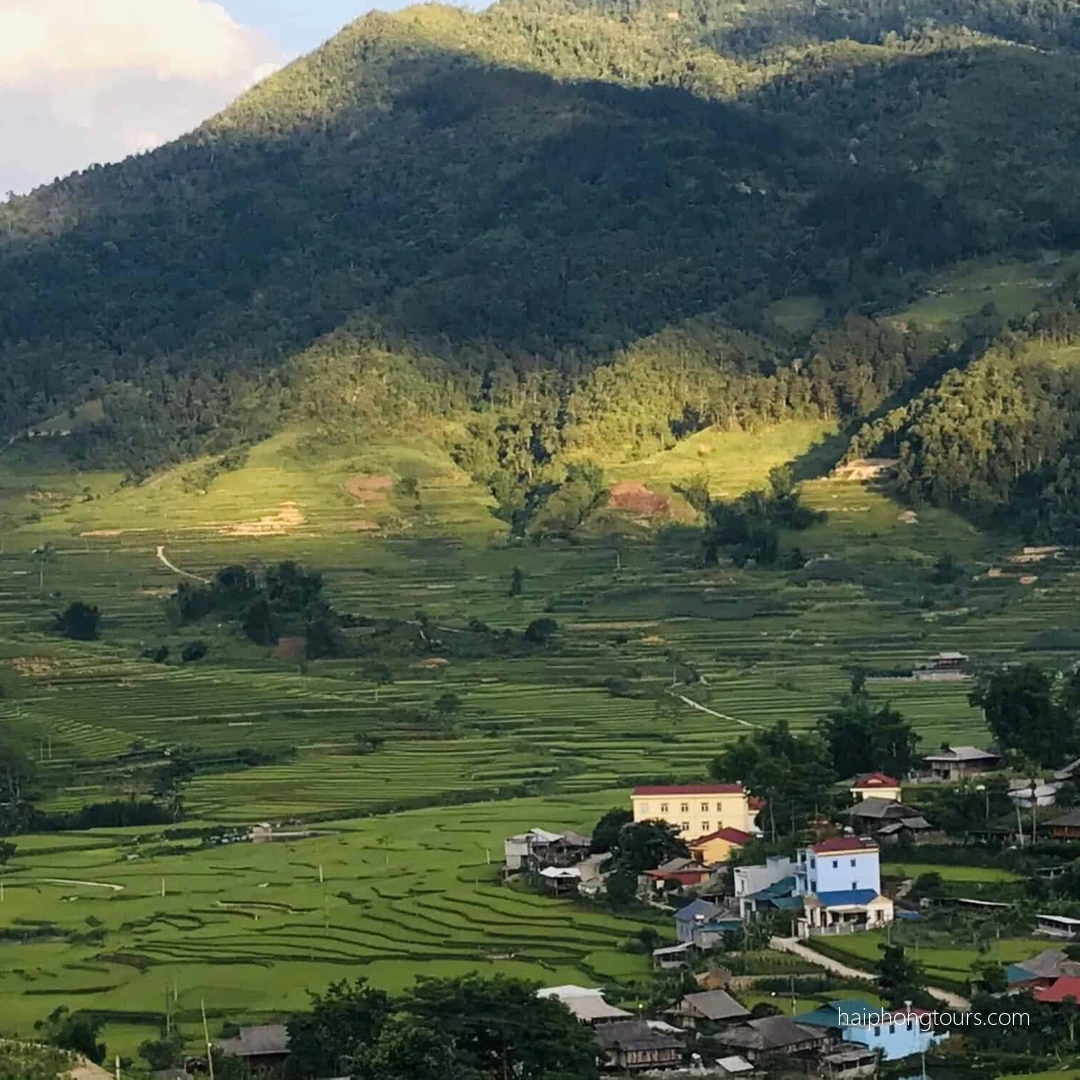
Umove also offers a traverse approaching through Tram Tau and Ban Mu, then descending toward Hang Dong in the Bac Yen area. The walking starts and finishes on different sides. Its detailed approach includes a motorbike transfer and sections with ladders.
For this version, have the organizer explain where your main luggage goes and where the return vehicle waits. Leaving a suitcase at a Tram Tau hotel without arranging its collection can create a separate journey after the trek. If you want a valley stay before climbing, use the Tram Tau guide, then confirm that accommodation fits the selected departure.
Contact Umove about the chosen route. Name the approach, your nationality and the date. Ask for the current itinerary and English guiding arrangement; do not infer the language of the group from an English booking page.
What makes the forest worth the effort
The scenery changes as the trail gains height: large old trunks, tangled shapes and patches of moss can become more memorable than the summit marker. Mist changes the light and hides distant views, so a cloudy day can still offer an interesting forest walk. Rain and slippery ground, however, also change the effort required.
For photography, make the forest part of the walking plan. Discuss short stops with the guide rather than falling behind repeatedly while the group moves on. Keep the camera accessible without occupying both hands on a steep section, and photograph moss and roots from the path instead of climbing onto them.
Spring is a period to investigate for rhododendrons, while autumn brings interest in changing maple leaves. Ask for recent information from the route you will actually walk. Flowers, colored foliage and a cloud sea are separate possibilities; they should not all be expected on one departure.
Use the descent to judge whether the trek suits you
One To Ong Adventure itinerary covers about 20 kilometers, including roughly 11 kilometers downhill after the summit section. That is a useful example of why the second day deserves as much attention as the climb. It is a description of that itinerary, not a universal distance for every Sa Mu route.
Choose the trip if you can sustain consecutive days of uneven mountain walking and still descend carefully when tired. Ask for the ascent, descent and longest expected day for your particular departure. A difficulty score cannot tell you how wet roots, mud or a ladder will feel with your own pack.
Tell the organizer about your recent walking experience and any discomfort with ladders or motorcycle passenger rides before paying. Request the actual alternative if one of those sections does not suit you. An extra walk around a transfer or obstacle could change the schedule substantially.
Booking with an English-speaking guide
To Ong Adventure has a Sa Mu – U Bo program with an English-speaking guide available on request. Contact To Ong Adventure to request the arrangement. Its foreign-guest English-guide arrangement requires advance notice: seven days for ordinary dates and 30 days for holiday periods.
Get the accepted date, guide language, total price and required documents in writing. Confirm who handles local access arrangements for your nationality and chosen trail. A listed departure is not confirmation that your place, language support or entry formalities have been settled.
Compare complete trips rather than only the climbing price. Check the road transfers, motorbike leg, pre-trek room, shelter, meals and porter allowance together. If joining from somewhere other than Hanoi, request the revised meeting point before booking your own transport.
Put the two walking days on a full travel calendar
Common organized trips leave Hanoi the previous evening and use a homestay before climbing. The mountain night is in a shared shelter; after the second day’s descent, the return to Hanoi can run late. Count those movements separately from the two days spent trekking.
Write down each night’s sleeping place and the final drop-off, especially if comparing packages with different day-and-night labels. A late arrival at the base gives less rest than an extra local night beforehand. Arrange that extra night with the trekking team so you meet the correct departure rather than another group on the opposite side.
Keep an onward flight out of the immediate post-trek schedule. A slower descent affects the shower, meal and road departure that follow it. If you need to travel onward early, a recovery night is more dependable than planning around the earliest advertised arrival.
Prepare for the shelter and a change of conditions
Ask which shelter the group will use, what bedding is reserved and how washing and toilets work there. Keep a dry sleeping layer separate from damp walking clothes. Confirm how food and drinking water reach the camp, and explain dietary requirements before supplies are packed.
Carry the things you may need before seeing the porter again: water, weather protection, a headlamp and personal essentials. Keep your phone and spare power dry, save meeting details offline and arrange personal communications before entering the forest. Do not depend on mobile reception to reunite with the group.
Before departure, agree how rain, a difficult crossing or an exhausted participant would change the route. A different exit may require a different vehicle pickup. Stay with the agreed group arrangement and accept a shortened walk when the guide judges that the full route no longer fits the conditions.
Sa Mu is a good fit when the forest journey itself is the reason for going. Choose the approach and exit first, then reserve the guide, shelter and transport as one workable plan. Treat the summit panorama as an addition to that journey.
Would you like help fitting this experience into your trip? Contact us with your travel dates, starting point, available time and group size. Tell us about walking limits or special interests so we can suggest a practical itinerary.