
Sapa to Pu Luong is an approximately eight-hour private road transfer and should be treated as the main activity of the day. The route is listed at about 385 kilometers. Start early, allow meal and comfort breaks, and protect enough daylight for the final approach to a Pu Luong lodge.

The private Sapa to Pu Luong transfer keeps passengers and luggage in one vehicle between confirmed accommodations. Hai Phong Tours recommends it when endpoint control matters more than minimizing the ticket price. It is different from combining a Sapa to Hanoi bus with a separate Hanoi to Pu Luong shuttle, where the connection and cross-city transfer remain your responsibility.

Sapa to Pu Luong: Leave Sapa town or a village stay?
A hotel in central Sapa and a homestay in Muong Hoa Valley do not share the same pickup time. Give the full property pin and ask whether the car can reach the entrance. A village pickup can require additional mountain-road time before the main southbound journey begins.
Do not schedule Fansipan, a long trek or a market visit on departure morning. Pack and settle the hotel bill the night before. Fog, rain and town traffic can slow the first part of the day.
Sapa to Pu Luong: Direct private car or Hanoi connection?
Direct car
Choose the direct car for a family, group, substantial luggage or a schedule that cannot absorb an unprotected connection. Agree on the planned route, two or more sensible breaks and the final property access. The driver may adjust the road according to weather or traffic.
Bus to Hanoi and shuttle to Pu Luong
This can be cheaper for one traveler, but it normally works better with a night in Hanoi. Sapa Express currently lists soft-seat departures at 7:30 a.m. and 3:00 p.m. to 204 Tran Quang Khai, plus cabin services at 2:00 p.m. and 10:00 p.m. The overnight cabin can reach Hanoi around 4:00 a.m., but that is not a protected connection to a Pu Luong shuttle leaving around 7:00 a.m.
Do not combine a daytime Sapa arrival in Hanoi with a Pu Luong departure whose meeting time is close. The two operators do not provide a protected through-ticket, and crossing Hanoi with luggage can take longer than expected.
Train via Lao Cai and Hanoi
The train does not create a direct route to Pu Luong. You first travel down from Sapa to Lao Cai station, then current evening references include SP16 at 9:25 p.m. and SP4 at 9:50 p.m. to Hanoi. The railway sector ends in Hanoi, where you still need a separate transfer and next-morning Pu Luong ticket. Choose rail only when the overnight experience or a Hanoi stop has value in its own right.
Sapa to Pu Luong: Plan the Pu Luong endpoint
Send the lodge map pin to the provider and ask the property where the booked vehicle can stop. Don Village, Hieu and other areas have different access. A large van may not reach a narrow lane or steep final road.
If guests finish on foot or by a smaller local vehicle, agree who meets you, how bags move and what happens after dark. The Pu Luong accommodation guide covers these questions in detail.
Sapa to Pu Luong: Design the eight-hour travel day
- leave after an early breakfast and complete checkout before the car arrives;
- plan meal and restroom breaks instead of improvising multiple sightseeing stops;
- carry water, a warm layer, medication and valuables in the cabin;
- tell the lodge the expected arrival window and reserve dinner;
- keep the first evening free of trekking or a driver-dependent outing.
A private transfer is not automatically a sightseeing car. Name any stop before payment and check how it changes the expected arrival. A significant detour can push the last mountain section into darkness.
Sapa to Pu Luong: Vehicle comfort and luggage
For a long journey, legroom, working seat belts and actual luggage capacity matter more than the word “luxury.” The linked service publishes planning limits of two medium 24-inch cases in a 4-seat car, three to four medium 20 to 24-inch cases in a 7-seat car, or four to five suitcases in a 9-seat Dcar. Confirm people and bags together. Request a child restraint in advance and wait for written acceptance.
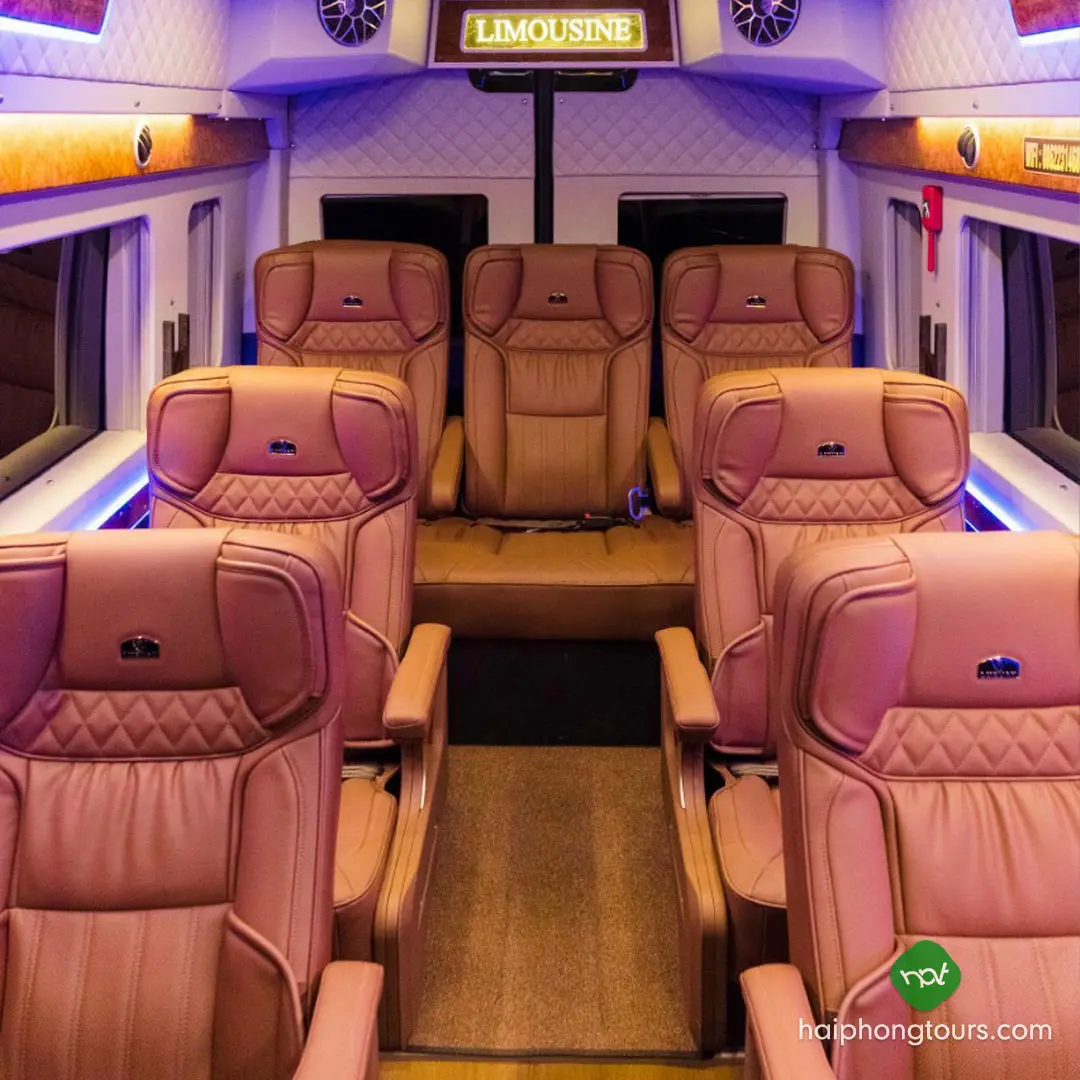
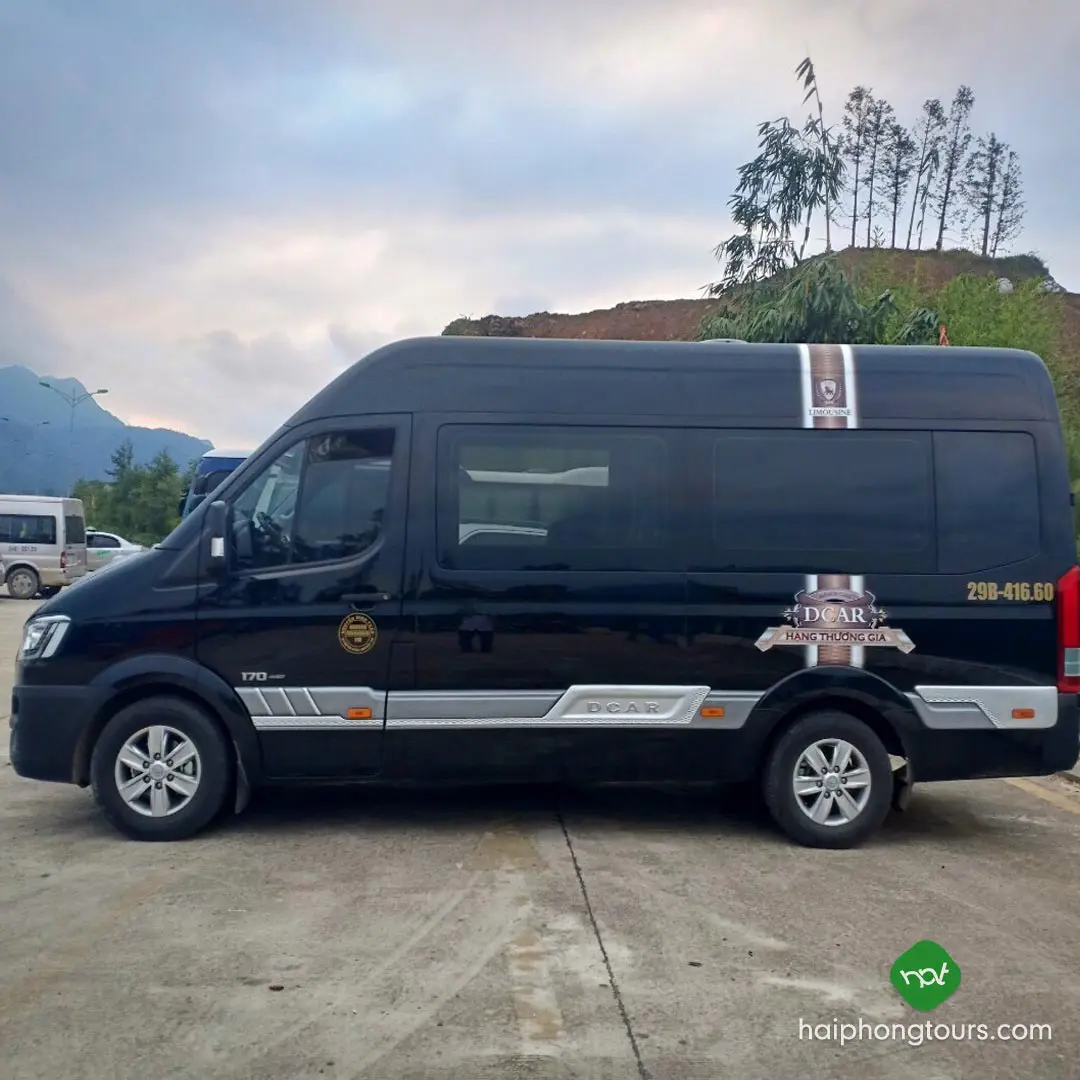
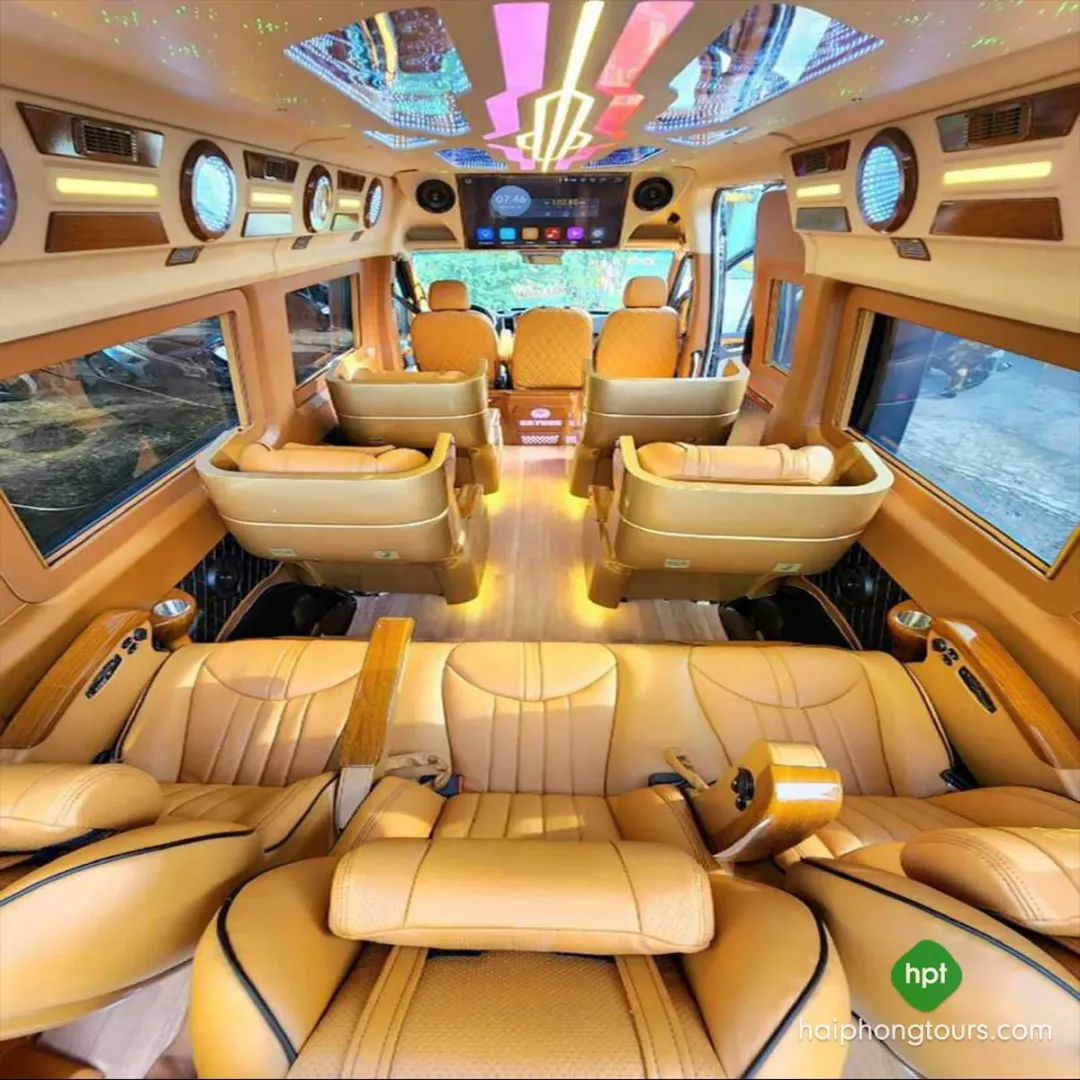
Reclining passenger seats inside a DCar limousine. A black DCar limousine van. Leather passenger seats inside a DCar limousine van.
The private-car booking checklist explains how to document the pickup, vehicle and contact details. Keep the confirmation offline because mobile coverage can vary near rural accommodation.
Sapa to Pu Luong: Separate Sapa town from a village pickup
Sapa town, Lao Chai, Ta Van, Topas-area properties and remote trekking exits require different collection times. Send the property or guide’s actual finish pin. A driver assigned to central Sapa may not be able to enter a narrow village road.
After a trek, return to the luggage store, dry equipment and eat before departure. Do not set the pickup for the exact estimated trail finish. Weather and walking pace can change it.
Sapa to Pu Luong: A direct car still needs a driver-rest plan
Sapa to Pu Luong is a long cross-regional assignment. Ask whether one or two drivers are used, where proper meal and rest periods occur and whether an overnight is necessary. The private car’s advantage is endpoint control, not an unsafe promise to compress the day.
A one-way transfer does not include sightseeing in Hanoi, Ninh Binh or Mai Chau unless written into the route. Choose one useful stop and remove it first after a delay.
Sapa to Pu Luong: Use Hanoi only when the change helps
A bus to Hanoi and a separate Pu Luong shuttle can save money for one traveler, but the arrival and departure offices may be across the city. Map both points, allow for Hanoi traffic and confirm the second operator’s luggage policy.
If the first service is overnight, avoid a curbside connection made while tired. A hotel or staffed waiting place is safer when the second departure is several hours later.
The normal lower-cost plan is therefore Sapa to Hanoi, a proper overnight, then the dated Pu Luong shuttle the next morning. Separate tickets give no automatic rebooking if the first service is late.
Sapa to Pu Luong: Arrive in Pu Luong with daylight
Ask the lodge for the final vehicle-access point and current road condition. Heavy rain can affect minor approaches even when the main highway is open. Follow local diversions and use a lower meeting point when reception says the lane is unsuitable.
Confirm dinner and reception. Keep the first evening light; a trek or sunrise activity is better after a proper night’s sleep.
Sapa to Pu Luong: Plan for limited mobility and rural handovers
Village stairs, steep paths and uneven lanes can affect both the Sapa pickup and Pu Luong arrival. Ask each property for the walking distance to the nearest vehicle-accessible point and whether staff can move luggage. Send the dimensions of a wheelchair, walking frame or other mobility aid before the vehicle category is confirmed.
If either entrance is unsuitable for the main car, agree on a named, staffed meeting point and the smaller local vehicle needed for the gap. Confirm the vehicle step height and rest frequency for anyone who cannot sit comfortably for long periods. “Anywhere in Sapa” or “anywhere in Pu Luong” still requires a reachable pin.
Useful guides for your trip
Would a private transfer make this journey easier? Contact us with your travel date, exact pickup and drop-off, number of travelers and bags. Include any flight, train or cruise deadline so we can assess a suitable plan and quotation.