
Si Thau Chai is a Dao village above the Tam Duong valley in Lai Chau, suitable for a short visit with lunch or a quiet overnight between mountain-road journeys. Choose an overnight if you want time with a local host and the possibility of both evening and morning views. A village walk, a meal and a comfortable place to sleep should be the core plan; clouds, paragliding and a mountain summit require separate expectations.
The village is in Ta Leng commune, about 30 km from central Lai Chau and roughly 50 km from Sapa by the road approach. Older addresses use Ho Thau and Tam Duong. Save bản Sì Thâu Chải and your host’s exact pin: this is a separate place from Sin Suoi Ho and Sin Ho, despite the similar-looking names.
Choose a day visit or stay overnight
A half-day visit on site can be enough for the village lanes, a host-led introduction and lunch. This is the better choice if you already have a comfortable base in Lai Chau or the lower Tam Duong area and want to avoid moving luggage for one night.
One night gives the visit a different rhythm: arrive in daylight, settle in, walk before dinner, then see how the valley looks the following morning. It also gives you more opportunity to talk with your host, provided you have arranged the language support you need.
Do not add a night solely because a photograph shows a sea of clouds. Fog can fill the village itself and remove the view. Choose accommodation and activities that still appeal to you when the mountains disappear.
Village life and the Dao community
Si Thau Chai is associated with the Dao Dau Bang community. Clothing, language, household traditions and village customs are part of its cultural value. A guided conversation about the community is more useful than treating the lanes as a sequence of backgrounds for portraits.
Walk the stone-lined lanes at an easy pace and look at the relationship between the houses, planted gardens and mountain slope. Ask a host about the craft or household activity that is actually available during your stay. A demonstration of a local craft or food preparation needs an agreement with the person giving it; it is not included simply because a village welcomes visitors.
Religious ceremonies and family rituals are not performances that can be summoned for a visitor. Enter a home only when invited, ask before close photography and follow instructions about private or sacred areas. The North Vietnam village guide explains the practical differences between a community stay and a short sightseeing stop.
Valley views without chasing every viewpoint
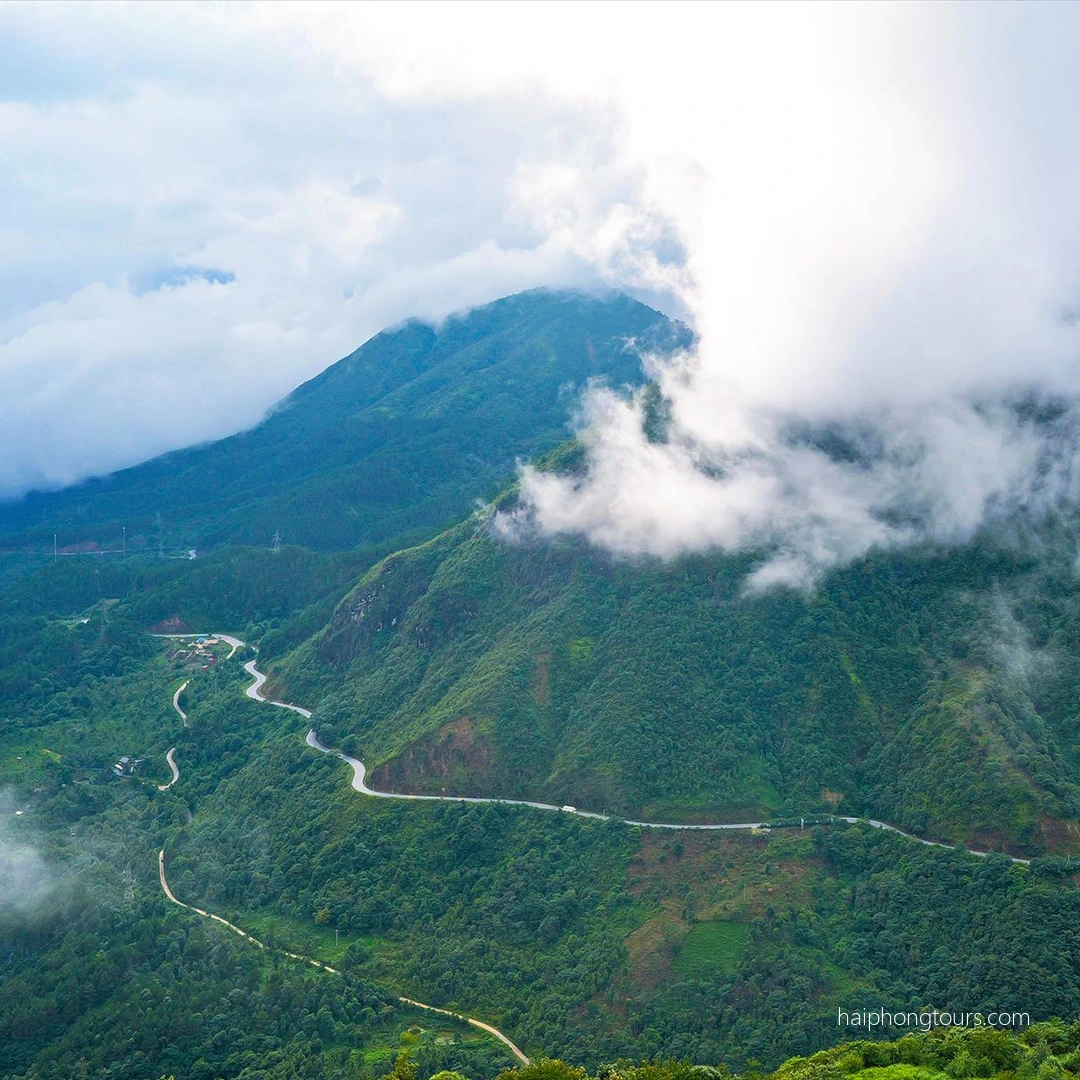
The elevated setting looks over the Tam Duong valley when visibility allows. Select one accessible viewing place with your host and give it time, rather than repeatedly moving between map pins in changing fog.
Views from a cafe, a homestay terrace and a paragliding launch area are different experiences. Confirm whether a terrace welcomes day visitors and whether a purchase or fee is expected. Stay within the public or host-approved area, especially where the ground drops away.
If rice color matters to you, ask for a recent picture of the valley you will see. Harvesting and planting do not follow one guaranteed date for every field. Morning and evening may produce attractive light, but neither ensures clear skies.
Tac Tinh Waterfall is an optional separate outing
Tac Tinh Waterfall lies in the lower Binh Lu area, formerly described as Tam Duong, on the wider approach to Si Thau Chai. It can add a walking stop if the weather and ground conditions are suitable. Ask your host to distinguish a vehicle approach to the waterfall area from a longer trail connection starting at the village.
Choose the route by the actual walking distance, elevation change and footing, not just the fact that both places appear on one itinerary. Arrange a local guide for an unfamiliar trail connection. If you only want a brief stop before checking in, agree on that explicitly with the driver.
The protected headwaters supply local drinking water: do not bathe, wash clothes, cook, light fires or leave rubbish there. Follow the water-protection signs and the guide’s instructions about the permitted route.
After heavy rain, skip streamside sections or the waterfall if local advice is unfavorable. The waterfall’s appearance and the trail’s safety are separate issues; stronger flow is not a reason to approach wet rocks or enter the water.
For a different valley-level outing, the Na Khuong waterwheels guide covers the irrigation landscape, riverbank walk and local food. Favor the drier months and check that the wheels are standing before making the detour.
Paragliding and Putaleng need their own booking
Si Thau Chai has a paragliding launch area in the surrounding hills. A viewpoint visit does not mean a passenger flight will be available. Flying depends on the operator, weather and operating arrangements for that day.
If a tandem flight is central to your trip, confirm the operator, passenger requirements, meeting point, landing arrangements and weather-cancellation terms before paying. Leave flexibility for the decision on the day. Do not make a tight onward journey depend on completing the flight.
Putaleng trekking is a separate mountain expedition. The village’s connection with trekking routes does not make a summit an easy extension to an afternoon walk. Book an appropriate guided itinerary, check current access and match the route to your experience. The North Vietnam hiking and trekking guide helps distinguish a village walk from a demanding mountain route.
The Putaleng trekking guide separates the summit expedition from a rhododendron-viewpoint outing and compares the main approach and exit combinations. Book the mountain route, shelter and return transport as a separate trip from the village stay.
Getting there from Sapa, Lai Chau or Tam Duong
From Sapa, the approach crosses toward Lai Chau via the O Quy Ho pass and continues toward the Tam Duong area before the village climb. Allow for mountain-road conditions and a final local approach; a ticket to Lai Chau does not automatically deliver you to a homestay in Si Thau Chai.
From the lower Tam Duong area, the village is commonly described as about 6 km uphill. That short distance does not remove the need to check the road and vehicle access. Have the host confirm where a car can stop and whether luggage must be carried along the final lane.

A prearranged local driver is practical for travelers who do not want to ride a motorcycle on unfamiliar mountain roads. Confirm the village pin, stops, waiting time and return or onward journey together. When using a bus for the main leg, ask the host to approve the actual drop-off before buying the ticket.
Travel in daylight and avoid starting the climb exhausted after an overnight journey. Save the host’s contact details offline. For the preceding part of the trip, the Sapa travel tips help keep the mountain connection realistic.
Book the room, meals and cultural visit together
Homestay arrangements vary. Request the room and bathroom photographs, check whether you are booking a private room or a shared sleeping space, and confirm bedding, hot water and warmth for cold evenings. The view should not be the only reason to choose the property.

Arrange dinner ahead of arrival. Local menus may feature sticky rice, pork, chicken and vegetables; tell the host about allergies or dietary restrictions when agreeing on the meal. An English-speaking guide, craft activity or Dao herbal bath may be a separate service, so confirm availability and price individually.
For a herbal bath, check privacy, cleaning, water temperature and ingredients rather than assuming every provider offers the same setup. Treat the bath as an optional cultural experience, without expecting a health treatment.
Travelers with mobility limitations should ask for the whole route from vehicle to room and dining area. A short lane can still include gradients and steps. Carry some cash, suitable walking shoes and a warm rain layer, and establish how to contact the host if the arrival is delayed.
A one-night plan that leaves room for the weather
- Arrival day: travel in daylight, take Tac Tinh only if the route and conditions suit, then check in and walk locally before a prearranged dinner.
- Next morning: have breakfast, spend time with the host or take a short agreed walk, and leave at a time that keeps the next mountain-road leg comfortable.
If a longer trek or tandem flight is booked, add the time it actually requires rather than squeezing it into this village plan. Si Thau Chai is most rewarding when the stay itself has value, with the valley view as an additional pleasure rather than the only reason to be there.
Would you like help fitting this experience into your trip? Contact us with your travel dates, starting point, available time and group size. Tell us about walking limits or special interests so we can suggest a practical itinerary.