
So Kien Basilica is a Catholic heritage and pilgrimage complex near Phu Ly, worth a deliberate visit for its Gothic church, Vietnamese decorative details and the history of the Vietnamese martyrs. It is a practical choice for travelers exploring the former Ha Nam area or planning a cultural stop south of Hanoi. Arrange access with the pilgrimage center if the interior and relic displays are important to you.
The current address is Tiểu khu Kiện, Châu Sơn ward, Ninh Bình province. Older maps and articles call the area Kiện Khê, Thanh Liêm, Hà Nam. Use the full destination name Vương cung Thánh đường Sở Kiện or Trung tâm Hành hương Sở Kiện; the province name alone can send you toward the wrong part of a much larger region.
Choose a heritage visit or a pilgrimage
For architecture and local history, allow around 60–90 minutes as a starting estimate, excluding transport and any worship you attend. That gives you time to appreciate the church and the areas open on your date without treating the whole complex as a quick photo stop.
For a pilgrimage, arrange the visit around the service you want to attend and any access to devotional spaces. The center has a regular Friday pilgrimage Mass at 10 a.m.; confirm that week’s program before making travel arrangements. Allow additional time if you are attending with a group.
A heritage visit does not require you to take part in worship. Follow the staff’s directions, keep clear of people praying and wait until a service has finished before moving around to examine the interior.
What to look for at So Kien
The Gothic church and Vietnamese altar
Construction began in 1877 and the church was completed in 1883. Its pointed arches and high interior create a European Gothic framework, while the red-and-gold altar introduces a distinctly Vietnamese decorative treatment. Look at that combination rather than expecting a replica of a church in Europe.
The church received the title of minor basilica in 2010. So Kien also became the national pilgrimage center honoring the Vietnamese martyrs in 2024. These roles explain why ordinary parish worship, visiting groups and heritage interest share the same grounds.
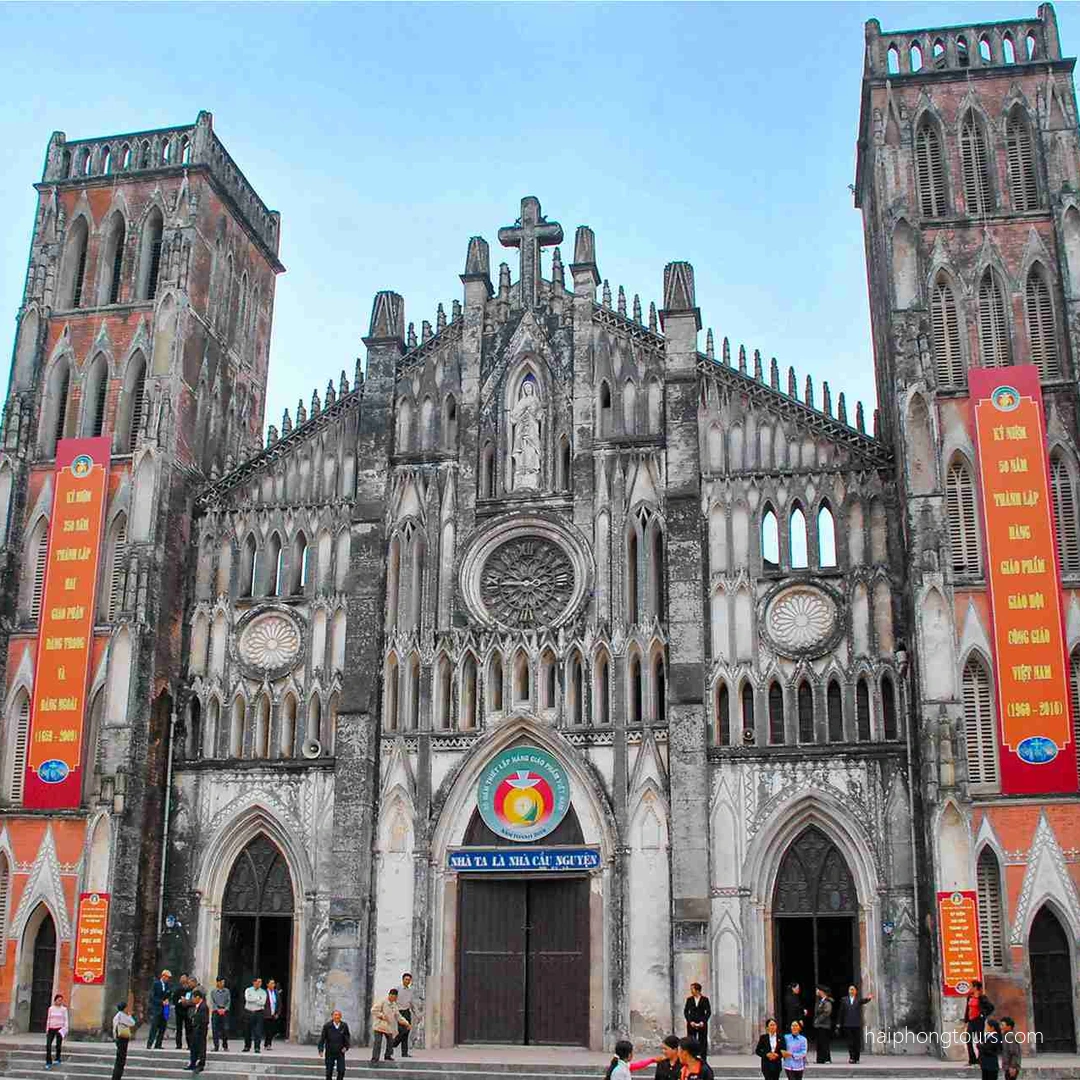 The Gothic facade and rose windows of So Kien Basilica.
The relic and historical displays
The complex preserves relics of Vietnamese martyrs and objects connected with their imprisonment and execution. The displays include restraints and a series of 14 paintings depicting martyrdom. Ask which rooms are open and whether someone can explain the material in a language you understand.
These are devotional collections as well as historical material. Some images depict violence, so parents may prefer to look ahead before taking young children through the displays. Do not touch reliquaries or photograph people at prayer without permission.
The chapel, grotto and former institutional buildings
The Sacred Heart Chapel, completed in 1913, and the grotto beneath an old banyan tree add another layer to the visit. The wider complex also has a history of seminary education and printing at Ninh Phu. Ask your host to identify what can be visited; historic names on a site description do not mean every building functions as an open museum.
The former printing house is an interesting subject for travelers who enjoy publishing and language history, but it should not be approached as a working print workshop. A short explanation from a suitable guide can add more value than trying to enter every old building.
Contact the center before traveling
- Visitor and pilgrimage contact:.
- Official name to look for: Trung Tâm Hành Hương Sở Kiện – TGP Hà Nội.
- Essential request: confirm the church and display-room visiting window for your date, the entrance to use and any advance arrangements or charges.
For a group, include your size, arrival time and whether you want to attend Mass. If you need English interpretation, mention that before booking transport; an English-language notice does not guarantee an English-speaking guide will be available on arrival.
Hai Phong Tours recommends confirming the interior visit first, then fitting the drive and meal around that window. This is particularly useful when So Kien is a stop between hotels: give the driver the actual destination pin and agree on waiting time, luggage arrangements and the next destination.

Mass times are separate from sightseeing access
Check the current Lịch Mục vụ, meaning the parish’s weekly pastoral schedule, on the official So Kien website or with the center. Regular morning and evening services can vary by season, and a weekly notice can change an individual service time.
If you are attending Mass, arrive before it begins and ask which service is suitable for your language needs. If your purpose is sightseeing, ask for a quiet visiting window outside worship. A late evening service does not establish late opening for the historical displays.
The November pilgrimage celebrations around the feast of the Vietnamese martyrs can draw organized groups. They suit travelers interested in communal religious life, while an ordinary confirmed visiting session is a better choice for a slower architectural visit.
Plan the journey through the Phu Ly area
So Kien lies roughly 65 km south of Hanoi. For road travel, obtain a time estimate from your actual hotel and agree on a return or onward arrangement. A dedicated car stop is simpler to coordinate than assuming a bus traveling toward Ninh Binh will stop at the church and wait.
From Tam Coc or Trang An, treat So Kien as a separate excursion toward Phu Ly. Its Ninh Binh provincial address does not place it among the neighboring boat-trip sights. Compare the round-trip driving with the time you want at the basilica before adding it to an already busy day.
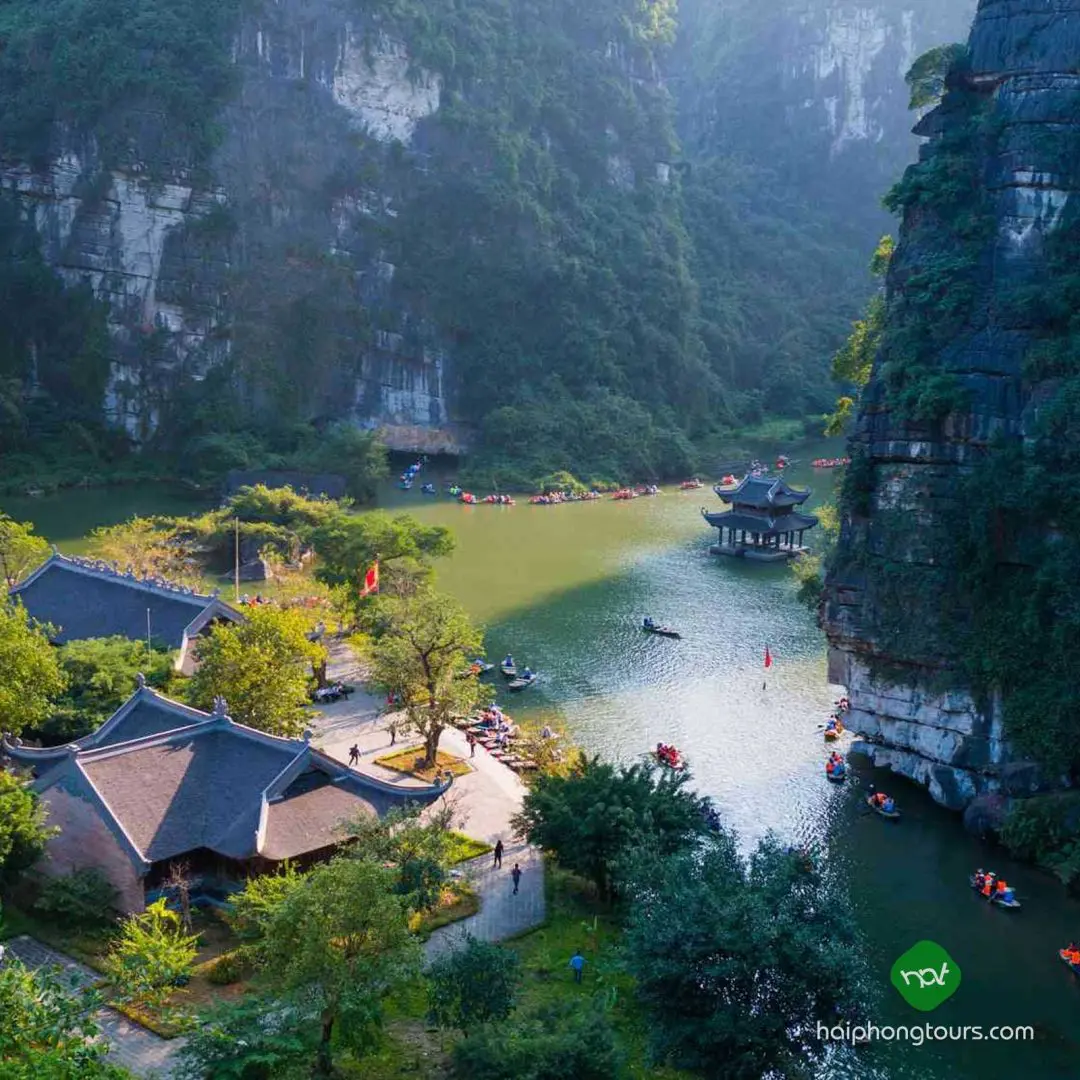
A meal in Phu Ly can give the outing a local food component. The Phu Ly breakfast guide explains rice sheets with grilled pork and fish noodle soup. Choose a serving time that fits the church visit, and agree on the restaurant stop with your driver.
Avoid confusing Chau Son ward with Chau Son Monastery
So Kien’s address includes Châu Sơn ward. It is a different destination from Chau Son Monastery in the Nho Quan area, which is known for its red-brick church and monastic gardens. Send the named church pin rather than asking a driver simply for “Chau Son.”
Choose So Kien for the basilica and the martyrs’ heritage. Choose the monastery for its architecture and monastic setting, with its own visitor arrangements. Seeing both requires separate access checks and a planned road itinerary.
Make the visit comfortable
Wear clothing that covers your shoulders and knees, bring water for the journey and keep your bag light. Ask before using a tripod or organizing portraits inside the complex. Keep the aisles, entrances and paths clear for parishioners and visiting groups.
If you need step-free access, ask about the specific route from the vehicle to the church, display rooms and toilets. Confirm these spaces individually. A shorter visit focused on the accessible areas can be more rewarding than arriving with an assumed all-site route.
The strongest reason to visit So Kien is the combination of a distinctive church and an active place of remembrance. A confirmed visiting window and a clear onward journey leave you free to appreciate both.
Would you like help fitting this experience into your trip? Contact us with your travel dates, starting point, available time and group size. Tell us about walking limits or special interests so we can suggest a practical itinerary.