
Son La Prison is a worthwhile history stop in central Son La, especially on a road trip through northwest Vietnam. The visit brings together a former French colonial prison, displays about political prisoners and a place of remembrance. Allow about 90 minutes to two hours for the main site; add time if you want broader museum displays or the separate memorial cemetery.
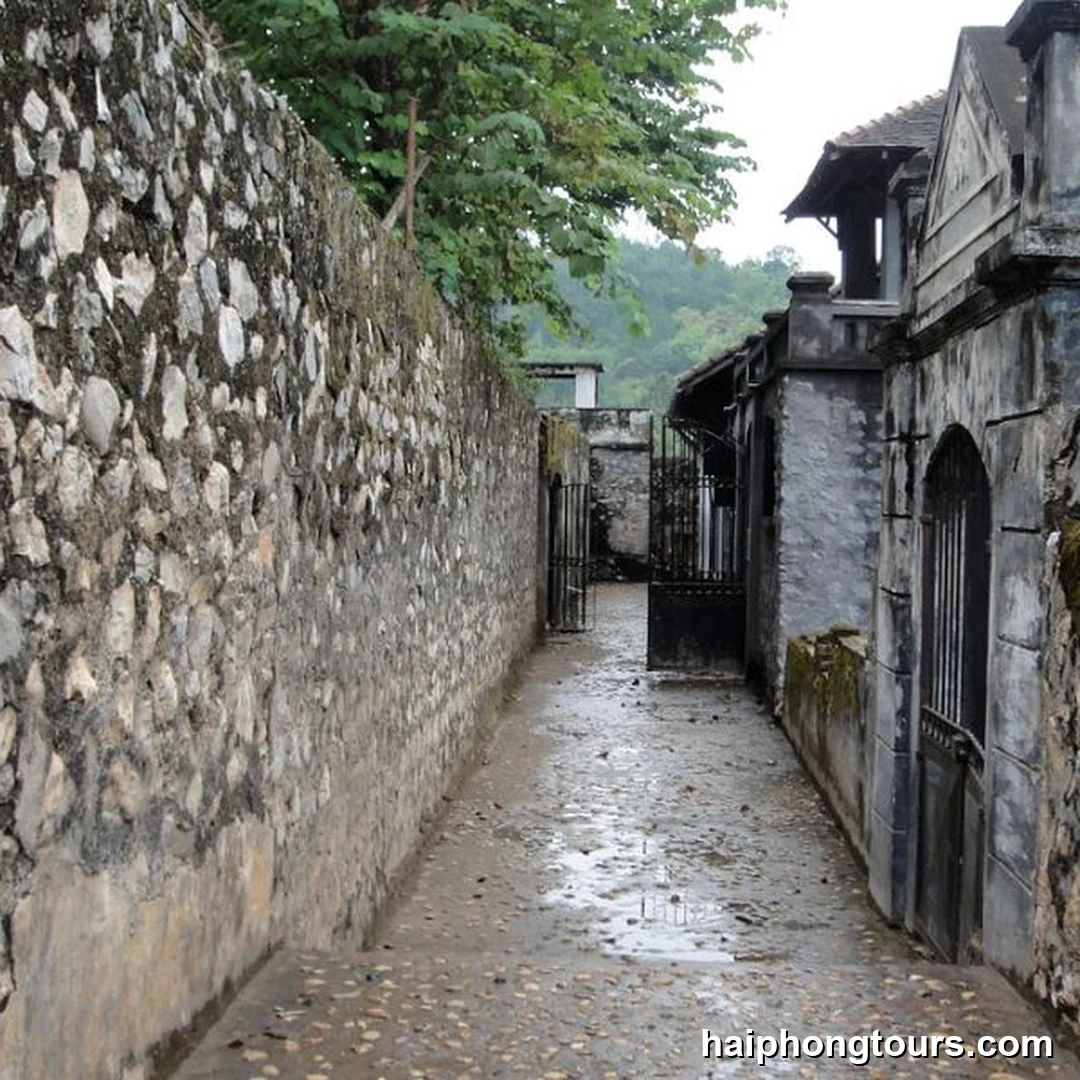
Go for the history of imprisonment and resistance, rather than expecting a completely intact jail or a large modern museum under one roof. Surviving fabric, excavated foundations and reconstructed structures all contribute to what you see. Understanding those differences makes the visit much more meaningful.
Where to go and how it fits into the city
The prison stands on Khau Ca Hill in To Hieu Ward, Son La. Use Di tích Nhà tù Sơn La or Nhà tù Sơn La as your destination when arranging a ride. This is central Son La, not the Moc Chau plateau farther along the province’s Hanoi approach.
The location works well as the main visit of a city morning, followed by lunch and a different historical stop. The Son La travel guide explains how to choose a city base and fit the stop into a longer northwest journey. A long drive from Hanoi followed by a rushed late-afternoon prison visit leaves little room to absorb the material.
Prison, museum and memorial are connected but different
The prison grounds tell the story through buildings, room layouts and historical interpretation. Exhibits provide the names, objects and context that the ruins alone cannot explain. If a booking or map description says “Son La Museum,” establish which displays are included that day rather than assuming the name refers only to the prison.
The wider protected historic site also includes the prison martyrs’ cemetery and the Ban Heo banyan tree, associated with clandestine contact outside the jail. These are separate locations, not extra rooms at the end of the main prison route. The cemetery is roughly 400 meters from the prison; confirm the walking approach if you want to include it.
For a first visit, concentrate on the prison and its interpretation. Add the cemetery if remembrance is a particular interest and your group has the time and energy. There is no need to collect every associated location to understand the main site.
The short history that helps you read the site
The French colonial administration built the prison in 1908 and expanded it during the 1930s and around 1940. It became an important place of incarceration for Vietnamese political prisoners. The period emphasized by the interpretation is the struggle against colonial rule before the August Revolution of 1945.
Conditions were severe, with confinement, forced labor and disease shaping prisoners’ lives. Prisoners also organized education, political discussion and mutual support. Keeping both parts of that story in mind prevents the visit becoming only an inspection of punishment cells.
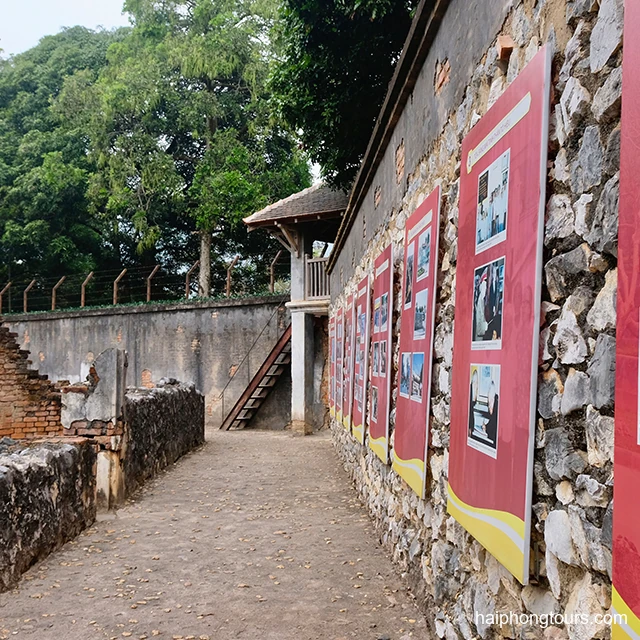
The complex suffered wartime destruction and was later conserved and partly reconstructed. A rebuilt wall helps make the original layout readable, but it is not the same kind of evidence as a surviving foundation. Ask your guide to distinguish these as you move through the grounds.
What to pay attention to during the visit
The layout of confinement
Look at the relationship between communal spaces, individual cells, surveillance points and the courtyard. The arrangement explains how a relatively compact site could control movement and separate prisoners.
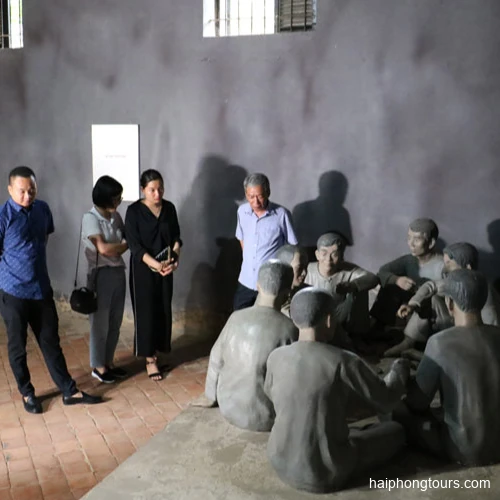
Some historical punishment spaces were below ground. Follow the visitor route and barriers rather than entering every opening you can see. For anyone uncomfortable with enclosed spaces, it is reasonable to understand a cell from its entrance or an explanation instead of going inside.
Everyday survival and collective organization
The small objects and individual accounts deserve as much attention as the walls. A container, a document or a piece of restraint equipment can make daily conditions easier to comprehend than a long list of dates.
Prisoners such as Nguyen Luong Bang helped organize care for sick inmates and resources within the prison. This is a useful thread to follow in the interpretation: how people tried to maintain health, communication and solidarity under confinement. Ask which objects illustrate that part of the story, as displays can change.
Suoi Reo: a handwritten newspaper inside the prison
Suoi Reo began in May 1941 as a clandestine handwritten prison newspaper. Its contents included political discussion, news, literature and humor. The practical difficulty of obtaining paper, writing secretly and sharing the finished pages is part of its significance.
This gives you a different way to read the site: alongside barriers intended to isolate people, consider the methods prisoners used to exchange ideas. You do not need to know every political figure in the displays to understand why producing a newspaper under those conditions mattered.
To Hieu and the peach tree
To Hieu, a communist organizer imprisoned here from 1940, died in the prison in March 1944. His name is closely connected with the site, and the peach tree bearing his name has become a symbol of resilience and remembrance.
Look for the explanation connecting the tree, his imprisonment and the commemorative spaces. The tree is meaningful throughout the year; spring blossoms are not necessary for this part of the visit. Treat it as a memorial feature rather than a place to climb or pose inside the planting area.
Opening sessions, tickets and language
The published visiting sessions are 7:30–11:30 a.m. and 1:30–5:30 p.m., daily. Plan around the midday break. A mid-morning start gives you more flexibility than arriving shortly before the morning session ends.
Buy admission through the official ticket point and check the current charge and what it covers. If your group wants a guided visit, treat interpretation as an arrangement of its own rather than assuming any ticket automatically includes an English-speaking guide.
For an English visit, establish the language, meeting point and duration beforehand. A travel guide accompanying your road trip can also help translate the historical context if site interpretation is available only in Vietnamese.
A virtual-tour resource exists for the prison, but do not depend on a phone signal or assume every digital feature has English audio. The most useful preparation is a short outline of colonial-era Vietnam and the particular stories you want explained.
Children, access and the tone of the visit
This is a site about imprisonment, hardship and death. Families should decide how much detail is suitable for their children, and give them a simple explanation before entering. Shorter sections with time outdoors can work better than expecting a child to follow an entire historical talk.
Expect steps, uneven surfaces and outdoor sections on a hill. Ask about the accessible route if anyone uses a wheelchair or has difficulty with stairs; nearby vehicle access does not establish that every room can be reached without steps.
Keep voices low around memorial areas and allow space for people paying their respects. Photograph where permitted, without using cells or restraint displays for playful reenactments. The grounds can be quiet on an ordinary day but busier when school groups or commemorative delegations arrive.
A useful half-day plan
- Start with the main prison: understand the layout before concentrating on a few prisoner accounts and objects.
- Leave time for the memorial element: the To Hieu story and commemorative spaces give the visit a human focus. Add the cemetery only if it fits your interests.
- Pause for lunch: give the historical material some breathing room before moving on.
- Choose one further city stop: Que Lam Ngu Che and the temple of King Le Thai Tong introduce an earlier period of regional history, with a different setting and pace.
If your larger journey also includes Hanoi or Dien Bien Phu, use the regional museum comparison to avoid repeating the same kind of visit without context. Son La Prison contributes a specific colonial-era story; the value comes from understanding that story, not from treating it as a smaller substitute for another war museum.
Would you like help fitting this experience into your trip? Contact us with your travel dates, starting point, available time and group size. Tell us about walking limits or special interests so we can suggest a practical itinerary.