
Son La to Hanoi is a long mountain-road journey, usually by sleeper bus or limousine-style coach. The key decision is the Hanoi endpoint: some current operator pages list Mỹ Đình, while another service serves Yên Nghĩa and nearby southern Hanoi stops. Choose the departure and endpoint together, then plan the final taxi or hotel transfer.
Cường Nguyệt’s current route page lists Sơn La Bus Station to Mỹ Đình at about seven hours and shows departures from 06:15 through 23:00. Phong Hiền publishes a different set of departures and also lists Yên Nghĩa. These are useful current references, not a single universal timetable; confirm the date, operator, vehicle and endpoint before leaving for the station.
Quick decision for Son La to Hanoi
- Mỹ Đình: convenient for western Hanoi and a common endpoint on the Sơn La route, but it is not the Old Quarter or airport.
- Yên Nghĩa: useful for Hà Đông and southern Hanoi when the operator’s route serves it; confirm the exact drop-off before booking.
- Day bus: practical when you want to see the route and arrive in the evening, but allow for a full travel day.
- Overnight sleeper: saves a hotel night but may arrive early and requires a plan for the first hours in Hanoi.
What Cường Nguyệt’s current page shows
Cường Nguyệt lists fixed two-way departures between Sơn La Bus Station and Mỹ Đình. Its Sơn La-to-Mỹ Đình references are 06:15, 08:30, 10:00, 12:15, 13:30, 17:00, 19:30, 21:30, 22:30, and 23:00. The page gives an estimated journey of about seven hours and advises calling to confirm, especially at weekends or during busy periods.
The published route follows Sơn La, Hát Lót, Yên Châu, Mộc Châu, Mai Châu, Hòa Bình and the approach to Mỹ Đình. That sequence explains why the trip can take much longer than a straight-line map distance. Mountain roads, passenger stops and traffic around Hanoi remain part of the planning window.
Phong Hiền’s current references
Phong Hiền publishes Sơn La-to-Mỹ Đình departures at 06:15, 10:30 and 21:00, and Sơn La-to-Yên Nghĩa departures at 09:30 and 21:00. It also lists Mường La services to Mỹ Đình and Yên Nghĩa. The operator’s route description includes Hòa Bình, Lương Sơn, Xuân Mai, Chương Mỹ, Mai Lĩnh and stops in southern Hanoi.
Because the two current pages publish different schedules, do not merge them into one “every few hours” timetable. Select an operator first, then confirm that operator’s departure time, bus type, boarding point, fare and Hanoi endpoint for your date.
Which Sơn La departure point?
Cường Nguyệt identifies Sơn La Bus Station as the origin. A hotel in Sơn La city may still need a short taxi to the station, while a stay near Mộc Châu, Yên Châu, or Hát Lót may be served by a different stop or a different route altogether.
Send the operator your exact accommodation and ask whether the vehicle collects there or requires a station transfer. Do not assume a “Sơn La” ticket begins at your resort or at Mộc Châu; the route label can cover a province or a city-level station.
Mỹ Đình or Yên Nghĩa?
Mỹ Đình is a useful western Hanoi endpoint for Ba Đình’s western side, Cầu Giấy, Nam Từ Liêm and onward connections around the ring-road area. Yên Nghĩa is more convenient for Hà Đông and southern districts when the operator’s service ends there.
Neither endpoint is automatically your hotel. Ask for the exact gate, office, or road-side stop and plan a second vehicle if you have bags. A ticket that says “Hanoi” without a district can leave you far from the neighborhood you booked.
Airport connections
Sơn La has no commercial airport for a direct Hanoi flight, so an airport plan normally means reaching Hanoi by road first. If you have an international departure from Nội Bài, do not treat a late-night bus arrival at Mỹ Đình or Yên Nghĩa as an airport transfer. The airport is a separate road journey across or around Hanoi.

For a flight that cannot be missed, arrive in Hanoi the previous evening or build a very large buffer after the bus’s realistic arrival. A seven-hour route reference excludes mountain delays, station loading, and the last urban transfer.
Daytime bus or overnight sleeper?
A daytime service lets you watch the route and may be easier for travelers who sleep poorly on buses. It also uses most of the day and may arrive during Hanoi’s evening traffic. An overnight service can protect sightseeing time, but you may reach the endpoint before hotel check-in and need a quiet place for luggage and breakfast.
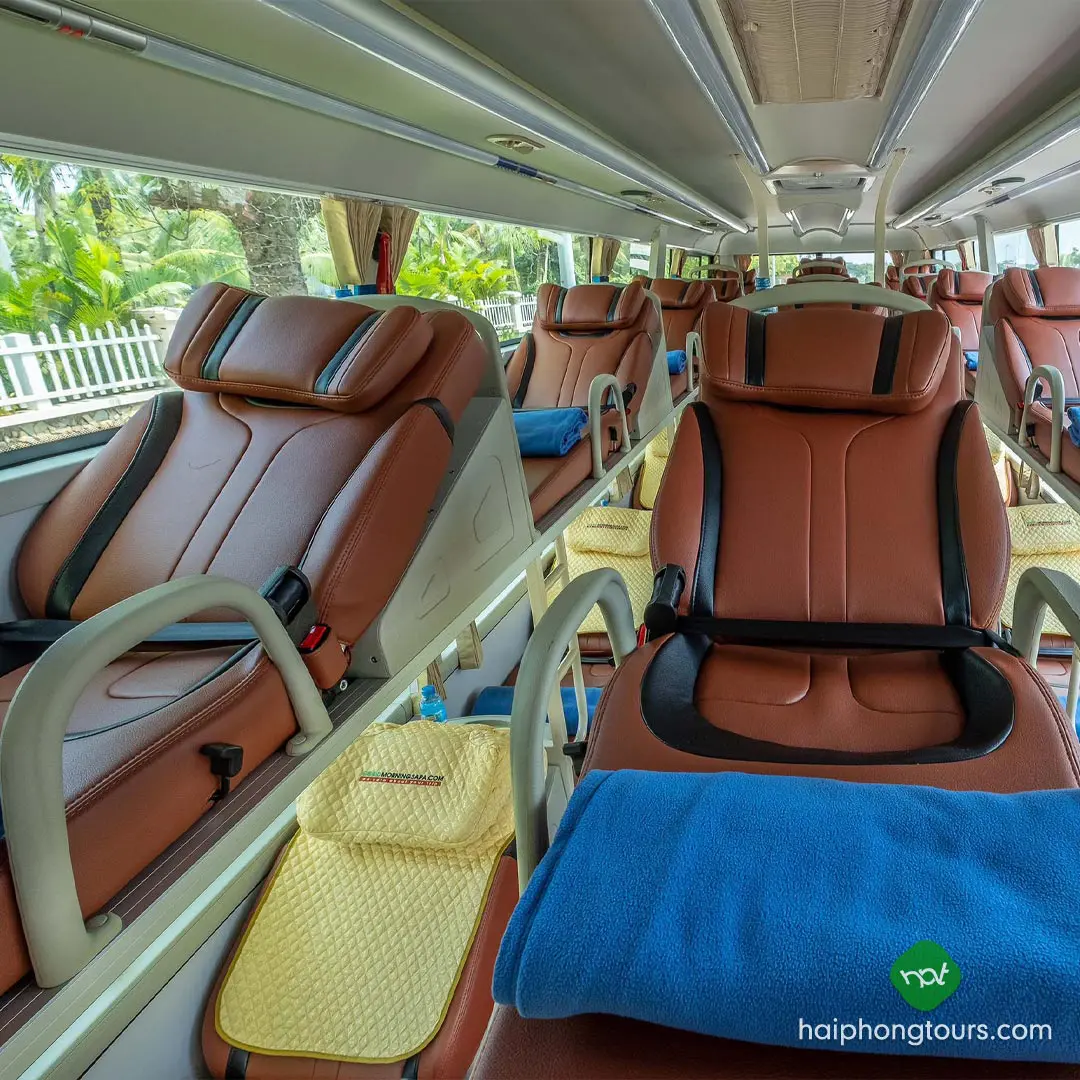
Ask whether the seat is a conventional sleeper, a cabin-style berth, or a reclining seat. Confirm if blankets, water, charging, and luggage storage are included. These details differ by operator and vehicle rather than by the word “bus.”
How long should you allow?
Use approximately seven hours as Cường Nguyệt’s route reference, not a guaranteed arrival. Add time when:
- you need a taxi from a hotel to Sơn La Bus Station;
- the bus makes intermediate collections or comfort stops;
- rain, fog, or road works affect the mountain section;
- you continue from Mỹ Đình or Yên Nghĩa to central Hanoi or Nội Bài;
- you travel on a weekend or holiday.
Keep a full arrival window rather than booking a timed activity immediately after the earliest estimate. A delayed bus can affect a train, cruise, or separate flight ticket.
Luggage and families
Tell the operator how many bags you have and whether any are hard-shell, oversized, or accompanied by a stroller or sports gear. A long-distance coach can have enough seats but limited usable luggage space. Ask whether the bag travels in the lower compartment and whether you can keep medication and valuables with you.
Children may find a seven-hour mountain-road journey tiring. Confirm the child fare, seat or berth, toilet-stop pattern and the vehicle type. Carry snacks, water, a light layer and motion-sickness supplies that are suitable for your family.
Motion comfort and road conditions
The route includes winding sections around the northwest. If you are prone to motion sickness, sit where the crew advises, avoid a heavy meal immediately before departure, and keep water and any usual medication accessible. Do not rely on the advertised arrival time when weather is poor.
Keep the bus company’s phone number, booking code and station location offline. If you are delayed reaching the station, call before departure. A coach on a long route may not be able to wait for a late taxi.
Booking checklist
- Operator name and exact date
- Departure point: Sơn La Bus Station, Mộc Châu, or another confirmed stop
- Departure time and vehicle type
- Hanoi endpoint: Mỹ Đình, Yên Nghĩa, or a named office
- Passenger count, child arrangements and luggage allowance
- Fare, payment, cancellation and delay contact
- Final hotel or airport connection from the Hanoi endpoint
Should you stop in Hanoi?
If Hanoi is only a connection to an airport, coast, or another northern destination, compare the complete route rather than the bus fare alone. A cheaper ticket ending at Mỹ Đình can become less convenient if you need a late taxi, an airport transfer, or a new hotel.
An overnight in Hanoi is safer when a separate international flight or train cannot be changed. It also gives you time to recover after a full mountain-road day before continuing.
Which Son La-to-Hanoi bus should you choose?
Choose a Cường Nguyệt departure when its Sơn La Bus Station and Mỹ Đình schedule fits your plan. Choose Phong Hiền when its route or Yên Nghĩa endpoint is more convenient, after confirming the current departure. For Mộc Châu or Mường La, book the service that explicitly names your starting town rather than assuming a Sơn La-city ticket includes a local transfer.
Before paying, obtain one written confirmation containing the date, origin, time, vehicle, Hanoi endpoint, luggage rules, total fare, and realistic arrival window. That prevents the common mistake of buying a ticket for the right province but the wrong station or district.
Useful guides for your trip
- How to pay for Hanoi buses: Cash, QR tickets and passes
- Hanoi Bus Stations: My Dinh, Giap Bat, Nuoc Ngam and More
Would a private transfer make this journey easier? Contact us with your travel date, exact pickup and drop-off, number of travelers and bags. Include any flight, train or cruise deadline so we can assess a suitable plan and quotation.
