
For a school trip from Hai Phong, start with a private Halong Bay day cruise if the group wants a shared outing with a meal and time on the water. Choose Ninh Binh when the learning goal is river landscapes or Vietnamese history and the school can accept an early departure and a late return. Cat Ba needs a more carefully coordinated crossing; an overnight stay gives you more room for activities on the island.
The deciding factors are the students’ ages, the latest acceptable return to school and how much walking or water activity the group can manage. A six-hour cruise means six hours on the bay, with road transfers and boarding added around it. It is not a six-hour school-to-school excursion.
Choose the trip around the group
- Less time on the water: consider a four-hour private Halong cruise. It follows a different sightseeing route from the six-hour trip, so compare the actual stops before choosing.
- Older students who can manage cave steps and a fuller day: consider the six-hour Halong route, with a school-approved plan for kayaking, a bamboo boat ride or sitting out an activity.
- A history or landscape field trip: choose Ninh Binh, preferably with one boat route and one complementary land visit. Allow for substantial travel time.
- Island activities and time together overnight: consider Cat Ba for two days and one night, after arranging the crossing and island transport.
If the children must be back before late afternoon, settle that requirement first. Ask for a shorter program designed around that deadline; shortening lunch or rushing a class through a cave is a poor way to make a full-day itinerary fit.
Halong Bay: a private boat for the class
A private boat gives your group its own space for lunch, a briefing and a shared activity. It also makes it easier to coordinate the outing with the teachers. The boat still follows its approved route and the day’s operating conditions, so a private charter does not mean unlimited stops or complete freedom over departure times.
Four hours or six hours on the bay
The private four-hour Halong Bay cruise departs from Tuan Chau and features Thien Cung Cave, Dau Go Cave and the Ba Hang area. It can suit a group that wants a shorter cruise, but cave visits still involve steps. Discuss the walking requirements before treating it as an easy option for every child.

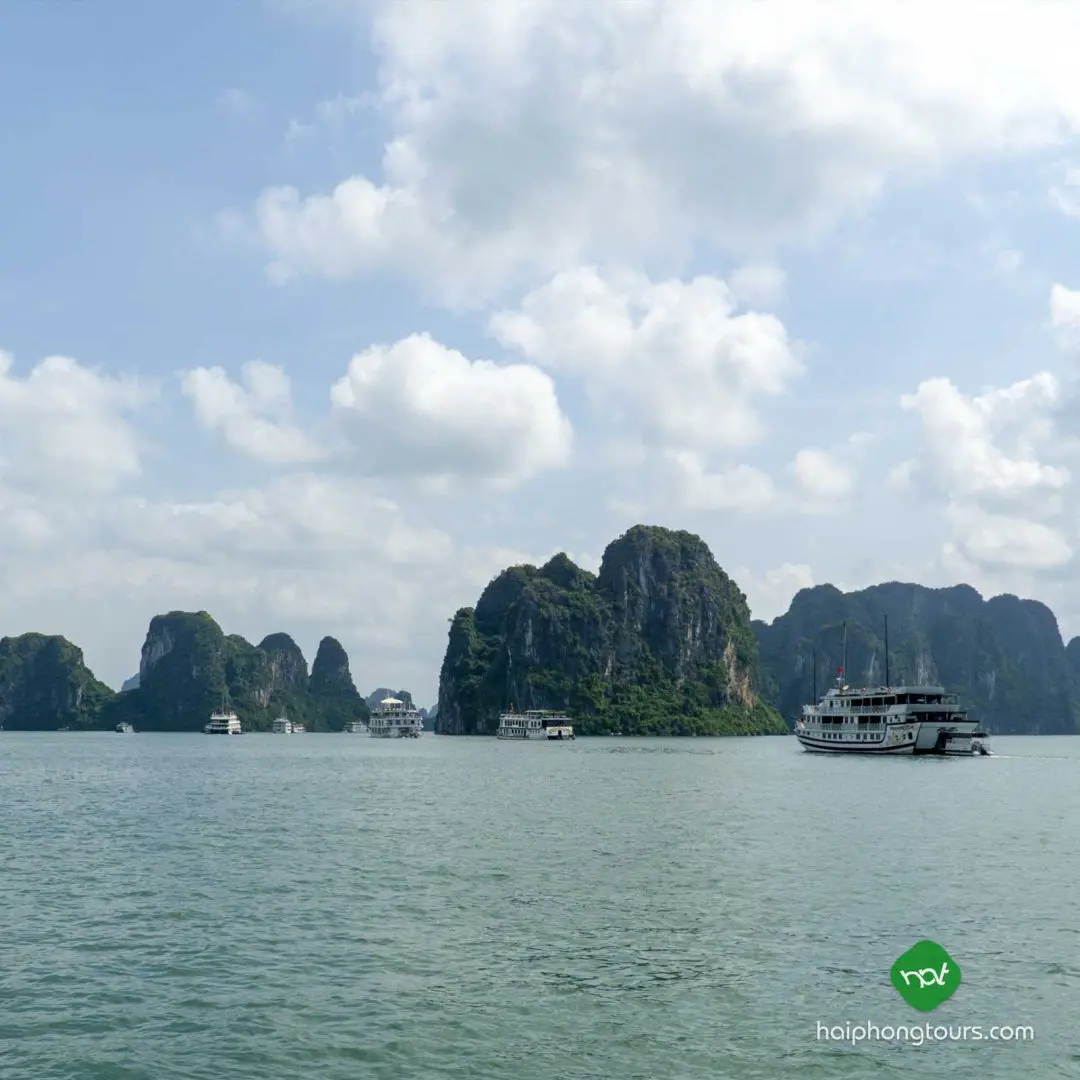
The private six-hour Halong Bay cruise combines Sung Sot Cave, the Luon Cave area and Titov Island. At Luon, the activity is kayaking or a bamboo boat ride; Titov offers a beach and a climb to a viewpoint. The longer program provides more variety but adds movement between the main boat, small boats and island landings.
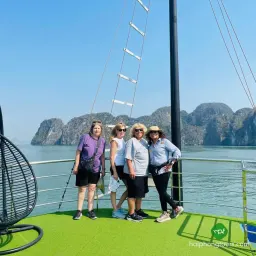
Both cruise packages include a meal, an English-speaking guide on board, entrance fees and the stated kayaking or bamboo boat activity. Road transfers from Hai Phong are separate. Request a complete school-group quotation covering the coach as well as the boat, rather than comparing the cruise-only price with an all-inclusive excursion.
Build the day from the school gate
Have the organizer confirm the precise pickup gate, coach access, passenger count and boarding time at Tuan Chau. Add time for attendance, toilets and moving the group from the coach to the boat. A transfer estimate for a small private car should not become a guaranteed arrival time for a school coach.
For the afternoon six-hour program, the usual port return is around 5:30–6:00 p.m., followed by the drive to Hai Phong. Parents should receive the agreed school return window, not the port arrival time. A class with an earlier collection deadline needs a different confirmed schedule.
For a geography theme, ask the guide to explain how limestone islands and caves form and give students a short observation task. A few clear learning points, followed by discussion over lunch or on the return journey, are more useful than adding another stop simply to lengthen the itinerary.
Ninh Binh: allow for a long day from Hai Phong
The Hai Phong to Ninh Binh day tour provides a useful starting point for a private excursion. Its normal program leaves Hai Phong at 7:00 a.m., allows about three hours of driving each way and returns around 8:30–9:00 p.m. A school coach and additional group stops may change those timings.
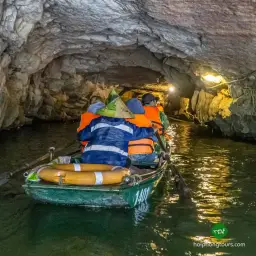
That late return matters for younger children, dinner and parents collecting students. If the school cannot accept it, ask whether fewer visits and an earlier departure from Ninh Binh can meet the required return time. Get the revised schedule agreed before collecting payments.
Choose one boat trip and a clear learning theme
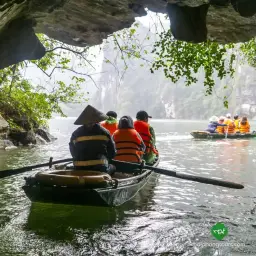
Trang An and Tam Coc are separate boat excursions. For a class traveling from Hai Phong in one day, choose one of them. At Trang An, the selected route can take roughly one and a half to three hours; confirm which route is available and suitable for your group. Boarding, toilets and regrouping need additional time.
Hoa Lu’s temples associated with the Dinh and Le kings can support a history theme, while a river trip provides a setting for studying limestone scenery and rural land use. Ask for a program built around the lesson and the students’ attention span. Combining several major attractions leaves less time to understand any of them.
Hang Mua is a strenuous optional addition, with hundreds of steps to the viewpoint. Include it only if the group can manage the climb in the day’s conditions, and arrange a supervised alternative for students who remain below. Cycling also needs a deliberate decision about riding ability, bike fit, helmets, the proposed route and adult supervision.

Agree the meal arrangements for a class
The standard Ninh Binh tour includes return private transport, lunch, a local English-speaking guide, entrance fees and the selected boat ride. Cycling and electric transport are included when used in the agreed program; drinks and extra food are separate.
Its usual lunch can be at the guide’s family home, with a restaurant available by arrangement. For a school group, confirm the actual dining venue, seating capacity, toilets, menu and dietary needs in advance. Do not assume that a meal arrangement intended for a small private party automatically fits an entire class.
Cat Ba: plan the crossing and the island visit together
Cat Ba is possible as a day trip, but the group needs a tightly defined purpose and a realistic return plan. The Dong Bai–Cai Vieng vehicle ferry can have queues on busy weekends and holidays. A passenger crossing or cable car changes the logistics: the group still needs suitable transport on the island.
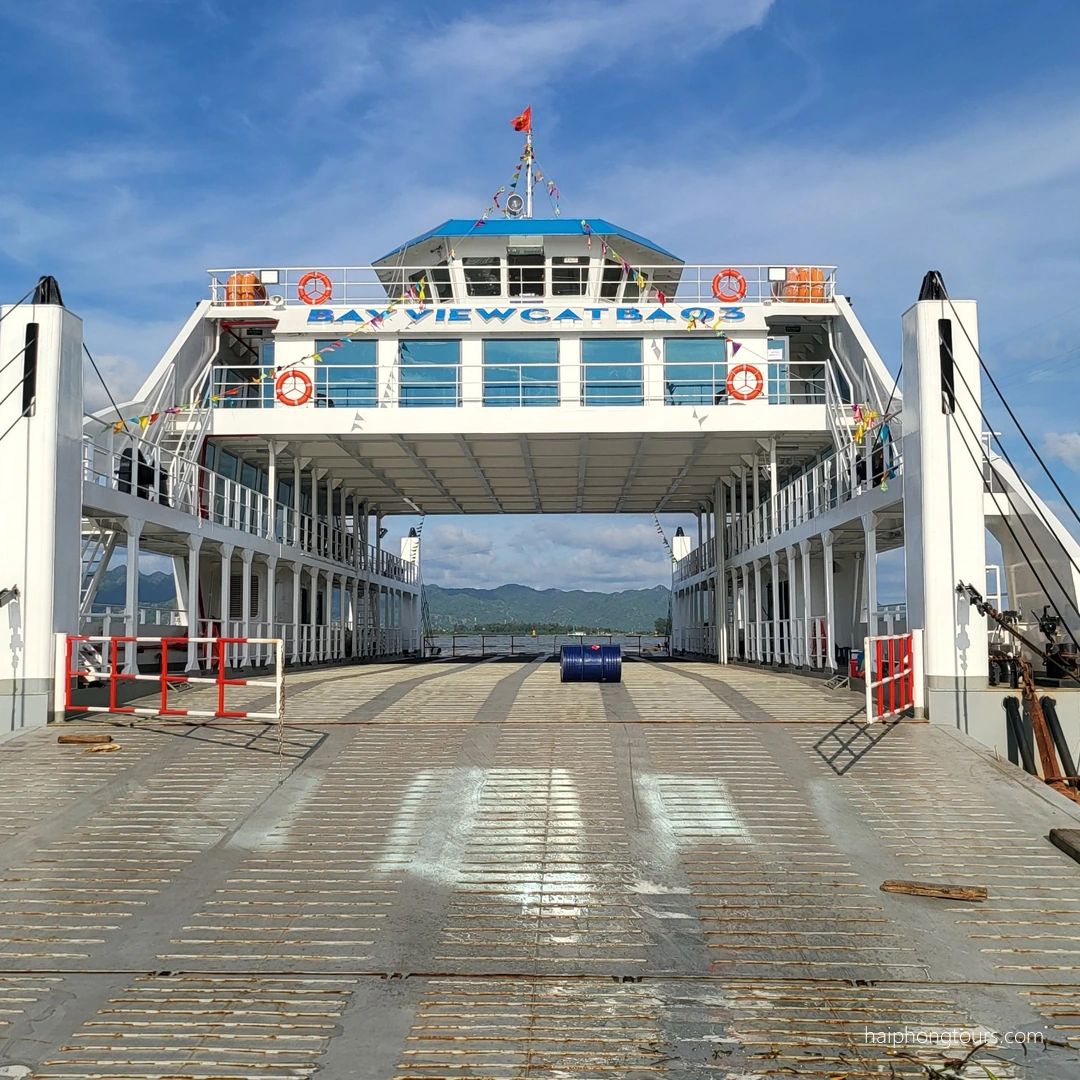
For a large class, ask who handles each transfer, where the coach can set down and how the return crossing is coordinated. Two days and one night generally gives more room if you want both an island stay and a substantial boat or nature activity. Add accommodation, rooming and overnight supervision to the school’s planning.
A Lan Ha Bay cruise departing from Tuan Chau should also be checked stop by stop. Cruising near Cat Ba is not the same as taking students ashore for an island visit.
Set the activity and weather limits before booking
Summer vacation may be convenient for the school calendar, but northern Vietnam can be hot, wet and stormy then. Choose clothing and the amount of outdoor activity around the forecast: sun protection and drinking water for hot days, and a light rain layer or warmer layer when conditions call for it.
Boat departures and sightseeing can be changed or suspended in unsuitable weather. Agree who makes the go/no-go decision, when families will hear about a change, and what cancellation or postponement terms apply. A land-based backup needs to be arranged beforehand if the school wants one.
Kayaking and swimming should be optional activities with explicit school and parent approval. Confirm the operator’s participation conditions, suitable life jackets, adult supervision and an alternative for anyone who does not take part. Being old enough for a child ticket does not establish readiness to paddle independently.
For river boats, assign students and accompanying adults to each boat before boarding, check life-jacket fit and follow the boat operator’s instructions. At caves and viewpoints, use a pace that allows the group to stay together, with supervised rest options instead of pressure to reach every summit.
Request a school-group quote with the details that matter
Send the organizer the travel date, school pickup address, number and ages of students, number of accompanying adults, preferred learning theme and latest acceptable return time. Add mobility needs, dietary requirements and activities the school will permit.
Ask for a written itinerary and price that identify:
- Transport: vehicle capacity for every student and adult, school pickup and drop-off, parking, tolls and any separate island transfers.
- Guiding and supervision: guide language, where the guide joins, and the separate responsibilities of the operator and the school’s accompanying adults.
- Meals and tickets: the agreed menu, drinking water, attraction and activity fees, plus any age or height information needed for pricing.
- Group arrangements: boat allocation, suitable life jackets, toilets, rest stops and a plan for students sitting out an activity.
- Booking terms: deposit, final headcount deadline, changes, weather disruption and the scope of any included insurance.
Use the school’s own approval, consent and supervision procedures. Retail family child discounts are pricing rules, not a guide to how many adults a class needs. Once the itinerary is agreed, give families the practical version: meeting time, return window, clothing, food arrangements, permitted activities and the school contact for the day.
Useful guides for your trip
- Cat Ba Island Travel Guide: Transport, Hotels and Food
- Places to Visit in Hai Phong: City Walks, Do Son and Cat Ba
Would you like help fitting this experience into your trip? Contact us with your travel dates, starting point, available time and group size. Tell us about walking limits or special interests so we can suggest a practical itinerary.