
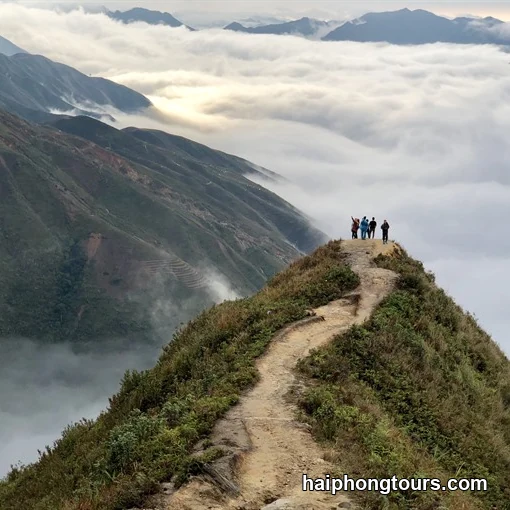
Ta Xua is a mountain destination in Son La where travelers come for cloud-filled valleys, ridge views, Shan tuyet tea and Hmong village life. For a first visit from Hanoi, plan at least two days and one night, staying in the Ta Xua area if you want an early start at a viewpoint.
A sightseeing trip to Ta Xua is different from a trekking expedition to the high mountain summits. You can enjoy the landscape from road-accessible cafés and viewpoints without undertaking a summit trek. Choose your activities around the weather and your comfort with steep ground; a sea of clouds is never guaranteed.
For an overnight forest climb, the Sa Mu–U Bo trekking guide compares the Xim Vang approach with a crossing from Tram Tau to Hang Dong, including guide language, mountain sleeping arrangements and the different return transfers. Give the trek its own itinerary rather than adding it to a roadside viewpoint circuit.
Where Ta Xua is
The main sightseeing base is Ta Xua commune, Son La province, in the area formerly described as Bac Yen district. The inhabited visitor area is around 1,600 meters above sea level, rather than at the height of the much higher mountain summits.
From Hanoi, the road journey is roughly 240 km, depending on your starting point and accommodation. Allow around five to six hours or longer as a planning estimate. Mountain traffic, weather and the final approach can make a bigger difference than the distance suggests.
When discussing a booking, name your exact accommodation and activity. A bus ticket to Bac Yen, a transfer to central Ta Xua and a trek starting from another side of the mountain range are different arrangements.
When to go for clouds and clear views
October to April is the main period to consider for a cloud-watching trip. Winter and early spring mornings can be cold, so bring warm layers even if Hanoi feels comfortable when you leave.
The useful distinction is between clouds below your viewpoint and fog surrounding you. The first can reveal layers of hills above a white valley; the second may hide the view completely. A weather app showing a cloud symbol cannot tell you that a particular lookout will have a clear view.
Check the forecast and ask your host about local visibility and road conditions shortly before arrival. Sunrise and late afternoon are worthwhile times to try, but do not spend the day racing between viewpoints if the weather is poor. Two nights give you more chances and a less hurried trip than a single night.
Summer brings green scenery and opportunities for village and tea visits, but it is also the rainy season. Heavy rain can affect hill roads and outdoor activities. Keep plans flexible and follow local access restrictions rather than treating rain as a promise of good clouds the next morning.
Getting to Ta Xua from Hanoi
Compare the Hanoi to Ta Xua bus and private-car options before booking, especially if you need early room access after a night bus or a car that stays for local outings.
Car or shared passenger service
A common road approach runs toward Son Tay and Highway 32, then through the Phu Yen and Bac Yen area on Highway 37 before climbing to Ta Xua. Arrange a driver familiar with the mountain section, particularly if you do not regularly drive on narrow, winding roads.
Shared passenger services can be convenient, but confirm the actual drop-off point. If the vehicle ends in Bac Yen, you still need an onward transfer. If it continues to Ta Xua, establish whether it reaches your accommodation or stops at a central meeting point.
For an overnight service, agree with your host on what happens when you arrive. A very early drop-off does not automatically include a room, breakfast or transport to a viewpoint. Reserve the return journey as well, leaving a realistic margin after your morning activities.
Motorcycle travel
Choose a motorcycle only if you are properly licensed for the vehicle and comfortable riding on mountain roads. Reach the area in daylight where possible, and avoid making an unfamiliar steep road your first ride in darkness or dense fog.
A local driver or transfer can help with the main approach to a viewpoint, but some final sections still require walking. Tell your accommodation if you want a trip without motorcycle rides so it can suggest stops that suit a car and your walking ability.
Do not assume a route continuing toward Tram Tau is an easy shortcut simply because it appears on a map. Confirm the current road condition and suitability for your vehicle before planning an onward mountain crossing.
Places to visit around Ta Xua
Dinosaur Backbone in the Hang Dong area
Song lung khung long, usually translated as Dinosaur Backbone, is the narrow ridge associated with Chong Tra village in the Hang Dong area. It is a separate outing from central Ta Xua, with a road approach followed by access along the hillside.
The attraction is the ridge extending into the valley, with steep slopes on either side. Ask where the vehicle will stop, how much walking is required and whether the path is suitable that day. The length of your outing depends on the access point and how far you choose to continue.
You do not need to walk the entire ridge to enjoy the landscape. Turn back if footing, visibility or crowding makes you uncomfortable. Keep clear of exposed edges when taking photographs, and choose another viewpoint if the ground is slippery or the wind is strong.
This Hang Dong sightseeing ridge should not be confused with a high-altitude ridge included in a multi-day Ta Xua summit trek. Confirm the route before booking anything described simply as a “Dinosaur Backbone tour.”
Dinh Gio and cafés overlooking the valleys
Dinh Gio, or Wind Peak, is an area to consider for late-afternoon views. Valley-facing cafés around Ta Xua also offer places to sit and watch the light change, which can suit travelers who prefer a quieter stop to an exposed ridge walk.
Choose the actual location according to visibility and access. Ask about steps, parking and the walking distance from the road if anyone in your party has limited mobility. A terrace photograph alone does not establish an easy route to the seating area.
Dolphin Rock, the Lonely Tree and the grassland area
Dolphin Rock and the Lonely Tree are landscape stops commonly included in Ta Xua sightseeing. The wider grassland area offers open mountain views, with parts of the landscape overlooking the Suoi Sap reservoir.
Group nearby stops together with your driver rather than crossing back and forth between them and Hang Dong. Keep to permitted paths and stable ground. The distant mountain or reservoir view can make a good photograph without climbing onto an exposed rock.
Ban Be and Shan tuyet tea
The tea-growing area around Ban Be offers another reason to visit Ta Xua, especially if the valleys are hidden by fog. Shan tuyet tea is closely connected with local Hmong households and the region’s older tea trees.
Arrange a visit with a host or producer to learn about picking, processing and tasting. The available activity depends on the season and the day’s work. Ask about language support if you want a detailed explanation in English, and buy labeled tea from the producer rather than assuming every packet sold nearby has the same origin.
Xim Vang as an additional outing
Xim Vang is worth discussing if you have extra time and want terraced-field scenery. Field colors depend on the agricultural stage, and the journey needs its own allowance. Treat it as an optional extension rather than another compulsory stop in a tightly packed first visit.
Where to stay
For an early viewpoint visit, choose accommodation in or near Ta Xua and confirm the dawn route before booking. Staying down in Bac Yen can be a sensible fallback if you arrive late, but it adds another climb before you reach the main sightseeing area.
Tra May Ta Xua Homestay is an option for travelers interested in a stay with a tea-focused setting. It offers private accommodation as well as shared arrangements; ask for the specific room, bathroom and meal inclusions that match your booking.
Ngong Ta Xua Homestay is another established name in the Ta Xua village area. Confirm its exact location, available sleeping arrangement and meal service before reserving. Use the full Vietnamese property name, as several local businesses have similar names involving may, meaning clouds.
For either a homestay or a more private bungalow, prioritize a suitable access road, warm bedding, hot water and a clear room description. A balcony or panoramic window does not guarantee an unobstructed view or clouds on the day you arrive.
If camping is central to your plans, use an agreed, managed site and check the weather arrangements with the host. A bare ridge or a convenient roadside patch is not a substitute for confirmed permission and suitable facilities.
A realistic two-day, one-night itinerary
Day one: Hanoi to Ta Xua and a nearby afternoon stop
Leave Hanoi early enough to aim for a daylight arrival. Have lunch along the route or by arrangement at your accommodation, then check in and rest after the drive.
Choose one manageable afternoon outing: a nearby café or Dinh Gio for changing light, or a short circuit around Dolphin Rock and the Lonely Tree if road and weather conditions suit. Return for dinner and agree on the next morning’s plan with your host.
Day two: one main viewpoint and the journey back
Start early for Hang Dong’s Dinosaur Backbone if the conditions and walking requirements suit your group. Otherwise, use a more accessible viewpoint close to your accommodation. Arrange breakfast around your departure time rather than assuming all kitchens open before dawn.
After the outing, return to rest and check out. Leave enough time for lunch and the drive to Hanoi. A tea tasting can fit if it is nearby and arranged, but omit it if it would make the return rushed.
For two full mornings, tea activities or an Xim Vang outing, stay two nights. If you also want Moc Chau, allow additional days and plan the transfer separately; it is not a quick detour between Ta Xua sunrise and a comfortable return to Hanoi.
Food and practical preparation
Ta Xua has restaurants, cafés and accommodation that can arrange meals. Ask about local chicken, hotpot, bamboo shoots, rice dishes and Shan tuyet tea. A cooked meal with your host can be more convenient than leaving your accommodation again after a long mountain drive.
Book meals ahead for a group or a late arrival, and explain any dietary restrictions. Carry a small snack and water for the dawn outing, when your preferred food stop may not yet be serving.
- For the weather: pack warm layers, a rain shell and shoes with grip. Protect your phone and camera from damp conditions.
- For an early start: bring a torch, a charged phone and the host’s contact details. Agree on the meeting point before going to bed.
- For the budget: distinguish the Hanoi transfer, local rides, room, meals and any viewpoint or activity charges. Ask for the total for your party and dates.
- For the plan: keep one main outing per half-day and a nearby alternative for poor visibility. Follow closures and local advice after heavy rain.
The most useful Ta Xua booking is one that gives you a comfortable base, sensible transport and enough time to enjoy the landscape as it appears. Clouds add to the experience, while the tea, villages and mountain scenery give the trip value even when the valleys remain clear.