
Tam Thanh and Nhi Thanh make a rewarding two- to three-hour cultural outing within Lang Son. Choose Tam Thanh for its cave pagoda and Buddha relief carved into the rock; add Nhi Thanh for its stream, rock inscriptions and connection with the scholar-official Ngô Thì Sĩ.
They are separate visitor sites within the same limestone heritage area, not two names for one cave. Both combine natural formations with places of worship. Plan a daytime visit on foot through the managed areas, with time for the street-level transfer between entrances.
Choose one cave or visit both
- Only about an hour available: concentrate on Tam Thanh’s pagoda, rock-carved Buddha and the open interior route, or choose Nhi Thanh if inscriptions and the stream interest you more.
- A full morning or afternoon: visit both, allowing roughly 45–75 minutes at each plus the transfer and a short break.
- Strong interest in local history: arrange interpretation so the inscriptions and religious spaces mean more than a sequence of unfamiliar names.
- Difficulty with steps or uneven ground: discuss the exact accessible sections before arriving; neither cave should be assumed step-free.
The time allowances are for a focused visit, not a required route. A worship service, festival crowd or a slower walking pace can make either stop longer. If you have a bus to catch, keep one cave as the main visit rather than rushing both.
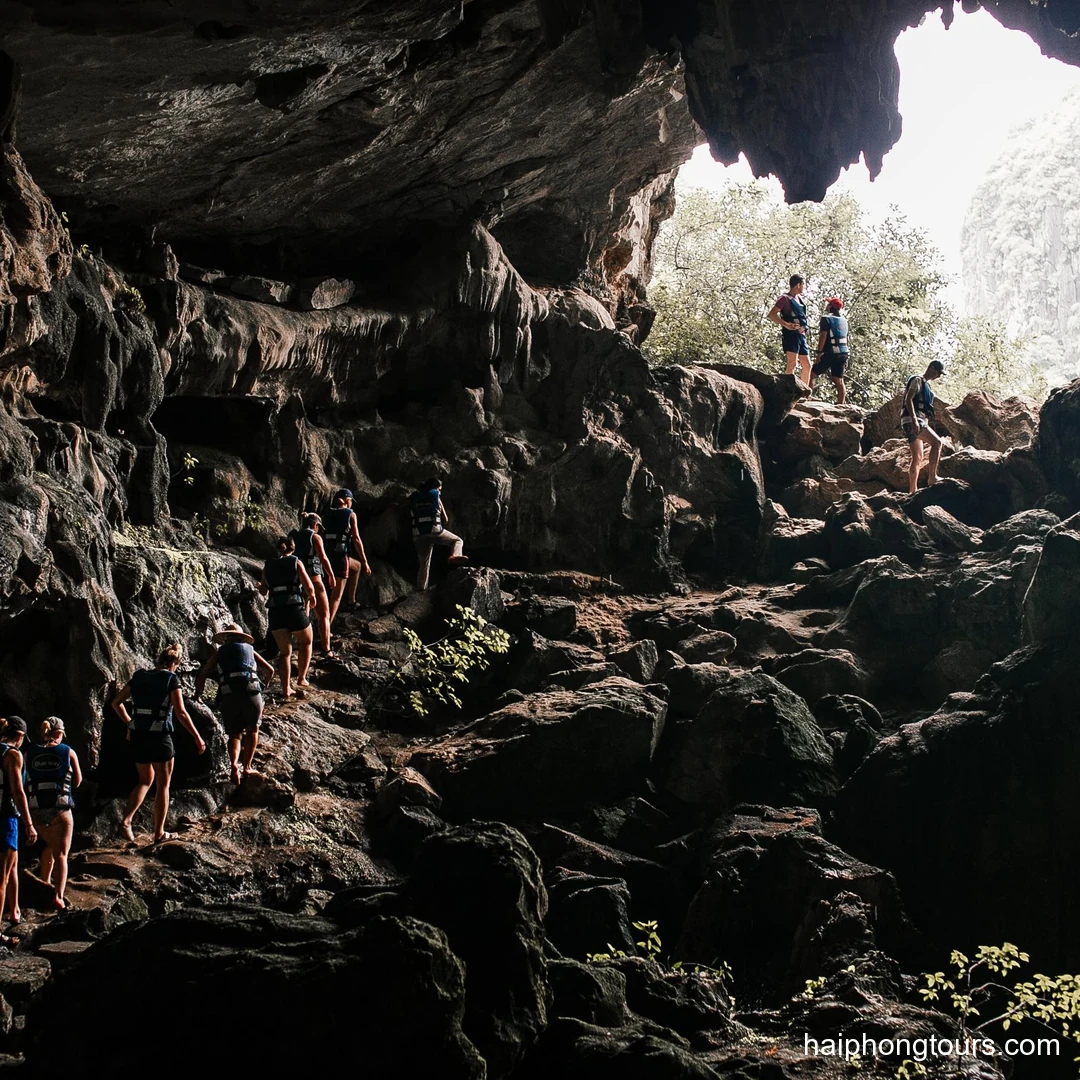
Tam Thanh: a pagoda within the limestone
Use Động Tam Thanh – Chùa Tam Thanh, Lạng Sơn as the destination. The entrance approach includes about 30 stone steps. Beyond it, the cave’s rock surfaces and recesses form the setting for the shrines, so the experience differs from walking through the courtyards and wooden halls of a conventional pagoda.
Look for the Amitabha relief
The standing image of Phật A Di Đà, or Amitabha Buddha, is carved directly into the rock within a bodhi-leaf-shaped frame. This is a relief rather than a freestanding statue brought into the cave. Its setting and the relationship between the figure and the natural wall are worth noticing before you continue farther inside.
The image belongs to the pagoda’s historic religious art, associated with the seventeenth century. Ask a guide or caretaker to point out the viewing position if you cannot identify it among the shrines. Stay outside any restricted altar area and follow the local photography instructions.
Notice the writing as well as the formations
Tam Thanh also preserves inscriptions left over different periods. An important early inscription records restoration in 1677, which tells you that the religious site was already established by then. It should not be treated as a precise founding date for the cave or the pagoda.
The interior route brings together shrines, limestone formations and the small Am Ty pool. Follow the open path and take time where daylight enters the cave. If an upper path or viewpoint is offered, check its condition before adding the climb; completing every branch is unnecessary for understanding the main site.
Keep the cave visit separate from worship. Cover shoulders and knees, lower your voice near the shrines and leave space for people making offerings. You can appreciate the art and setting without taking part in a ritual.
Nhi Thanh: the stream, inscriptions and Tam Giao Pagoda
Use Động Nhị Thanh – Chùa Tam Giáo for the second destination. Its street approach is on Nhi Thanh Road, near the Po Soai six-way junction. Tam Giao Pagoda belongs with Nhi Thanh; it is not another name for Tam Thanh Pagoda.
Understand Ngô Thì Sĩ’s connection
Ngô Thì Sĩ helped develop Nhi Thanh as a cultural and religious place while serving in Lang Son in the late eighteenth century. Tam Giao Pagoda was established in 1779. Its name refers to the three traditions of Confucianism, Daoism and Buddhism represented together at the site.
That context makes the visit more interesting than simply comparing the size of two caves. Notice how the shrine spaces fit into the rock and how the inscriptions record people’s relationship with the place. Avoid assuming that every altar or figure belongs to just one religious tradition.
Read the cave as a historical space
Nhi Thanh’s bia ma nhai are inscriptions cut into the rock face. They include texts connected with Ngô Thì Sĩ and later visitors, preserving accounts and literary responses to the landscape. Ask for an explanation of one inscription’s subject rather than trying to photograph every panel without context.
A stone portrait of Ngô Thì Sĩ is another detail to look for with a guide. The writing and carved image are heritage objects, so do not touch, trace or rub them. A phone translation may help with a modern information board, but should not be relied on to interpret worn historical characters on the rock.
Follow the managed route beside the stream
The Ngoc Tuyen stream and small bridges give Nhi Thanh a different character from Tam Thanh. The route passes between narrower areas and larger spaces, including a chamber associated with a natural stage and an opening toward daylight. Walk slowly enough to notice how water and light change the interior.
Check which sections and exits are open before setting off. A rear exit can change where you finish, so agree on the pickup point with your driver only after confirming the route. Do not assume a through-walk is available merely because it appears on an old map.

Opening, tickets and moving between the sites
Plan around a daytime visiting window of 7:00 am to 6:00 pm, with a morning or early-afternoon start giving you more room to explore. Confirm the day’s final admission and available cave sections locally, especially after heavy rain or during a festival. An advertised closing time is not a good arrival time for beginning both visits.
Check the displayed admission price at the official entrance and ask what the ticket covers. Treat the two sites as separate entries unless staff explicitly confirm otherwise. Keep small-denomination Vietnamese cash for admission or parking, and distinguish a voluntary religious offering from a required visitor charge.

The caves are near each other within Lang Son’s urban heritage area, but the entrance-to-entrance walking route is not an underground connection. Use the public street route shown locally, or take a short car ride if the weather or your mobility makes walking inconvenient. Set each actual entrance as a separate stop rather than giving the driver only the broad name “Nhị–Tam Thanh.”
Ask Lang Son tourism support for regional visitor information. This is a tourism information contact, not a guarantee of an English-speaking guide waiting at either cave. Arrange interpretation in advance if history is the main reason for your visit.
Weather, festivals and a comfortable visit
Wear shoes with grip: steps, stone surfaces and areas beside water can be damp even when the street is dry. Carry a small bag so your hands remain available on the uneven sections. With children, stay together at bridges and changes of level, and keep them away from the stream and altar candles.
Do not treat the caves as an automatic shelter from severe rain. Water conditions and the open walking route matter more than the fact that part of the attraction is indoors. After prolonged or heavy rain, have your accommodation check access before you travel and follow any on-site restriction.
The Tam Thanh–Tam Giao festival centers on the fifteenth day of the first lunar month, with a procession linking the religious sites. It offers a different experience from an ordinary sightseeing day: more ceremony, more people and possible changes to street access. Use the current year’s announced program if the procession is your priority, because the Gregorian date changes.
On an ordinary day, one cave followed by a meal is a comfortable short outing. Both caves can form the cultural core of a longer Lang Son stay; use the Lang Son Geopark planning guide to choose a separate rural corridor afterward. Keep this compact cave visit distinct from the much larger journey through the geopark.
Would you like help fitting this experience into your trip? Contact us with your travel dates, starting point, available time and group size. Tell us about walking limits or special interests so we can suggest a practical itinerary.