
Tay Yen Tu is the western approach to Yen Tu Mountain, with its own visitor complex, lower and upper pagodas, and a single cable-car line. Choose it for a mountain-and-temple day approached through the former Bac Giang area. The cable car reduces the ascent, but it does not deliver you to Dong Pagoda: the summit still requires an uphill walk and a planned return.
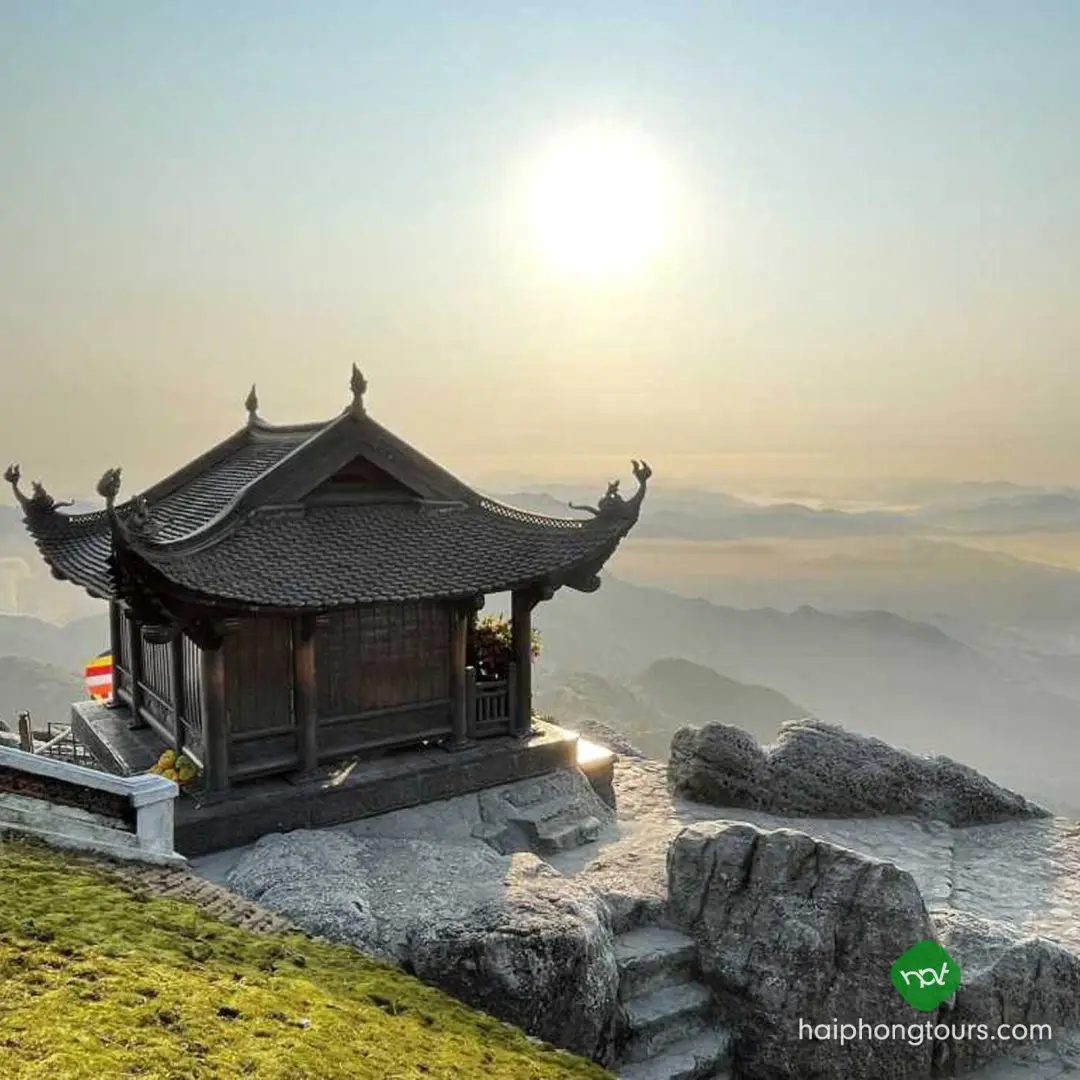
The most important booking detail is the entrance. Tay Yen Tu in Bac Ninh and the main Yen Tu reception in Quang Ninh are different road destinations. They share the mountain summit, not a car park, ticket system or convenient ground-level connection. Decide which side you want before arranging transport.
Choose the western side for the right reason
The western complex combines broad landscaped spaces with Chua Ha, the Hoa Nghiem bell tower, forest views from the cable car and Chua Thuong higher on the mountain. It suits visitors who want those particular places and a clearly defined western return route.
If your priorities are Hue Quang Stupa Garden, Hoa Yen, Mot Mai and the two eastern cable-car sections, use the Yen Tu Mountain guide for the Quang Ninh approach. Those are not all stops on the Tay Yen Tu cable-car journey. Likewise, a hotel reservation on the eastern side should not be treated as accommodation beside the western station.
Tay Yen Tu also names a much wider landscape of forest and Buddhist heritage. For this outing, specify Khu du lịch Tâm linh – Sinh thái Tây Yên Tử, the managed visitor complex, rather than asking a driver to take you to the general Tay Yen Tu region.
What to see before taking the cable car
The square, gardens and the story of Tran Nhan Tong
The central square provides an open introduction to the site. Its large architectural forms recall an imperial setting, while the nearby Duong doi Phat Hoang sculpture sequence follows stages in Tran Nhan Tong’s life. The shift from ruler to Buddhist practitioner explains the connection between the palace-like entrance and the pagodas above.
Behind the square, Vuon Tu Dai represents earth, water, fire and wind. These landscaped spaces are useful when part of a group wants a lower-level visit while others continue uphill. They are contemporary interpretations of Buddhist themes; do not expect every photogenic structure to be a medieval ruin.
Chua Ha and Hoa Nghiem bell tower
Chua Ha is also called Phat Quang Thien Tu. Its worship halls and the prominent Hoa Nghiem bell tower give this part of the complex more substance than an entrance photo stop. Look for the Three Patriarchs of Truc Lam: Tran Nhan Tong, Phap Loa and Huyen Quang.
The bell tower’s red columns and yellow roofs are particularly recognizable. Allow time to view the relationship between the temple buildings and the surrounding hills, and give worshippers room around the altars. Access to the grounds does not imply that every interior or upper level is open.
Follow the western mountain route
The cable-car approach passes the Van Du bridge area. The line makes one continuous journey to the upper station serving Chua Thuong, also called Linh Thong Thien Tu. This is different from buying tickets for the two separate eastern sections.
Chua Thuong provides a natural point to pause after the ride. Visit the pagoda, assess the weather and decide whether the summit is still sensible for everyone. A return from here can be a complete outing; Dong Pagoda need not become an obligation.
From the upper pagoda, continuing to Dong Pagoda means walking uphill. Reserve at least an hour for the additional ascent and descent, with more time for worship, rests, wet footing or crowds. Treat that as planning space rather than a promised completion time. Someone who finds stairs difficult should assess the actual path before committing to it.
Return toward the Tay Yen Tu station if your driver is waiting on the western side. Paths on the upper mountain connect with the eastern pilgrimage route, so following other visitors downhill can take you away from your booked pickup. A one-way traverse needs separate tickets, a suitable walking plan and a vehicle relocated to the other entrance; it is not an improvised shortcut after lunch.

Cable-car prices and the services to budget separately
Use these standard reference prices when planning a normal visit:
- Western cable car, return: approximately VND 290,000 per ticket.
- Western cable car, one way: approximately VND 200,000 per ticket.
- Electric shuttle: approximately VND 15,000 one way or VND 20,000 return.
Confirm the applicable price at the ticket counter, including any current promotion or separate charge on your chosen route. Do not add an old holiday offer to the standard fare. Children below 120 cm qualify for the cable-car concession; have staff check the child’s height and the services covered before paying. Other concessions require appropriate documents and should not be assumed to apply to every overseas visitor.
A return cable-car ticket is generally the useful choice for a visit that finishes at the same western car park. Keep it accessible for the descent. Meals, parking and the road journey are separate budgeting items unless your specific package explicitly includes them.
Arrive in the morning and settle the return time first
Plan a morning arrival and leave most of the sightseeing day for the complex, mountain route and lunch. A lower-complex visit can be shorter, but trying to add the summit late in the afternoon removes the margin for queues and changing weather.
At reception, establish the day’s final uphill boarding and final descent separately. The opening time of the wider grounds is not a guarantee that every cable-car journey is available until the same hour. Keep enough time to walk back from Dong Pagoda to the correct station.
The operator’s contact numbers are within Vietnam and, or from an overseas number. Use these to confirm operations before a long journey, especially near Tet or during unsettled weather.
Getting there and choosing a realistic day
The complex is in Tay Yen Tu commune, Bac Ninh. Older addresses say Tay Yen Tu town, Son Dong district, Bac Giang; these refer to the western destination, not the Quang Ninh reception. Save the full attraction name and entrance pin when booking a car.

The western road approach runs through the former Bac Giang area, with provincial road 293 forming the principal tourism corridor. Book the return journey and waiting arrangement along with the outward trip. A generic intercity ticket to Bac Giang or Son Dong leaves the final mountain connection unresolved.
For a first visit from Hanoi, make Tay Yen Tu the main destination rather than promising several major temples and the summit in one tightly timed day. Give the lower complex, cable car and possible Dong Pagoda walk enough space, then have lunch before the return drive.
If you have another day for Buddhist heritage, Vinh Nghiem Pagoda and its woodblocks provide a contrasting experience centered on teaching and printed texts. It is a separate lowland site, not a hall inside Tay Yen Tu. A short stop may fit some road itineraries, but a proper collection visit deserves its own arrangement.
Know when to keep the visit lower
Low cloud can remove the view, and wet mountain steps demand more care than the landscaped entrance suggests. Wear shoes with grip, keep a rain layer and drinking water with you, and use the marked visitor routes. Do not turn the cable-car outing into an unplanned forest trek or stream excursion.
For a separately arranged forest-and-stream day, see the Ba Tia Waterfall visitor guide. Its rocky approach and community tourism meeting point require their own plan; a cable-car ticket or a generic Yen Tu drop-off does not cover that outing.
For travelers with limited stair tolerance, discuss the route between parking, shuttles, pagodas and stations before buying the full mountain journey. A cable car does not make the final summit approach step-free. The lower pagoda, bell tower and gardens can be the better choice when the aim is a comfortable cultural visit.
Early lunar-year pilgrimage periods can be busy. Choose a quieter ordinary day when your priority is walking and architecture, or the specifically announced festival program when you want communal ceremonies. In either case, agree on the western pickup point before going uphill: it is the small decision that keeps the whole day coherent.
Would you like help fitting this experience into your trip? Contact us with your travel dates, starting point, available time and group size. Tell us about walking limits or special interests so we can suggest a practical itinerary.