
Thach Xa and Chang Son make a practical craft day west of Hanoi: watch a bamboo dragonfly balance on its nose, discover how chè lam gets its chewy texture, and see a folding fan take shape from bamboo ribs and paper or fabric. The villages are working production communities in the Tay Phuong area, so the rewarding part is time with a maker, not simply finding a village sign.
For an English-guided visit covering all three crafts, book a coordinated outing from Hanoi. If you mainly want one item or one demonstration, arrange a specific workshop appointment instead. A shop purchase, a production visit and a hands-on session are different experiences; decide which matters before organizing transport.
Thach Xa: look at the balance before the paint
Thach Xa’s small bamboo dragonflies, called chuồn chuồn tre, can balance on a narrow support such as a fingertip. That balance is the useful thing to watch. Shaping the body and positioning the wings accurately matter as much as the colorful surface.
The production process starts well before decoration: bamboo is dried, split and shaped, then the wings and body are assembled and adjusted. Ask the maker to show an undecorated piece beside a finished one. It makes the relationship between the material, weight and balance easier to understand.
A short visitor activity is more likely to involve decorating a prepared piece than carrying out every cutting and assembly stage. If you want to take something home, establish whether your finished piece is included, whether the paint needs drying time and how it will be packed. Keep children with the host when tools are being used.
For a direct product inquiry: Liên Xoan is the family production business associated with artisans Đỗ Văn Liên and Nguyễn Thị Xoan. Its contact is Mr. Kiên on. The workshop address is described as near Hoang Long ecological resort, Thon 8, in the former Thach Xa commune. Ask for the current entrance pin and agreement to visit; the sales contact is not a standing English-language class schedule.

Chè lam: a sweet with a process worth seeing
Chè lam is a chewy rice-based sweet, commonly made with glutinous rice flour, ginger, peanuts and a sweetener such as sugar, malt or cane syrup. Here, “chè” does not mean that you are being served a bowl of the liquid dessert often called chè elsewhere in Vietnam. It is usually cut into pieces and eaten with tea.
One distinctive Thach Xa technique starts with roasting whole glutinous-rice grains in their husks until they puff, then milling and sifting them into flour. The flour is combined with the cooked sweet mixture. Grinding or mixing equipment may be part of a working kitchen; the craft does not require every task to be done by hand.
The interesting comparison is between puffed rice, flour and the finished sweet. If seeing production is your priority, have the host arrange the visit around a working batch. Tasting a finished piece is a different activity from watching the mixture being cooked, and a tasting stop does not automatically include a cooking lesson.
Peanuts are a normal ingredient, so discuss the actual recipe before tasting if this affects your group. For a gift, choose a labeled package and ask the maker about storage and the use-by date. Avoid assuming a sweet bought loose will keep through the rest of a long, hot trip.
Chang Son: folding fans, practical objects and larger works
At Chang Son, the craft is easier to appreciate when you compare the frame with the finished fan. Watch the selection and smoothing of bamboo ribs, the pivot that lets them spread, and the application of paper or fabric across the frame. Hand finishing and modern tools can be used together in the same production process.
The result may be a small everyday fan, a fabric fan for performance or an oversized decorative piece. Choose the type before discussing a purchase. Open and close a handheld fan gently, look at the covering along the folds, and ask whether its image is printed or painted. An elaborate picture and a handmade frame do not necessarily mean the picture itself was painted by hand.
Simple fan painting or assembly can be arranged as part of a hosted visit. A custom design made to order is a separate purchase and may need production time. For a large wall fan, establish the packed dimensions before buying; a compact souvenir and a display object pose different luggage problems.
For a direct fan inquiry, Quạt Từ Tâm lists its production workshop at No. 102, Chang Son Market, Tay Phuong, Hanoi. Its office at No. 151 in the Chang Son industrial area is a different location. Specify whether you want to buy, observe production or request an activity, and confirm the meeting place before traveling.
A bookable route from Hanoi
Saigontourist Travel offers a Hanoi Craft Village Experience covering the three crafts, with a minimum of four guests. Inclusions are English/Vietnamese guiding, private air-conditioned transport, lunch, water and specified admission charges. Agree on the language and pickup when booking.
The sample itinerary leaves the Old Quarter at 8 a.m. and visits the dragonfly maker, sweet producer and Chang Son before lunch. The drive back starts at 1:45 p.m.; that is not the hotel arrival time. Leave the rest of the afternoon flexible.
Solo travelers and couples need a specific quotation or another confirmed arrangement. Do not assume a daily shared departure. Have the quotation identify the making activities, take-home items and children’s charges.
Fit the crafts around your interests
For a family: prioritize a short dragonfly decorating session and a fan activity. Tell the organizer the children’s ages and choose tasks that fit their attention span. Leave tool preparation and hot sugar cooking to the makers unless the host explicitly sets up a suitable supervised activity.
For a food-focused visit: put the chè lam producer first and arrange around the batch, rather than expecting production to begin when you arrive. Keep enough time for questions about ingredients and texture instead of making the food stop only a souvenir purchase.
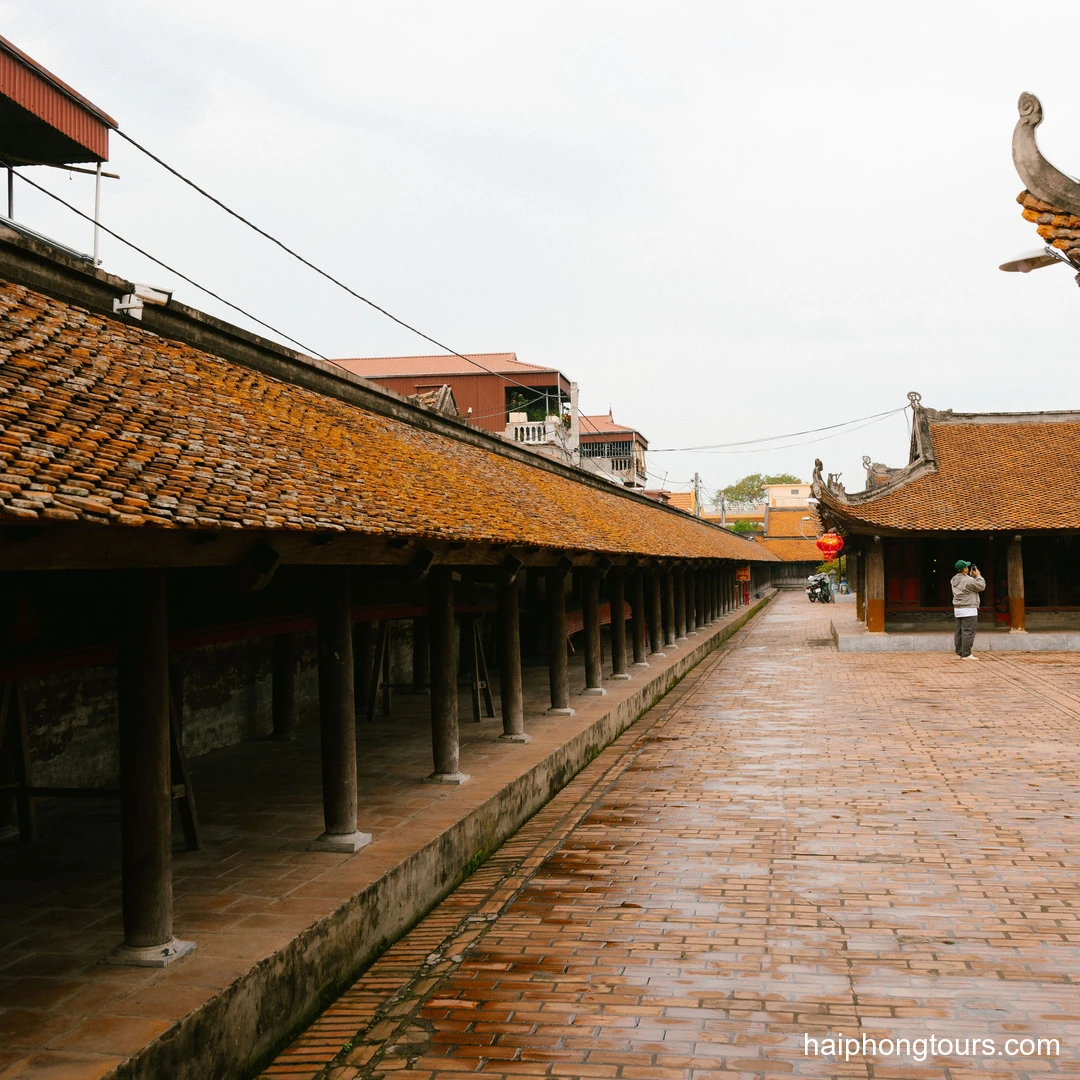
For sculpture and architecture: combine one prearranged craft stop with Tay Phuong Pagoda’s timber halls and Buddhist sculptures. The pagoda’s traditional approach has 239 laterite steps. Allow roughly 90 minutes to two hours there as a planning allowance, and add it explicitly to the itinerary; it is not one of the three craft stops in the program above.
For an independently arranged visit, obtain each workshop’s pin and agree on driver waiting time and the return ride. Older addresses may still say Thach Xa or Thach That, while current addresses use Tay Phuong. A village name alone is not enough to identify the family or entrance expecting you.

Choose fewer stops if you want to make something slowly. The most useful plan is the one that secures time with the right maker, explains what you will actually do and leaves enough room to carry your finished work home carefully.
Would you like help fitting this experience into your trip? Contact us with your travel dates, starting point, available time and group size. Tell us about walking limits or special interests so we can suggest a practical itinerary.