
Quang Ninh has very different kinds of temple visits. Choose Long Tien for a short cultural stop in central Halong, Yen Tu for a mountain pilgrimage, or Cai Bau for a monastery overlooking Bai Tu Long Bay. Ba Vang, Cua Ong and Loi Am offer further options, but the six places are spread across the province and do not make a sensible single-day sightseeing circuit.
Most are Buddhist pagodas, called chua in Vietnamese. Cua Ong is a den, a temple honoring historical figures and other deities. The distinction helps explain what you will see, while the amount of walking matters more when choosing where to spend your day.
Choose a visit that fits your time
Use these as planning allowances for an ordinary visit, then add transport from your hotel. Ceremonies, queues, weather and walking pace can extend the time considerably.
- Long Tien, Hon Gai: allow about 30–60 minutes for the pagoda. A practical choice when you are already exploring the old waterfront side of Halong.
- Ba Vang, Uong Bi: allow roughly 1–2 hours for the main visitor areas. Suitable if you want a substantial temple complex without a mountain-summit itinerary.
- Yen Tu, Uong Bi area: reserve the main part of a day for a mountain visit, including cable cars, walking and breaks.
- Cai Bau, Van Don: allow around 1–1.5 hours at the monastery, with additional time for the drive east from Halong.
- Cua Ong, Cam Pha area: allow around 1–1.5 hours to visit the temple levels at an unhurried pace.
- Loi Am, Yen Lap Lake: set aside a half-day for the boat crossing, uphill walk, pagoda and return. Add your road journey separately.
The six pagodas and temples
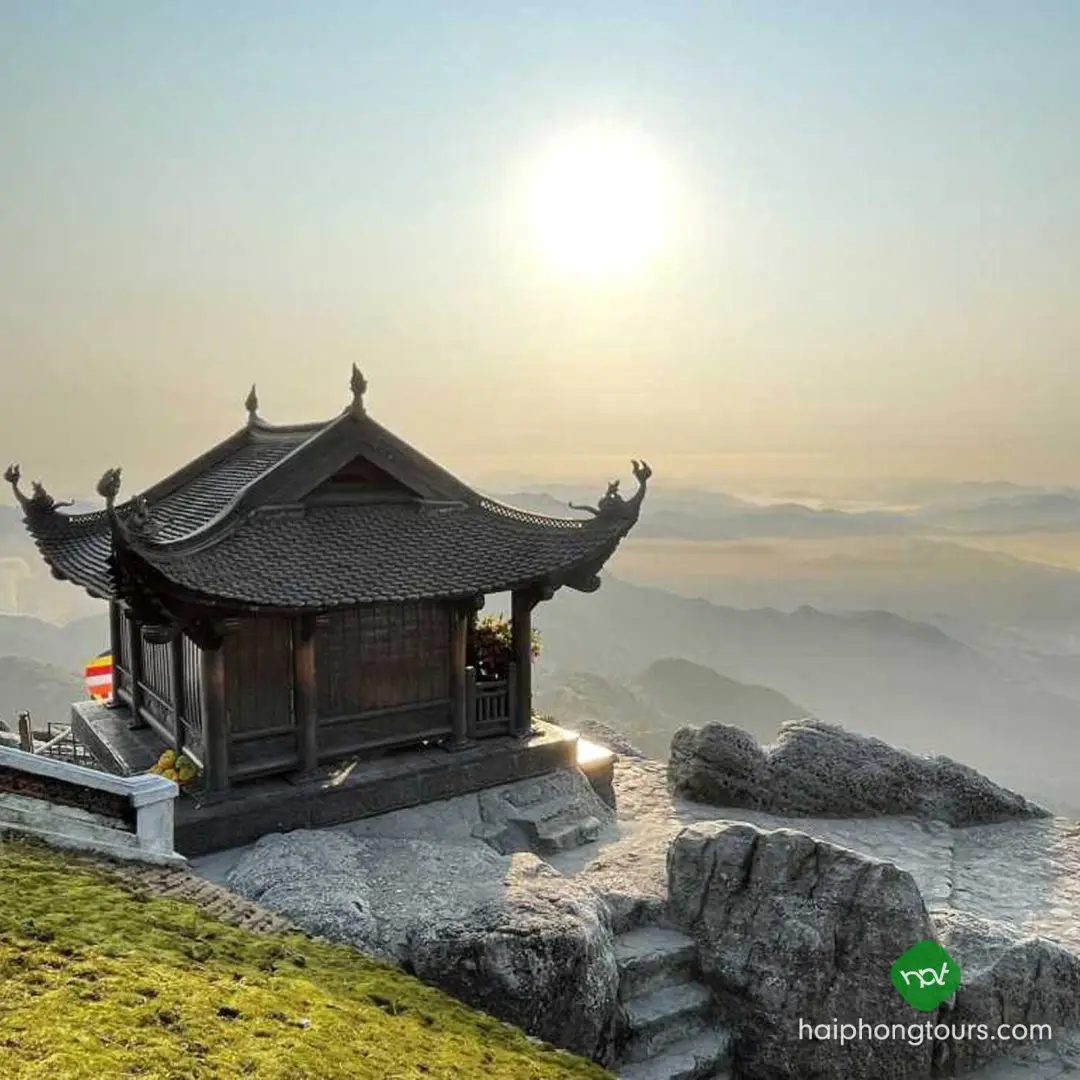
1. Yen Tu: a pilgrimage through mountain pagodas
Yen Tu is a landscape of pagodas, stupas and mountain paths associated with Emperor Tran Nhan Tong and Truc Lam Zen Buddhism. It forms part of the Yen Tu–Vinh Nghiem–Con Son, Kiep Bac heritage complex inscribed on the UNESCO World Heritage List in 2025.
On the Quang Ninh approach, the Hoang Long cable car brings you toward the Hue Quang stupa garden and Hoa Yen Pagoda. A second line, Bach Long, takes you farther up the mountain toward Dong Pagoda. There is still walking between sights and beyond the cable cars; the summit approach includes uneven rock and steps.
Choose your endpoint before buying tickets. Hoa Yen and the nearby heritage sites can be the focus of a shorter mountain visit. You do not have to reach Dong Pagoda to appreciate Yen Tu. Travelers with limited stamina should discuss the actual walking route and available assistance before committing, because cable-car access does not make the pilgrimage step-free.
Confirm the last return cable car and weather conditions on arrival. Start early, carry water and a light rain layer, and turn back with enough time for the descent. Give your driver the Quang Ninh entrance and meeting point; Tay Yen Tu is a different approach with its own access arrangements.
2. Ba Vang: a large temple complex above Uong Bi
Ba Vang stands on Thanh Dang Mountain above Uong Bi. Its broad main-hall area, decorated corridors and hillside setting make it suitable for visitors who want to spend time around a substantial Buddhist complex without planning a summit hike.
The Ba Vang visitor guide explains the main hall, sculpture corridor, pond and optional upper areas, with the correct drop-off and meal-registration arrangements for a focused visit.
The pagoda offers free admission. If you would like to join a vegetarian meal, ask the visitor reception, Ban Tri Khach, on the first floor of the main hall about registration and serving arrangements. Plan another lunch option if your arrival does not fit the meal service.
A road journey to Ba Vang can still end with walking and stairs. Confirm whether your car reaches the visitor parking area or drops you at a lower gate; a bus stop described as “Ba Vang” is not enough information. For an older relative, ask about the distance from the actual drop-off to the main hall before departure.
Best for: a focused temple visit while staying in or passing through Uong Bi. If you also want a full Yen Tu pilgrimage, give each visit enough time instead of making Ba Vang a compulsory late-afternoon stop.
3. Cai Bau: a monastery facing Bai Tu Long Bay
Cai Bau Pagoda is also called Truc Lam Giac Tam Zen Monastery. It is in Van Don, near the Bai Dai area, with hills behind it and views toward Bai Tu Long Bay. The main hall, bell and drum towers, and elevated courtyards give the visit its focus.
The present monastery occupies the site of an older pagoda, but the buildings you visit belong to a much more recent construction. Come for the setting and an active place of worship rather than expecting an intact medieval monument.
Allow time for the steps between levels and take breaks if the exposed courtyards are hot. Clear weather makes the bay view more rewarding; a hazy day may still suit a cultural visit. Tet and other religious occasions can bring substantial crowds, so a weekday alone does not guarantee a quiet experience.
Best for: travelers already going toward Van Don, or an eastern Quang Ninh day with Cua Ong Temple. Arrange the return car as part of the outing rather than assuming another vehicle will be waiting when you finish.
4. Cua Ong Temple: Tran Dynasty heritage in Cam Pha
Cua Ong Temple principally honors Tran Quoc Tang, also known as Hung Nhuong Dai Vuong, a son of Tran Quoc Tuan. The distinction matters: statues of several members of the Tran family and their generals are present, but Tran Quoc Tang is the temple’s principal figure.
The complex has Lower, Middle and Upper temple areas with different dedications. Tran Quoc Tang is the principal deity of the Upper Temple. The carved and painted statues reward a slower visit, especially if you have a guide who can explain the people represented.
Expect an uphill visit with steps between areas. Decide whether everyone in your group wants to reach the upper section, and agree on a meeting place before separating. Ask before taking photographs inside worship halls and leave space for people making offerings.
Best for: travelers interested in the Tran Dynasty or those combining Cam Pha and Van Don. Cua Ong is east of central Halong; it needs a separate road plan from the Yen Tu and Ba Vang area to the west.
5. Loi Am: a lake crossing followed by a hill walk
Loi Am Pagoda is reached by the visitor boat route across Yen Lap Lake, followed by an uphill walk through wooded hills and pineapple-growing areas. This approach is a major part of the experience. It also makes Loi Am a poor choice for a brief stop between tightly timed bookings.
At the boat landing, confirm the return arrangement before setting off: where to board, whether the fare covers both directions, and when the last boat leaves. Wear a life jacket throughout the crossing. Take water and shoes with a dependable grip for the uphill path and steeper final approach.
Walking time depends on fitness, heat and stops; do not build your plan around a guaranteed 30-minute ascent. In heavy rain, consider a temple reached directly by road instead. Arrange a driver pickup at the road-side meeting point and keep the full return journey within daylight.
Best for: visitors who actively want a walk as well as a pagoda visit. Long Tien or a limited visit to Ba Vang is a more practical starting point for a group that needs to minimize sustained climbing.
6. Long Tien: a short cultural stop in Hon Gai
Long Tien Pagoda stands at the foot of Bai Tho Mountain, around Le Quy Don and Long Tien streets on the Hon Gai side of Halong. Built in 1941, it has architecture and decorative work inspired by the Nguyen period, a courtyard and halls honoring Buddhist and other religious figures.
The Long Tien Pagoda visitor guide explains the nine-dragon Cuu Long carving, festival timing and the steps between worship areas.
Long Tien works well as a small part of a Hon Gai outing. You can spend time in the pagoda and continue toward the nearby market and waterfront without dedicating the day to a remote temple journey. If you are staying in Bai Chay, allow for the trip across town in both directions.
The pagoda visit and a climb up Bai Tho Mountain are separate activities. Do not treat the pagoda as an automatic mountain entrance or follow an unofficial route through neighboring properties. A driver should agree on a convenient drop-off and meeting point around the surrounding streets.
Build one realistic route
- A little free time in Halong: choose Long Tien and keep the rest of the outing nearby. If you have a cruise check-in, calculate the return to your actual port before leaving the hotel.
- A mountain and Buddhist heritage day: make Yen Tu the main destination. Add Ba Vang only if you deliberately choose a shorter Yen Tu route and have sufficient daylight and energy.
- An eastern Quang Ninh day: consider Cua Ong followed by Cai Bau, with lunch and both road journeys included in your driver’s plan.
- A nature-focused half-day: choose Loi Am in suitable weather and leave room for boat waits, walking breaks and the descent.
Starting in Hai Phong for a Yen Tu visit? The Hai Phong to Yen Tu private transfer covers that road journey. Specify the mountain visitor entrance or your Yen Tu accommodation when booking. Arrange the return separately or book both ways, and agree on any waiting time; temple visits, cable-car tickets and a guide are separate from the transfer.
For the eastern route, the Cai Bau and Cua Ong day-trip guide explains the temple halls, monastery viewpoints, road connections and walking involved at both sites.
Prepare for worship spaces and outdoor paths
Wear clothing that covers your shoulders and knees, and choose footwear suitable for steps. Follow signs and attendants’ directions about shoes, photography and access to halls. Keep conversations quiet during prayers, ask before photographing worshippers, and leave ritual objects where they are.
For cultural sightseeing, visiting in daylight makes the route easier to manage. Lunar New Year and major ceremonies can change traffic, parking and access even when a temple remains open. Confirm the day’s arrangements for your chosen site, carry some cash for transport or incidental purchases, and keep your next fixed booking comfortably outside the temple visit.
Before entering an active worship space, use the North Vietnam religious-site etiquette guide for dress, altars, incense, photography and festival behavior.