
To book a private transfer in Vietnam, agree on the exact journey, vehicle space and total price before paying. Send the pickup and drop-off locations, travel date, passenger count and luggage details together so the operator can quote for the trip you actually need.
A private transfer can be useful for a group, a door-to-door journey or a connection with a fixed deadline. It does not automatically include sightseeing, unlimited waiting or the same vehicle for every leg. These seven checks help make the booking clear.
1. Define the journey and deadline
Specify whether you need a one-way ride, a return transfer or a vehicle waiting during a visit. A return booking can consist of two separate journeys; it does not necessarily include a car and driver staying with you all day.
For a flight or cruise connection, give the time you must be at the terminal or waiting lounge, then agree a pickup time that allows for the road journey and delays. Use the airline’s or cruise operator’s check-in deadline, not just the advertised departure time.
If you are comparing several northern Vietnam routes, the HPT transfer directory lets you check directions, private and shared options, and pickup coverage. Select the direction you actually need.
2. Match the vehicle to people and luggage
Give the total number of adults and children, plus the number and approximate size of suitcases. Mention a stroller, wheelchair, walking aid, bicycle or other bulky item before accepting the quote.
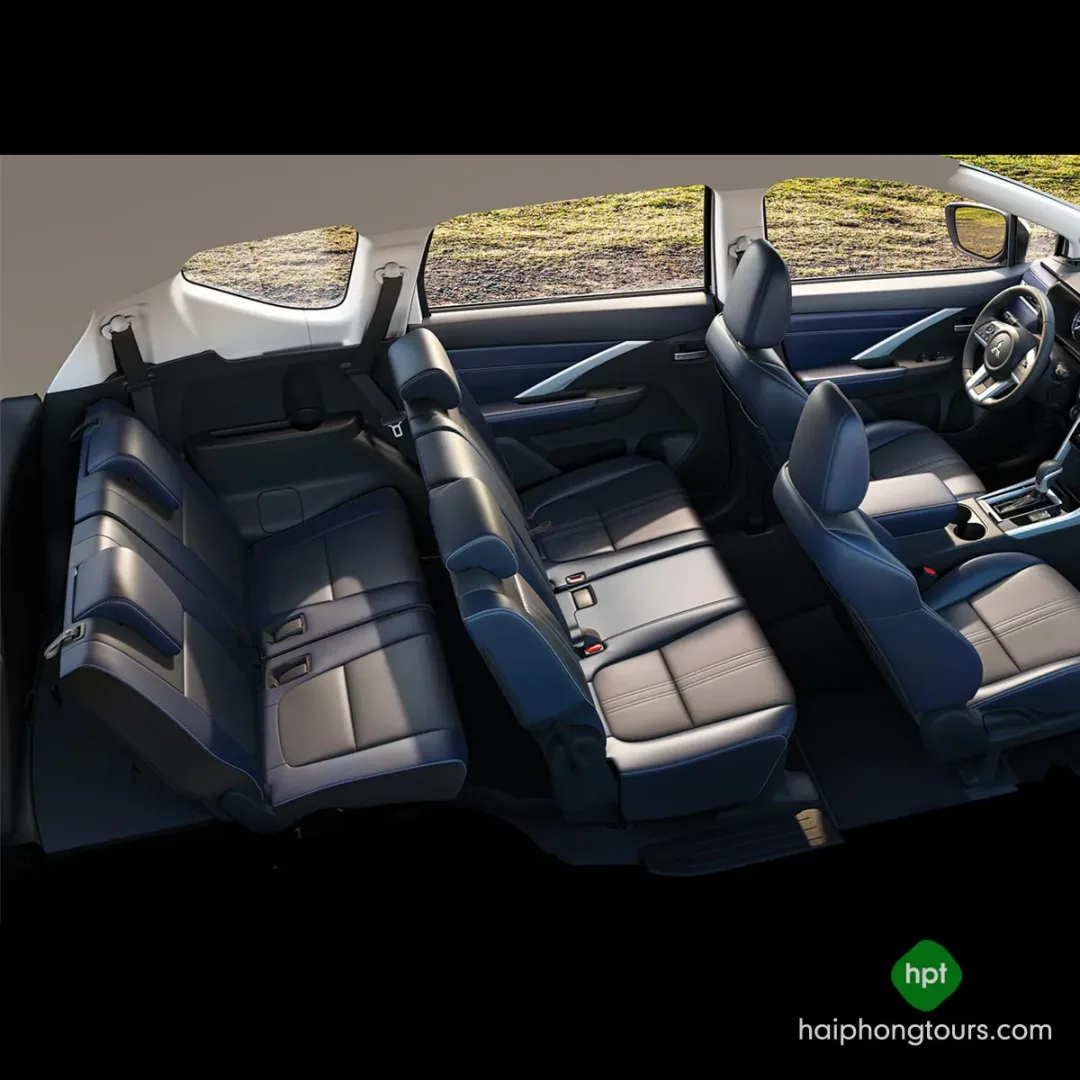
A label such as “7-seater” does not establish that seven travelers and their luggage will fit. Seats used for passengers may leave less space for bags. Ask the operator to confirm a suitable arrangement for your group and belongings, rather than relying on a vehicle category alone.
Request any child seat or boarding assistance in advance and confirm availability. If you require a particular vehicle model or an English-speaking driver, make that an explicit booking request; neither is guaranteed by the word “private.”
3. Give an exact pickup point
- Hotel: full property name, address and map location, including the branch if names are similar.
- Airport: airport code, flight number, arrival date and terminal, with an agreed meeting point after arrival procedures.
- Cruise: ship or operator name, exact port, waiting lounge and check-in or disembarkation details.
Use local Vietnam time for the booking. An international flight’s landing time is not the time you will be ready at the curb: immigration, baggage collection and customs come first. Agree how the driver will be informed of a delay.
In the Ha Long area, Tuan Chau and Ha Long International Cruise Port are separate places. A city name or the phrase “cruise port” is not enough to arrange the right drop-off.
4. Confirm the complete price and payment arrangement
Check whether the quote is per vehicle or per person, one way or return, and which currency applies. Have the exact pickup and drop-off accepted, including any supplement for an address outside the stated service area.
Ask whether the total includes fuel, road tolls, parking, driver costs and any ferry tickets your route requires. A car transfer does not automatically include attraction admission, a sightseeing guide, cruise tickets, meals or extra stops.
Confirm the deposit, remaining balance, payment deadline and authorized recipient. Do not assume the driver collects every outstanding payment or carries a card terminal. If you want to add a stop later, agree the extra time and charge before changing the journey.
5. Understand waiting, changes and no-show terms
Ask when waiting time begins, what waiting is included, when charges start and how additional time is calculated. An airport collection may have different conditions from a hotel or port pickup.
For an HPT booking, read the transfer-specific provisions in the current Terms and Conditions, including delay notification and changes or cancellations. Do not assume that a tour’s waiting rule applies to a separately booked transfer.
Keep the booking contact available and report delays as soon as you know about them. Confirm whether the operator can hold the driver, change the pickup time or assign another car, and what that means for the price.
6. Check every leg of an island transfer
A private island transfer can still involve a public ferry and a change of car. For example, the private option on the Cat Ba to Hanoi transfer uses one vehicle to Cai Vieng, a foot-passenger ferry crossing to Dong Bai and a second vehicle for the mainland journey.
Confirm who handles luggage, how far you need to walk and how to identify the driver on the other side. Tell the operator if stairs, ramps or carrying bags could be difficult.
Shared and private packages may handle the crossing differently, and arrangements can change during congestion or operating restrictions. Booking privately does not make the ferry private or remove every queue.
7. Keep a usable confirmation and contact plan
Before travel, save the agreed route, date, pickup time, passenger and luggage details, vehicle category, total price and booking contact where you can access them offline.
Ask when driver or vehicle details will be sent and follow the operator’s identification instructions at pickup. If the meeting point changes, have the booking contact confirm it rather than assuming an unfamiliar driver is part of your arrangement.
A useful confirmation leaves little room for different expectations: everyone knows where the journey starts and ends, what is included, how delays are handled and whom to contact when plans change.