
Tram Gian Pagoda in An Ninh is a Buddhist heritage stop in inland Hai Phong, known for its historic printing blocks. Arrange woodblock viewing before making a special journey; visiting the worship halls does not automatically include access to the collection.
The destination is Chùa Trăm Gian, also called Vĩnh Khánh Tự or chùa Yên Ninh, in An Đông village, An Phú commune. Older addresses use An Bình, Nam Sách, Hải Dương. This is separate from the Trăm Gian pagoda near Hanoi.
Give the driver the complete destination
Send the Vietnamese name and a confirmed map pin, rather than searching for “Tram Gian” or “An Phu” alone. Đền Cao An Phụ in the Kinh Mon heritage complex is another destination. The modern Hai Phong address also does not place this pagoda beside the coastal city’s central attractions.

Agree on the return journey and waiting time when arranging a car. For a focused visit, allow around an hour at the pagoda as a planning estimate, with extra time for an explanation you have arranged. Add the road journey separately; a transfer quoted simply to Hai Phong may have a different drop-off.

Understand the woodblocks before trying to see them
The national-treasure collection preserves Buddhist texts carved in Chinese and Nôm characters, with illustrations on some blocks. Many are carved on both sides. They connect the pagoda’s role in monastic teaching with the production of religious books.
If viewing is possible, ask the host to explain one selected block: the text’s purpose, the arrangement of a page and how an image relates to the writing. A photograph alone may reveal the carving without explaining what was printed. Agree on English interpretation in advance if you need it.
Keep your expectations to the access actually agreed. A collection visit is not permission to remove a block from storage, touch its carved surface or make a print. Ask which photographs are permitted and whether any explanation uses an original, a reproduction or a printed sheet.
Leave time for the pagoda itself
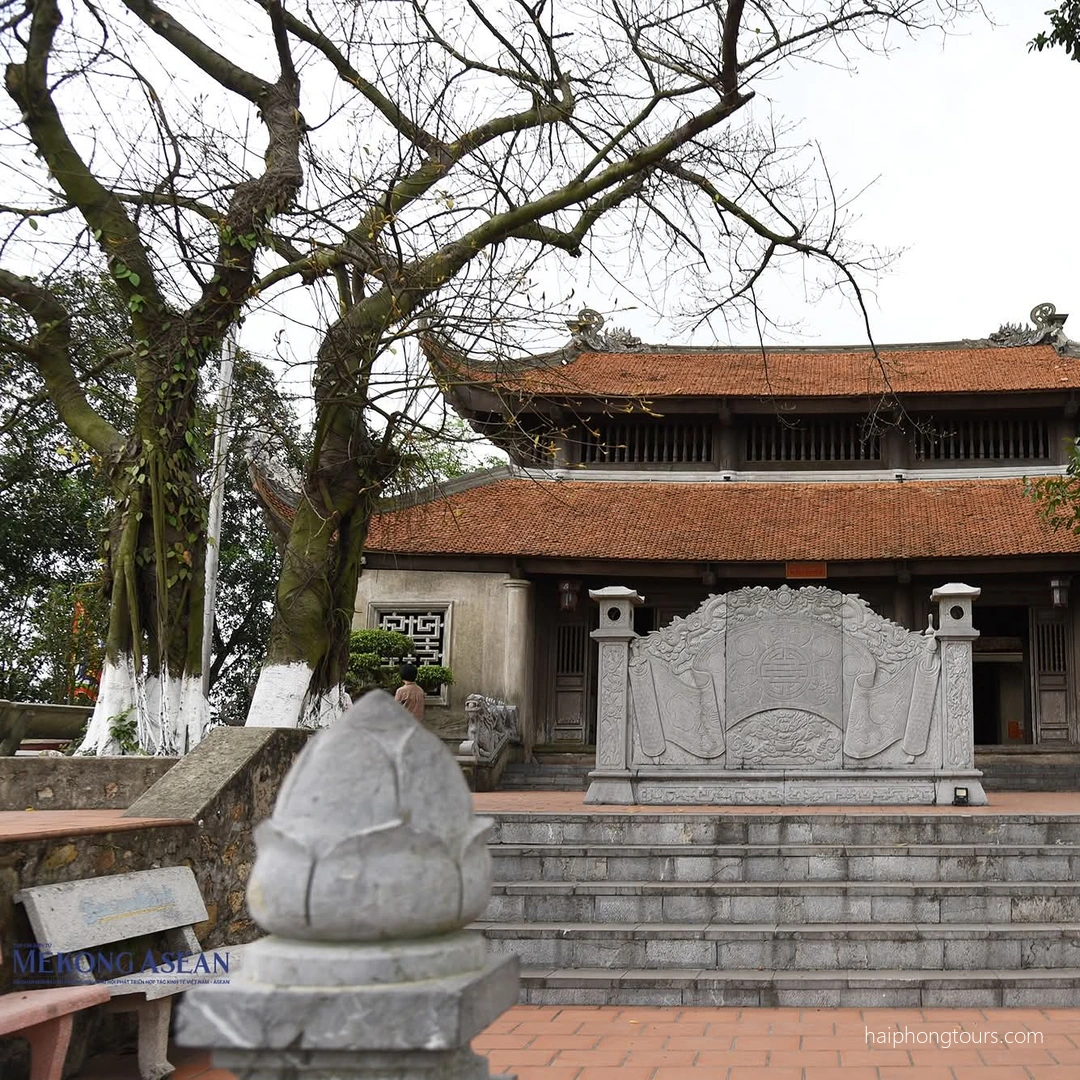
The buildings include a bell tower, a timber-framed front hall, an inner sanctuary, an ancestral hall and a garden of stupas. Much of the present architecture reflects rebuilding in the nineteenth and early twentieth centuries.
Follow the open route and compare the timber joints and carved details before moving between halls. Ask which areas you may enter, especially during worship or teaching. Cover shoulders and knees, follow footwear instructions, and give people praying space. If thresholds or steps are difficult, request details of the actual visitor route before traveling.
Arrange access and one additional stop
For an advance inquiry, use the listed heritage management number within Vietnam, or from abroad. Specify the An Phú pagoda and ask for the person responsible for receiving visitors. Treat this as a management contact, rather than an English-speaking ticket desk.
Give your date, party size and interest in the woodblocks. Confirm the arrival time, which interiors or objects can be viewed, any charge and whether someone can explain them. If collection access cannot be arranged, decide whether the architecture alone justifies your journey before booking transport.
For a craft-focused day in the former Nam Sach area, compare a separately arranged stop at Chu Dau Pottery Village. Its factory and showroom involve different arrangements from a religious site. If wooden Buddhist sculpture is your main interest, Giám Pagoda’s lotus tower offers another focused visit elsewhere in western Hai Phong; choose it as an alternative or allow a separate road leg.
Would you like help fitting this experience into your trip? Contact us with your travel dates, starting point, available time and group size. Tell us about walking limits or special interests so we can suggest a practical itinerary.