
Tram Tau is a mountain destination in northern Vietnam for hot-spring stays, rice-terrace scenery, and access to demanding trekking routes. Two days and one night can work for a relaxed trip from Hanoi; a summit trek needs its own itinerary, with time for the journey, mountain accommodation, and recovery.
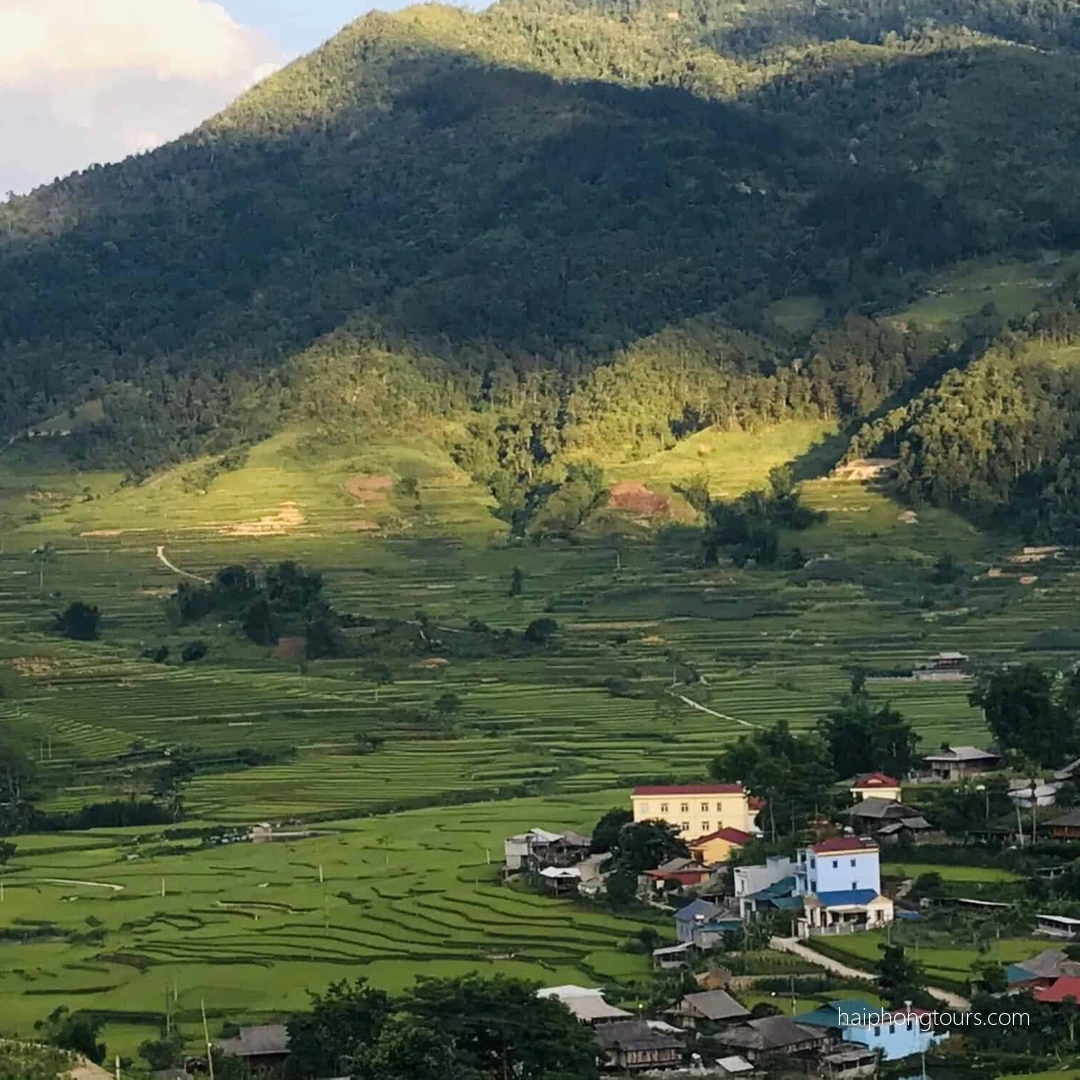 Village roads and terraced fields in the Tram Tau valley.
The main decision is whether you want a countryside break or a hiking trip. Staying beside the mineral pools does not require climbing a mountain, and the Ta Xua summit trek is a different outing from visiting the roadside cloud viewpoints around Bac Yen in Son La.
Where Tram Tau is and which name to use
Tram Tau lies beyond Nghia Lo in the western part of the former Yen Bai province, now within the expanded Lao Cai province. The former town center and hot-spring area are now associated with Hanh Phuc commune. Older accommodation listings and trekking programs often still use Tram Tau, Yen Bai.
Use your accommodation’s exact map location when arranging a driver or bus pickup. A province name alone can send your trip planning toward Lao Cai city or Sapa, which are different destinations.
Choose the trip that fits your group
- Hot springs and a slower weekend: stay near the central valley, enjoy the pools, and arrange a short village or rice-field outing.
- Photography and local life: allow flexibility for terrace conditions, visibility, and a locally arranged visit to Cu Vai. Cloud cover is never guaranteed.
- Ta Chi Nhu trekking: book a guided mountain itinerary with an overnight stop and confirm the approach route.
- Ta Xua summit trekking, also called Phu Sa Phin: choose the route and difficulty carefully. The Tram Tau approach includes exposed terrain and is unsuitable as an impromptu stroll from a homestay.
Getting from Hanoi to Tram Tau
A common approach passes through Nghia Lo, with approximately another 30 km to Tram Tau. Allow much of a day for the journey from Hanoi; around six hours is a useful starting estimate for a car trip, with additional time for traffic, stops, and mountain-road conditions.
A private car and driver simplifies the final leg, especially with luggage or a family group. If traveling by bus, check whether the service reaches Tram Tau or ends in Nghia Lo, then arrange the remaining transfer in advance. Confirm the actual boarding address, arrival point, and luggage allowance with the operator.

A motorbike gives flexibility but adds steep bends, unfamiliar surfaces, and weather exposure. If you are not comfortable riding mountain roads, use a driver. Aim to arrive in daylight, and ask your host about access after prolonged rain rather than relying only on a navigation app.
For a complete road booking, use the Hanoi to Tram Tau transport guide. Hai Phong Tours recommends confirming the final homestay entrance and the separate trekking pickup before comparing a Nghia Lo bus ticket with a private-car quote.
When to go
September and October are useful months to consider for ripening rice terraces. The timing differs between fields and harvests, so ask your host about the particular valley or village you want to photograph before fixing a trip around golden rice.
Cooler months are often chosen for hot-spring stays and mountain walks. High ridges can still be cold, windy, wet, or completely enclosed in cloud. A forecast for the town does not describe conditions near a summit.
For trekking, let the guide’s assessment of rain, wind, visibility, and trail conditions decide whether to proceed. Keep a lower-level alternative if conditions are poor. A photograph of a cloud sea from a previous season is not a promise of what you will see.
Hot springs: choose the facilities you need
The Suoi Khoang Nong Tram Tau area combines outdoor mineral pools with views toward fields and surrounding hills. It can be the main reason for a short break, rather than merely a stop after trekking.
Before booking, distinguish a room at the hot-spring property from a nearby homestay that requires a separate pool visit. Ask which pools your booking includes, whether entry permits more than one session, and whether towels, changing facilities, and meals cost extra.
Room types can range from private bungalows to communal sleeping arrangements. Check the bathroom, stairs, bed configuration, and distance to the pools if traveling with children or anyone who has difficulty walking. Follow the posted bathing rules and staff guidance about the different pools.
Cu Vai village and shorter outings
Cu Vai is a Hmong village in the high country above the Tram Tau valley. Its attraction is the mountain setting and the chance to see a lived-in community, rather than a guaranteed viewpoint floating above clouds.
Arrange the visit with your accommodation or a local host, and confirm the final approach road shortly before departure. Establish whether your vehicle can reach the village and how much walking is involved. If staying overnight, book a specific host and room rather than assuming a bed will be available on arrival.
Ask permission before photographing people or entering a home. Keep clear of planted fields, avoid handing out sweets or money to children, and agree on any meal or guiding charge beforehand.
For an easier outing, ask your host for a short walk near the valley fields or the Eo Gio pine-hill area. Specify the walking time and terrain you can manage; a “nearby” location on a mountain road may still need transport.
For a more active full-day outing, the Hang De Cho waterfall guide explains the motorbike approach, a current tour inquiry route and the conditions that can change the plan. Arrange it separately from a short valley walk.
Ta Chi Nhu: a separate overnight trek
Ta Chi Nhu reaches approximately 2,979 meters. The established approach from the Xa Ho side involves substantial climbing and exposed upper slopes. Guided programs commonly use two trekking days with a night in a mountain shelter, plus the journey to and from Tram Tau.
Some tours approach from Nam Nghiep on the Son La side instead. Confirm your trailhead, total walking distance, overnight location, and return transfer before booking accommodation in Tram Tau. Different approaches should not be treated as interchangeable.
The seasonal purple flowers associated with Ta Chi Nhu are commonly called chi pau, not azaleas. September and October are often targeted for flowering, but the display depends on the season and conditions. Ask the guide what is currently visible and choose the trek for the mountain itself as well.
Check whether the package provides an English-speaking guide, meals, drinking water, sleeping equipment, porters, and mountain transfers. Confirm the plan if the group needs to turn around early. Do not arrange an independent summit camp without checking the permitted overnight arrangements.
The Ta Chi Nhu trekking guide compares the Mo Chi approach with the Nam Nghiep side, including routes that finish on the opposite side of the mountain. Confirm the shelter, guide language, luggage and final pickup before fitting the climb into your Tram Tau stay.
Ta Xua summit, or Phu Sa Phin: avoid booking the wrong trip
The high mountain often advertised as the Ta Xua trek is also marketed under the name Phu Sa Phin. The Tram Tau approach starts around Ban Cong and is known for its narrow ridges, mossy forest, and Turtle Head rock formation.
This is separate from a sightseeing stay around Ta Xua and Bac Yen in Son La. Both areas appear in searches for clouds and “dinosaur backbone” viewpoints. Tell your operator whether you want the summit trek or a road-based sightseeing trip, and ask for the actual route.
Allow a guided itinerary of roughly two or three trekking days, depending on the approach and your ability, with travel time accounted for separately. The Ban Cong route has exposed sections that need steady footing and a willingness to turn back if conditions deteriorate. A shorter approach from Hang Chu is another option offered by trekking operators, but it still needs a proper assessment of your fitness and the weather.
Do not combine Ta Chi Nhu and Phu Sa Phin into a casual two-day weekend. Choose one mountain and keep enough time for the descent and onward journey.
Where to stay
For a leisure visit, start with the hot-spring area or accommodation around the central valley. A room with convenient pool access suits a relaxed break; a village homestay may better suit travelers who want meals with their host and help arranging local walks.
Zoni Home is one option with private rooms and communal-style accommodation overlooking the mountain and rice-field setting. Some room categories have shared bathrooms. Confirm the exact room and location, because the distance to the hot springs varies between its accommodation areas.
For a trek, book the mountain program first. Your operator may include a pre-trek room and an overnight shelter, so a separate resort reservation could overlap with accommodation you have already paid for. Consider an extra valley night after the descent if you prefer to avoid a long drive while tired.
Food and local purchases
Ask your host about dishes available that day, such as upland sticky rice, bamboo shoots, vegetables, and smoked meat. In Hmong communities, men men, a steamed corn dish, may also be available. Tell the host about vegetarian needs or allergies before arrival, particularly at smaller homestays.
Shan tuyet tea and packaged local rice can make useful purchases if you want something to take home. Confirm the producer, packaging, and price. Tea is a drink and agricultural product here; it should not be confused with a sweet dessert.
A relaxed two-day outline
- Day one: travel from Hanoi via Nghia Lo, have lunch, check in, and spend the afternoon at the hot springs. Keep the evening for a prearranged meal and rest.
- Day two: take a short local walk or a confirmed Cu Vai visit if road and weather conditions suit your group. Leave time for lunch and the return journey to Hanoi.
Keep mountain summits out of this leisure itinerary. If hiking is your priority, build the trip around one guided route and add hot springs only when the schedule leaves enough time.
What to confirm before paying
- The exact accommodation location, room type, bathroom, meal arrangements, and pool access.
- The complete transport route, including the final leg from Nghia Lo and any trailhead transfers.
- For a trek: guide language, difficulty, daily walking time, shelter facilities, equipment, and weather-related changes.
- The host’s or guide’s latest assessment of roads and trails after heavy rain.
- The return schedule, with flexibility for a slower descent or road delays.
Tram Tau works well when the trip has one clear focus. Choose a comfortable valley base for hot springs and village scenery, or reserve the time and support needed for a mountain trek.
Would you like help fitting this experience into your trip? Contact us with your travel dates, starting point, available time and group size. Tell us about walking limits or special interests so we can suggest a practical itinerary.