
Trang An is a small-boat journey through limestone mountains, water-filled valleys and caves, with stops at temples along the way. For a first visit, choose Route 2 for a mix of caves and cultural stops, Route 1 if repeated cave passages and Tran Temple are your priorities, or Route 3 for the long passage through Dot Cave.

Allow about three hours for a main boat route, plus time for tickets, boarding and getting back to your driver. The boat excursion is only one part of the Trang An Landscape Complex, a UNESCO World Heritage property recognized for both cultural and natural values. Its ticket does not cover every attraction in the surrounding Ninh Binh countryside.
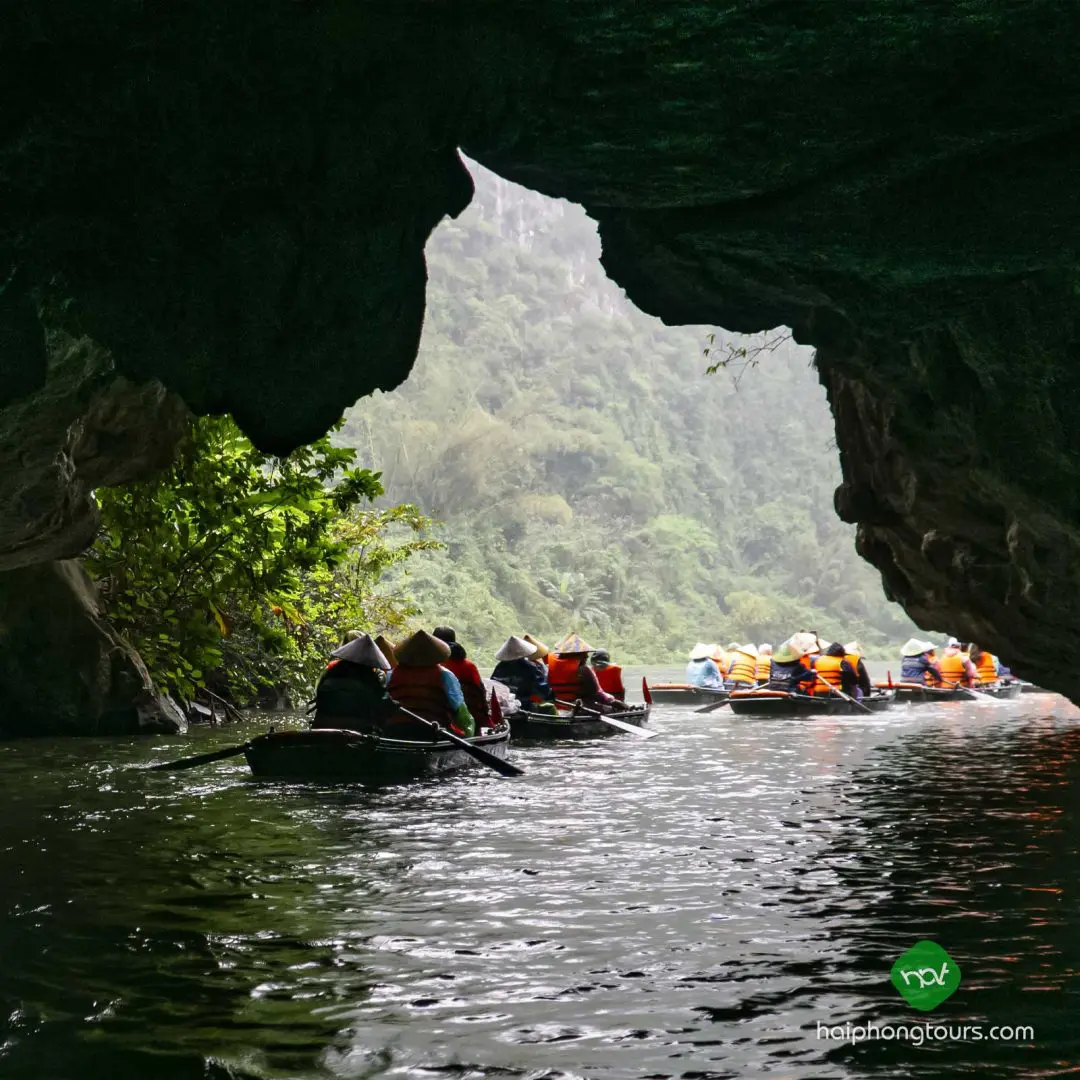
Operating update reviewed on 10 November 2026: Trang An announced a weather-related suspension for 9 November. Reopening had not been verified at this review. Contact the attraction on 1900 9251 before traveling; the route information below describes the normal sightseeing choices.
Compare the four route choices
| Route | Main distinguishing stops | Published duration | Best reason to choose it |
|---|---|---|---|
| Route 1 | Trinh Temple, Tran Temple, Phu Khong and a sequence of nine caves | About 3 hours | The cave sequence and Tran Temple |
| Route 2 | Lam, Vang, Thanh Truot and Dai caves; Thanh Cao Son, Suoi Tien and Vu Lam | About 3 hours | A varied first visit with caves and cultural stops |
| Route 3 | Trinh Temple, Dot, Van and Dai caves; Suoi Tien and Vu Lam | About 3 hours | The long passage through Dot Cave |
| Route 4 / Phuong Hoang | Lam, Vang, Thanh Truot and Dai caves; Thanh Cao Son and Vu Lam | About 1.5 to 2 hours | A shorter circuit when it is operating |
This is a route comparison, not a scale map. All begin from the Trang An tourism boat terminal, then follow different cave-and-valley circuits. The attraction’s boarding board determines the route available that day. Ask for the route number and the feature you want, particularly Dot Cave or Tran Temple, before joining a boat.
Choose your Trang An boat route
The main routes start from the Trang An tourism boat terminal. Choose with everyone in your party before joining a boat, and check the day’s route board: water levels, weather and operating arrangements can affect which passages are available. Fewer caves do not automatically mean a much shorter trip.
Route 1: More caves and Tran Temple
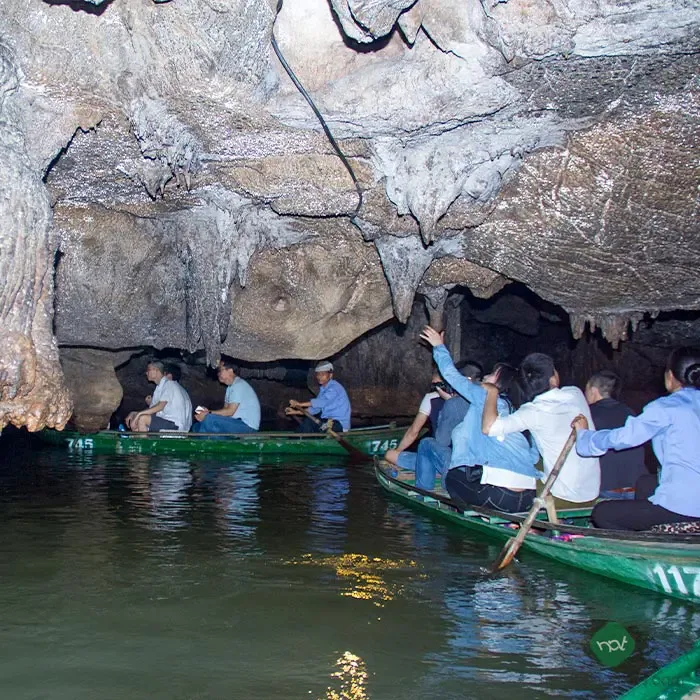
Route 1 combines nine caves with Trinh Temple, Tran Temple and Phu Khong. Cave passages include Toi, Sang and Nau Ruou; the route also passes through stretches of open valley between the limestone walls. Allow approximately three hours, with walking and steps at the temple stops.
Choose this route if exploring successive cave passages interests you more than reaching the Vu Lam photo spots. It is the main route to Tran Temple, also called Noi Lam Temple, which honors Quy Minh Dai Vuong and his consort. Look at the carved stone columns, including dragon and water motifs, rather than expecting a large palace complex.
Trinh Temple and Phu Khong connect the journey with figures and traditions of the Dinh dynasty. Phu Khong sits against the rock with water in front, making the setting as much a part of the stop as the shrine itself. Treat stories about royal burials and miraculous events as local traditions, rather than a literal account of archaeological discoveries.
Route 2: Caves, Suoi Tien Temple and Vu Lam
Route 2 passes through Lam, Vang, Thanh Truot and Dai caves, with stops at Thanh Cao Son Temple, Suoi Tien Temple and Hanh Cung Vu Lam. It offers a varied first visit without concentrating on the long enclosed passage that defines Route 3. Plan around three hours.
The cultural stops include shrines to protective deities, while Hanh Cung Vu Lam connects the landscape with the Tran dynasty’s history in the region. Its waterside pavilion, Thuy Dinh, is a recognizable photo subject. Keep to the landing and meeting arrangements given by your rower so photography does not separate you from your boat.
Route 3: Dot Cave and the Vu Lam landscape
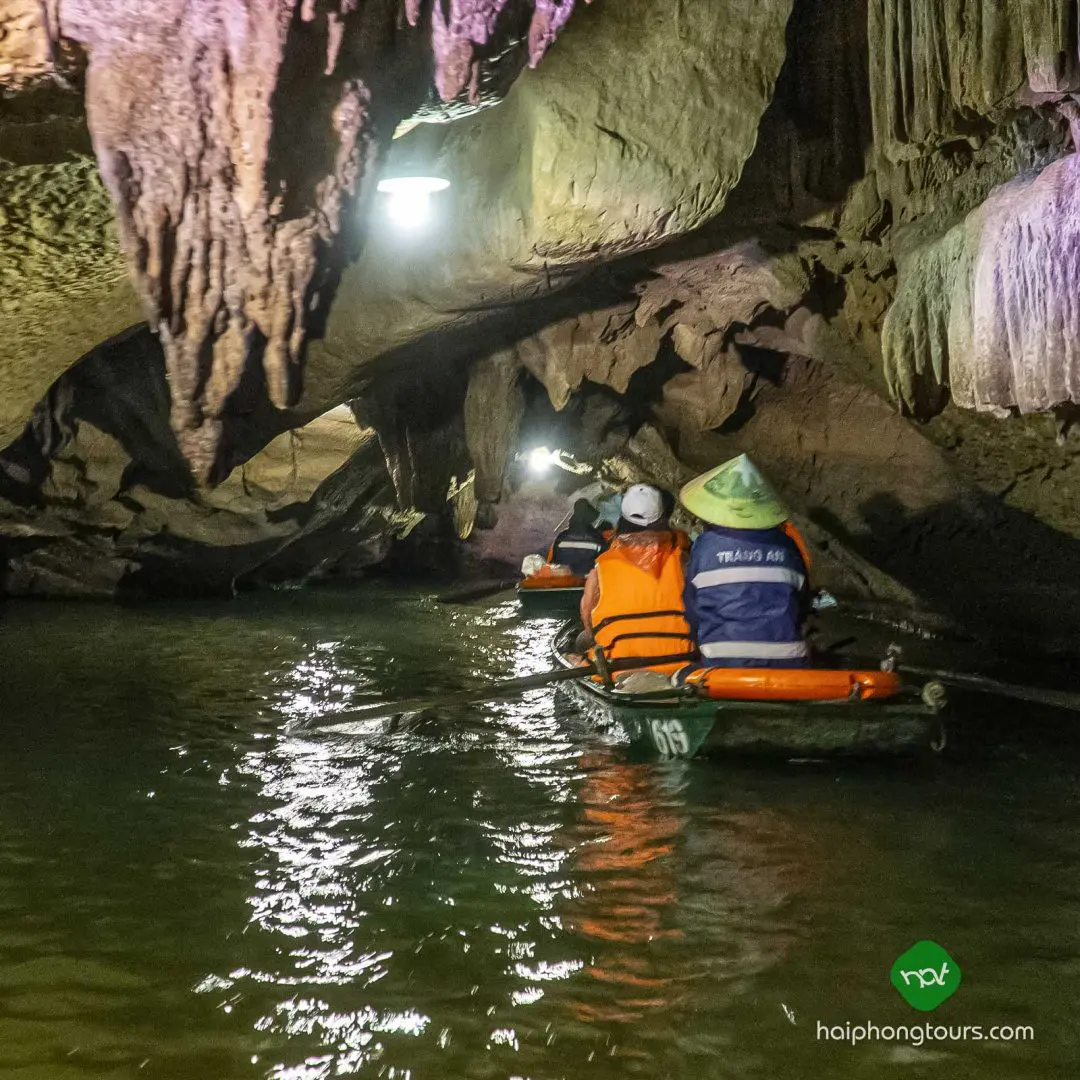
Route 3 includes Trinh Temple, Suoi Tien Temple and Hanh Cung Vu Lam, with three caves. Its distinctive feature is Dot Cave, a water cave more than a kilometer long. This is the route to consider when an extended cave passage is the experience you most want.
Allow approximately three hours here too. If anyone in your group is uncomfortable in enclosed spaces, discuss the cave section before choosing; Route 3 is not simply the easiest option because it has fewer caves. Stay seated and follow the rower’s instructions where the ceiling narrows.
Route 4 / Phuong Hoang: a shorter circuit
The shorter Route 4, also described as the Phuong Hoang circuit, takes about one and a half to two hours. It combines four caves with Thanh Cao Son Temple and Vu Lam, passing the Goc Gao area. Choose it when you want the boat landscape with less time committed to the circuit, then confirm its departure and return estimate before relying on it for an onward connection.
Tickets, opening hours and boarding
The standard ticket includes the boat ride and sightseeing fee. The current listed categories are:
- Visitors taller than 1.3 meters: VND 300,000 per person;
- Children from 1 to 1.3 meters: VND 150,000 per child;
- Children under 1 meter: free.
Reconfirm the displayed tariff when buying. These are visitor tickets, not a private-boat price. If you want a boat only for your party, ask the terminal how it is arranged and what it costs; buying two individual tickets does not by itself reserve an entire boat. For a child close to a height boundary, let ticket staff confirm the category.
Start early enough to complete your chosen route before the day’s last return. General gate hours and the last departure are different: a three-hour circuit needs a much earlier boarding time than closing time suggests. Ask the terminal for that day’s operating window, especially after heavy rain or a suspension.
Use the official ticket counter or the operator’s currently available booking channel. Keep your ticket and confirm the boarding lane, route and return point with staff. For ticket and operating questions, ask the Trang An operator; the tourism visitor-support desk at the boat terminal can also help with directions or a problem on arrival.
What the landscape and temples mean
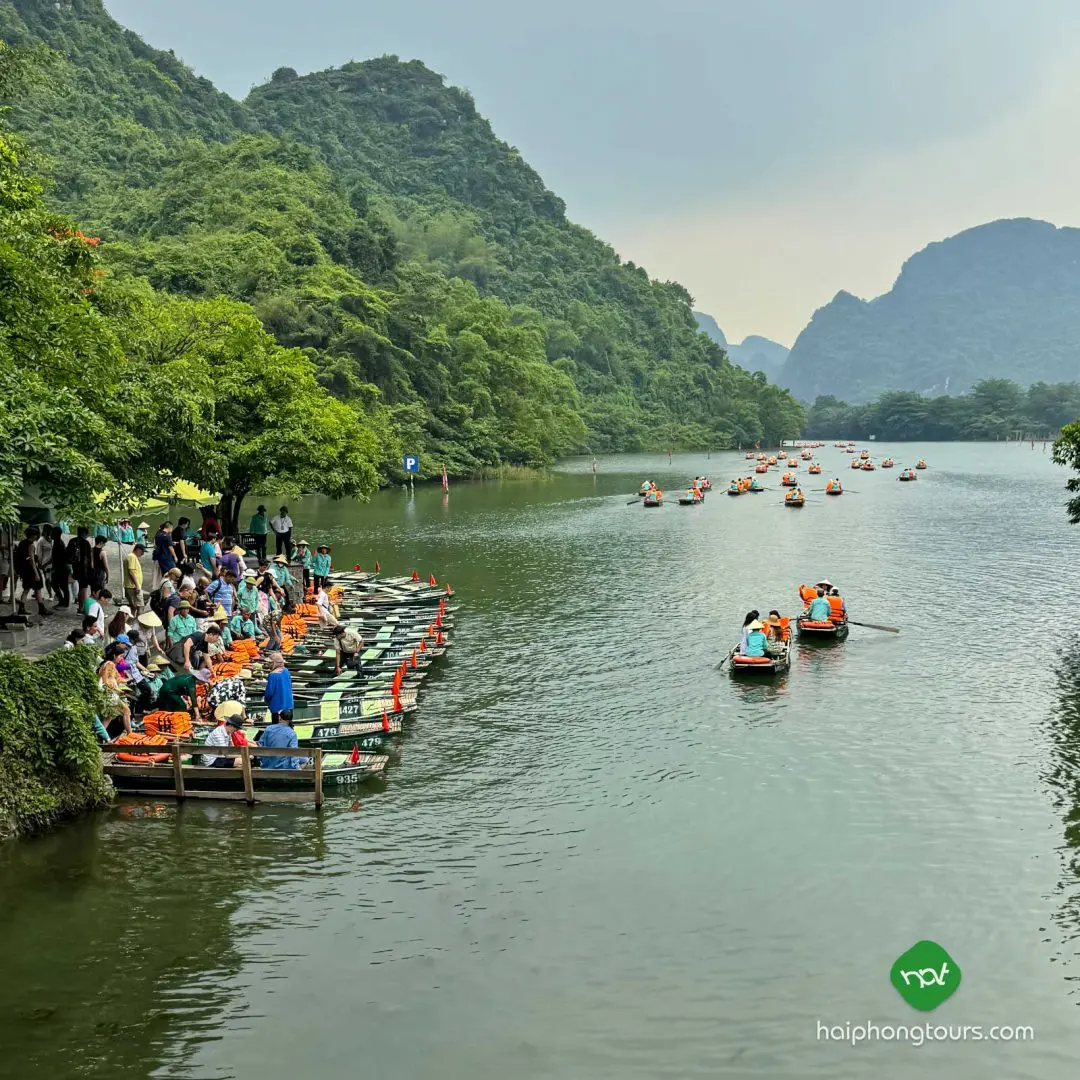
Trang An’s scenery comes from limestone shaped into steep towers, enclosed valleys and water passages through the rock. From the boat, the changing view is the main attraction: an open stretch of water gives way to a low cave, then another basin appears beyond the exit. This is a river-and-cave outing in small rowed boats, rather than a large-vessel cruise.
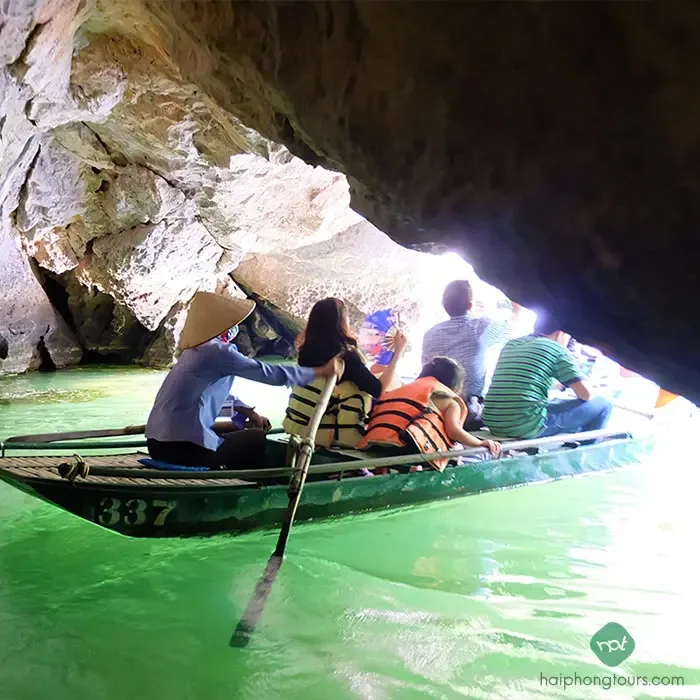
The UNESCO listing dates from 2014 and covers a much wider landscape than the tourist boat circuit. Archaeological caves preserve evidence of people adapting to environmental change over more than 30,000 years, while Hoa Lu and other sites reflect later royal history. Those archaeological locations should not be assumed to be ordinary stops on your boat ticket.
At the temples, cover your shoulders and knees, speak quietly and follow signs about photography. Historical associations do not mean every visible building is an untouched original from the dynasty it commemorates. The surrounding landscape, continuing worship and individual architectural details are more useful things to notice than an unsupported age attached to every structure.
Comfort, weather and access
You will spend much of the visit sitting in a small boat, with opportunities to get out at designated stops. Use the toilet before boarding and ask where the next suitable stop is if someone in your group needs frequent breaks. Leave large luggage at your accommodation or in an agreed secure storage arrangement.
- Wear the provided life jacket throughout the boat journey and check that children have a suitable fit.
- Bring drinking water, sun protection and a light raincoat; protect your phone and camera from spray or rain.
- Choose shoes with grip for wet landings and temple steps.
- Keep hands inside the boat in narrow passages, remain seated and duck when instructed.
- Do not smoke, light fires, play amplified music or leave rubbish in the landscape.
Visitors with limited mobility should ask about getting into a low boat, steps and the walking required at each stop before buying. A mostly seated excursion is not automatically step-free. If you plan to stay aboard during a temple visit, agree that arrangement with staff first.
On hot days, the open-water sections can feel exposed even though the caves provide shade. Rain can change the atmosphere and visibility; severe weather or its aftermath can suspend ticket sales and boat operation. Check conditions before traveling from another city and keep an alternative plan available.
Getting to the correct boat terminal
Ask for the Trang An tourism boat terminal, or Ben thuyen Trang An. Tam Coc has a separate boat terminal, and a hotel or bus stop described as being in Ninh Binh may still require a road transfer to Trang An. Send your driver the actual entrance pin rather than only the name of the UNESCO landscape.
If arriving independently from Hanoi by train or bus, arrange the final transfer from the station or confirmed drop-off. For a local taxi or car, agree whether it will wait, return later or finish the journey at the terminal. Allow extra time after the boat returns to walk out, use facilities and find the vehicle.
Read the boarding process in the right order
- Choose the route with everyone in your party, including anyone uncomfortable in a long cave.
- Buy the correct height-category tickets and establish whether the boat will be shared.
- Use facilities before joining the boarding lane and keep the ticket available.
- Put on a correctly fitted life jacket, then board in the order staff direct.
- At each permitted landing, agree the meeting point with the rower before walking to a temple.
For a family, the useful question is how your group will sit and board together. For a photographer, it is whether the route includes the landscape or pavilion you have in mind. Both are more useful than choosing a route solely because its cave count looks shorter.
Combining Trang An with a Ninh Binh day trip
For an independent day based in Ninh Binh, a morning boat ride, lunch and one land attraction make a manageable starting plan. Choose Hoa Lu Ancient Capital for royal history, Hang Mua for a strenuous viewpoint climb, or Bai Dinh for a larger Buddhist complex. Each needs its own travel and visiting time.
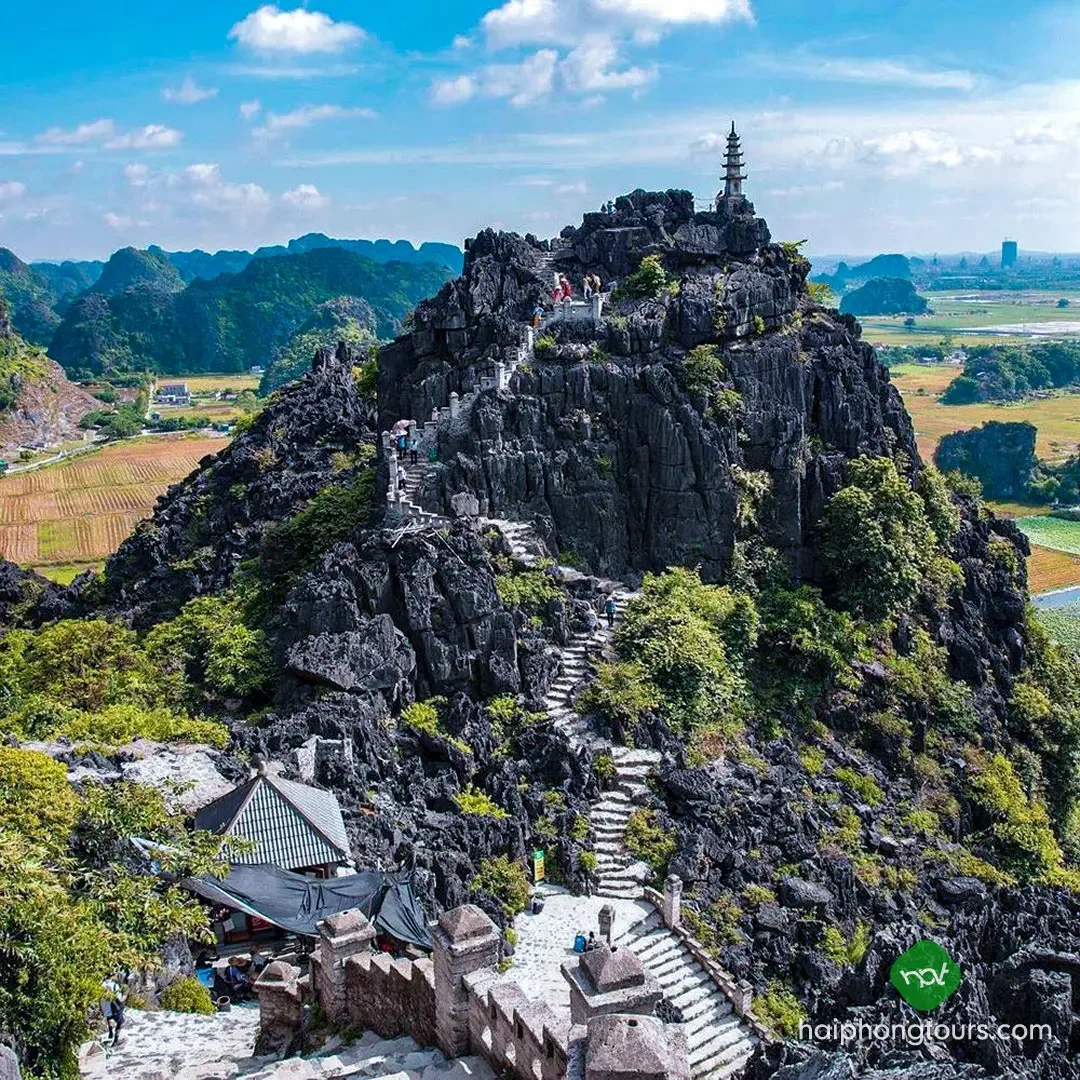
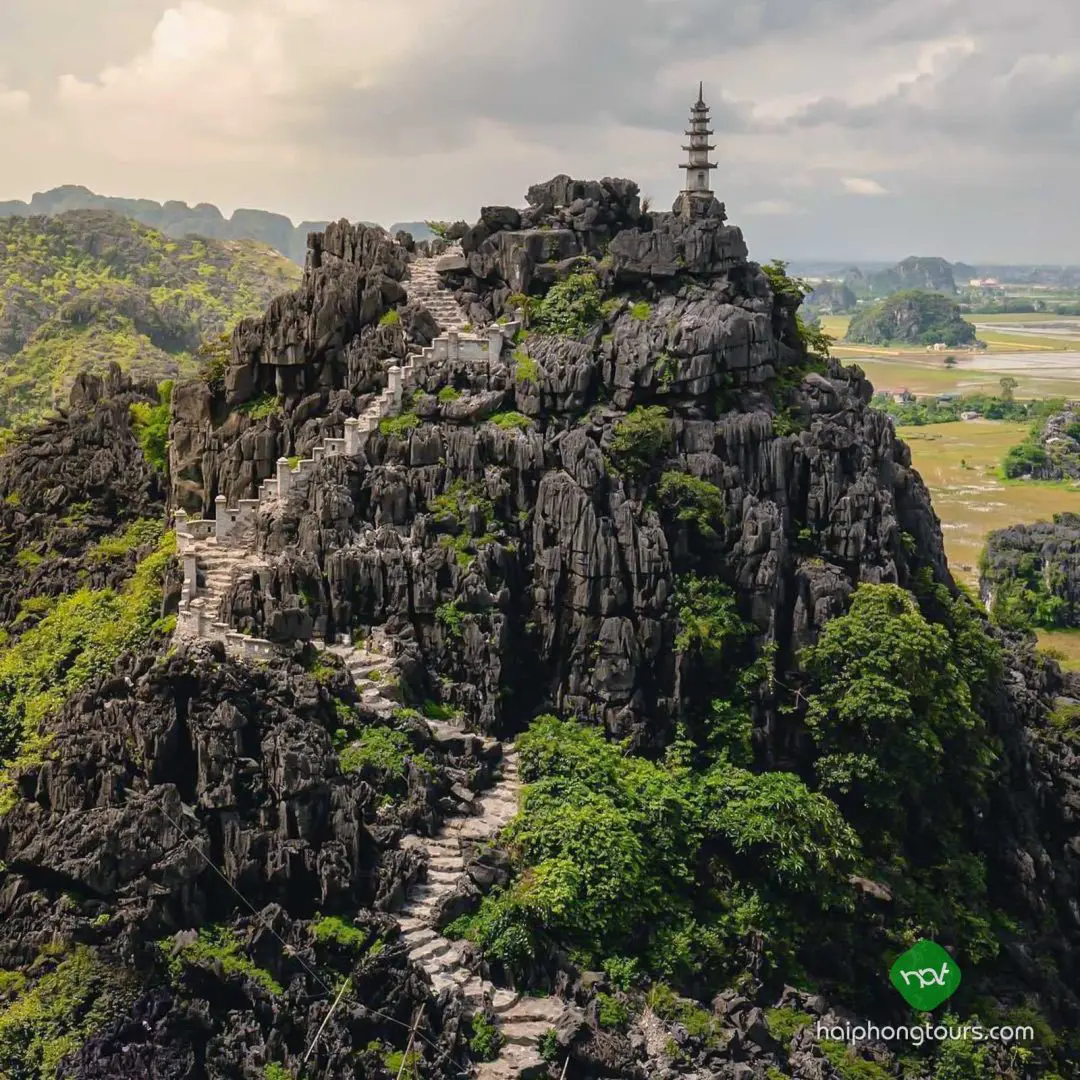

Stone steps and a hilltop pagoda at Hang Mua. The stone stairway winding up a limestone hill at Hang Mua. Visitors at the Hang Mua viewpoint above the river and limestone valley.
From Hanoi, the Ninh Binh day tour from Hanoi has distinct Trang An packages with Hoa Lu and cycling, with an optional package adding Hang Mua, or with Bai Dinh and Hang Mua. Select a package that actually names Trang An: the Tam Coc alternatives use a different boat trip. Confirm the boat route and time allocation if a particular cave or temple matters to you.

From Hai Phong, the Hai Phong to Ninh Binh day tour offers a private return journey with a local guide, lunch and admission for the selected program. Trang An with Hang Mua is one option; Bai Dinh with Trang An avoids the viewpoint climb. This is a long day with a substantial drive each way and an evening return, so choose the number of stops to suit your pace.
On either tour, a Trang An inclusion does not guarantee every route or every temple listed here. Agree on the main experience before booking, leave room for the boat journey, and avoid putting a tight flight, train or cruise connection immediately after the scheduled return.
Travelers choosing only one river experience can use the Trang An versus Tam Coc comparison for scenery, time, caves, temple stops and comfort trade-offs.
For help arranging a Trang An day trip or road transfer, contact Hai Phong Tours with your date, starting point, group size and preferred route. Mention any boarding limits and fixed onward connection before choosing the program.