
Trang Trinh Nguyen Binh Khiem Complex, officially the Special National Relic of Nguyen Binh Khiem Temple, is a cultural and historical site in Trung Am Village, Nguyen Binh Khiem Commune, Hai Phong. It is most rewarding for travelers interested in Vietnamese history, literature, traditional architecture and the country’s respect for learning.
The complex is roughly 50 kilometers south of central Hai Phong, so it works better as a half-day outing than a quick city-center stop. Its principal features include Nguyen Binh Khiem Temple, Bach Van Hermitage, Trung Tan Pavilion, Kinh Thien Pen Tower, a memorial square and a museum-style exhibition space.
Quick visitor information
- Vietnamese name: Khu di tích Quốc gia đặc biệt Đền thờ Trạng Trình Nguyễn Bỉnh Khiêm
- Current address: Trung Am Village, Nguyen Binh Khiem Commune, Hai Phong, Vietnam
- Former address still shown online: Trung Am Village, Ly Hoc Commune, Vinh Bao District, Hai Phong; this refers to the same location
- Useful map searches: “Đền Trạng Trình Nguyễn Bỉnh Khiêm” or the full Vietnamese name above
- Time at the site: allow about 1.5–2 hours to see the main areas without rushing; this is a planning estimate rather than an official visit duration
- Best suited to: history and literature enthusiasts, families with school-age children, and travelers interested in Vietnamese spiritual and educational traditions
Opening arrangements, group services and any charges can change around ceremonies or special events. Ask your accommodation, driver or a local tourism office to reconfirm them before making the journey, especially when traveling with a large group.
Who was Nguyen Binh Khiem?
Nguyen Binh Khiem (1491–1585), whose original name was Van Dat and whose literary name was Bach Van Cu Si, was a scholar, poet, teacher and official of the Mac dynasty. He was born in Trung Am and achieved the highest rank in the 1535 imperial examination. The title Trang nguyen identified the first-ranked laureate in the court examination.
He served the Mac court before leaving office in 1542 and returning to his home village. There he established Bach Van Hermitage as a place to teach and write. His pupils included figures who later became prominent scholars and officials, and his surviving work includes poetry in both classical Chinese and Nom script.
The name Trang Trinh combines his examination distinction with the later title Trinh Quoc Cong. Popular tradition also associates him with predictions known collectively as Sam Trang Trinh. These texts survive in different versions, so his documented importance as a scholar, poet and educator provides the clearest context for a visit.
Why the complex is historically important
The protected area covers approximately 91,500 square meters. The original temple was established after Nguyen Binh Khiem’s death and has been restored more than once; an inscription records rebuilding work in 1735–1736, while details in the present structure record another restoration in 1928.
The site received national historical and cultural relic status in 1991. It was then designated a Special National Relic under Decision 2367/QD-TTg dated December 23, 2015. The expanded grounds combine surviving religious objects with restored or reconstructed memorial buildings, so not every structure dates from Nguyen Binh Khiem’s lifetime.
What to see at Trang Trinh Nguyen Binh Khiem Complex
Nguyen Binh Khiem Temple
The main temple has a traditional Dinh-shaped plan, with a front ceremonial hall leading to the sanctuary. Its timber structure and carved decoration reflect the Nguyen-period restoration recorded in 1928. Inside the sanctuary is a seated image of Nguyen Binh Khiem.
Look for the old stone stele connected with the temple’s eighteenth-century rebuilding and the collection of ritual objects. The surviving pieces range from the seventeenth to the early twentieth century and include an eighteenth-century glazed ceramic incense burner, a spirit throne, tablets, parallel inscriptions and inscribed panels.
Bach Van Hermitage
Bach Van Hermitage represents the home and school Nguyen Binh Khiem established after leaving court service. The historic building was lost, and the present three-bay structure was reconstructed in 2004. It helps visitors understand the teaching phase of his life rather than presenting an untouched sixteenth-century residence.
Trung Tan Pavilion and Kinh Thien Pen Tower
Trung Tan Pavilion was associated with Nguyen Binh Khiem’s years of retirement and teaching. The original disappeared during the eighteenth century; the present three-bay pavilion was rebuilt beside the former Han River landing in 2001.

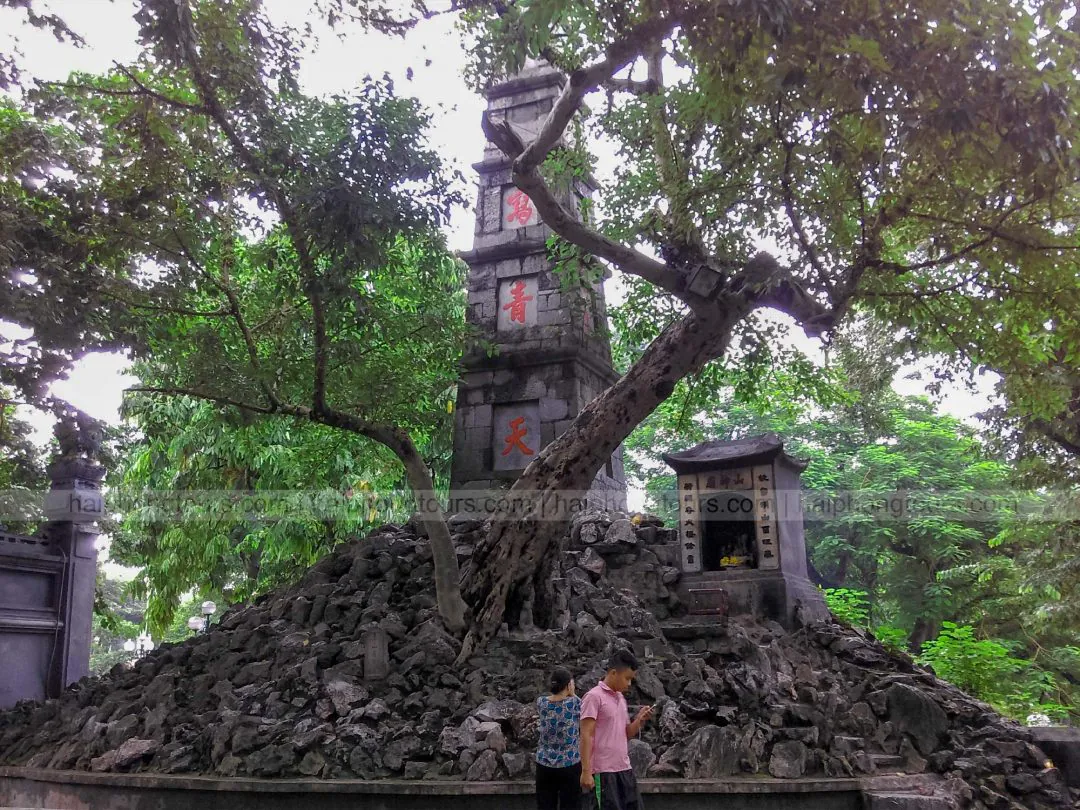
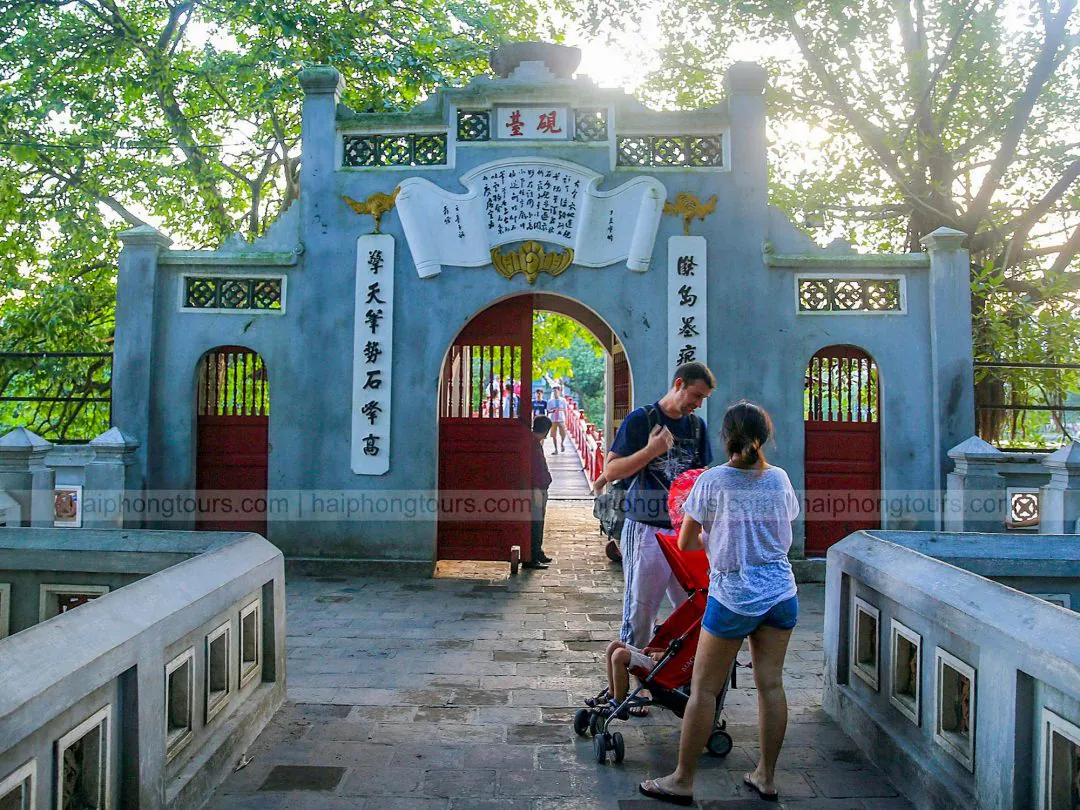
Kinh Thien Pen Tower symbolizes scholarship. Local tradition says his pupils raised the tower to compare their teacher’s talent to a pillar supporting the sky. Because the earlier tower was ruined and later rebuilt, it should be understood as a memorial landmark shaped by both history and tradition.
Temple to his parents and his father’s grave
The separate temple honoring Nguyen Binh Khiem’s parents was begun in 2010 and built in a traditional timber style. Behind the main complex is the grave of his father, Nguyen Van Dinh. Older descriptions sometimes call this the grave of both parents, but the protected-site record identifies it specifically as his father’s burial place.
Monument, reliefs, lakes and exhibition space
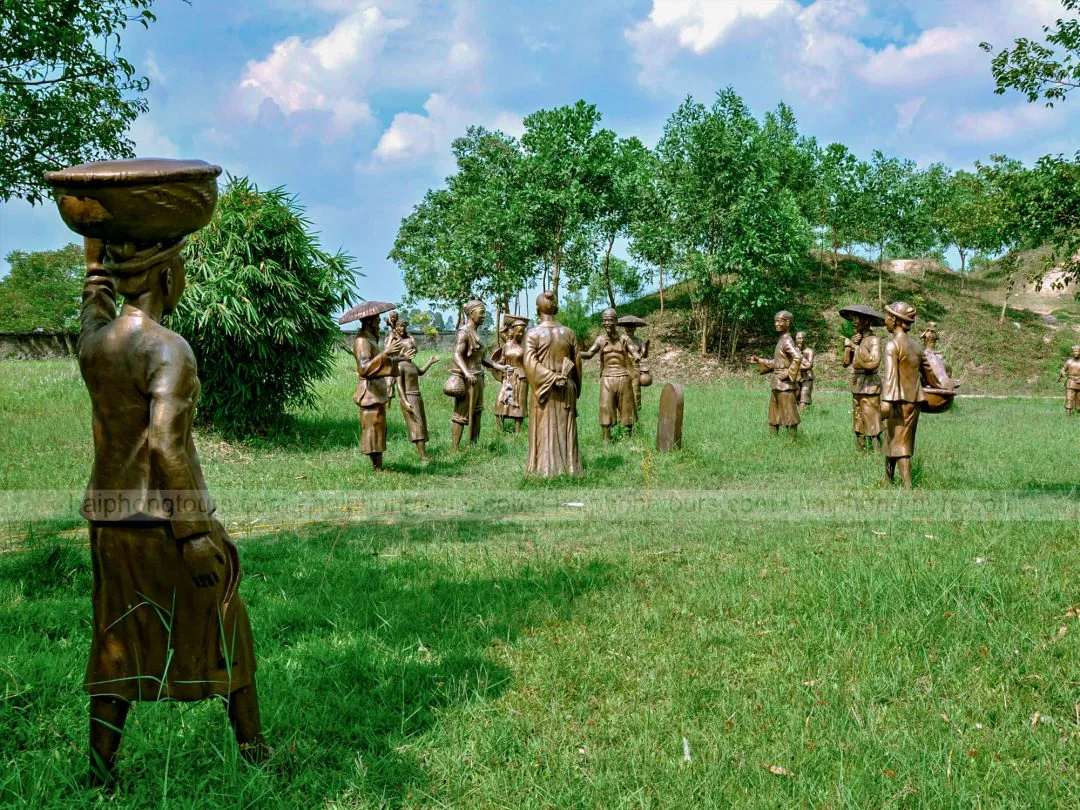
The central granite statue is 5.7 meters high and weighs 8.5 metric tons. It shows Nguyen Binh Khiem seated with a brush and book, while two large reliefs depict episodes from his life and the later history of the local area.
The broad square in front of the monument hosts educational ceremonies and major events. The landscaped lakes, stone bridge, gardens and exhibition space make this the easiest part of the complex for a general orientation before entering the more sacred areas.
Song Mai Pagoda nearby
Song Mai Pagoda is close to the temple and is traditionally associated with Nguyen Binh Khiem. It is often included in general descriptions of the visitor area, although it is not listed among the principal components of the protected temple complex. Treat it as a nearby additional stop rather than part of the core monument route.
The annual Trang Trinh festival
The main temple festival takes place from the 27th to the 29th day of the eleventh lunar month, centered on the commemoration of Nguyen Binh Khiem’s death. As the corresponding Gregorian dates change every year, check that year’s official program before arranging transport.
Festival activities can include processions and ceremonies alongside wrestling, Chinese chess, earth firecracker contests, four sacred creatures dance performances, swings, boat racing, water puppetry and stage puppetry. The grounds are much busier during this period. Visit on an ordinary weekday if a quieter look at the architecture and displays matters more than seeing the festival.
The complex also has a continuing educational role. Hai Phong holds ceremonies here to honor outstanding students, and many visitors offer incense with hopes connected to study or examinations. This practice reflects Nguyen Binh Khiem’s reputation as a teacher rather than a promise of academic success.
How to plan the trip from Hai Phong
For most international travelers, a pre-arranged car with a confirmed return is the simplest option. The site lies in a rural part of southern Hai Phong, and finding an on-demand return vehicle may be less predictable than in the city center. Save the Vietnamese place name and map pin before departure because some navigation results still use the former Ly Hoc and Vinh Bao address.
Travel time depends on the pickup point and current road conditions. Leave a generous buffer if the visit is connected to a flight, train or cruise schedule, and do not treat the complex as a short detour from central Hai Phong.
Etiquette and practical tips
- Wear clothing that covers the shoulders and knees when entering worship spaces.
- Keep voices low, avoid blocking worshippers and follow signs concerning photography.
- Do not touch statues, steles, carved woodwork or objects in the exhibition.
- Bring water and sun or rain protection for the open grounds, but keep food away from temple interiors.
- For children, begin at the exhibition area so the names and buildings have more context.
- If anyone in the group has limited mobility, confirm step-free access and the closest vehicle drop-off point before leaving.
Is Trang Trinh Nguyen Binh Khiem Complex worth visiting?
The complex is a worthwhile cultural excursion for travelers who want to understand a major sixteenth-century Vietnamese scholar and the long local tradition of honoring education. Its appeal comes from the relationship between the temple, reconstructed teaching spaces, historic objects and rural setting rather than from entertainment or a packed sightseeing program.
If your time in Hai Phong is very limited and you want only central landmarks, the distance may make this trip impractical. If history, literature or spiritual culture is a priority, arrange a round-trip vehicle, reconfirm visitor arrangements and give the site enough time to be seen at a respectful pace.
Would you like help fitting this experience into your trip? Contact us with your travel dates, starting point, available time and group size. Tell us about walking limits or special interests so we can suggest a practical itinerary.