
If a storm affects your Vietnam itinerary, check the conditions at your current location, along the route and at your destination before changing plans. Follow local instructions to evacuate or remain in shelter. Switching from a canceled ferry or train to another vehicle is useful only when the alternative service and its access route are confirmed to operate.

Vietnam’s northern, central and southern regions can experience different weather at the same time, but that does not make another region an automatic escape route. Flights, through-trains and connecting road journeys may be disrupted beyond the area where the worst weather occurs.
Make the immediate decision first
- Your trip has not started: ask the airline, railway, ferry or tour operator whether it is running and whether you should still go to the meeting point.
- You are already traveling: follow the crew or driver’s instructions and obtain the revised arrival point before arranging the next connection.
- You are in an affected town or on an island: ask your accommodation about shelter and local travel restrictions. Follow evacuation instructions rather than waiting for a booked departure.
An ordinary rain forecast is not the same as a transport suspension. Equally, a clear patch of sky does not mean a restriction has ended. Check the operator’s current instructions and the time of the next update instead of relying on a general weather-app symbol.
Northern Vietnam: cruises, islands and mainland connections
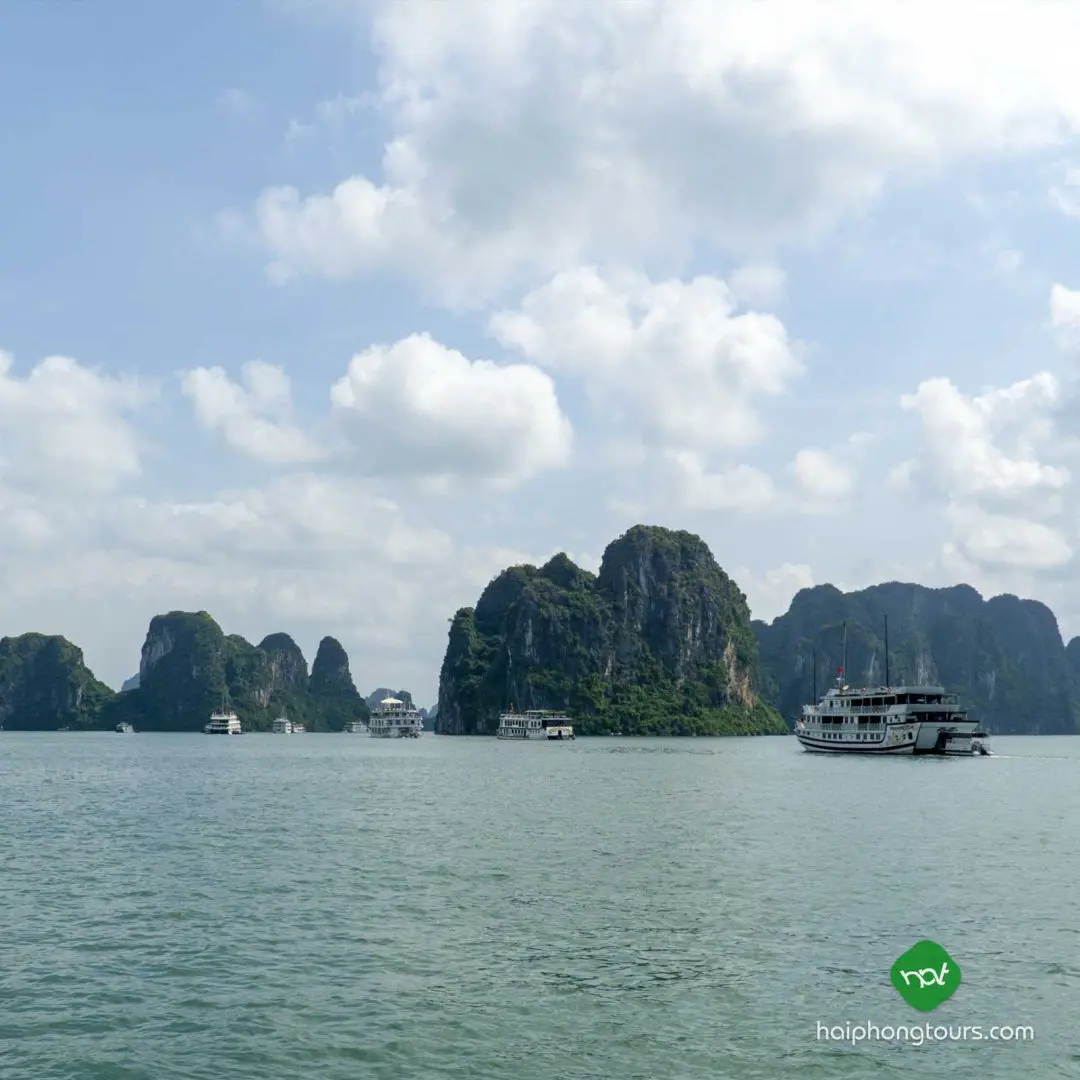
For Halong Bay, Lan Ha Bay and Cat Ba, the boat or crossing is a separate part of the journey from the road transfer. A bus reaching the coast does not guarantee that the island crossing or cruise can continue. Before leaving Hanoi or Hai Phong, confirm the complete trip, including the return if an important flight follows.
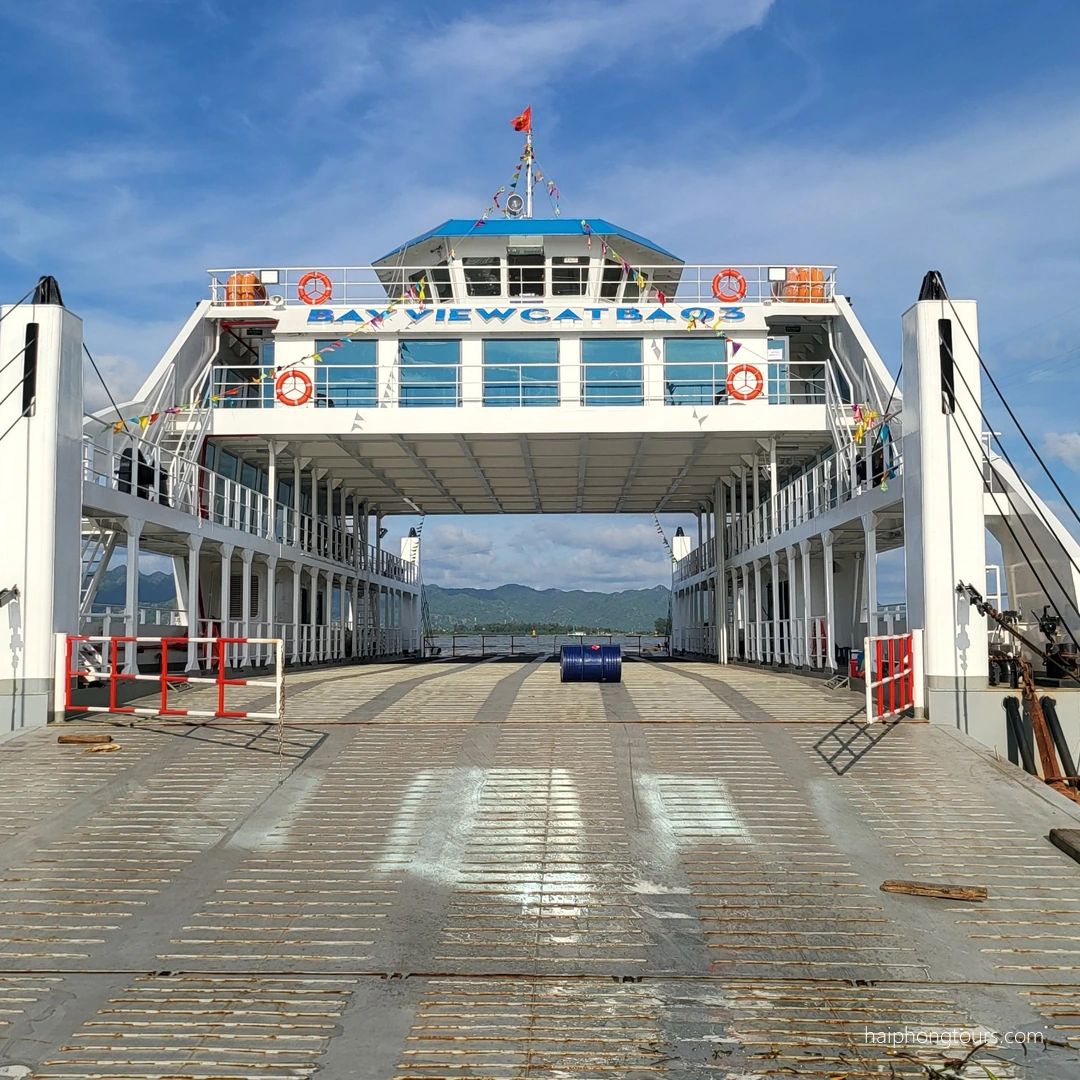
A speedboat or cable car is not an automatic alternative when a ferry stops because of bad weather. The Dong Bai–Cai Vieng ferry, Cat Hai–Phu Long cable car and other sea services can be suspended during the same storm. Each service needs confirmation from its operator and must comply with the applicable restrictions.
If you are already on Cat Ba, follow local advice about whether and when to leave. Arrange any permitted departure while there is time to reach it, but do not race to a pier or seek an unofficial crossing once services are restricted. If you must remain, work with your accommodation on a suitable place to stay and practical supplies.
On the mainland, changing to Ninh Binh or another inland destination still requires checking road access, flooding and conditions at the next hotel. Flying from Cat Bi or Noi Bai depends on the actual flight and access to the airport, not just the weather at the destination.
For the cruise-specific decisions, see the guide to storm-related cruise changes in Halong Bay, including what to confirm about a later departure, hotel stay and revised transfer.
Central Vietnam: check the full north–south route
When your itinerary passes through central Vietnam, check the entire section you need to travel. A disruption near Hue or elsewhere on the north–south railway can affect a train whose departure city is outside the affected area. Road and air services may have different restrictions, so one cancellation does not establish that another mode is available.
If your train is delayed, shortened or canceled, ask the railway or ticket seller for the official options. These may include a changed date or an operator-arranged transfer when conditions allow. Confirm the boarding point, destination, baggage arrangements and whether your original ticket remains valid.
Do not travel to another station on the assumption that a train will be waiting there. First obtain confirmation of the train’s actual origin, departure and available seat. A private car or sleeper bus cannot bypass a flooded or closed road simply because rail service has stopped.
For flights through Da Nang, Hue or other central airports, check your specific booking with the airline. Weather disruption can also affect later flights elsewhere in the network. Keep contact details in your reservation current so you receive a revised time or cancellation notice.
Southern Vietnam: assess the destination and connection separately
If you are considering Ho Chi Minh City, Phu Quoc or another southern destination as a replacement, check its local conditions and the transport you would use to reach it. A destination can be outside the main storm area while your departure airport, incoming aircraft or connecting service is still disrupted.
The same applies in reverse: a weather problem in the south does not automatically make a flight to Hanoi or Hai Phong the best next step. Confirm the flight, airport journey and a place to stay before committing to the change.
For an island stay, check both outward and return transport, as well as any planned boat excursions. Do not build a tight international connection around an island departure that may be affected by weather. A flexible night on the mainland can give you more room to reorganize, provided the journey there is appropriate.
Choose between waiting and changing destination
Waiting can be reasonable when your accommodation remains suitable and local guidance permits you to stay. Changing destination can make sense when there is a confirmed route, suitable accommodation and enough time to travel before restrictions or deteriorating conditions. An evacuation instruction takes priority over either holiday plan.
There is no standard one- or two-night delay after which every service returns to normal. Roads and railways may need inspection or repair, and some departures can remain canceled even after the route reopens. Obtain confirmation for the particular service you will use.
Before paying for a replacement, ask what happens to the original ticket or tour, what additional costs you are accepting and who will confirm the new arrangement. Keep cancellation notices, revised bookings and receipts. If you have insurance, ask the insurer what documentation it needs and which expenses your policy covers.
While you wait for travel to resume
Follow the accommodation’s shelter arrangements and local emergency instructions. Keep your passport, essential medicines, phone charger and important contacts accessible. Let someone know where you are staying and how to reach you.
Stay away from exposed windows and balconies during strong winds. Do not walk, swim or drive through floodwater, or pass a road barrier to continue sightseeing. Conditions can remain hazardous after the rain or wind eases.
For an immediate emergency or rescue need in Vietnam, call the national emergency service and give your exact location and the nature of the problem. Ask nearby staff for language assistance if necessary. Use the airline, railway, tour operator or booking provider for routine timetable and refund questions.
Would you like help fitting this experience into your trip? Contact us with your travel dates, starting point, available time and group size. Tell us about walking limits or special interests so we can suggest a practical itinerary.