
Vegan and vegetarian travel in North Vietnam is manageable, especially in Hanoi, Tam Coc, Sapa town, Ha Long and Cat Ba town. The safest strategy is to use dedicated vegetarian restaurants when available, explain your exclusions by ingredient, and arrange meals before traveling to rural homestays, mountain routes or cruises.
The word chay is useful, but it does not answer every dietary question. A dish with no visible meat may still contain fish sauce, oyster sauce, shrimp paste, meat stock, egg, dairy or honey. If one of those matters to you, name it before the kitchen starts cooking.
Vegetarian, vegan and food allergy are different requests
- Vegetarian: no meat, fish or seafood. Say separately whether you eat eggs and dairy.
- Vegan: no animal-derived ingredients, including egg, dairy and honey as well as meat, fish and seafood.
- Food allergy: a specific safety requirement that may also involve utensils, cookware, oil and preparation surfaces.
- Gluten-free: a separate requirement. A vegan dish can still contain wheat noodles, bread or soy sauce made with wheat.
Do not combine all of these into one vague “special diet” note. A kitchen can respond more accurately when it knows exactly which ingredients and forms of contact matter.
Save a Vietnamese vegan card
Show the following text on your phone before ordering:
Tôi ăn thuần chay. Xin không dùng thịt, cá, hải sản, trứng, sữa, bơ động vật, mật ong, nước mắm, dầu hào, mắm tôm, nước dùng thịt hoặc nước hầm xương.
Meaning: I am vegan. Please do not use meat, fish, seafood, eggs, milk, dairy butter, honey, fish sauce, oyster sauce, shrimp paste, meat stock or bone broth.
If you are vegetarian and eat eggs and dairy, use this version:
Tôi ăn chay nhưng có ăn trứng và sữa. Xin không dùng thịt, cá, hải sản, nước mắm, dầu hào, mắm tôm, nước dùng thịt hoặc nước hầm xương.
Meaning: I am vegetarian and I eat eggs and dairy. Please do not use meat, fish, seafood, fish sauce, oyster sauce, shrimp paste, meat stock or bone broth.
Use the word allergy only when it is medically accurate. If cross-contact could cause a reaction, add the specific allergen and ask whether clean utensils, cookware and preparation surfaces can be used.
Ingredients that often cause confusion
Fish sauce and shrimp paste
Fish sauce can appear in a dressing, dipping bowl, stir-fry or marinade even when the main ingredients are vegetables. Shrimp paste may be served separately or used in a sauce. Ask for a suitable soy-based or salt-based alternative rather than simply removing the dipping bowl after the dish arrives.
Oyster sauce and animal stock
Vegetable stir-fries may use oyster sauce. Noodle soup that appears meat-free may still use a meat or bone broth. Ask for nước dùng chay, meaning vegetarian broth, and confirm that the sauce is also vegetarian.
Egg and dairy
Fried rice, noodles, bread spreads, pastries and batter can contain egg. Butter, condensed milk, cream, cheese and yogurt appear in coffee, baked goods, Western-style dishes and some desserts. A vegetarian menu is not automatically vegan.
Honey
Honey may be used in drinks, dressings and breakfast items. State the exclusion if you avoid it; staff may not group honey with meat, egg or dairy.
Shared oil and cookware
A mixed kitchen may use the same fryer, wok, grill, ladle or cutting surface for animal and plant foods. This matters differently to different travelers. State your requirement calmly and choose a dedicated kitchen when strict separation is essential.
How to read common dish names
Adding chay to a dish name usually signals a vegetarian version, but the recipe still deserves a check. Useful examples include phở chay, bún chay, cơm chay, lẩu chay and bánh mì chay.
- Vegetarian noodle soup: confirm the broth, toppings and fried garnish.
- Vegetarian fried rice: ask whether egg is included.
- Tofu with vegetables: check oyster sauce, fish sauce and shared frying oil.
- Fresh or fried rolls: check the filling and dipping sauce.
- Vegetarian bánh mì: ask about butter, mayonnaise, pâté-style spreads and sauce.
- Hotpot: confirm the broth, dipping sauces and processed ingredients.
- Sticky rice: confirm toppings, meat floss, sausage, egg, butter or animal fat.
A plain-looking dish is not necessarily simpler. Clear communication before ordering is more reliable than removing visible ingredients at the table.
Hanoi: the easiest place to build flexibility
Hanoi has the broadest range of dedicated vegetarian kitchens, mixed-menu restaurants, Indian restaurants and international food. Use the city to recover from a rural leg, buy snacks and arrange special meals for an onward train, bus or cruise.
Search by the exact restaurant name and current map pin. Businesses with similar names may be different branches with different hours and menus. Check the same day rather than walking across the city based on an old list.
At a dedicated vegetarian restaurant, still ask about egg, dairy and honey if you are vegan. At a mixed restaurant, use the full ingredient card. If the kitchen is busy and communication remains unclear, choose a simpler meal or another venue.
Hai Phong: local options with less English signage
Hai Phong has vegetarian restaurants and simple rice, noodle and tofu dishes, but English menus may be less common than in central Hanoi. Save the Vietnamese card offline and ask your hotel to mark a current vegetarian restaurant on the map.
Local specialties often use seafood, fish sauce or animal broth, so a vegetarian version should be treated as a separate recipe rather than a standard dish with the visible seafood removed. A dedicated quán chay is the lower-stress choice for a full meal.
If you are continuing to Cat Ba or a cruise, buy a portable backup before departure. Ferry, cable-car and road connections do not guarantee a useful meal stop.
Ninh Binh: base yourself where food is accessible
Tam Coc has the most convenient concentration of traveler services and plant-based choices. Ninh Binh city also has vegetarian food, while accommodation near Trang An, Bai Dinh or rural villages may require a taxi or an arranged dinner.
The detailed Ninh Binh vegetarian and vegan guide explains current kitchen types, hidden fish sauce and meat broth, and how to plan meals around sightseeing. Use it to choose a base, then verify the venue on the day.
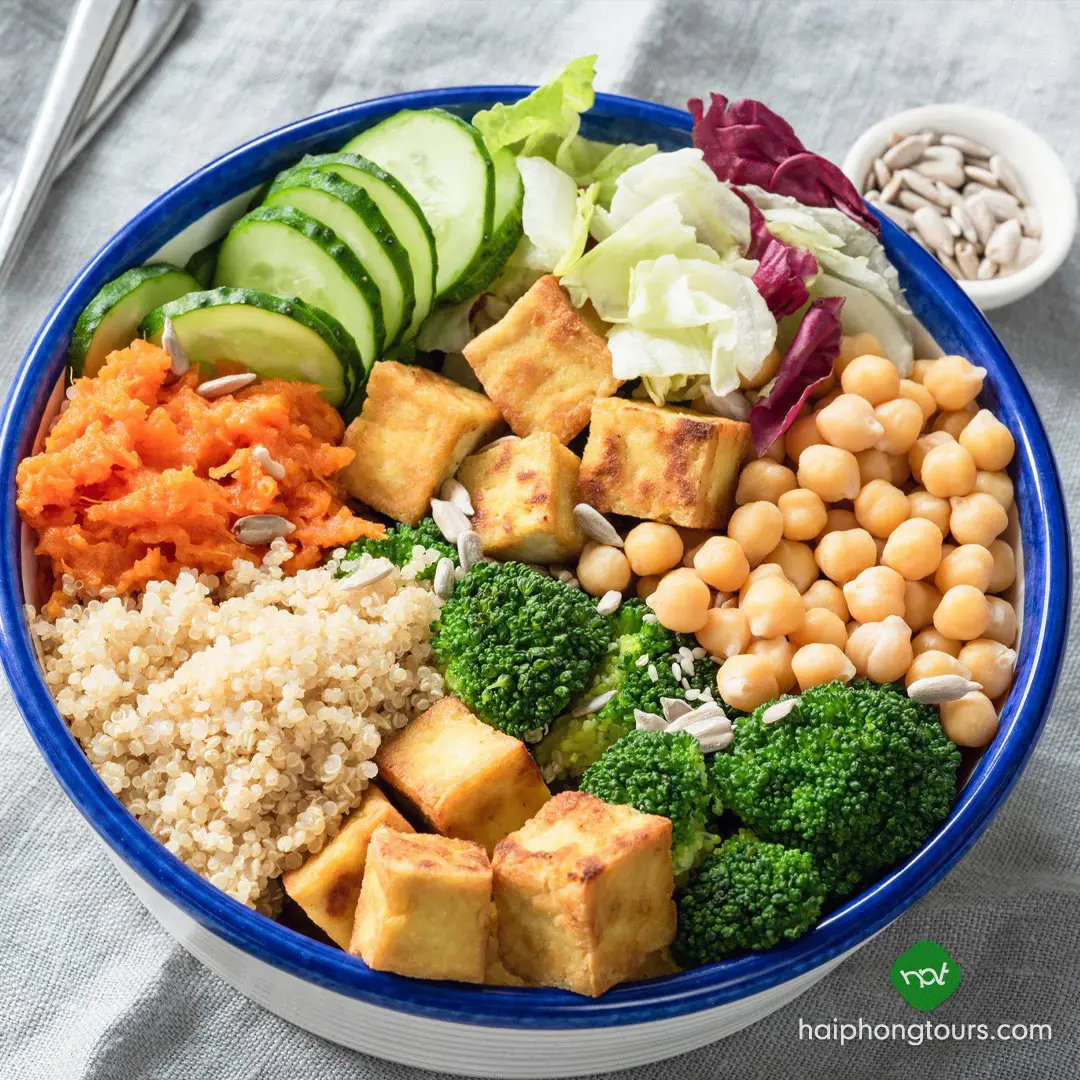
For an early boat trip or day tour, arrange breakfast with your accommodation the previous evening. Carry enough food to bridge a delayed lunch; attraction canteens should not be your only strict-vegan plan.
Ha Long Bay cruises: confirm every included meal
Cruises can prepare vegetarian food, but a vegetarian option may include egg, dairy, honey or animal-based sauces. Send the dietary request before paying and have it attached to the booking. Reconfirm the vessel, travel date, number of passengers and meal requirement before boarding.
For a day cruise, lunch is usually the main meal to arrange. For an overnight trip, check lunch, dinner, breakfast, brunch, snacks, cooking demonstrations and any meal served on a separate excursion boat. A buffet does not guarantee a complete vegan meal.
The vegetarian and vegan food on Ha Long Bay cruises guide explains how to evaluate menus and confirm substitutions. If you have a food allergy, send that as a separate safety request.
Cat Ba and Lan Ha Bay
Cat Ba town is the practical base for restaurant choice. Remote resorts, national-park stays and small boat trips offer fewer spontaneous alternatives. Arrange dinner with the accommodation and tell the boat operator about your diet before departure.
Seafood-focused restaurants can often prepare vegetables, rice or tofu, but sauces, broth and shared cookware require checking. A fruit plate should be a backup or part of a meal, not the entire promised vegan menu.
Bring snacks on a full-day boat trip. Once the boat has left, another restaurant is not available and the crew can only work with ingredients already onboard.
Sapa: easy in town, less certain on the trail
Sapa town has vegetarian and international options, but village treks and homestays need advance communication. Ask which meals are included, who prepares them and whether the request has reached the actual host rather than remaining with a booking intermediary.
A group meal may be served family-style. Request a separate dish and serving utensils if shared plates do not meet your needs. Confirm the trek lunch as well as dinner and breakfast; a day bag should contain a reliable snack.
Cold or wet mountain weather increases the value of a substantial hot meal. Ask for rice or noodles, tofu or beans, vegetables and a suitable broth rather than accepting fruit alone.
Ha Giang and Cao Bang: arrange meals around the route
Mountain routes pass through small towns and rural stops where the available kitchen may serve one set meal. Tell the tour company, driver and accommodation about your diet before the trip. Do not assume the message automatically moves from the sales contact to every homestay.
Carry enough shelf-stable food for delays, but do not plan to replace every meal with snacks. A practical request asks for rice, cooked vegetables, tofu, beans, peanuts or another suitable protein, a vegetarian broth and separate dipping sauce.
Ask where the route normally stops for lunch. If no suitable kitchen is expected, arrange a packed meal at breakfast. This is more reliable than trying to explain a strict diet during a short roadside stop.
Mai Chau and Pu Luong: communicate with the accommodation
Many rural stays provide dinner and breakfast because other restaurants are not close. Send the request directly to the accommodation and reconfirm at check-in. State whether you avoid egg, dairy, honey, fish sauce and animal broth.
Family-style meals can work well when the kitchen plans ahead. Ask for enough substantial dishes, not only a plate of greens. If the property cannot meet the request, choose a more central base or bring one prepared meal for the difficult leg.
Vegetarian food on trains and buses
Do not rely on station stalls, onboard carts or scheduled rest stops for a complete vegan meal. Availability changes by service and departure time. Eat before boarding and carry food that is easy to store, open and clean up.
Good travel foods include fruit that can be peeled, plain bread or crackers whose ingredients you have checked, nuts or seeds, packaged plant-based snacks and a prepared rice or noodle meal suitable for the journey length. Follow any transport rules and avoid food that spoils quickly in heat.
Keep a small amount of food accessible rather than packed under the vehicle. A late bus or changed rest stop should not turn a dietary preference into an urgent problem.
Coffee, breakfast and dessert
Vietnamese coffee commonly uses condensed milk. Black coffee is cà phê đen; if you want it without sugar, say không đường. Plant milk may be available in larger cities and tourist areas, but confirm the actual milk rather than assuming a menu symbol is vegan.
Hotel breakfast can be the most repetitive meal. Request fruit, rice, vegetables, tofu, plain bread with checked ingredients or a vegetarian noodle soup. Ask about egg wash, butter, milk and stock.
Coconut milk does not make every dessert vegan. Toppings or bases may include condensed milk, dairy cream, gelatin, egg or honey. Ask about the complete recipe when strict avoidance matters.
How to book a tour or cruise meal
- Identify the booking date, route, vessel or tour and number of guests.
- State “vegan” or “vegetarian,” then list the ingredients you exclude.
- List allergies separately and describe cross-contact needs.
- Ask which meals and snacks are included.
- Request written confirmation before paying.
- Reconfirm shortly before departure and again with the onboard or local team.
Do not use “Indian vegetarian,” “Jain,” “vegan” and “no meat” as interchangeable terms. Each request can carry different ingredient rules.
A low-stress daily food plan
- Breakfast: arrange it the previous evening when leaving early.
- Lunch: identify a dedicated kitchen or prebook a tour meal.
- Dinner: eat near your accommodation or confirm the homestay meal.
- Backup: carry one substantial snack and water during transport or rural sightseeing.
This is more effective than saving a long restaurant list. It attaches one reliable meal decision to each part of the day and leaves room for places to change.
Food allergy and gluten-free travelers need another layer
A dedicated vegan kitchen removes animal ingredients but can still use peanuts, soy, sesame, wheat and other allergens. Gluten-free travelers must check noodles, bread, batter, soy sauce, processed mock meats and shared preparation areas. Rice is naturally gluten-free, but the finished dish may not be.
For a medically necessary diet, carry a precise translated allergy card, any prescribed medication and an emergency plan from your clinician. Choose kitchens that understand the request and can explain their process. If communication remains uncertain, do not treat reassurance alone as proof that a dish is safe.
Frequently asked questions
Does chay always mean vegan?
No. It usually identifies vegetarian food, but individual kitchens and diners may treat egg, dairy or honey differently. State every ingredient you avoid.
Is tofu automatically vegan in Vietnam?
The tofu itself may be plant-based, but the finished dish can contain fish sauce, oyster sauce, animal stock or shared frying oil. Ask about preparation.
Can a Ha Long Bay cruise prepare vegan food?
Many cruises can prepare suitable meals when the request is made in advance. Confirm every included meal and the actual vessel; do not rely on a generic vegetarian note.
Is North Vietnam difficult for vegan travelers?
Cities and established tourist bases are manageable. Rural mountain routes require more preparation, direct communication with accommodation and a reliable backup meal.
Should I carry food from Hanoi?
Carry a compact backup for transport and remote days, but arrange proper meals at your destination. Hanoi is a useful place to buy checked packaged foods before a mountain or cruise leg.
Can I trust a vegetarian symbol on a menu?
Use it as a starting point. Confirm egg, dairy, honey, fish sauce, oyster sauce, shrimp paste and broth according to your diet.
Make the diet part of the route plan
Choose food-accessible bases, send requests before rural stays and cruises, and carry one useful backup during transfers. North Vietnam offers enough rice, noodles, tofu, vegetables and dedicated vegetarian cooking for a satisfying trip, but precise ingredient language is what turns a meat-free-looking dish into a meal that actually fits your diet.