
For a Vietnamese calligraphy experience in Hanoi, start with the Temple of Literature’s writing activities or book Zó Project’s 90-minute calligraphy workshop. The temple provides the setting of scholarship and historic inscriptions; Zó offers time with brush, ink and traditional dó paper. A focused half day can combine a temple visit with one confirmed lesson.
Choose the script before choosing a decorative word. Modern Vietnamese lettering, Hán characters and historical Nôm writing require different explanations. A worthwhile beginner session should leave you able to read your own piece, explain its meaning and recognise the techniques you practised.
Two places to arrange a calligraphy experience
Temple of Literature: learn in a heritage setting
Entrance: 58 Quốc Tử Giám Street, Hanoi. Daytime opening: 08:00–17:00 daily. Standard adult admission is 70,000 VND; children under 16 have free daytime admission. A separate price applies to the evening programme.
The official calligraphy service lists guided Vietnamese and Chinese writing, short weekend courses, group workshops and the New Year custom of requesting auspicious characters. This makes it a practical first contact for a family, school group or visitor who wants learning and heritage in the same place.
Contact: 024 3747 2566 or 0866 663 645; email tthdvhkhvmqtg_svhtt@hanoi.gov.vn. Specify whether you want a short introduction, hands-on practice or a longer taught session, along with your date and preferred explanation language.
The official homepage labels its introductory calligraphy-practice experience as free. It does not publish a fixed private-workshop tariff or a guaranteed daily start time. Obtain the arrangement and any fee for your requested lesson; the general adult entrance charge remains a separate planning item.
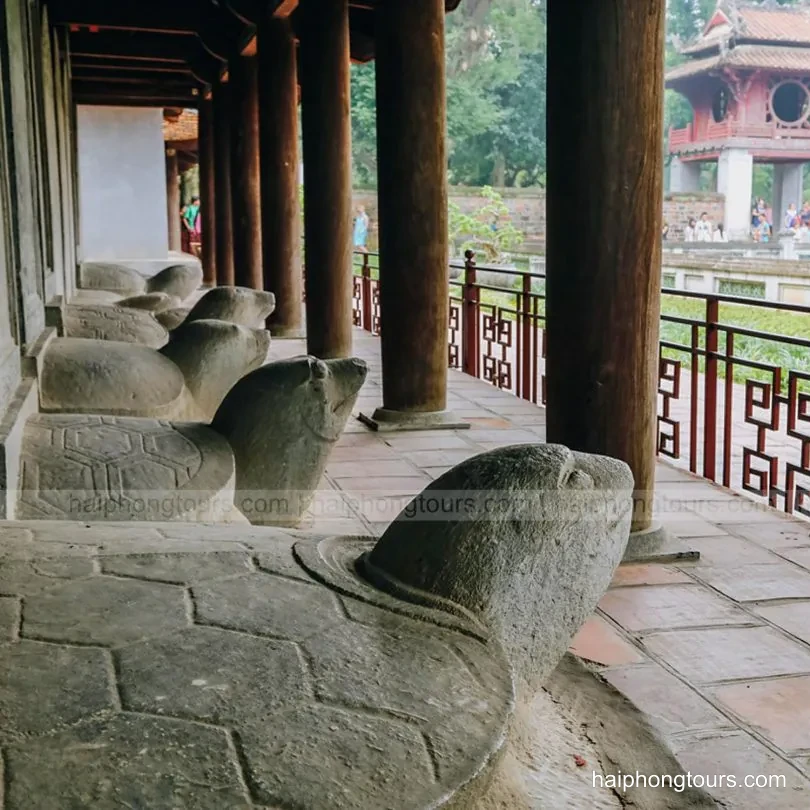

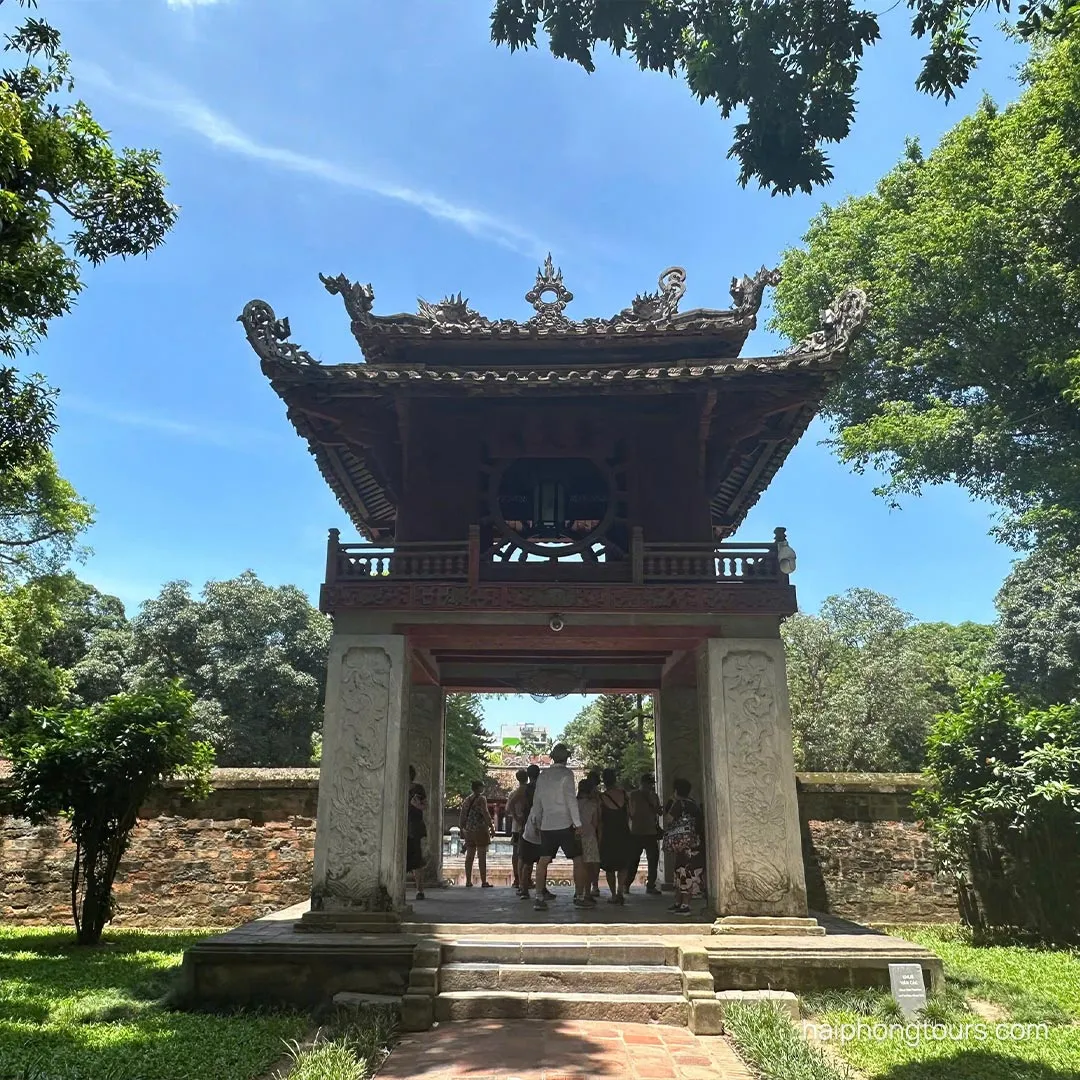
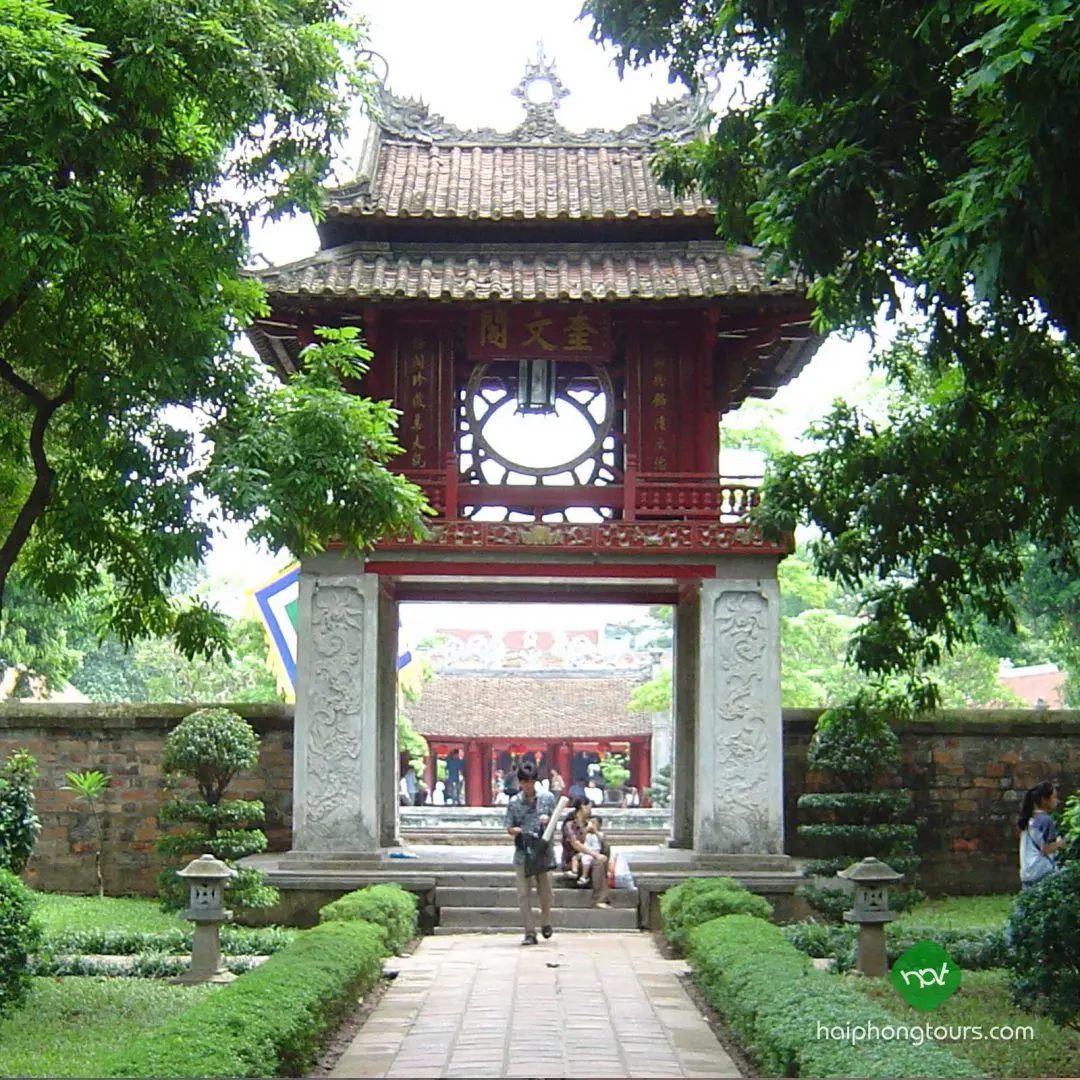
Temple of Literature stelae, courtyards and gateways.
Before practising, walk through the courtyards and look closely at the inscriptions and presentation of learning. Use our Temple of Literature visiting guide for the wider site route. Let the writing session build on what you have seen.
Zó Project: a booked session with traditional paper
Zó’s dedicated calligraphy listing advertises one hour and 30 minutes, from US$35, using a request-to-book process. The description includes brush pens, inkstones, dó paper and guided practice, and names calligraphy teacher Ngau Thu, Nguyen Thanh Tung.
The displayed starting price does not clearly state a per-person or group basis. Get the total for your party, the confirmed teacher and the included materials before paying. An online request needs acceptance before you treat it as an appointment.
| Hanoi location | Published general hours | Useful for |
|---|---|---|
| 189 Trích Sài, Tây Hồ | 09:00–18:00 daily | A paper-focused visit combined with West Lake |
| 15 Hàng Đường, Hoàn Kiếm | By booking only | A central-Hanoi lesson near your Old Quarter itinerary |
Contact: +84 366 602 928. State the address you prefer: Zó also lists a separate Ecopark venue in Hưng Yên. General shop hours are not the class timetable. If steps are difficult, resolve access to the actual teaching room before booking.
Our Zó Project paper guide explains the wider material and workshop options. Writing on an existing sheet is a different activity from making a fresh sheet of paper; choose the calligraphy product if learning brushwork is your aim.
Understand the script before you begin
Quốc ngữ calligraphy uses modern Vietnamese’s Latin-based alphabet. You can recognise familiar letter forms while exploring brush pressure, spacing and composition. Vietnamese accents remain part of the written word, even when the lettering is expressive.
Hán calligraphy uses Chinese characters, which can have Vietnamese readings and cultural associations. Chữ Nôm is the historical character-based writing system developed to represent Vietnamese. The two terms are related but not interchangeable, and a brush-written character is not automatically Nôm.
For a first lesson, Hai Phong Tours suggests a short Quốc ngữ word or one clearly explained Hán character. A long phrase creates more to copy while leaving less time for correction. If you want your name written, settle whether the result will preserve its spelling, represent its sound or express a chosen meaning.
Four useful words to discuss with your teacher
| Vietnamese reading | Hán character | Basic meaning | Possible personal theme |
|---|---|---|---|
| An | 安 | Peace | A calm home or peaceful year |
| Phúc | 福 | Blessing or good fortune | Good wishes for a household |
| Đức | 德 | Virtue | A value you want to cultivate |
| Tâm | 心 | Heart or mind | Attention, intention and character |
These are starting points for a conversation, not a rule assigning one word to every recipient. The examples in the middle column are Hán characters with Vietnamese readings. Your teacher can explain nuance and help choose a composition appropriate for the gift or occasion.
What to practise in a beginner lesson
The following is our suggested learning sequence for a 90-minute session, rather than a promise about either provider’s exact curriculum:
- First 10 minutes: agree on the word, script and meaning; identify the brush, ink and paper.
- Next 20 minutes: practise holding the brush and varying pressure. Compare a lighter stroke with a heavier one.
- Next 25 minutes: copy the teacher’s model and ask for correction of one or two recurring problems.
- Next 25 minutes: plan the spacing and create a final version, leaving room for the intended signature or seal.
- Final 10 minutes: review what the piece says, record the artist or teacher’s name, and discuss safe drying and packing.
Keep one practice sheet as well as the finished work. Comparing them later makes the lesson easier to remember. A successful first session is progress in control and understanding; it need not produce a flawless artwork.
A realistic half-day itinerary
This example assumes a confirmed 11:00 lesson at 15 Hàng Đường. Reserve the workshop first, then build the sightseeing around it.
| Time | Plan |
|---|---|
| 08:30–10:00 | Visit the Temple of Literature, entering at 58 Quốc Tử Giám. Focus on inscriptions, courtyards and the scholarly setting. |
| 10:00–11:00 | Leave a generous interval for the transfer to 15 Hàng Đường, a drink and finding the teaching room. This is a planning buffer, not an estimated driving time. |
| 11:00–12:30 | Attend the booked 90-minute workshop. |
| After 12:30 | Have lunch nearby, with the artwork packed only when the teacher says it is ready. |
For a temple-based lesson, keep the morning at one venue and let its confirmed activity time determine the order. For Trích Sài, plan your later meal or walk around West Lake instead of returning immediately to Hoan Kiem.


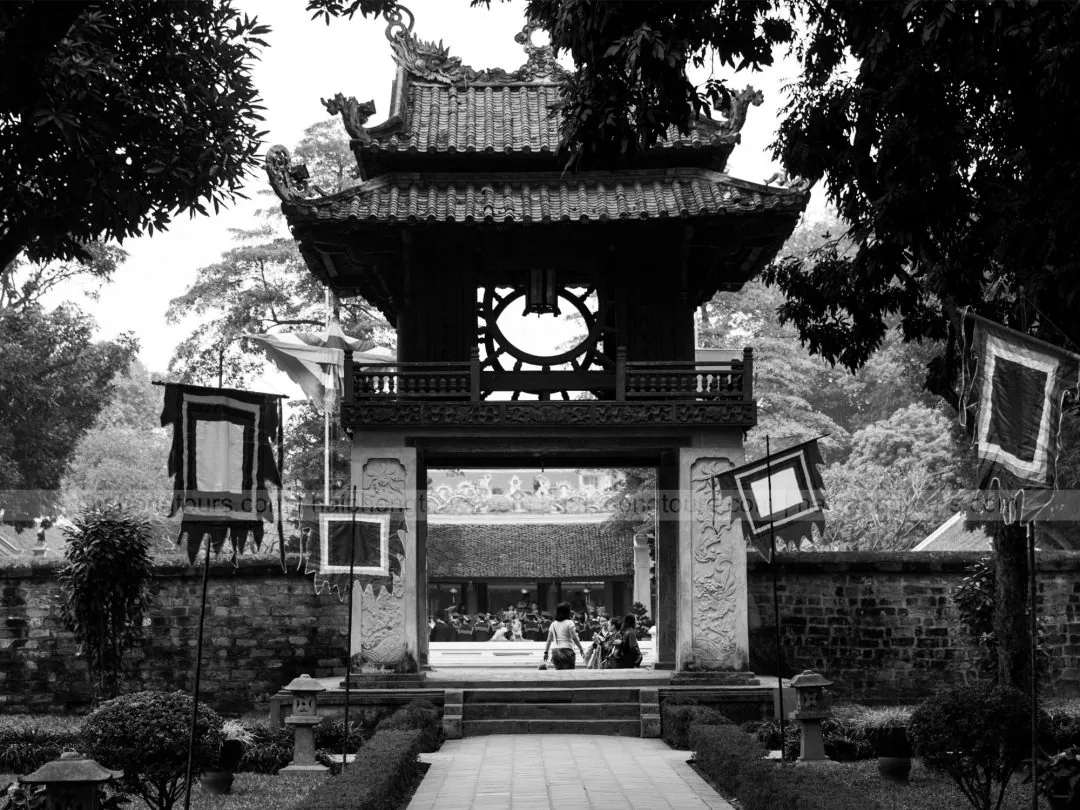
Temple of Literature drum, worship hall and historic pavilion.
Budget for the experience you actually want
A standard adult temple visit plus Zó’s advertised workshop starts from 70,000 VND plus the quoted workshop charge, advertised from US$35. Keep transport, food and any extra paper, mounting or commissioned artwork separate. Because the workshop price basis needs confirmation, do not multiply the headline figure into a family total without a quote.
A demonstration, a taught lesson and a commission have different outcomes. For a commission, agree on the exact wording, dimensions, paper, artist’s signature and whether mounting is included. For a class, prioritise enough practice time and an explanation language everyone can follow.
Tet calligraphy and a regular workshop are different visits
During Tet, requesting an auspicious word connects calligraphy with hopes for the new year and respect for learning. Hanoi’s Spring Calligraphy Festival takes place seasonally around Hồ Văn, the lake in front of the Temple of Literature.
The 2026 festival ran from 11 February to 1 March. Those are past event dates, not a year-round timetable or the schedule for the next Tet. A festival visit may centre on watching a calligrapher and commissioning a piece; it does not automatically include a private lesson.
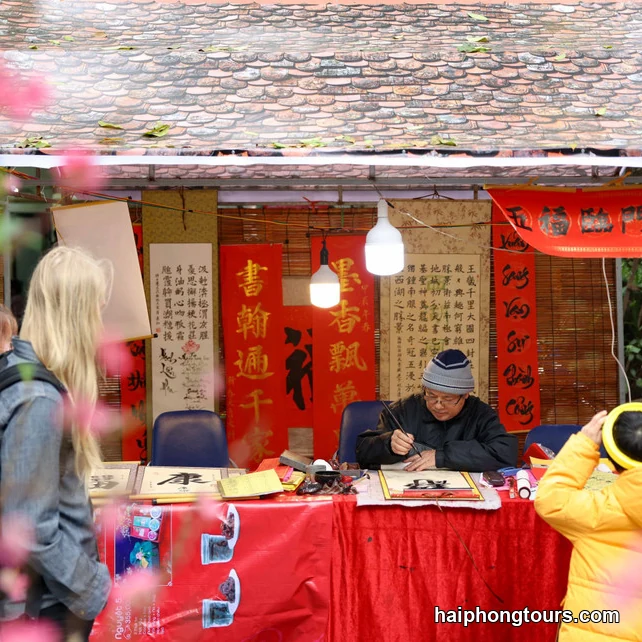
If travelling outside the festival period, use an accepted workshop booking. If travelling during Tet, leave room for crowds and verify that your teacher and venue will operate during the holiday.
Bring home a piece you understand
Record the text in readable Vietnamese, its meaning and who created the work. Keep drinks away from the table, ask before photographing a demonstration and use only the signatures or seals appropriate to your own piece.
Let the ink dry fully before packing. Use the artist’s recommended protective folder or tube, keep the work away from wet clothing and postpone framing if it makes the journey awkward. Discuss children, seating height or mobility needs when arranging the lesson so the activity fits the people attending.
For sightseeing with a guide and vehicle, our private Hanoi city tour includes the Temple of Literature in its published route. A calligraphy lesson or studio stop needs a separately agreed arrangement and timing.

Want a Hanoi day built around a calligraphy lesson? Contact Hai Phong Tours with your date, hotel, group size and preferred script. Tell us whether you want a short introduction, a hands-on workshop or a commissioned gift, and we can help plan the sightseeing and transport around it.