
You can travel through North Vietnam with English and a translation app, but a small set of Vietnamese phrases makes transport, food, shopping and emergencies clearer. Keep the Vietnamese spelling with full accents on your phone. Vietnamese is tonal, so showing a written sentence is often more reliable than using an English-style pronunciation guide.
Start with Xin chào for hello, Cảm ơn for thank you, Xin lỗi for sorry or excuse me, and Tôi không hiểu for I do not understand. Speak slowly, use short sentences and confirm important details by showing the address, price, vehicle plate or ingredient in writing.

Quick communication rules
- Keep Vietnamese accents; they help identify the intended word and tone.
- Do not depend on improvised phonetic spelling.
- Show one complete sentence at a time on the screen.
- Use a map pin as well as a place name.
- For money, let the other person type the full amount into a calculator.
- For allergies, show the allergen and cross-contact warning in Vietnamese.
- For tickets and pickups, show the date, time and booking reference.
- Repeat the final agreement: destination, total price and what is included.
- Download offline language data before entering mountain or island areas.
- In an emergency, prioritize location, injury or illness and the help needed.
Greetings and basic courtesy
- Xin chào., Hello.
- Cảm ơn., Thank you.
- Cảm ơn nhiều., Thank you very much.
- Xin lỗi., Sorry; excuse me.
- Không sao., It is okay; no problem.
- Tạm biệt., Goodbye.
- Vâng., Yes, polite and common in the north.
- Không., No; not.
- Được., Okay; possible; allowed, depending on context.
- Không được., Not possible; not allowed.
Vietnamese normally uses family and age terms such as anh, chị, cô, chú and em where English uses you or I. The natural choice depends on relative age and relationship. A visitor can often avoid guessing by using a short request, a smile and ạ at the end to sound respectful.
Do not attach ạ mechanically to every phrase. Listen to how the person addresses you and follow their lead. The North Vietnam culture and etiquette guide explains age, homes, temples, photography and public behavior in more detail.
When you do not understand
- Tôi không nói tiếng Việt., I do not speak Vietnamese.
- Tôi nói tiếng Việt không giỏi., I do not speak Vietnamese well.
- Bạn có nói tiếng Anh không?, Do you speak English?
- Tôi không hiểu., I do not understand.
- Xin nói chậm hơn., Please speak more slowly.
- Xin nhắc lại., Please repeat that.
- Bạn có thể viết ra được không?, Can you write it down?
- Vui lòng nhập vào điện thoại., Please type it into the phone.
- Cái này nghĩa là gì?, What does this mean?
- Tôi cần phiên dịch., I need an interpreter.
If a sentence creates confusion, remove optional words. Show the noun, date, time or address separately. Machine translation works better with a direct sentence such as I need to reach Gate 2 at 7:00 than with slang or a long story.
Directions and finding a place
- … ở đâu?, Where is…?
- Nhà vệ sinh ở đâu?, Where is the restroom?
- Lối vào ở đâu?, Where is the entrance?
- Lối ra ở đâu?, Where is the exit?
- Quầy vé ở đâu?, Where is the ticket counter?
- Bến xe ở đâu?, Where is the bus station?
- Ga tàu ở đâu?, Where is the train station?
- Bên trái., On the left.
- Bên phải., On the right.
- Đi thẳng., Go straight.
- Gần đây không?, Is it near here?
- Đi bộ được không?, Can I walk there?
- Vui lòng chỉ trên bản đồ., Please show it on the map.
Place names can sound similar and map pins can be inaccurate. Show the full Vietnamese address and confirm the district, hotel or landmark. In remote areas, ask the accommodation to send a pin and a written local-language direction.
Taxis, cars and ride-hailing
- Tôi muốn đến địa chỉ này., I want to go to this address.
- Đây có phải xe của tôi không?, Is this my car?
- Biển số xe là gì?, What is the vehicle plate number?
- Vui lòng bấm đồng hồ., Please use the meter.
- Giá trọn gói là bao nhiêu?, What is the total fixed price?
- Giá này đã bao gồm phí cầu đường chưa?, Does this price include tolls?
- Vui lòng dừng ở đây., Please stop here.
- Vui lòng chờ một chút., Please wait a moment.
- Tôi đi nhầm đường rồi., I am going the wrong way.
- Vui lòng gọi cho khách sạn., Please call the hotel.
Match the plate and driver to the booking before entering. A useful sentence cannot replace that safety check. The North Vietnam travel safety guide covers airport pickups, taxis, ride-hailing and incident response.
Bus, train, ferry and airport phrases
- Xe này đi… phải không?, Does this bus or vehicle go to…?
- Đây có phải đúng chuyến của tôi không?, Is this my correct service?
- Mấy giờ khởi hành?, What time does it depart?
- Mấy giờ đến?, What time does it arrive?
- Xe đón ở đâu?, Where is the pickup point?
- Tôi cần xuống ở đâu?, Where should I get off?
- Ghế của tôi ở đâu?, Where is my seat?
- Toa của tôi ở đâu?, Where is my train carriage?
- Cổng lên máy bay ở đâu?, Where is the boarding gate?
- Chuyến này có bị hoãn không?, Is this service delayed?
- Tôi bị lỡ chuyến., I missed my service.
- Hành lý của tôi bị thất lạc., My luggage is missing.
Show the ticket or booking reference together with the question. Train numbers, flight numbers and vehicle routes are more reliable than a translated destination alone. Use the North Vietnam transport guide for route choices and the train guide for stations, carriages, berths and boarding.
Ordering food and drinks
- Cho tôi món này., Please give me this dish.
- Món này là gì?, What is this dish?
- Món này có thịt không?, Does this dish contain meat?
- Món này có hải sản không?, Does this dish contain seafood?
- Tôi không ăn thịt., I do not eat meat.
- Tôi ăn chay., I eat vegetarian food.
- Không cay., Not spicy.
- Ít cay., Less spicy.
- Không đường., No sugar.
- Ít đường., Less sugar.
- Không đá., No ice.
- Cho tôi nước đóng chai., Please give me bottled water.
- Cho tôi xem thực đơn., Please show me the menu.
- Tính tiền, làm ơn., The bill, please.
Tôi ăn chay can still be interpreted differently by different kitchens. Show the exact ingredients you avoid and ask about broth, fish sauce, shrimp paste, eggs and dairy separately. The North Vietnam food guide explains hidden ingredients, regional dishes and ordering strategy.
Allergies and cross-contact
- Tôi bị dị ứng nghiêm trọng với…, I have a severe allergy to…
- Tôi không thể ăn…, I cannot eat…
- Món này có… không?, Does this dish contain…?
- Nước dùng có… không?, Does the broth contain…?
- Nước sốt có… không?, Does the sauce contain…?
- Vui lòng không dùng chung chảo hoặc dầu chiên., Please do not use the same pan or frying oil.
- Chỉ một ít cũng nguy hiểm., Even a small amount is dangerous.
- Nếu không chắc, xin vui lòng cho tôi biết., If you are not sure, please tell me.
Keep the allergen name written in Vietnamese and English, with an image when useful. A spoken no peanuts request does not cover peanut oil, garnish or shared equipment unless you ask.
Shopping and money
- Bao nhiêu tiền?, How much?
- Tổng cộng bao nhiêu?, What is the total?
- Giá này cho một người hay tất cả?, Is this price for one person or everyone?
- Giá này đã bao gồm thuế và phí chưa?, Does this include taxes and fees?
- Tôi có thể trả bằng thẻ không?, Can I pay by card?
- Tôi sẽ trả bằng tiền mặt., I will pay cash.
- Vui lòng nhập số tiền vào máy., Please enter the amount into the device.
- Cho tôi hóa đơn., Please give me a receipt.
- Tôi muốn xem cái khác., I want to see another one.
- Tôi không mua, cảm ơn., I am not buying, thank you.
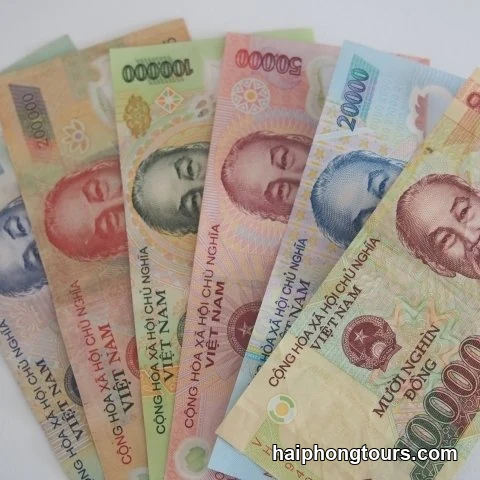
Vietnamese prices can contain many zeros. Read the entire screen before approving a card or QR transaction and count cash privately. The North Vietnam money guide covers cash, ATMs, cards, conversion and payment disputes.
Hotel and room phrases
- Tôi có đặt phòng., I have a reservation.
- Đây là mã đặt phòng của tôi., This is my booking reference.
- Phòng của tôi chưa sẵn sàng phải không?, Is my room not ready yet?
- Phòng có cửa sổ không?, Does the room have a window?
- Khách sạn có thang máy không?, Does the hotel have an elevator?
- Nước nóng không hoạt động., The hot water is not working.
- Điều hòa không hoạt động., The air conditioner is not working.
- Phòng quá ồn., The room is too noisy.
- Tôi có thể gửi hành lý không?, Can I store my luggage?
- Mấy giờ trả phòng?, What time is check-out?
Permission and photography
- Tôi có thể vào không?, May I enter?
- Tôi có thể ngồi ở đây không?, May I sit here?
- Tôi có thể chụp ảnh không?, May I take a photo?
- Tôi có thể chụp ảnh bạn không?, May I take your photo?
- Có được dùng đèn flash không?, Is flash allowed?
- Có được quay video không?, Is video allowed?
- Khu vực này có được vào không?, May I enter this area?
- Tôi sẽ không đăng ảnh., I will not post the photo.
Permission to enter is not permission to photograph, and permission to photograph is not permission to publish a close portrait. Ask separately when the distinction matters.

Medical help and emergencies
- Tôi cần giúp đỡ., I need help.
- Tôi cần bác sĩ., I need a doctor.
- Gọi xe cấp cứu., Call an ambulance.
- Tôi bị đau ở đây., It hurts here.
- Tôi khó thở., I am having difficulty breathing.
- Tôi bị dị ứng., I am having an allergic reaction.
- Tôi bị mất hộ chiếu., I lost my passport.
- Tôi bị mất điện thoại., I lost my phone.
- Tôi bị lạc., I am lost.
- Vui lòng gọi cảnh sát., Please call the police.
- Địa chỉ của tôi là…, My location or address is…
In a medical emergency, show the medication, allergy card, passport copy and insurance details if available. The North Vietnam health and emergency guide explains preparation and escalation.
Build an offline phrase card
- Save your hotel name, full address and map pin in Vietnamese.
- Add one sentence for each serious allergy or medical condition.
- Add your destination, pickup time and booking reference.
- Save passport and insurance details in secure offline storage.
- Download the language and map areas needed for the route.
- Keep essential phrases in a note that opens without internet.
- Use large text so another person can read the screen without taking the phone.
The North Vietnam SIM and internet guide covers eSIM setup, offline preparation and weak-coverage areas.
Five phrases to remember first
- Xin chào., Hello.
- Cảm ơn., Thank you.
- Xin lỗi., Sorry; excuse me.
- Tôi không hiểu., I do not understand.
- Bạn có thể viết ra được không?, Can you write it down?
Use Vietnamese to open the conversation, then support it with written details, maps and numbers. Clear verification matters more than perfect pronunciation, especially for transport, prices, allergies and emergencies.
Would you like help fitting this experience into your trip? Contact us with your travel dates, starting point, available time and group size. Tell us about walking limits or special interests so we can suggest a practical itinerary.