
Vung Duc is a mainland cave and memorial complex in Cam Pha, Quang Ninh, beside Bai Tu Long Bay. You can reach it by road: you do not need a ferry or a bay-cruise ticket. Choose it for limestone chambers, elevated views and a quieter look at Cam Pha’s history, provided your group is comfortable with a route that climbs into the hillside.
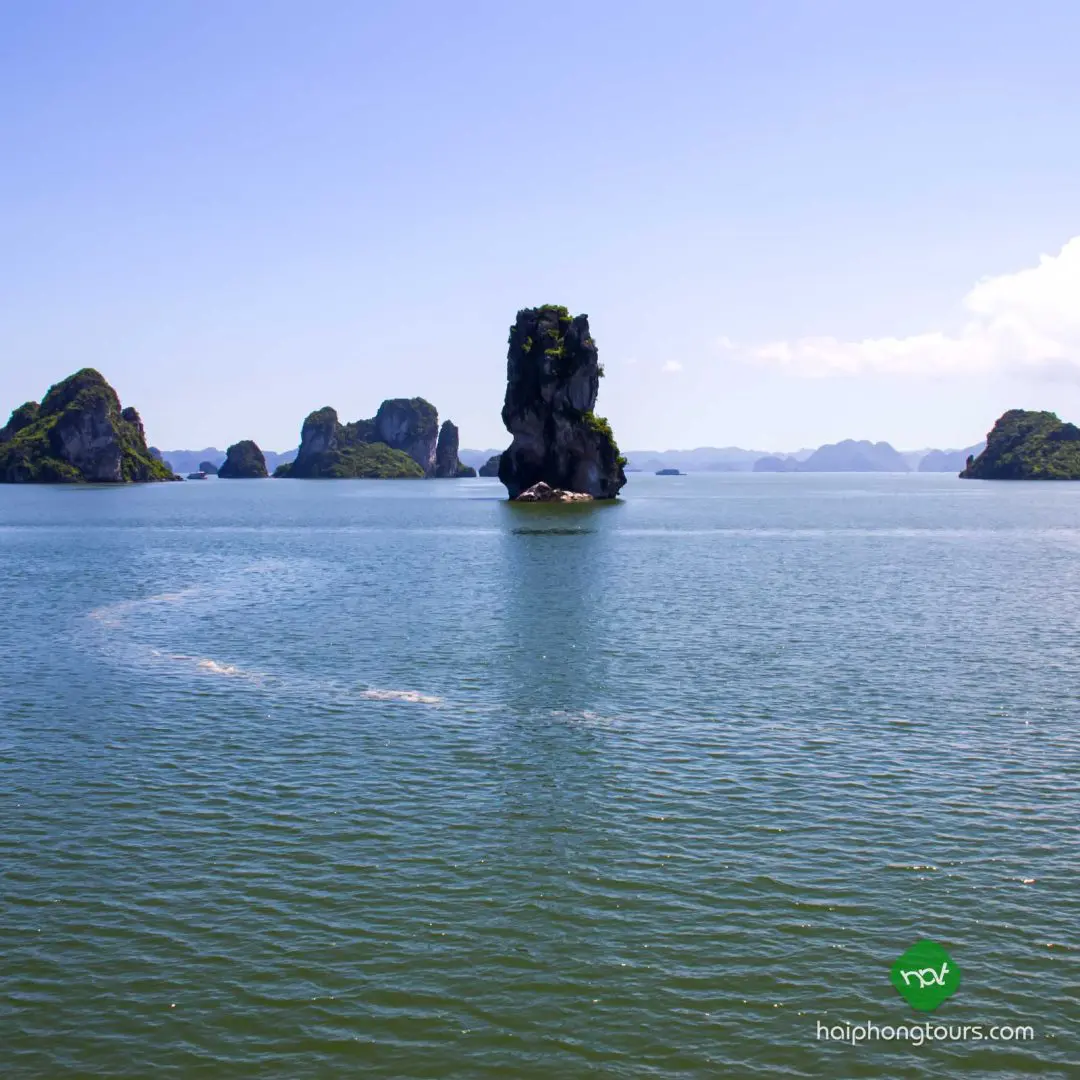
Decide which experience you want before arranging transport. A daytime visit to the Vung Duc cave complex and a meal-and-show reservation at Dragon Pearl Cave are different bookings. Hang Ngoc Rong, the show venue, is also known as Hang Doi within the wider complex. A photograph of a decorated dining room does not show what is included in an ordinary cave visit.
Find the caves, not just a name on the waterfront
Save Khu du lich hang dong Vung Duc, Cam Pha for the cave attraction. It lies by Ban Co Mountain on Vung Duc Road, in the Diem Thuy area. Older addresses use Cam Dong Ward; newer ones use Cam Pha Ward. Give your driver the attraction’s full name and the entrance pin supplied by the reception, rather than relying on the ward name alone.
The temple and memorial belong to the same heritage landscape, but a drop-off at the memorial does not settle where you should buy a cave ticket or start the walk. Agree on the correct entrance and a return meeting point before the driver leaves.

From a Halong hotel, plan this as a separate road outing east toward Cam Pha. Your starting point matters: a hotel in Bai Chay and one on the Hon Gai side do not have the same approach. Ask for a return-car quote covering the actual hotel, cave entrance and waiting time. A one-way taxi fare does not include a driver waiting while you explore.
What to look for inside the cave complex
The five named caves associated with Vung Duc are Thien Dang, Long Van, Ngo Ngang, Kim Quy and Hang Doi. Treat those names as a guide to the complex, not a promise that one ticket opens every chamber on every day. Ask reception which sections are operating and whether the visit includes a guide.
Thien Dang lies roughly 46 meters above sea level. Its entrance and outlook help explain the appeal of the location: you move from the coastal edge into limestone above the bay. Inside, look for hanging formations and stone curtains, then pause at permitted viewpoints instead of rushing straight to the next chamber.
Long Van sits higher and has branching spaces. In Kim Quy and Ngo Ngang, the attraction is again the variety of limestone shapes. Names and local interpretations often compare formations to animals or familiar objects; use them to understand the storytelling without expecting every shape to be immediately obvious.
Stay on the visitor route and leave formations untouched. If bats are present, give them space and follow the guide’s photography instructions. Do not seek out dark side passages or use a phone light as a reason to continue beyond the managed route.
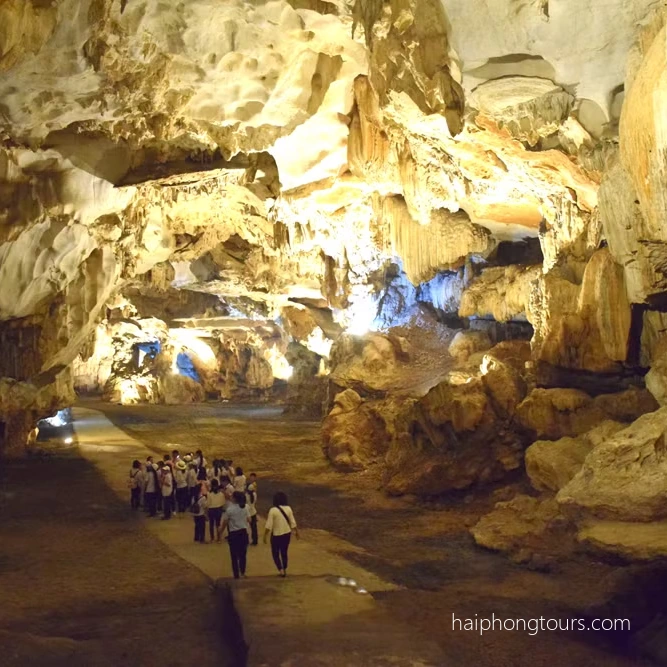 Limestone formations inside Thien Dang Cave at Vung Duc.
The memorial deserves a separate pause
Vung Duc also commemorates local people and mine workers killed during the French colonial conflict, particularly in 1948–1949. The temple, memorial and reliefs give this waterfront a significance that is easy to miss if you arrive thinking only about caves.
Keep the distinction between remembrance and entertainment clear. Dress respectfully around the temple, lower your voice during ceremonies and ask before photographing worshippers. An English-speaking guide can help connect the memorial to Cam Pha’s mining history; confirm that service in advance if detailed interpretation matters to you.
Cave visit or Dragon Pearl Cave show?
- Choose the daytime cave visit when your priority is exploring the landscape and you want flexibility around a shorter outing. Confirm the open chambers, walking route and admission arrangement directly.
- Choose the show and meal when the staged performance, lighting and set-menu dining are the reason for going. This has its own reservation, arrival deadline and much longer seated program.
- Combine them only after checking inclusions. Establish exactly which cave areas your reservation covers and whether a separate daytime visit adds anything you want to see.
The Dragon Pearl Cave lunch and dinner guide explains the meal packages, transport and booking conditions. Its advertised wheelchair access applies to that venue; do not extend that promise to the complete hillside cave circuit.
Tickets, opening arrangements and useful questions
For a daytime Vung Duc cave visit, contact the attraction directly. Confirm visiting hours and the last admission for your date before setting off. State explicitly that you want the ordinary cave visit if you are not booking a meal-and-show package.
Ask which caves are included, the total adult and child charge, whether guiding costs extra and where to park or meet your driver. Private functions can change the practical arrangement in an event space, so check access to your intended chambers rather than asking only whether the whole complex is open.
A useful message is: “We would like a daytime cave visit without the meal show. Which caves are open, what is the total price for our group, and where should our driver drop us off?” Add your date, party size and any walking limitations.
Walking, weather and how much time to leave
Plan for changes in level and wear shoes with a reliable grip. A cave interior does not make the entire outing sheltered: the approach and viewpoints are part of the visit. Wet weather can make exposed walking less comfortable, and you should follow any route restrictions rather than trying to reach every chamber.
For limited mobility, ask about the specific route from vehicle drop-off through the sections you want to visit, including steps and toilets. A stroller or wheelchair should not be assumed to work across the full circuit. Families can choose a shorter confirmed route rather than committing everyone to all five named caves.
As an initial planning allowance, set aside around two hours for a cave visit with pauses and a look at the memorial, then add all driving. This is not an official tour duration: the open route, guide arrangement and your walking pace determine the actual time.
Build a manageable Cam Pha day
Hai Phong Tours recommends choosing one main Cam Pha activity and one optional stop, instead of combining a full cave circuit, several temples and a fixed dinner show. If the caves are your priority, leave enough daylight for the walk and keep the rest of the day flexible.
For a cultural pairing farther east, consider Cua Ong Temple. It adds an active place of worship and a different historical focus, but also more steps and driving. Continuing all the way to Cai Bau Pagoda in Van Don turns this into a broader outing; choose that only when your return time allows it.
Vung Duc works best as a deliberate mainland visit. Confirm the cave route first, give the memorial its own time and arrange the return ride before arrival. Those decisions matter more than trying to collect every cave name in one visit.
Transport between Hai Phong and Cam Pha
Vung Duc, central Cam Pha and Cua Ong require different drop-offs. Use the Hai Phong to Cam Pha guide for arrival planning and Cam Pha to Hai Phong for the return.
Would you like help fitting this experience into your trip? Contact us with your travel dates, starting point, available time and group size. Tell us about walking limits or special interests so we can suggest a practical itinerary.