
Today, Vung Vieng is a managed visitor and heritage area, not an unchanged floating residential village. The fishing families who once lived on the bay were moved to the mainland in 2014. Former residents and other local workers may still return during the day for rowing, tourism, or aquaculture, so the visit can show real maritime skills and livelihoods without being a walk through a normal neighborhood.
Most cruise guests arrive by a smaller excursion boat, then explore by a locally rowed bamboo boat or a kayak. The natural stone arch, limestone walls, sheltered water, and floating service or aquaculture structures form the core experience. Cultural displays, fishing demonstrations, aquaculture visits, and pearl processing are possible, but only when the exact program includes them.
What “fishing village” means at Vung Vieng today
Vung Vieng was once a permanent waterborne community. Families lived and worked around floating homes, boats, and fishing grounds. The 2014 relocation changed that everyday residential function.
The name survives because the place, structures, working knowledge, and cultural identity still matter. Preserved floating houses, aquaculture rafts, visitor facilities, and daytime workers can all be part of the scene. They should not be treated as proof that the former village still operates as an inhabited neighborhood.
This distinction does not make the stop artificial. It makes the visit interpretive: you are seeing a landscape shaped by a fishing community and the ways its heritage and some water-based work continue after residents moved ashore.
What cruise visitors actually see
The natural “village gate”
A large stone arch marks the Vung Vieng area and is commonly described as the village gate. It is one of the easiest features to recognize among the surrounding limestone formations. Small boats can pass through the opening, although the exact circuit depends on the local operating plan.
Karst scenery and sheltered water
The excursion moves away from the main overnight vessel and closer to the rock walls, coves, and quieter water. Even when the cultural component is brief, the low viewpoint from a bamboo boat or kayak makes the landscape the main part of the visit.
Floating structures and daytime work
You may see preserved raft houses, service platforms, small shelters, and aquaculture structures. Some people return to the area during the day for visitor services, fishing-related work, or small-scale aquaculture. What is visible changes as structures are maintained, repurposed, or repaired.
Cultural or pearl-related stops
The wider visitor area has supported displays about fishing-community life, aquaculture experiences, and pearl cultivation or processing. A short cruise stop may not enter any of them. Nearby Tung Sau is also associated with pearl farming, so “pearl visit” and “Vung Vieng visit” should not be used as interchangeable terms.
Bamboo boat or kayak: the experience is different
- Locally rowed bamboo boat: you remain seated while a boatman handles the rowing. This suits travelers who do not want to paddle, but you should still confirm boarding steps, seating, and assistance.
- Kayak: you paddle yourself or with a partner. It gives you more control over your movement and puts the emphasis on water and rock scenery rather than a narrated cultural visit.
- Tender or day boat: this usually transfers guests from the main cruise to the excursion area. It does not automatically mean that the local circuit will also be a seated boat ride.
Do not assume the two activities are freely interchangeable. Ask whether your departure assigns one, allows a choice, or offers the bamboo boat only when conditions permit. Also confirm whether the activity is included, because package wording can change.
What is not guaranteed
- A living residential village: the former waterborne community moved ashore in 2014.
- A museum-style tour: some visits are mainly a scenic rowing or kayaking loop.
- A pearl demonstration: pearl activity exists in the area, but it must be named in the program.
- Fishing with a local or visiting an aquaculture raft: these require an organized activity rather than a general place name.
- Swimming: current cruise programs normally associate Vung Vieng with rowing or kayaking and use other named areas for swimming.
- The stop itself: weather, tide, port instructions, and operating conditions can change the route or cancel a small-boat activity.
Which current HPT itineraries name Vung Vieng?
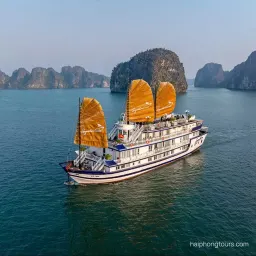
The Renea Cruise 3-day, 2-night itinerary lists Vung Vieng on the middle day, reached by a day boat, with a boat ride or kayaking. It is the clearest currently published HPT match for travelers who want this stop, but the final activity still depends on operating conditions.
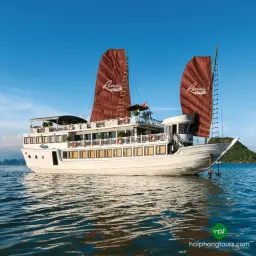
The Signature Cruise 3-day, 2-night itinerary is another relevant option. Before paying, ask HPT to state whether your dated departure visits Vung Vieng on day one or day two, whether the local activity is a bamboo boat or kayak, and whether Cong Do replaces the stop.
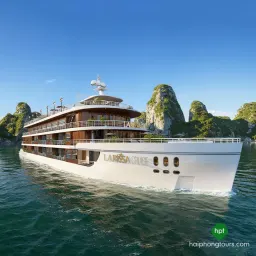
The Larissa Cruise 3-day, 2-night itinerary publishes a day-two bamboo-boat visit. Its HPT listing advertises an October 2026 opening, so confirm that the ship has entered service for your date and that the named route will operate on Larissa itself.
A cruise marketed for Bai Tu Long Bay does not automatically visit Vung Vieng. The official management framework places Vung Vieng on Ha Long Bay Route 4, while operators use broader commercial bay labels. The named stop and dated day-by-day program are more useful than the bay name alone.
Questions to ask before you book
- Is Vung Vieng named on my exact departure date? Ask for the day and approximate part of the day.
- Is it a stop or only a sail-past? The confirmation should describe leaving the main vessel.
- How do guests explore? Request “locally rowed bamboo boat” or “kayak,” not simply “boat.”
- Can I choose the activity? If you will not kayak, confirm the seated alternative in advance.
- What cultural content is included? Ask separately about a guide explanation, preserved house, display, fishing demonstration, aquaculture raft, and pearl activity.
- Are there extra charges? Get the activity and entrance inclusions in writing rather than relying on a general package label.
- What can replace Vung Vieng? Ask for the normal substitute and whether a route change affects refunds.
- What assistance is available? Travelers with limited mobility should ask about steps between the main ship, tender, and local craft, plus the option to remain on board.
Practical preparation for the excursion
Wear footwear that can handle a wet transfer, protect your phone or camera, and keep both hands available when stepping between boats. Use the life jacket and follow crew instructions even when the water looks calm.
Sun, glare, rain, and spray can all matter on an open small craft. Bring sun protection and a light rain layer, but keep luggage to a minimum. If you choose a kayak, expect your lower legs or clothing to get wet.
Do not judge a changed or canceled activity only by the weather at the port. Conditions can differ farther out in the bay, and the crew may have to follow instructions that prioritize safe navigation.
Is Vung Vieng worth choosing a cruise for?
Vung Vieng suits travelers who want a small-boat view of the karst landscape and a concise connection to Ha Long’s former waterborne communities. It is especially relevant when the itinerary clearly includes a locally rowed boat, cultural explanation, aquaculture, or pearl component that matches your interests.
It is a weaker fit if you expect to wander independently through an inhabited floating neighborhood or spend several hours in a detailed cultural center. In that case, the honest value of the stop is its combination of scenery, preserved maritime heritage, and present-day visitor activity, not the illusion that village life has remained unchanged.
Frequently asked questions
Is Vung Vieng still inhabited?
Not as the permanent floating residential community it was before 2014. Residents moved to the mainland, while some people return during the day for tourism, aquaculture, and related work.
Are Vung Vieng, Vong Vieng, and Vông Viêng the same place?
Yes. English and Vietnamese official or operator materials use these spelling variants for the same area. “Vung Vieng” is the clearest form to use when asking an English-speaking booking agent.
Does every Bai Tu Long Bay cruise visit Vung Vieng?
No. Some routes use Cong Do, Cap La, caves, or other stops, and even a cruise that mentions Vung Vieng may substitute it on certain dates. Check the exact duration, vessel, and dated itinerary.
Is the bamboo boat better than kayaking?
Choose the bamboo boat if you prefer to sit while someone else rows or if you want an easier physical activity. Choose a kayak if you want to paddle and focus on the water-level landscape. Availability and cultural interpretation vary by program.
Will I see pearl farming?
Possibly, but not automatically. Ask whether the cruise includes a Vung Vieng pearl or aquaculture visit and confirm that it is not referring to nearby Tung Sau.
Final advice
Choose Vung Vieng for the stone gateway, close-up karst scenery, small-boat excursion, and a careful look at fishing-community heritage after relocation. Before booking, get one written answer that names the stop, the local craft, the cultural or pearl component, any extra charge, and the normal substitute if conditions change.