
For water sports in Vietnam, choose the activity before choosing the beach. A guided kayak outing in Lan Ha Bay suits scenery and gentle exploration, Da Nang has surf lessons and coastal SUP sessions, and Phu Quoc has boat trips focused on snorkeling. Water skiing and parasailing require a specialist operator and suitable conditions.
These six activities offer different experiences, from looking beneath the surface to learning a new skill. Your swimming ability, the actual time on the water, and the launch location matter more than a long list of destinations. A sunny day does not guarantee suitable wind, waves, currents, or visibility.
Choose the activity that fits your trip
- Water skiing: choose this for an instructor-led challenge behind a towboat. Arrange it with a watersports center before traveling specifically for it.
- Surfing: choose a lesson if you want to learn to catch waves. Beginners need a suitable break and coaching, rather than simply a board rental.
- Stand-up paddleboarding: choose a supervised introductory session for balance and coastal scenery. A calm-water outing and a SUP surfing lesson involve different skills.
- Kayaking: choose a guided route for limestone scenery and a seated paddling experience. A cruise with a kayaking stop works well when you also want sightseeing and lunch.
- Snorkeling: choose this to observe reefs and fish while breathing through a snorkel at the surface. Prioritize the reef stop and supervision over the number of islands advertised.
- Parasailing: choose this for an aerial view while attached to a boat-towed parachute. Check the operator’s equipment, participant restrictions, and weather policy before paying.
1. Water skiing: arrange a specialist session
Water skiing uses skis and a towline to a powered boat. It is different from riding a jet ski, standing sideways on a wakeboard, or riding a flyboard powered by water jets. Check the exact activity name when booking; a general watersports package may not include skis or a skiing lesson.
Six Senses Ninh Van Bay, in Khanh Hoa near Nha Trang, offers water skiing alongside wakeboarding and other tow sports. Sessions are sold in short time increments with instruction. If you are staying elsewhere, confirm whether you can book the activity as a nonresident and how resort access and transfers work.
For a first attempt, ask how much of your slot is instruction, whether failed starts count toward the paid time, and whether the equipment fits your size and ability. Tell the instructor you are a beginner, wear the flotation equipment provided for the activity, and learn the stop signal before entering the water.
Best for: travelers who want an active lesson and can accept that getting up on the skis may take repeated attempts. Choose a quieter outing if you dislike falling into open water or being towed at speed.
2. Surfing: learn on a suitable Da Nang break
Da Nang is a practical place to include a surf lesson in a city-and-beach stay. Go Surfing operates from locations in the Son Tra beach area and at Non Nuoc; confirm the meeting point for your lesson because the chosen beach can change the journey from your hotel.
The coast generally has smaller waves around April or May through summer, with stronger winter surf. These are broad patterns, not a promise of beginner conditions on any particular morning. Ask the school to select the break and lesson time for your experience level.
A first lesson should cover positioning, handling the board, getting through the shore break, and returning to the beach. Check whether instruction, a suitable board, and sun-protection clothing are included. Describe your actual swimming confidence rather than relying on a package labeled suitable for everyone.
Best for: travelers who enjoy learning a physical skill and have room in the itinerary to reschedule. One lesson is an introduction; leave time for another if improving your surfing is a main reason for the visit.
3. Stand-up paddleboarding: choose supervision and a realistic route
SUP uses a broad board and a handheld paddle. You can begin kneeling while learning balance, but you still need to be ready to fall in and get back aboard. Do not confuse a relaxed introductory paddle with SUP surfing in breaking waves.
Man Thai Beach in Da Nang has organized SUP outings. Go N Chill offers sessions from this beach, with morning trips and a different nearshore afternoon program. Confirm the route, launch point, English-language briefing, and whether your booking includes a guide on the water or only equipment rental.
For paddling in Hanoi, the Red River SUP guide covers route choices, equipment and the return arrangement.
For your first session, choose a short supervised outing rather than an independent crossing to an offshore landmark. Ask about board capacity before sharing with another adult or a child, and make sure everyone has correctly fitted flotation equipment.
Offshore wind can push a board away from land even when the water looks smooth. Avoid paddling in those conditions. A leash must also suit the setting: an ordinary ankle leash can create an entrapment risk in moving or tidal water, so have a trained instructor explain the appropriate system and its release.
Best for: travelers who want a short activity close to their beach accommodation. Book a coached session if you have never paddled before; sunrise photographs are not a substitute for a clear route and supervision.
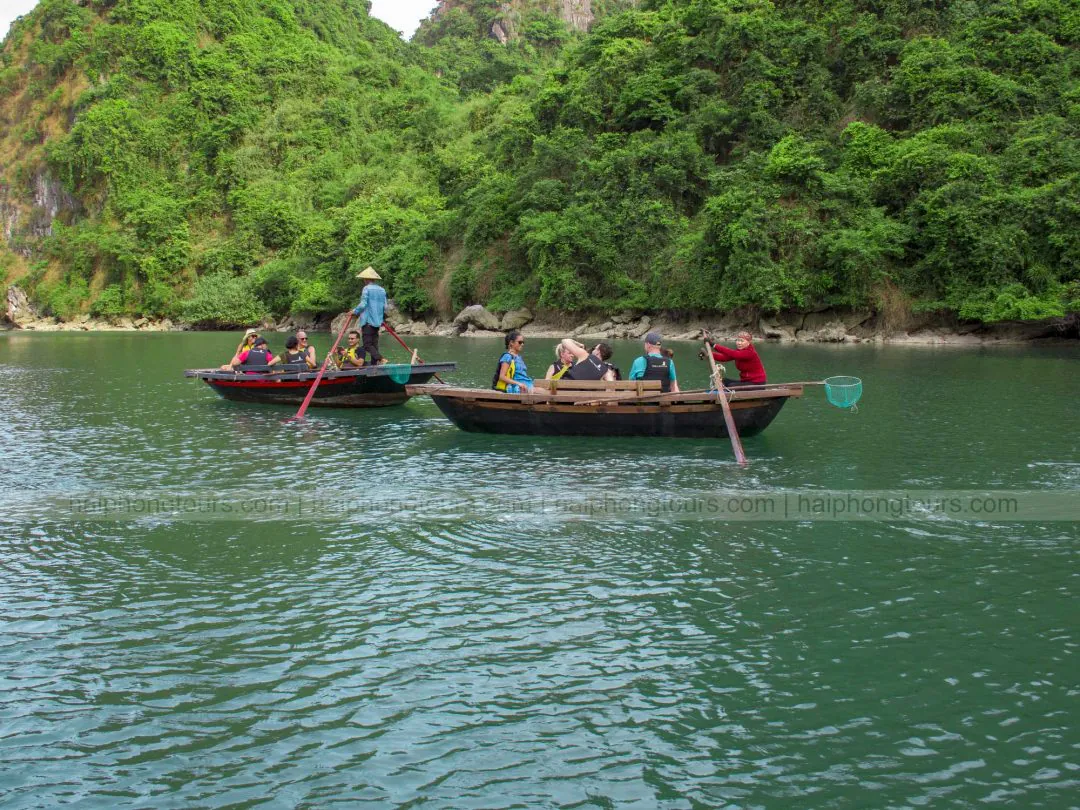
4. Kayaking: combine paddling with Lan Ha Bay scenery
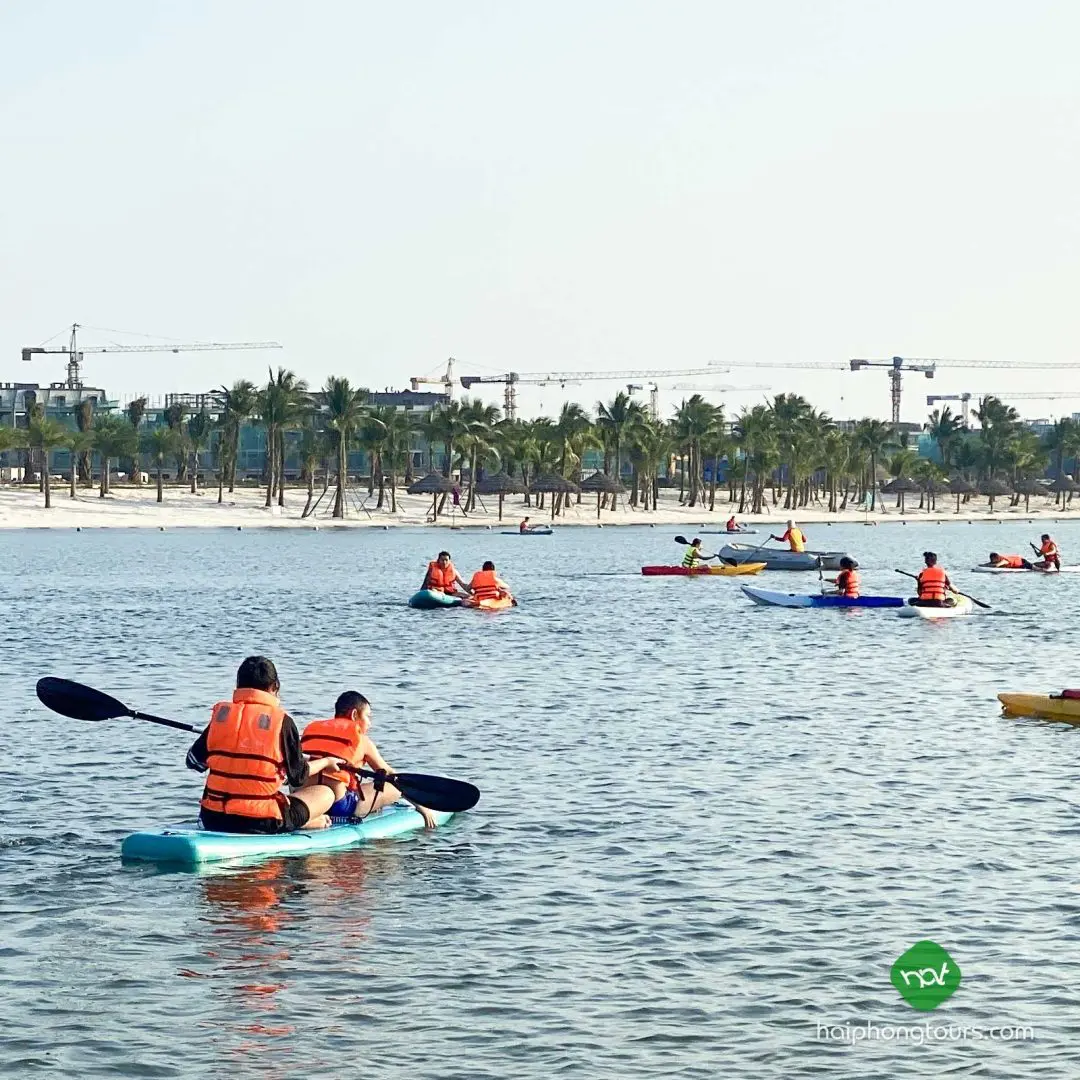
Kayaking lets you explore from a seated position, usually using a double-bladed paddle. In a shared kayak, coordinating with your partner matters more than paddling hard. A short organized session can fit travelers who want to try the activity without committing to a long expedition.
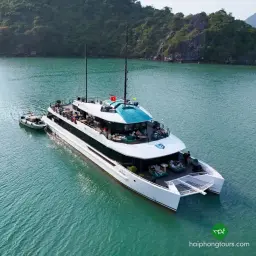
For a sightseeing day with a paddling stop, the Catamaran Premium Day Cruise in Lan Ha Bay includes kayaking or a bamboo-boat option around the Dark and Bright Cave area. It departs from Tuan Chau, so staying on Cat Ba does not mean the boat will collect you there.
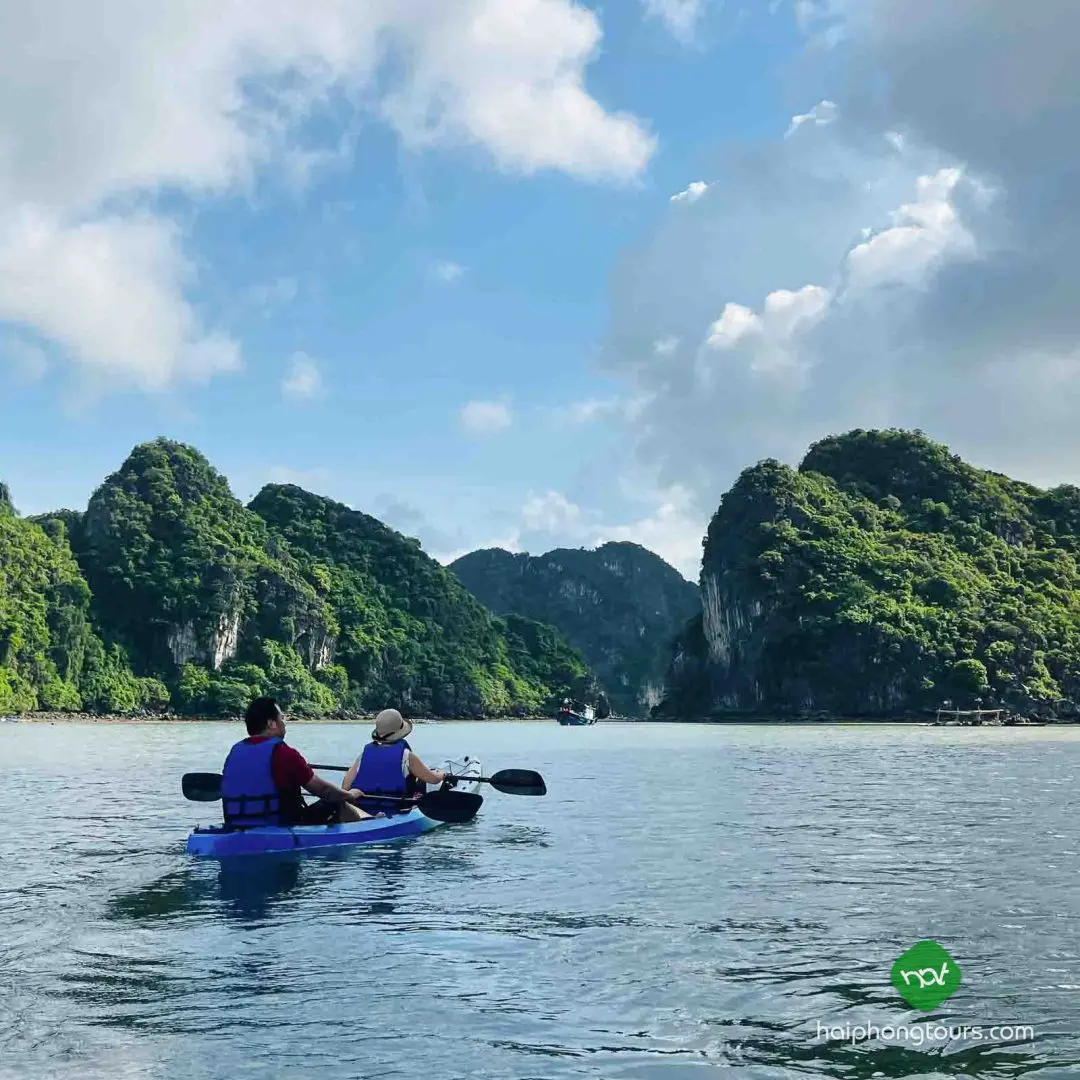
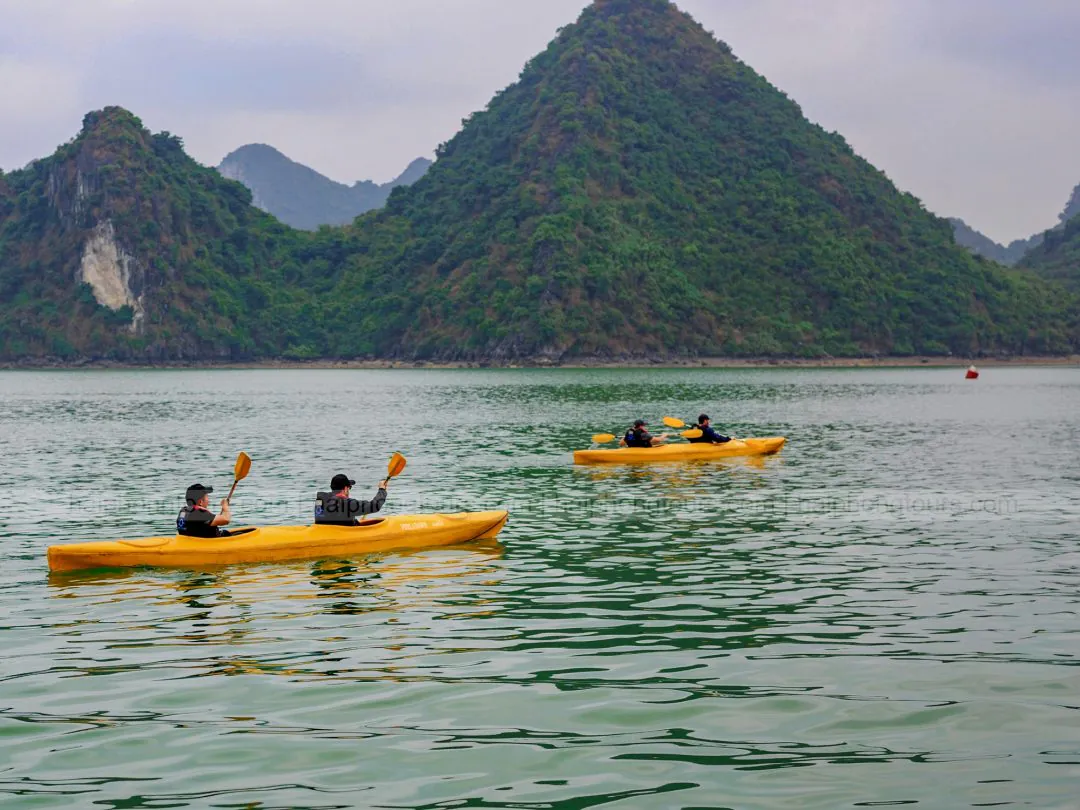
Kayaking in Lan Ha Bay.
Choose between the cruise-only package and the package with transfers. Confirm the hotel pickup for Hanoi, Hai Phong, or Halong; Ninh Binh requires a private car and a surcharge. The cruise occupies roughly six hours, while the complete day is longer once road travel is included. It is a cruise with an activity stop, not six hours of continuous kayaking.
Follow the permitted route and the guide’s instructions around cave entrances, other boats, and changing water levels. Wear a correctly fitted life jacket and keep the return point in sight or stay with the guided group. Never paddle into an unapproved passage to follow another group’s photographs.
Best for: couples or groups combining bay scenery with a short activity. If someone prefers not to paddle, ask whether the bamboo-boat alternative is operating that day. Water activities remain subject to conditions and the crew’s decision.
5. Snorkeling: book for the reef experience
Snorkeling normally uses a fitted mask, a snorkel, and fins so you can look underwater while remaining at the surface. The snorkel does not provide an underwater air supply. You need to understand how the equipment works and be comfortable with your face in the water before leaving the boat or shore.
Phu Quoc has snorkeling trips to northern and southern sites. Flipper Diving arranges excursions with equipment and hotel transfers, using different departure points for the two areas. Its northern route has a seasonal closure, so confirm which side is operating for your dates instead of choosing a trip solely because it is near your hotel.
A boat excursion can occupy most of the day, although the actual snorkeling takes place in shorter sessions. Ask which reef sites are planned, how long you will spend in the water, how many people share the guide, and whether the boat has an easy way to climb back aboard. Visibility and the site selection depend on conditions.
Keep clear of coral with your feet and fins. Do not stand on the reef, touch marine animals, or feed fish for photographs. If you need a rest, use the boat or a designated resting arrangement rather than the coral beneath you.
Best for: travelers interested in marine life who are comfortable floating in open water. If you cannot swim or are anxious, tell the operator before booking and ask for an appropriate supervised introduction; a life jacket alone does not make every offshore excursion suitable.
6. Parasailing: check the ride, access, and operating limits
Parasailing lifts you in a harness beneath a parachute towed by a powered boat. You are a passenger relying on the crew and equipment, rather than learning to pilot a paraglider. The attraction is the view from above the bay.
Hon Tam in Nha Trang offers solo and tandem parasailing in its Sparkling Waves activity area. Confirm current availability before arranging the island visit. A boat ticket, beach admission, or mud-bath package should not be assumed to include the parasailing ride.
Ask whether the quoted duration means airborne time or the whole boat outing, how takeoff and landing work, and whether spectators pay separately. The crew should explain the harness, flotation equipment, weight limits, and what happens if weather changes. Age and weight rules depend on the specific operation and equipment.
Best for: travelers comfortable with heights who want a short aerial experience. Skip the ride if you cannot obtain a clear briefing or the operator dismisses concerns about deteriorating weather.
Plan around the activity, not one Vietnam-wide season
The conditions that help one sport can make another less suitable. Surfing needs waves; beginner SUP, boat transfers, and comfortable snorkeling generally need a more sheltered setting. Check the conditions for the exact coast and launch point.
- Da Nang: discuss small-wave lessons with a surf school if you are new to surfing. Do not apply the same surf recommendation to a first-time SUP outing.
- Ninh Van Bay: February through September is generally the more favorable period for the resort’s sea activities, but confirm the actual operating schedule before building a stay around water skiing.
- Phu Quoc: book the snorkeling route that is operating for your dates. A trip to the north and a trip to the south are not interchangeable when sea conditions change.
- Lan Ha Bay: keep a flexible day for a cruise and its water activities. A confirmed sailing does not guarantee that every kayaking or swimming stop can go ahead.
Compare the complete booking before paying
A low equipment-rental price is difficult to compare with a guided outing that includes transport and meals. Request a breakdown for the actual group and activity you want.
- Location and access: obtain the launch point or pier, hotel collection area, and return arrangement. Ask whether resort entry or an island boat transfer costs extra.
- Activity time: distinguish the full excursion, instruction, waiting time, and minutes actually participating. Check whether a price applies per person, board, kayak, or ride.
- Support: confirm guide availability, briefing language, equipment sizes, and the plan for participants who need to return early.
- Changes: understand cancellation, rescheduling, and refund terms if conditions are unsuitable or the main activity is replaced.
Pack secure swimwear, sun protection, drinking water, a towel, and dry clothing. Leave valuables ashore or use storage appropriate to the activity. Check that your travel insurance covers the sport you actually book, including any conditions for motorized or towed activities.
Can beginners take part without a diving certificate?
Snorkeling does not require a scuba-diving certificate. Scuba is a separate activity using breathing equipment underwater. If you want to try it without certification, book a recognized introductory experience with a qualified professional, complete the required screening, and stay within that program’s limits. A trial dive does not qualify you to dive independently.
For any of these water sports, describe your experience honestly and choose a session matched to it. A shorter, well-supported outing at the right location is more useful than booking several activities that do not fit your ability or travel day.
Would you like help fitting this experience into your trip? Contact us with your travel dates, starting point, available time and group size. Tell us about walking limits or special interests so we can suggest a practical itinerary.