
Xom Trai Cave is a worthwhile stop for travelers interested in how people lived in northern Vietnam long before its temples and citadels were built. Its appeal is the evidence of daily life: stone tools, food remains, hearths and layers of occupation. Choose a visit with local explanation, rather than expecting a long underground walk or a cave-lighting spectacle.
Pair it with Lang Vanh Rock Shelter if archaeology is a main interest and the local access arrangements work for your date. These are two separate sites. For a first visit, giving Xom Trai enough time to understand the landscape and reconstructed living area is more useful than rushing between both entrances.
Find the right places in the former Hoa Binh area
For your driver, save the name Hang Xóm Trại, xóm Trại Sào, xã Mường Vang, tỉnh Phú Thọ. Older directions place the cave in Tan Lap commune, Lac Son district, Hoa Binh province. The name Hoa Binh still matters geographically and archaeologically, even though the current provincial address is Phu Tho.
The second destination is Mái đá Làng Vành, xóm Vành, xã Yên Phú, tỉnh Phú Thọ. A rock shelter is an overhanging cliff space used for shelter; it need not be a deep cave. Send both names when arranging transport so that a general request for “the prehistoric cave” does not become a visit to the wrong site.
Plan the visit within a journey through the former Hoa Binh area, with a vehicle available for the smaller local roads and your return. Do not treat it as a quick stop beside the Hoa Binh urban waterfront or a short taxi diversion from Hanoi.

What to look for at Xom Trai
The cave opens from a limestone hill above the valley, beside the Lan stream. It is relatively shallow, extending a little over 13 meters into the rock, and daylight reaches well inside. The entrance is roughly 15 meters above the valley floor. Expect an approach to a hillside site rather than level access directly from a car door.
Start outside. The relationship between the shelter, water, valley and nearby stone is the first part of its story. People did not choose the site because it would look impressive in a photograph: the surrounding landscape provided resources for living and making tools.
Read the occupation layers, not just the shape of the cave
A cultural layer is material left by human activity and accumulated over time. Here, food remains, charcoal, stone-working debris and other traces help archaeologists reconstruct repeated use of the shelter. A shell embedded in a deposit matters partly because of its position alongside everything around it.
Ask the person explaining the site to distinguish three things: the natural limestone, surviving archaeological deposits and areas arranged for visitors. This turns a small-looking cave into a more understandable place. The thickness of a deposit also does not mean that everything in it belongs to one moment.
Separate the reconstructed hearth from original evidence
Part of Xom Trai’s interior has been arranged to recreate a prehistoric living space around a hearth. This helps visitors picture ordinary activity, but the scene is an interpretation. It is not an ancient household left intact with all its contents still in place.
The protected grounds include a gate, paths and a small pagoda named Trại Sơn Cốc Tự near the approach. Treat the worship space quietly and follow the indicated visitor route. The pagoda is part of the site’s later community life; it is not evidence that prehistoric inhabitants practiced the same religion.
Why the archaeology matters
Xom Trai and Lang Vanh belong to the wider study of Hoabinhian archaeology, associated with prehistoric communities in Vietnam and other parts of Southeast Asia. In this context, “Hoa Binh culture” is an archaeological term. It should not be confused with a description of every person living in Hoa Binh today.
The useful theme is adaptation to a limestone-valley environment. Pebbles became tools; gathered shellfish and hunted animals became food; hearths and discarded materials left evidence of repeated domestic activity. Burials also show that these places had uses beyond a temporary shelter from rain.
You do not need to memorize a list of ancient dates. A better question is what a particular discovery can demonstrate. A worked stone can tell you something about manufacture; burnt material can contribute to dating; food remains can help explain the surrounding environment. One object alone rarely tells the whole story.
Should you add Lang Vanh Rock Shelter?
Lang Vanh makes a useful comparison because its broad, open shelter differs from Xom Trai’s cave setting. Madeleine Colani excavated here in 1929. Shell-rich deposits, stone objects and traces of occupation and burial explain its archaeological significance.
The local name hang ốc, or shell cave, refers to the conspicuous accumulation of shells. Look at these as archaeological evidence, not loose souvenirs. Do not move a shell, brush a layer clean for a photograph or step into an exposed deposit.
The final approach deserves a specific check when arranging the visit. Road improvements have been underway in the area; have your local contact identify the current vehicle drop-off and walking section. Do not build a tight two-site schedule around the assumption that a larger vehicle can reach both entrances.
Add Lang Vanh when you want to compare how people used two different shelters. Skip the extra stop when access is awkward, the ground is wet or your group mainly wants a brief introduction. Neither site becomes more meaningful simply by collecting an entrance photograph at both.
A realistic visit plan
Arrange Xom Trai first, ideally in daylight with someone who can explain the visible features in a language you understand. As a planning allowance, set aside about an hour for the approach, explanation and looking around, with more time for detailed discussion. This is not a published tour duration.
Before setting off, settle the meeting time, access, any visitor or guiding charge and the vehicle’s return arrangement. There is little value in arriving after a long drive if nobody is available to explain which features you are seeing. A local accommodation host or the Muong Vang commune’s cultural staff can help direct an access inquiry.
If Lang Vanh is included, leave the second part of the outing flexible for the transfer, walking and a meal. The Hoa Binh food guide gives useful regional meal ideas; arrange lunch in a village or town rather than depending on food service at the archaeological sites.
Where to see collections and a different kind of cultural history
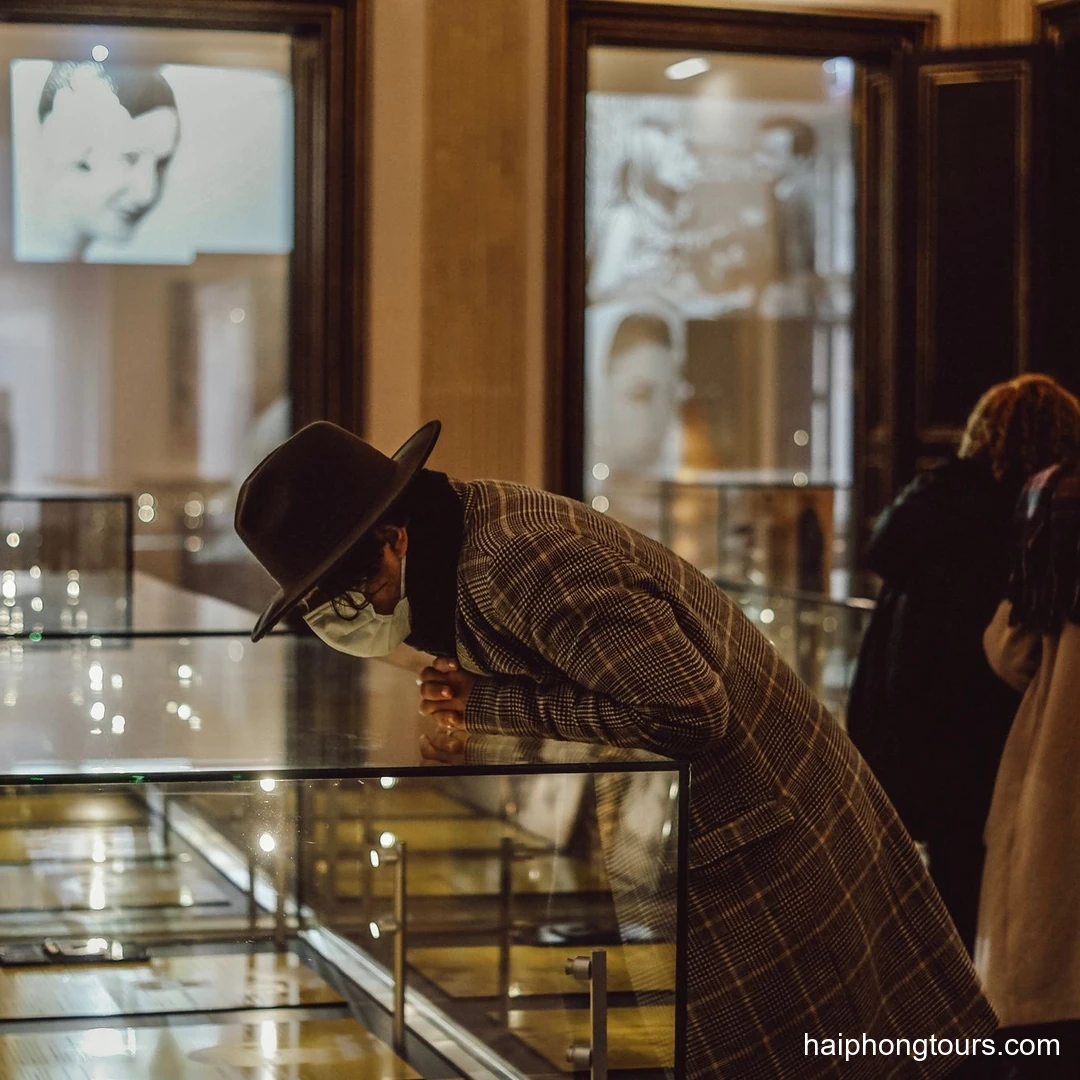
Not every excavated object remains in the cave. Finds from Xom Trai are held in museum collections, including Hung Vuong Museum’s branch 3 in Hoa Binh ward. If particular objects are the reason for visiting, check that branch’s current display and opening arrangements. Do not go to the Viet Tri branch expecting the same collection.
For a separate visit about historical Muong houses, household objects and contemporary art, consider the Muong Cultural Space Museum. It is a different institution and subject, not the cave’s excavation museum. Combining the two can be rewarding if you keep prehistoric archaeology and later Muong cultural history distinct.
Suitability and care at the sites
Wear shoes with grip and keep children close on the approach and around protected deposits. For anyone needing step-free access, obtain a description of the entire route from drop-off to the viewing area before committing. Natural daylight inside Xom Trai does not make the hillside approach step-free or remove the risk of slippery ground.
The best visit is a small, attentive one: understand the shelter, identify a few meaningful traces and leave the deposits untouched. If your main interest is dramatic formations, long passages or organized adventure caving, choose a different outing. Come here for the human story carried by an otherwise modest piece of limestone landscape.
Would you like help fitting this experience into your trip? Contact us with your travel dates, starting point, available time and group size. Tell us about walking limits or special interests so we can suggest a practical itinerary.