
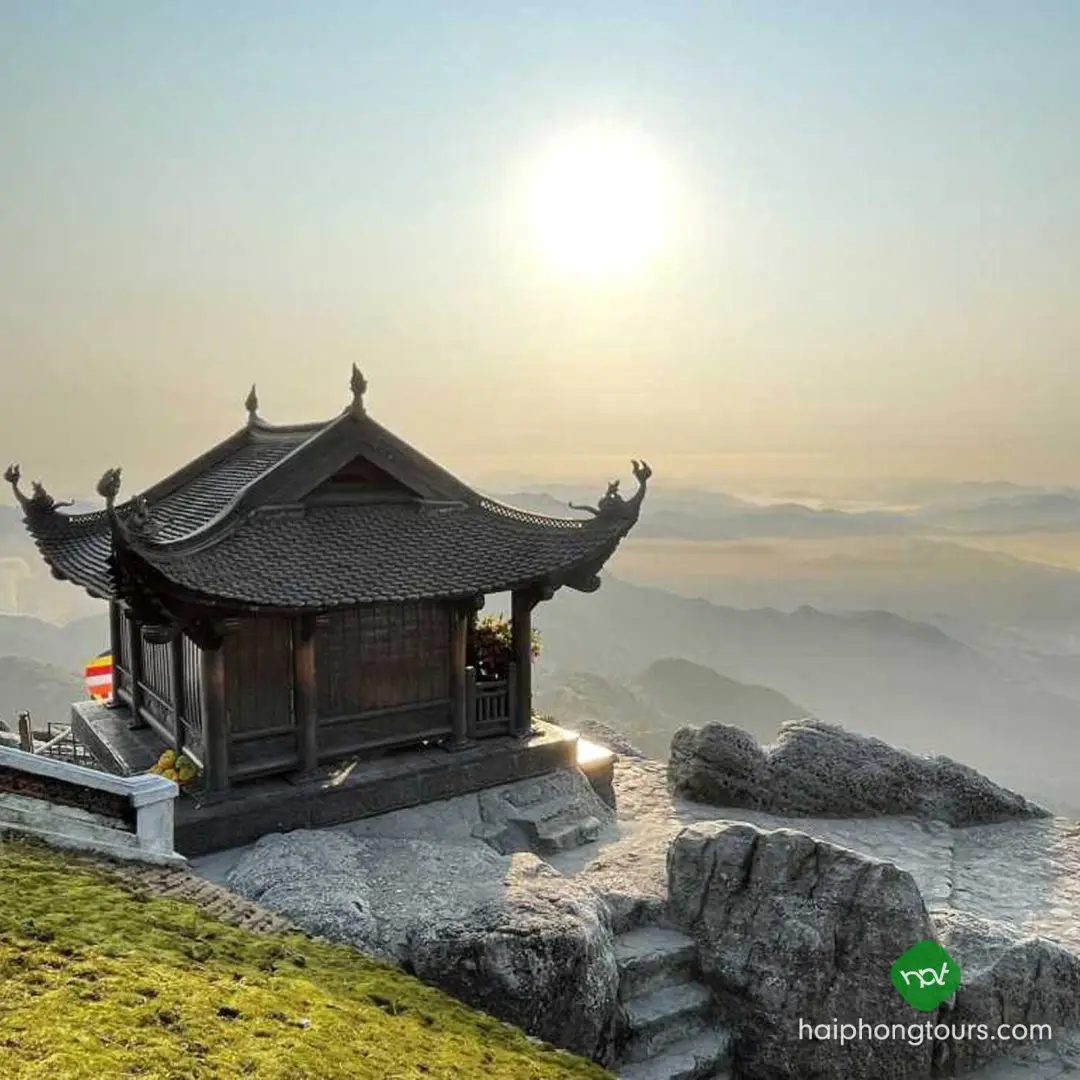
Choose a Yen Tu day trip when you can arrive early, plan to use the cable cars and are satisfied with a focused mountain visit. Stay overnight when you want to walk much of the pilgrimage route, travel from Hanoi without rushing, visit during the busy spring season, or need flexibility for mobility and mountain weather.
The correct choice depends less on hotel preference than on four time blocks: travel to Yen Tu, the route you want on the mountain, the descent, and the onward or return journey. Count all four before deciding that Yen Tu fits into one day.
Day trip or overnight: the quick answer
- From Hai Phong: a day trip is usually practical because the listed private-road journey is about 40 km and 1 hour 6 minutes each way.
- From Ha Long: a day trip is also practical from a hotel or road-accessible pickup, with a listed journey of about 60 km and 1 hour 24 minutes each way.
- From Hanoi: a day trip works with an early private departure and cable-car-assisted route; an overnight stay is better for extensive walking or a slower pace.
- After a morning cruise: travel to Yen Tu and stay overnight. An afternoon arrival is too uncertain for a relaxed summit visit.
- With limited mobility: stay overnight if extra rest, a quieter start or a lower stopping point would improve the day.
Start with the mountain route you actually want
There are several valid Yen Tu visits. A short lower-mountain visit, a two-cable-car route toward the summit and a fuller pilgrimage walk need very different amounts of time.
Lower area and Hoa Yen
Choose this for cultural context without making Dong Pagoda the objective. You can visit the foothills and Lan Pagoda, or use the lower Hoang Long cable-car section toward the Hue Quang Stupa and Hoa Yen. Hoa Yen is the central pagoda in the mountain system and is a meaningful endpoint.
This is the most adaptable day-trip plan. It leaves room for a late arrival, limited mobility or worsening weather, although walking and steps still remain.
Both cable-car sections and the upper mountain
The lower Hoang Long and upper Bach Long lines remove much of the elevation. They are separate systems, so visitors walk through mountain sites between them. After the upper line, the route continues toward An Ky Sinh, the Buddha-Emperor statue and the final climb to Dong Pagoda.
The official operator describes about two hours for a cable-car-assisted journey toward the sacred peak. A traveler should allow more for tickets, queues, pagoda visits, rests, the descent and any meal. The estimate is a route guide, not an appointment time for the return car.
Walking pilgrimage
The historic route is about six kilometers with more than 6,000 steps. The official operator describes roughly four to five hours for uphill travel, before adding religious stops, food, rests and the descent.
If walking is the purpose of the trip, stay near the mountain the night before. Combining a full ascent with a long road journey from Hanoi and another late drive back makes the day depend on ideal fitness, traffic and weather.
When a Yen Tu day trip works well
A day trip is a good choice when all of these conditions are true:
- you can start early enough to reach the correct Quang Ninh entrance well before the final downhill cable-car operation;
- you have chosen a clear stopping point instead of assuming everyone must reach Dong Pagoda;
- your transport waits or your return vehicle has a firm meeting plan;
- the group can manage the walking, station changes and steps required by that route;
- you are willing to shorten the visit if rain, mist, queues or fatigue slow the ascent.
A day trip does not need to include the summit to be worthwhile. A well-paced visit to Hue Quang and Hoa Yen is better than reaching the final steps too late and rushing the descent.
When staying overnight is the better decision
You are coming from Hanoi
Hai Phong Tours lists Hanoi to Yen Tu at approximately 140 km and 2 hours 30 minutes one way. A same-day return therefore begins with about five hours of expected road travel before extra traffic or stops.
Stay overnight if you dislike very early departures, want a slow visit or expect to spend substantial time in worship. Arriving one afternoon and starting the mountain the next morning separates road fatigue from the ascent.
You want to walk rather than ride most of the route
The walking pilgrimage is the strongest reason to stay. An overnight base lets you begin with daylight, carry less pressure from the return schedule and decide whether to descend partly by cable car.
Confirm which one-way cable-car tickets are available on the day. Do not assume a particular hiking-and-riding combination from an old ticket chart.
You are visiting during the spring pilgrimage season
The traditional festival begins around the tenth day of the first lunar month, with the Gregorian date changing each year. This period can bring heavier road traffic, longer ticket and cable-car queues, and slower movement near religious sites.
An overnight stay cannot remove the crowds, but it can let you begin earlier and avoid calculating the whole experience around a same-evening return to Hanoi.
Your group needs more rest or has mixed mobility
Older travelers, children and people with limited mobility benefit from time to reassess at each stage. The cable car does not create a step-free route, and the summit should remain optional.
Staying overnight also makes it easier to split the group: some travelers can enjoy the base or lower sites while stronger walkers continue, provided everyone has tickets, phones and a clear meeting point.
You arrive after another activity
Do not place a full Yen Tu summit visit after a cruise that finishes late morning. Disembarkation time, port location, luggage collection and the road transfer all reduce the afternoon window.
The practical plan is to transfer to a Yen Tu hotel, rest, and visit the mountain the following morning. The reverse sequence also needs care: descend and sleep near the mountain or Ha Long before a cruise with a fixed midday check-in.
Sample day-trip structures
From Hai Phong
Leave after breakfast or earlier during a busy period, reach the Quang Ninh visitor area, choose the lower or two-section cable-car route, and begin descending with a generous road-return buffer. The Hai Phong to Yen Tu private transfer lists pickup anywhere in Hai Phong and drop-off at the mountain, MGallery or another Yen Tu location.
A one-way transfer does not include sightseeing or waiting. For a day trip, confirm the round-trip arrangement, meeting point and waiting terms.
From Ha Long
A hotel-based departure is straightforward. The Ha Long to Yen Tu private transfer lists pickups from Ha Long hotels, the ferry terminal and the two main cruise-port areas, with a road estimate of about 1 hour 24 minutes.
If your pickup follows cruise disembarkation, the schedule is no longer equivalent to leaving a hotel early. Use the arrival day for the base or hotel and save the mountain for the next morning.
From Hanoi
Leave early, travel directly to the visitor area, use a predefined cable-car route and set a firm turnaround time. The Hanoi to Yen Tu private transfer serves the mountain and named Yen Tu accommodation from addresses in Hanoi.
Choose the overnight format if the group cannot comfortably combine two long drives with several hours of standing and climbing.
A useful one-night itinerary
Day 1: travel and understand the base
Arrive at a road-accessible hotel or reception in the afternoon. Store luggage, confirm the next day’s cable-car operation and ticket options, and explore only the base-area activities that fit the remaining daylight.
For a planned cultural activity, use the Lang Nuong visitor guide to choose a daytime session or evening program and arrange your meal and return transport around it.
Use the evening to set the mountain endpoint, turnaround time and group plan. The hotel stay has value because it protects the next morning, not because it needs a packed program of its own.
Day 2: mountain visit and onward travel
Start early enough to move without pressure. Use the first cable-car section toward Hoa Yen, then decide whether the group should continue to the upper line and Dong Pagoda. Descend before fatigue makes the stone route unsafe.
Schedule the onward vehicle after a conservative descent. If moving to Cat Ba or a cruise port, do not promise an exact arrival until ferry, port and boarding details are checked for that date.
What an overnight stay does not solve
- It does not guarantee clear summit views.
- It does not make the route wheelchair accessible.
- It does not include mountain or cable-car tickets unless the hotel package says so.
- It does not remove spring pilgrimage queues.
- It does not make an early cruise connection safe after a long morning ascent.
Choose the night because it improves timing, rest or flexibility. Do not add it automatically when a focused day trip already meets your goal.
Booking and packing checklist
- main Quang Ninh Yen Tu entrance or exact hotel pin;
- one-way transfer, round trip with waiting, or separate onward journey;
- one or two cable-car sections and one-way or return ticket validity;
- same-day last downhill operation;
- passenger mobility, steps and planned stopping point;
- shoes with grip, modest temple clothing, water and a light rain layer;
- large-luggage storage and a small mountain bag;
- return meeting point saved offline.
For a first visit, choose a day trip from Hai Phong or a Ha Long hotel when you plan to use the cable cars and keep the summit optional. From Hanoi, a day trip remains realistic for a fit group with an early private transfer; one night is the stronger choice for walking, spring crowds, limited mobility or a slower religious visit.