
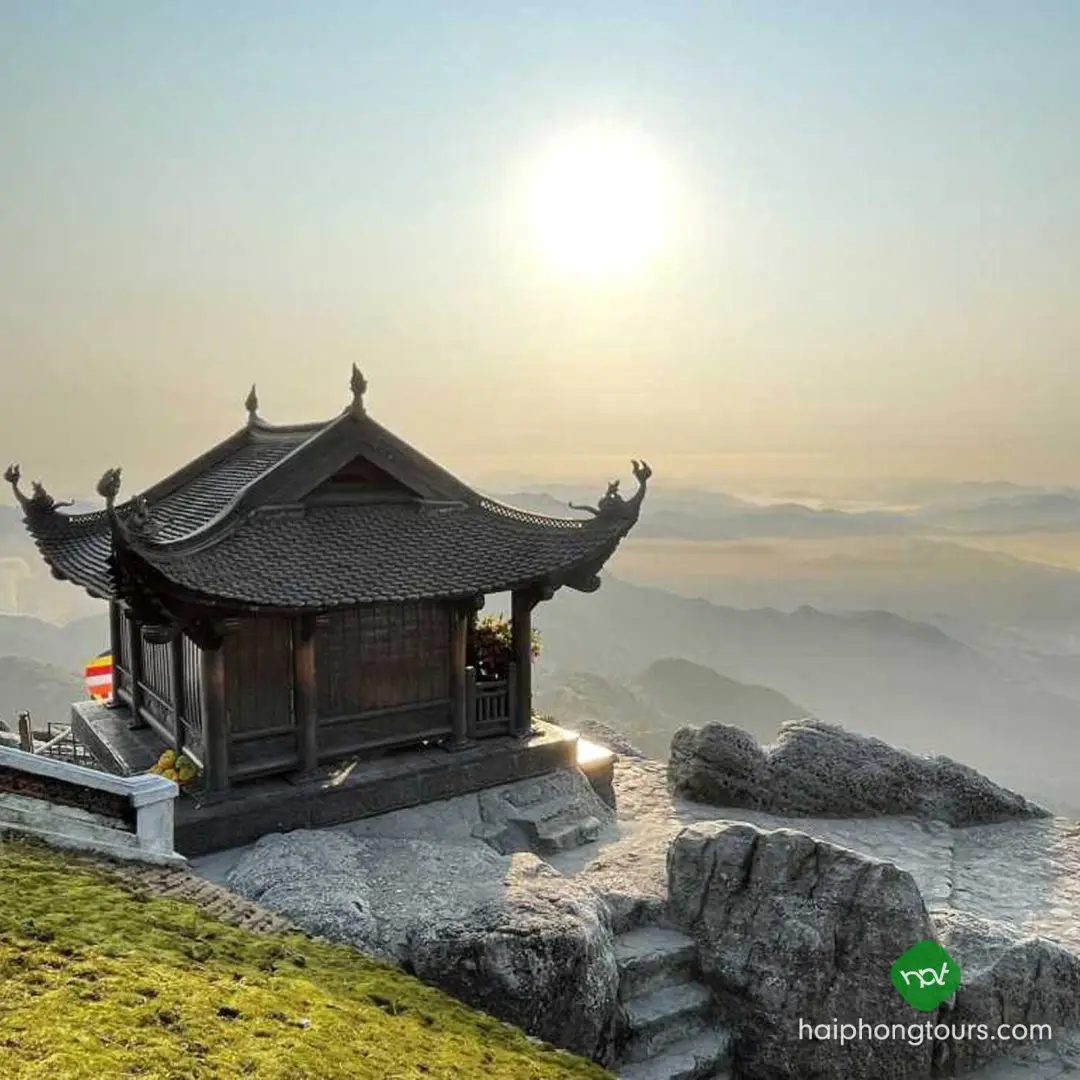
Yen Tu is a Buddhist pilgrimage mountain in Quang Ninh, with forest paths, hillside pagodas and Dong Pagoda at its 1,068-meter summit. You can walk the mountain or use two cable-car sections to reduce the climb, but reaching the summit still involves steep steps and a final walk.
Choose how far to go before buying tickets. Hoa Yen and the surrounding shrines make a worthwhile visit without reaching Dong Pagoda; a summit visit needs more time, suitable footwear and weather that allows you to continue comfortably. The route below follows the main Quang Ninh approach. The Tay Yen Tu western-route guide covers the separate entrance, cable car and return arrangements on the other side of the mountain.
Why Yen Tu matters
Yen Tu is closely associated with King Tran Nhan Tong, who became a Buddhist monk after leaving the throne and founded the Truc Lam Zen tradition. Its religious importance comes from this living tradition as well as its pagodas, stupas and mountain landscape.
Yen Tu forms part of the Yen Tu–Vinh Nghiem–Con Son, Kiep Bac complex, inscribed on the UNESCO World Heritage List in 2025. The wider heritage property contains separate places across several locations; visiting Yen Tu Mountain does not cover the entire complex.
Choose a route that suits your day
- For a shorter cultural visit: focus on the foothills and Lan Pagoda, or use the first cable-car section to visit Hue Quang and Hoa Yen. Walking and steps are still involved around the mountain shrines.
- For the summit with less climbing: use both cable-car sections, allow time for the pagodas between them, then decide whether to continue from the upper station to Dong Pagoda.
- For a longer pilgrimage walk: follow the marked stairways through the forest and hillside pagodas. Allow a full sightseeing day for the ascent, stops and descent; do not plan from an uphill walking estimate alone.
At the entrance, check the day’s last cable-car descent and any route restrictions. Set a turnaround time that leaves room for queues, rests and the journey back to your accommodation.
Pagodas and landmarks along the mountain
Lan Pagoda and the foothills
Lan Pagoda, also called Long Dong, stands on the approach to the mountain. The present Truc Lam Yen Tu monastery was established here in 2002, continuing the site’s Buddhist role. It is a separate stop to allow for before or after the mountain route.
Giai Oan Pagoda is near the lower part of the pilgrimage route. Walkers can continue through wooded sections, including the old Tung tree path, rather than treating every shrine as a quick stop beside a road.
Hue Quang Stupa Garden and Hoa Yen Pagoda
Hue Quang is a stupa garden honoring Buddhist masters. Its central tower, also known as Thap To, is especially associated with Tran Nhan Tong. The tower combines a Tran-period base with a body restored in the Le period, so its different parts belong to different stages of the site’s history. Allow a quiet pause here before continuing to Hoa Yen, the central pagoda on the mountain.
Hoa Yen occupies a historic religious site, but the buildings have been restored over time; the present pagoda was rebuilt in 2002 on the earlier foundations. This is a useful point to rest and decide whether your group has time and energy for the upper mountain.
Mot Mai, Bao Sai and Van Tieu
Mot Mai means “One Roof.” Much of this small shrine fits into a natural rock recess, with only one side of its tiled roof projecting out. Look for the contrast between the rock shelter and the white-stone statues and ritual objects; this intimate setting gives the shrine a different character from the larger pagodas.
Water trickles from the rock inside the shrine and has a spiritual meaning for pilgrims, who refer to it as “mother’s milk.” Observe respectfully and avoid interrupting worshippers for a photograph. Bring your own drinking water rather than relying on the shrine’s spring as a refill point.
Mot Mai fits into a visit after Hoa Yen and before the Bach Long cable car. Hai Phong Tours recommends making time for this middle part of the mountain if pagoda architecture interests you more than reaching the summit. Keep a separate allowance for the walk to the station; seeing the shrine does not remove the steps still ahead.
Above the central area, walking paths lead toward Bao Sai or Van Tieu before continuing toward An Ky Sinh. Bao Sai is named for a disciple of Tran Nhan Tong; Van Tieu has the Vong Tien Cung stupa garden in front. These are walking-route choices, not a sequence of stops automatically included when you ride the second cable car. Follow the current signs for the route you choose.
An Ky Sinh and the Tran Nhan Tong statue
The An Ky Sinh landmark is a naturally shaped standing rock associated with a local Taoist legend. Nearby, the large bronze statue of Tran Nhan Tong is a recognizable landmark on the upper mountain.
This area is close to the upper cable-car station, but it is not the summit. Check the remaining steps, the weather and your return timing before continuing.
Dong Pagoda at the summit
Dong Pagoda, also called Thien Truc, stands at 1,068 meters. The present bronze temple was inaugurated in 2007, continuing the history of earlier shrines at the summit.
The final approach can be strenuous, especially on wet steps or in a crowded procession. Mist may hide the view. Turn back if footing, visibility or your energy makes the climb uncomfortable; reaching Hoa Yen or the upper statue area can still be a satisfying visit.
Cable-car tickets and walking requirements
The Hoang Long section takes you from the lower area toward Hue Quang and Hoa Yen. The Bach Long section continues from the Hoa Yen–Mot Mai area toward An Ky Sinh and the Tran Nhan Tong statue. You walk between the stations and religious sites, and from the upper area toward Dong Pagoda.
Scenic admission to the Yen Tu monument and national forest area on the Quang Ninh side is free through December 31, 2028. This entrance-fee waiver does not include cable-car rides, electric shuttles, meals or other paid services.
Before buying a cable-car package, check whether it covers one section or both, one-way or return travel, and the electric-shuttle connection. Some cable-car packages include the shuttle, so check the inclusions before buying it separately. The free scenic admission does not change the walking and stair requirements.
Ask about the current height bands for children and the documents needed for any concession before paying. If anyone has difficulty with stairs, discuss the actual station exits and walking sections with staff; cable-car access does not make the summit step-free.
When to visit and what to bring
The traditional spring pilgrimage season begins around the festival opening on the tenth day of the first lunar month. Its Gregorian date changes each year. Choose a day outside major festival gatherings if a quieter walk matters more to you than seeing the ceremonies.
Check the mountain forecast shortly before departure. Damp stone, rain and low cloud can change the experience even when the weather at your hotel looks pleasant. Wear shoes with good grip, carry drinking water and a light rain layer, and keep your hands free for steps and handrails.
Dress modestly for the pagodas, keep voices low near worshippers and follow signs about photography. Stay on the marked paths and leave forest plants where they grow.
Getting to the correct Yen Tu entrance
Send your driver the exact mountain reception or hotel pin on the Quang Ninh side. “Yen Tu” alone can cause confusion with the western Tay Yen Tu departure area.

For a direct road journey, the Hai Phong to Yen Tu transfer and Hanoi to Yen Tu transfer serve their respective starting cities. Agree on the visitor entrance or hotel drop-off and arrange waiting time or a return pickup separately. The road transfer does not include a guided mountain visit or cable-car tickets unless specifically agreed.

Keep the day flexible enough to enjoy the pagodas you can comfortably reach. A clear return arrangement and a sensible turnaround time matter more than fitting every landmark into one outing.
Would you like help fitting this experience into your trip? Contact us with your travel dates, starting point, available time and group size. Tell us about walking limits or special interests so we can suggest a practical itinerary.