
The UNESCO property called “Yen Tu–Vinh Nghiem–Con Son, Kiep Bac Complex of Monuments and Landscapes” is not one attraction at Yen Tu Mountain. It is a serial World Heritage property made up of 12 separate component sites across northeastern Vietnam. Visiting Dong Pagoda and Hoa Yen gives you an important part of the story, but it does not mean you have visited the whole property.
Allow at least four days for a selective route and five to six days for a serious attempt to see all 12 components without turning religious and mountain sites into roadside photo stops. The most logical journey moves east from Hanoi through present-day Bac Ninh and western Hai Phong, continues across the Dong Trieu and Yen Tu mountains, and finishes near Quang Yen, Hai Phong or Ha Long.
What UNESCO actually inscribed
The property was inscribed on the World Heritage List in 2025 under criteria (iii) and (vi). UNESCO describes a connected cultural landscape associated with the Tran Dynasty and the origin, development and continuing practice of Truc Lam Buddhism, a Vietnamese Zen tradition.
“Serial property” means the heritage value is expressed by a group of geographically separate places. There is no single ticket, entrance gate or shuttle covering the full UNESCO site. Every component has its own access, terrain, opening arrangements and visit duration.
The 12 component sites
1. Thai Mieu, the Imperial Ancestral Shrine
Thai Mieu belongs to the Tran Dynasty heritage landscape in Dong Trieu. It helps explain the royal setting from which Truc Lam developed, rather than functioning as another station on the familiar eastern Yen Tu summit route.
2. Kiep Bac Temple
Kiep Bac is closely associated with Tran Hung Dao and the military history of the Tran period. It lies near Con Son but is a distinct complex with its own worship traditions, festival pressure and visitor route.
3. Chua Lan Pagoda
Chua Lan, also called Lan Pagoda or Long Dong, stands in the lower eastern Yen Tu area. The current Truc Lam Yen Tu monastery continues the site’s Buddhist role. Allow it time before or after the main mountain ascent instead of treating it as a quick stop on the road.
4. Hoa Yen Pagoda relic cluster
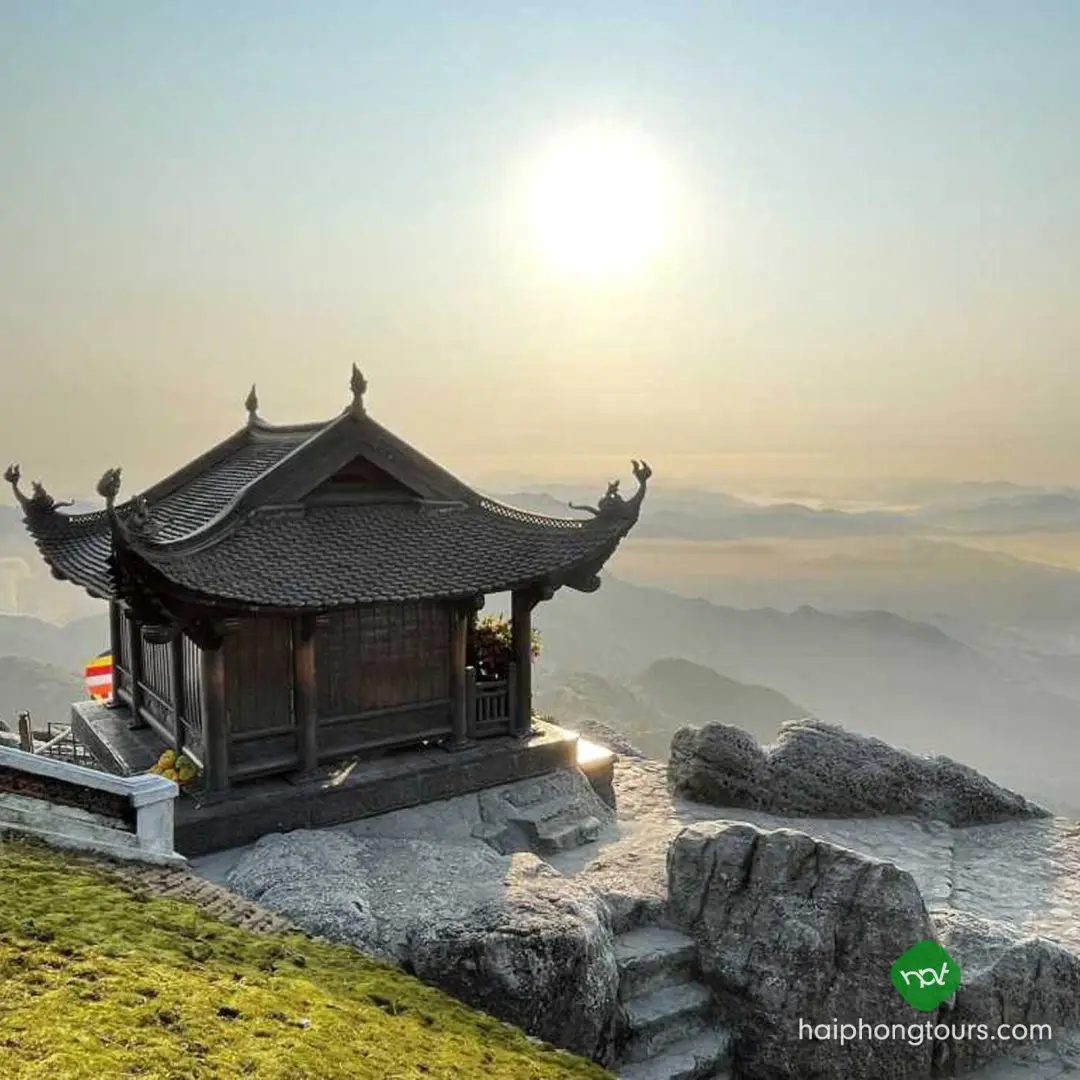
This component covers the central religious landscape on the main Yen Tu mountain route. It includes the Hoa Yen level and associated pagodas, stupas, paths and archaeological setting that lead toward the summit.
Dong Pagoda is a famous endpoint for visitors, but the inscribed component is a wider mountain relic cluster. Use the Yen Tu Mountain visiting guide to understand the cable-car sections and walking choices.
5. Ngoa Van Hermitage Pagoda relic cluster
Ngoa Van is on the Dong Trieu side of the sacred mountain landscape and is associated with the final religious life of King-Monk Tran Nhan Tong. It is not reached through the main Quang Ninh Yen Tu visitor entrance used for Hoa Yen and Dong Pagoda.

Treat Ngoa Van as its own mountain visit. Confirm the present approach, cable-car or walking operation and return timing before traveling there.
The Ngoa Van and Dong Trieu visitor guide covers the Trai Loc cable car, walking beyond the upper station and choosing Thai Mieu or An Sinh Temple as a complementary stop.
6. Vinh Nghiem Pagoda
Vinh Nghiem represents the institutional growth of the Truc Lam Buddhist tradition. It is known for its religious role and historic woodblocks, but visitors should approach it as a living pagoda rather than only a museum object.
The Vinh Nghiem Pagoda visitor guide explains the sequence of halls, the Three Patriarchs and the woodblock collection. Arrange collection access or a supervised printing experience separately if either is central to your visit, and use the Duc La location to avoid the Ho Chi Minh City namesake.
7. Thanh Mai Pagoda
Thanh Mai sits in a forested mountain setting in the former Hai Duong area, now within Hai Phong after the 2025 administrative reorganization. The approach and walking make it a different visit from the more accessible lowland temples.
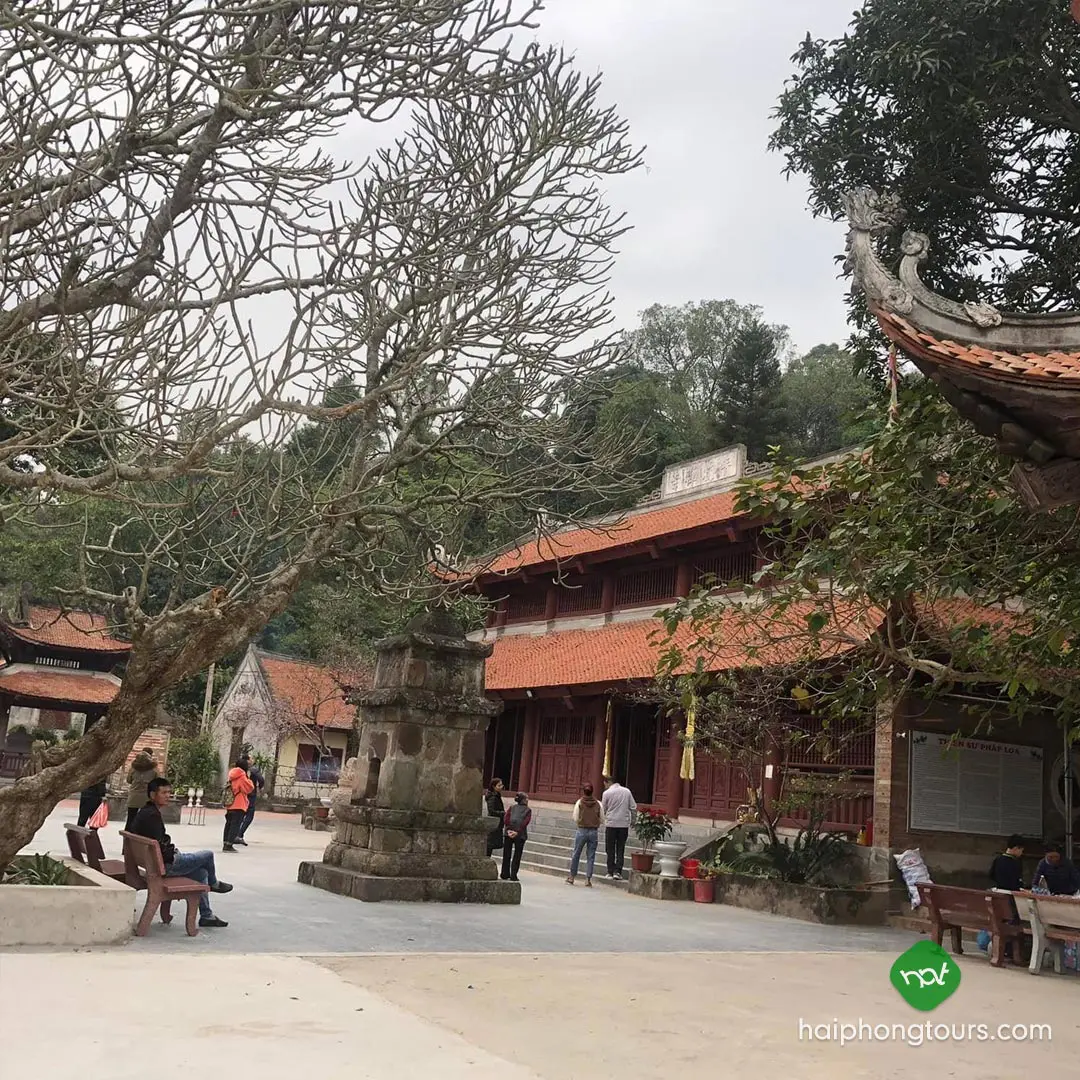
Do not add Thanh Mai to a crowded Con Son–Kiep Bac day without checking road access, daylight and the group’s mobility.
8. Con Son Pagoda
Con Son combines Buddhist heritage with a larger landscape of paths, monuments and optional climbing. It lies close enough to Kiep Bac for the two to form one coherent day, but each deserves its own visit rather than a single map pin.

The Con Son–Kiep Bac travel guide explains their current location, access and one-day sequence.
9. Bo Da Pagoda
Bo Da is a separate Buddhist complex in the area that now forms Bac Ninh Province. Its architecture, monastic setting and woodblock heritage contribute another part of the Truc Lam story.
Do not confuse Bo Da with Vinh Nghiem. They are distinct sites and require separate navigation pins.
The Bo Da Pagoda visitor guide explains its earth-wall approach, connected Tu An halls, monastic stupa garden and optional uphill shrines. Arrange woodblock interpretation separately if that is your main interest; collection access is not automatic.
10. Nham Duong Pagoda
Nham Duong belongs to the limestone and religious landscape around present-day western Hai Phong. It connects Buddhist practice with caves and archaeological evidence, making the visit different from a conventional lowland pagoda.
11. Kinh Chu Cavern
Kinh Chu is a cave and inscription landscape rather than a simple temple stop. Steps and cave surfaces matter for visitors with limited mobility, and wet weather can change footing.
12. Yen Giang Stake-yard
Yen Giang preserves part of the Bach Dang victory landscape near Quang Yen. Its military and riverine context broadens the property beyond pagodas and meditation sites.
Check the exact heritage-site pin instead of searching only for “Bach Dang,” a name used by several monuments, museums and local places in the region.
The Quang Yen Bach Dang heritage guide combines Yen Giang with the local museum and Tran Hung Dao Temple–Vua Ba Shrine. It explains what each place adds, how archaeological evidence differs from local tradition and how to plan a connected half-day.
Why maps may show different province names
The UNESCO nomination was prepared before Vietnam’s 2025 provincial reorganization. Its documents may describe components in Quang Ninh, Hai Duong and Bac Giang. Current administrative references can instead place the former Hai Duong sites in Hai Phong and the former Bac Giang sites in Bac Ninh.
The monuments did not move. The labels changed. Search by the exact site name, Vietnamese spelling and saved map pin, and retain older province names only as navigation clues when a listing has not been updated.
Group the property into five travel zones
Zone 1: Bo Da and Vinh Nghiem
These two components make the western gateway from Hanoi. They can share a day when road conditions and opening arrangements cooperate, but they are not adjacent buildings. Start with the site farther from your evening accommodation and protect enough time for quiet temple conduct.
Zone 2: Con Son, Kiep Bac and Thanh Mai
Con Son and Kiep Bac form the natural pair. Thanh Mai belongs to the same wider regional story but has a mountain approach and should be added only when the group starts early and has suitable transport.
A slower plan gives Con Son and Kiep Bac one day and Thanh Mai part of the following day.
Zone 3: Nham Duong and Kinh Chu
These western Hai Phong components are linked by limestone, caves and religious history. Visit in daylight, wear footwear with grip and confirm any current cave or restoration restriction.
Zone 4: Thai Mieu, Ngoa Van, Chua Lan and Hoa Yen
This is the core mountain-and-dynasty zone, but it cannot sensibly be compressed into one day. Thai Mieu is a lower heritage visit, Ngoa Van is a separate mountain route, and Chua Lan plus Hoa Yen belong to the main eastern Yen Tu approach.
Give Ngoa Van one day and the main Yen Tu route another. Add Thai Mieu where road timing allows without reducing either mountain visit.
Zone 5: Yen Giang Stake-yard
Use Yen Giang as the river-history conclusion to the route. It combines naturally with Quang Yen and an onward journey toward Hai Phong or Ha Long, rather than with a same-day climb at Yen Tu.
A realistic six-day route from Hanoi
Day 1: Bo Da and Vinh Nghiem
Leave Hanoi for the two present-day Bac Ninh components. Visit with modest clothing and enough time to distinguish their different Buddhist functions. Sleep near the next day’s route rather than returning west if you intend to continue the full property.
Day 2: Con Son and Kiep Bac
Use the morning for Con Son and the afternoon for Kiep Bac, adjusting the order for current access or festival activity. Their proximity makes this the clearest paired day in the itinerary.
Day 3: Thanh Mai, Nham Duong and Kinh Chu
This is the most ambitious road day. Begin with the site whose mountain or cave access is most time-sensitive. If weather, daylight or mobility slows the route, move one component to the following morning rather than reducing every stop to a few minutes.
Day 4: Thai Mieu and Ngoa Van
Visit Thai Mieu around the road movement, then give Ngoa Van the main part of the day. Confirm which entrance and mountain transport operate; do not navigate to the eastern Yen Tu cable car by mistake.
Day 5: Chua Lan and the Hoa Yen cluster
Use the main Quang Ninh Yen Tu entrance. Visit Chua Lan and continue into the Hoa Yen mountain landscape by the walking route or two cable-car sections. Keep Dong Pagoda optional because the final stone climb and descent add time beyond the upper cable car.
Stay at the mountain base the previous night if you want a fuller pilgrimage. From Hanoi, the Hanoi to Yen Tu private transfer is suitable when you are visiting this eastern Yen Tu portion as a separate trip; it is not a vehicle-and-guide package for all 12 UNESCO components.
Day 6: Yen Giang and onward travel
Finish with the Bach Dang river landscape at Yen Giang, then continue to Hai Phong or Ha Long. Keep the site pin separate from your hotel or port destination.
A shorter four-day route
Four days cannot give equal attention to all 12 components. Use it for a representative journey:
- Day 1: Vinh Nghiem and Bo Da.
- Day 2: Con Son and Kiep Bac, adding Thanh Mai only when access and daylight are favorable.
- Day 3: Thai Mieu or Ngoa Van, then sleep near the main Yen Tu entrance.
- Day 4: Chua Lan and the Hoa Yen mountain cluster.
This route deliberately omits or postpones some components. Describe it as a World Heritage introduction, not a complete visit.
Transport and guide planning
Public transport is poorly suited to a full-property route because the components have separate rural, mountain and cave approaches. A private vehicle solves road connections, but the driver is not automatically a heritage guide and may not accompany you on walking routes.
Before booking a multi-day vehicle, provide:
- all 12 site names and map pins;
- the order and overnight locations;
- passenger and luggage count;
- walking ability and any mobility equipment;
- whether a guide is required at each site;
- the mountain transport planned for Ngoa Van and Yen Tu;
- a daily finish time that leaves a daylight and weather buffer.
A quote for “Yen Tu” should not be interpreted as a quote for this serial-property itinerary. The route crosses multiple zones and needs an explicit multi-stop plan.
Tickets, opening and language
There is no UNESCO pass. Admission, cable cars, electric transport, parking and guide services may be controlled separately. Reconfirm them for each component close to travel.
English interpretation may be limited outside major visitor centers. Save the English and Vietnamese names, carry a translation tool and read the heritage background before arrival. A local guide is most valuable where the physical remains do not explain their role in the wider Truc Lam landscape.
Mobility and weather
The 12 components range from lowland temple grounds to caves and steep mountain paths. Do not label the entire UNESCO property accessible or inaccessible. Assess each stop separately.
- Ask how close a vehicle can reach the entrance.
- Confirm stairs, slopes, cave surfaces and distance to the main monument.
- Treat cable cars as elevation aids rather than proof of a step-free route.
- Carry shoes with grip and a light rain layer.
- Replace a mountain component with a lower site when rain or mist makes the route unsafe.
Travelers with limited mobility should select representative components instead of attempting a checklist of 12. Vinh Nghiem, Bo Da, Con Son, Kiep Bac and the lower Yen Tu area offer different parts of the story, subject to exact access confirmation.
Temple etiquette and responsible visiting
Many components remain active places of worship. Cover shoulders and knees inside religious spaces, speak quietly, ask before photographing ceremonies, and keep away from objects or areas marked as restricted.
Place donations in designated boxes rather than on statues or altars. Stay on marked paths, do not remove plants or stones, and avoid touching cave inscriptions and archaeological remains.
Common planning mistakes
- assuming the World Heritage property is only Yen Tu Mountain;
- counting Dong Pagoda as all 12 components;
- following old province names without checking the exact site pin;
- confusing the main eastern Yen Tu entrance with Ngoa Van or Tay Yen Tu;
- trying to see every component from Hanoi as repeated day trips;
- packing two mountain sites and a cave into one short winter day;
- assuming one ticket, guide or vehicle quote covers the full serial property;
- describing a selective four-day route as complete.
How to choose the right version of this trip
Choose one day at the main Yen Tu mountain when your goal is the best-known pilgrimage landscape. Choose two or three days when you also want Con Son–Kiep Bac or the Dong Trieu heritage. Choose five to six days when understanding the serial property matters more than collecting famous names.
The value of this UNESCO site lies in the relationship among royal history, Truc Lam practice, pagodas, mountains, caves and the Bach Dang landscape. A slower route makes those connections visible; a rushed 12-stop checklist does not.
Would you like help fitting this experience into your trip? Contact us with your travel dates, starting point, available time and group size. Tell us about walking limits or special interests so we can suggest a practical itinerary.