Lung Cu Flag Tower is a national monument reached through a substantial stair-based visit. Go because you want to understand the symbol and see the surrounding plateau, then decide how far everyone in your group will climb. Reaching the northern area by car does not remove the final walking effort.
The tower stands on Dragon Mountain, or Long Sơn, in Lung Cu. Treat it as a meaningful northern landmark rather than proof that you have stood on the exact northernmost boundary point. Border markers and controlled routes are separate places, with separate access rules.
What the monument represents
The national tourism database describes an octagonal tower standing 33.15 metres high, with a flag of 54 square metres symbolising Vietnam’s 54 recognised ethnic groups. The stone reliefs around the base draw on Đông Sơn drum designs, national history and the cultures of Ha Giang.
Those details make the visit more than a climb for a photograph. Look at the relief panels before moving on, and distinguish the monument’s symbolism from the landscape around it. A guide can explain a particular panel or the way the flag is used, rather than reducing the site to a distance from Hanoi.
Stories about the origin of Lung Cu’s name and earlier flags belong to the site’s historical and legendary interpretation. It is reasonable to enjoy those stories while keeping them separate from the dimensions and construction visible in front of you.
Understand the two kinds of stairs
The tourism authority’s description refers to a stone stair approach and a further narrow spiral staircase inside the tower. It gives 389 stone steps and 140 internal steps for the route it describes. Your actual walk depends on the permitted arrival point and the sections open during your visit, so do not use those figures as a guaranteed total from every parking area.
Decide separately whether you want to reach the monument area and whether you want to continue inside. Someone may be comfortable with the outdoor climb but dislike a narrow enclosed staircase. Another person may enjoy the lower interpretation and prefer not to make the full ascent.
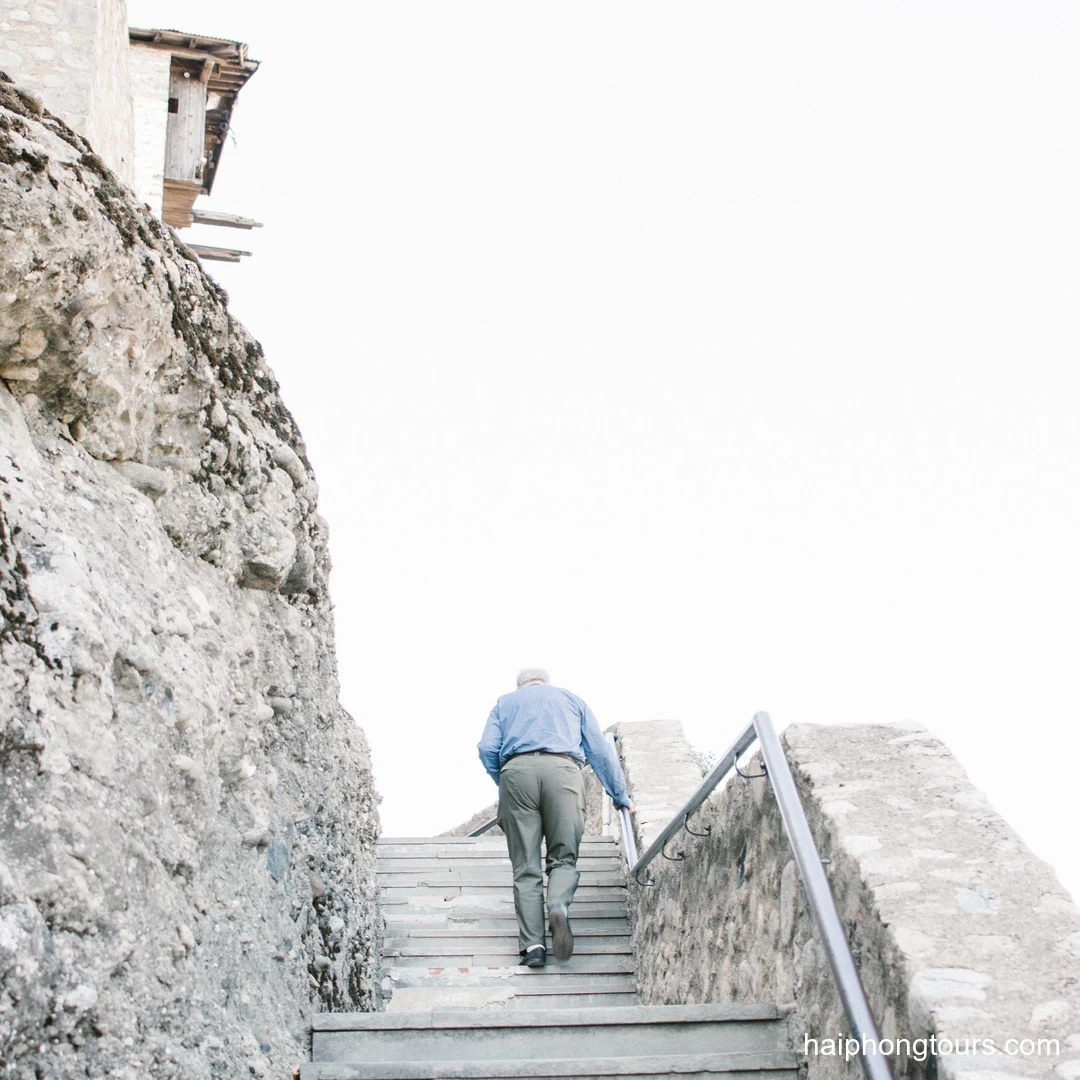
Wear shoes with grip and carry water in a small bag that leaves your hands free. Keep a child’s pace and the descent in mind. Reaching the top is only half the walking commitment, and enthusiasm for a photograph does not remove fatigue on the way back.
Admission and concessions
The provincial fee schedule sets standard admission to Lung Cu Flag Tower at 40,000 VND per person. Children under six are exempt; other eligible children and students are among the groups receiving a fifty-percent reduction. At this standard fee, a reduced ticket is 20,000 VND.

Keep admission separate from any parking, local transfer or guiding charge. For two adults without concessions, the admission component is 80,000 VND. A driver or tour may quote a larger total because it includes other services; the quotation should identify those services rather than presenting all of them as a tower ticket.
Use the site’s displayed tariff and applicable identification for the final purchase. No universal opening hours or unrestricted tower access is promised here; a controlled national monument can regulate entry and individual sections. Follow the staff’s direction at the actual entrance.
Read the landscape from the permitted viewing area
When visibility allows, look for the settlements and water features around Dragon Mountain. The tourism authority describes the two nearby lakes as the “dragon’s eyes” in local tradition, with Lo Lo Chai and Then Pa associated with different communities around the mountain.
A viewpoint can make those relationships easier to understand, but it does not establish which lanes or household spaces are open to visitors. Save the cultural visit for a separate, respectful walk. The Lo Lo Chai guide explains the difference between a daytime visit and an overnight stay.
Fog may remove much of the panorama while leaving the monument itself visible. Decide whether the symbolism and architecture still make the climb worthwhile for you. If the view is the sole reason for going up, a shorter visit may be the sensible choice; do not compensate by seeking an unofficial exposed edge.
Combine the tower with one village experience
Leave time for a meal or an arranged village visit after the climb. Trying to climb, photograph every courtyard and complete several distant stops in one rushed block often leaves very little time with the people who live there.
Lo Lo Chai is associated with the Lô Lô community, while nearby Then Pa is associated with Hmong life. Those names are not interchangeable cultural labels. Use the actual village name and a receiving business or host when arranging a meal, room or explanation.
If your group includes someone who is not climbing, agree a real meeting place and an activity they can enjoy. Do not leave that person waiting on the assumption that every nearby shop is a rest facility. A split plan works when both parts have a clear arrangement and a way to communicate.
Make it part of a sensible northern stay
A stay in Dong Van gives you a base from which to decide on the Lung Cu branch. The geopark route guide explains why this branch competes for time with other plateau experiences. The tower is a choice within the trip, not a test that everyone must complete.
Arrange local access and any border-area requirements with the relevant local provider; admission to the monument does not replace any separate travel permission that applies to your route.
Would you like help fitting this experience into your trip? Contact us with your travel dates, starting point, available time and group size. Tell us about walking limits or special interests so we can suggest a practical itinerary.