
Ngam La is a tea-growing landscape for an arranged local visit, not a plantation attraction with a guaranteed daily tour. Come if you want to connect old tea trees, harvesting, processing and the cup you drink. The best visit has an identified grower or guide and a clear subject, rather than a drive to a forest pin followed by an improvised search for someone to let you in.
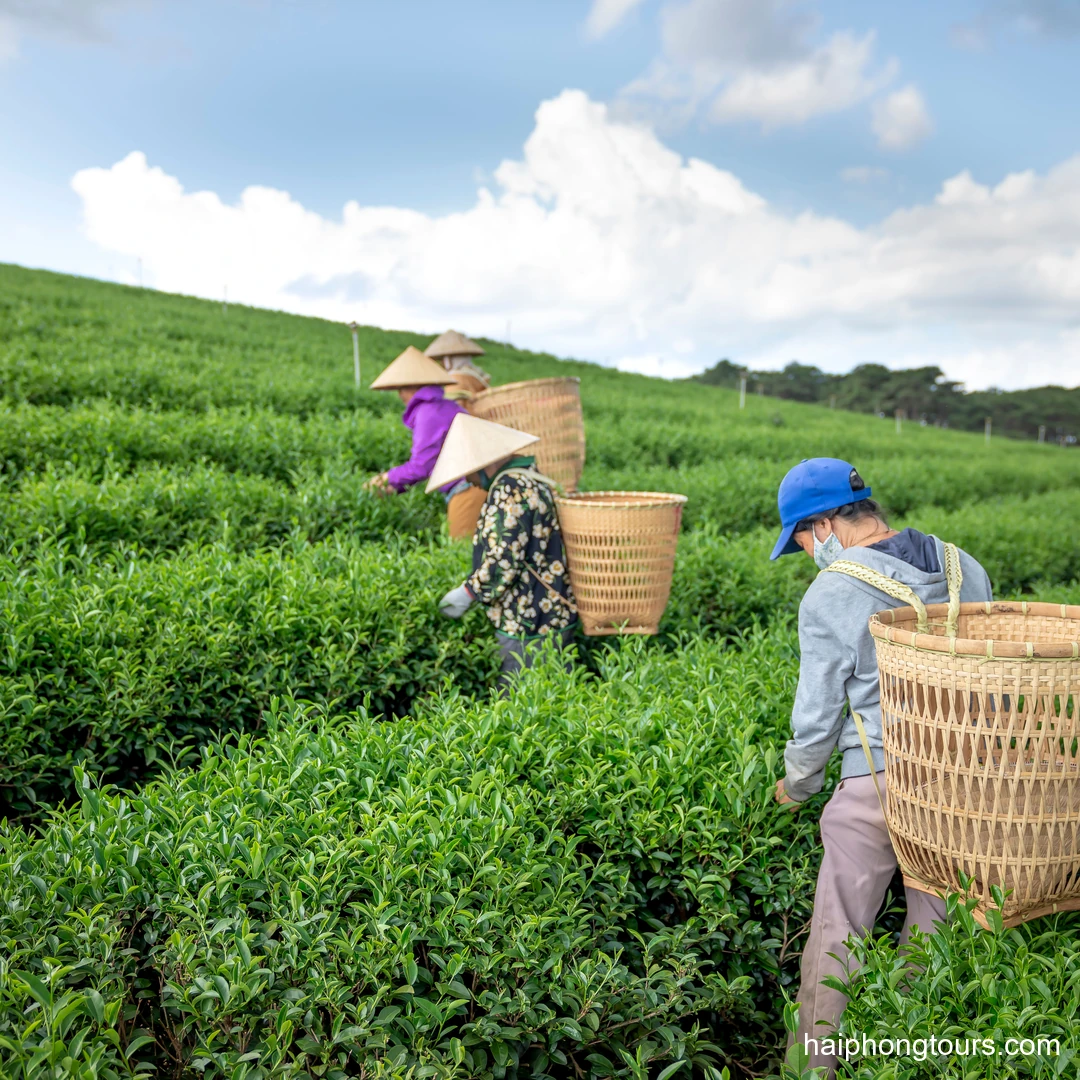
The spelling Ngam La also appears without Vietnamese accents in local records. For a practical enquiry, use Rừng chè cổ thụ Ngam La, Mậu Duệ and identify it as the ancient tea forest in the geopark region. This avoids confusion with the western Ha Giang tea areas around Tay Con Linh and Hoang Su Phi.
Know what the official site reference establishes
Mau Due commune’s own account identifies the ancient tea forest as geopark site 41 and describes work with residents of Sa Ly hamlet during heritage preparation. It confirms that this is a recognised tea landscape. It does not advertise a staffed daily visitor centre, a standard ticket price or a public self-guided circuit through every plot.
Arrange access through a local guide who can name the grower receiving you. The agreed meeting point should be somewhere the guide and driver can identify, with the walk to the trees described separately. A nearby main-road location does not tell you the condition or gradient of the final approach.

No dependable direct booking number or regularly scheduled public tour for this exact forest is established here. The useful alternative is a confirmed grower appointment, or a tea-tasting stop elsewhere if an introduction cannot be arranged. Do not arrive assuming that recognition as a geopark site makes private agricultural land freely accessible.
Build the visit around the leaf’s journey
Start at the tree. Ask the grower to show the part of the plant selected for the product being made, and how they decide whether it is ready. Watch the technique before touching a branch. A visitor should not climb an old tree or pick a handful of leaves because a tour description mentions harvesting.
Then connect the fresh leaf to the finished tea. Does the household process its own harvest, supply another producer or use more than one arrangement? The answer explains why a growing area may not contain an operating processing workshop beside every tree.
Finally, taste the product if the host has agreed to prepare it. Ask about the quantity of leaf, water temperature and infusion time they prefer. Record those three details with the product name. A useful souvenir is tea you can brew successfully at home, not simply a packet labelled “ancient”.
Recognise a local enterprise without assuming a factory tour
The Vietnam Women’s Union has profiled Tay producer Nguyen Thi Tuoi and the Huong Vi Nui cooperative in connection with bringing Ngam La tea to market. That story helps explain the link between growers, processing and a recognisable product. It does not establish that the cooperative accepts unannounced visitors or that every packet sold in the area comes from it.
If your guide proposes a producer visit, request the actual enterprise name and the stage you can observe that day. Watching sorting or discussing a finished batch can be worthwhile when fresh processing is not underway. Do not make a demonstration restart the working day solely for a photograph.
Choose a route that fits the group
| Visit goal | What to arrange |
|---|---|
| A short introduction | One accessible meeting place, an explanation and a tasting if offered |
| A walk among the trees | Landholder permission, current path condition and a defined turnaround |
| Processing interest | A named workshop and the stage actually operating |
| Buying tea | Producer, origin, batch or packing information and brewing instructions |
Wear shoes with grip and keep your bag small. After rain, a farm path may be muddy even if the vehicle road looks clear. Tell the guide about children or anyone who needs to avoid a steep slope before the appointment is fixed. A seated tasting can be a better choice than an unsuitable walk.
Buy with a traceable origin and realistic expectations
Ask whether the packet contains tea from Ngam La itself, a blend or tea brought from another Ha Giang area. These can all be legitimate products when labelled accurately. The place where you buy a packet is not proof of where its leaves grew.
Keep the label and receipt, and choose a quantity you can store dry and use within the producer’s advice. Avoid judging age or quality only from a large tree in a photograph. The mint-honey guide applies the same useful habit of identifying the producer before buying a regional food souvenir.

If the forest appointment cannot be arranged, Ma Hong’s showroom at 80 National Road 4C, Quan Ba, telephone, advertises Shan Tuyet tea tasting. It is a separate experience and does not claim to replace a visit to Ngam La’s growers.
Use the geopark route guide to fit the tea area into a realistic mountain day. keep the grower visit with the guide who confirms the introduction and access.
Would you like help fitting this experience into your trip? Contact us with your travel dates, starting point, available time and group size. Tell us about walking limits or special interests so we can suggest a practical itinerary.