
Bac Hoa is worth visiting for something a busy orchard tour can easily miss: the relationship between a Nung village’s houses, courtyards and working landscape. Plan a short, respectful village walk, with an interior visit only if a resident has agreed to host you. It is a residential community, not a ticketed row of houses that all open on demand.
The most useful plan is to arrive in daylight, walk the public lanes slowly and keep lunch and accommodation arranged elsewhere unless a named host has accepted those bookings. Photographs of a cultural event do not establish an ordinary daily performance or restaurant service.
Find Bac Hoa in Tan Son, not another “ancient village”
Use Bản Bắc Hoa, Tân Sơn as the destination name. Older material places it in Luc Ngan district, Bac Giang; more recent provincial tourism descriptions use Tan Son in Bac Ninh. These refer to the same village area, not a move toward Bac Ninh city.
The documented approach leaves the National Highway 279 corridor around Tan Son and follows an approximately two-kilometre paved connection into Bac Hoa. That final turn matters more than a broad ticket to Luc Ngan or Chu. Give a driver the village pin and arrange where the vehicle will wait before you get out.

Do not assume a small lane can serve as a parking area simply because a car fits through it. A sensible arrival is at an agreed edge-of-village stopping point, followed by a walk. A driver who waits nearby also makes the return straightforward when you do not have a booked local host.
What to look for in the houses
The characteristic older homes combine thick earthen walls with interlocking curved roof tiles, often described locally as âm dương tiles. Provincial heritage reporting identifies a concentration of traditional homes around the village entrance, with shared or adjoining courtyard spaces.
Look at the building as a practical whole: the roof overhang, the wall surface, the doorway and the relationship between the house and the yard. These details give a more useful introduction than simply labelling everything “old”. A repair, new door or modern household object is part of a lived-in house, not evidence that the village has failed to remain picturesque.
From a public lane, you can appreciate the overall form without entering a family yard. If someone invites you inside, let them show where visitors can sit and what can be photographed. An open door is not an invitation, and a greeting does not create permission to inspect sleeping areas or household possessions.
A compact walk that does not depend on a show
Allow roughly 60–90 minutes as a planning estimate for a gentle exterior visit. This is not a published guided-tour duration. A hosted conversation may take longer; a rain-shortened walk may take much less.
- Start at the agreed vehicle point. Orient yourself to the return lane and explain to any accompanying host that you are interested in architecture and daily life, not entering every house.
- Walk the older residential cluster. Pause where the lane is wide enough for residents to pass. Look at walls, rooflines and courtyard relationships without blocking doorways.
- Continue only along clearly public routes. Fields, orchard rows and spaces used for household work are not extensions of a visitor trail. Stop at a public viewpoint rather than crossing a cultivated plot for a better angle.
- Return before the agreed pickup. Keep any longer conversation or craft purchase within the time you have arranged, so a quiet village visit does not become a rushed departure.
A local introduction can greatly improve this walk, especially if you want to understand the use of rooms or the meaning of a household tradition. However, the available official material does not establish a daily English-speaking guide desk. Arrange an actual person and language before describing your booking as a guided cultural visit.
Tan Son market and Sloong Hao are separate experiences
Current provincial descriptions distinguish the regular Tan Son market from the spring Thac Luoi–Tan Son gathering. They describe a five-day market rhythm and a special celebration around the twelfth to fourteenth days of the first lunar month. Because lunar dates and event arrangements need translating into your travel calendar, obtain the exact local market date before making it the reason for a long drive.
Sloong Hao is Nung responsive singing associated with social and spring-festival settings. It is not a soundtrack that visitors can expect to hear every afternoon in Bac Hoa. A performance requires willing participants and a specific arrangement; an ordinary architectural walk remains worthwhile without one.
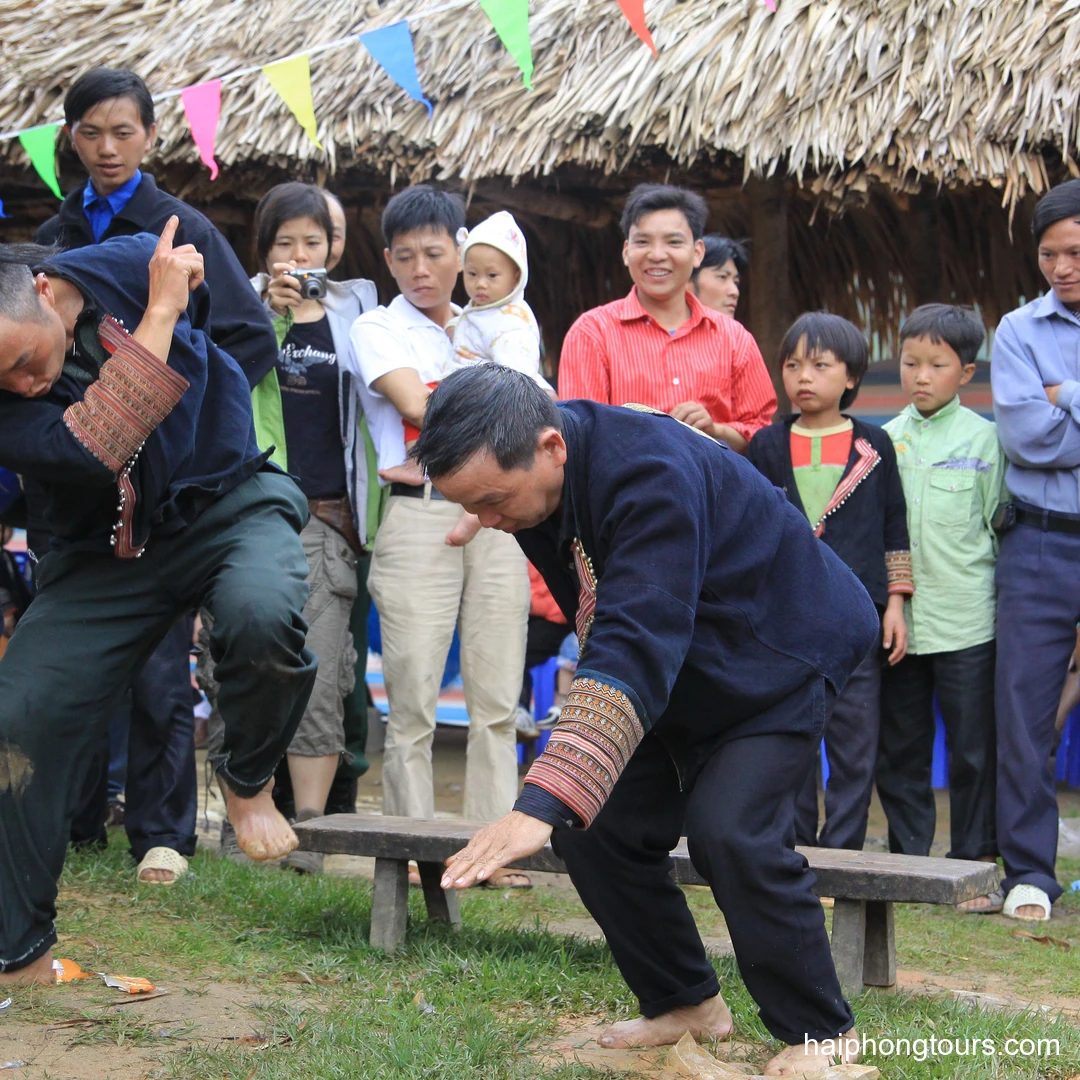
If you are invited to a public celebration, follow the hosts’ direction on where to stand and when photographs are welcome. Do not pull participants out of an activity for posed pictures or treat ceremonial clothing as a free prop.
Meals, toilets and overnight expectations
Tourism-development reports describe work to strengthen Bac Hoa’s visitor services, rather than a mature network of individually bookable restaurants and rooms. This guide therefore does not invent a homestay, daily lunch service or public toilet opening schedule inside the village.
Use a confirmed meal stop in the Tan Son or Chu corridor, and take drinking water for the walk. A family offering tea is extending hospitality; it is not agreeing to cook lunch for your group. If a host has accepted a meal, settle the number of diners, food requirements and total charge beforehand.
For an overnight trip with an orchard or managed accommodation base, use the separate Luc Ngan fruit-region guide. Keep Bac Hoa as the architectural component rather than assuming a fruit-tour booking automatically includes access to residents’ homes.
Choose one worthwhile pairing
A village walk plus a properly arranged orchard visit can fill the cultural and agricultural parts of a day. A Cam Son Lake outing is another possibility, but it requires its own meeting point and boat arrangement. Neither should be added casually at the end because both appear near Tan Son on a regional map.
Ban Ven is a different community and experience. Its Cao Lan tea setting should not be copied into descriptions of Bac Hoa’s Nung culture. Compare the Ban Ven village guide if tea production and a managed visitor programme are your main interests.
Want a Bac Hoa stop that fits your route and respects the village? Contact us with your starting point, group size and interest in an exterior walk or hosted introduction. We can help assess transport and timing; any home visit remains subject to the resident’s agreement.
