
A cable-car ticket does not turn Huong Tich into a roadside temple stop. The visit involves reaching the mountain complex, choosing the approach to the lower station, visiting the religious buildings and returning down the same system. Understanding those stages makes the day far more enjoyable than arriving with only a photograph of the pagoda.
Huong Tich Pagoda in Ha Tinh is a mountain pilgrimage site in the Hong Linh range, not the Perfume Pagoda outside Hanoi. Plan a substantial half-day at the attraction, plus road travel from your hotel. The cable car reduces part of the climb, but it does not establish a completely step-free visit.
Make sure you are going to the correct Huong Tich
Use the full destination name Chùa Hương Tích, Hà Tĩnh when requesting transport. Older maps place it in the Thien Loc and Can Loc area. A search for only “Huong Pagoda” may produce the Hanoi pilgrimage with Yen Stream, Ben Duc and Thien Tru, which is a different journey.
The Ha Tinh complex sits around 650 metres above sea level. Its religious story is associated with Princess Dieu Thien and Quan Am, the bodhisattva of compassion. Treat that account as a religious tradition, not a documented biography. The setting includes several shrines and halls, so the famous pagoda is not the whole site.
For an overnight base, compare your actual plans in the Ha Tinh travel guide. Vinh is useful when you arrive by train or air; a Ha Tinh city hotel can work when the following day continues south. Neither choice removes the need for a dedicated road connection to the mountain entrance.
The approach, explained in separate stages
| Stage | What it means for your visit | Decision to make |
|---|---|---|
| Hotel to the visitor area at the foot of the mountain | This is the road-transfer part, with your luggage, driver and parking arrangements. | Book a return journey or an onward transfer with waiting time. |
| Lower visitor area toward Mieu Co | The provincial visitor description includes walking, electric vehicles and a boat option around the Nha Duong reservoir. | Choose the operating approach on the day; these are not automatically all compulsory stages. |
| Mieu Co toward the upper pagoda area | The museum’s route description identifies a roughly 900-metre upper section, served by the cable car or an uphill walking route. | Choose return cable-car tickets if you do not want the full descent on foot. |
| Religious buildings and optional higher areas | Movement continues on foot between the places you want to see. | Agree how much climbing your group actually wants before splitting up. |
The useful distinction is between a transport choice and a complete tour. Buying a cable-car ticket does not necessarily include admission, a lower electric-vehicle ride, a boat excursion, parking or a guide. Similarly, a car quote to “Huong Tich” may finish at the lower visitor area rather than include all the attraction’s internal transport.

What to see without attempting every staircase
Start with the main worship area and understand the relationship between the Buddhist halls and the Dieu Thien tradition. The provincial museum describes the main Tam Bao–Tien Duong area, the Quan Am devotional space behind it and additional higher structures. Its historical account also records rebuilding after fires. Do not interpret every building you see as an untouched medieval original.
A rewarding short visit can therefore be selective: reach the main area, look closely at the worship spaces that are open, spend time on the mountain setting, then return while you still have energy. You do not need to climb every higher section to have made a worthwhile cultural visit.
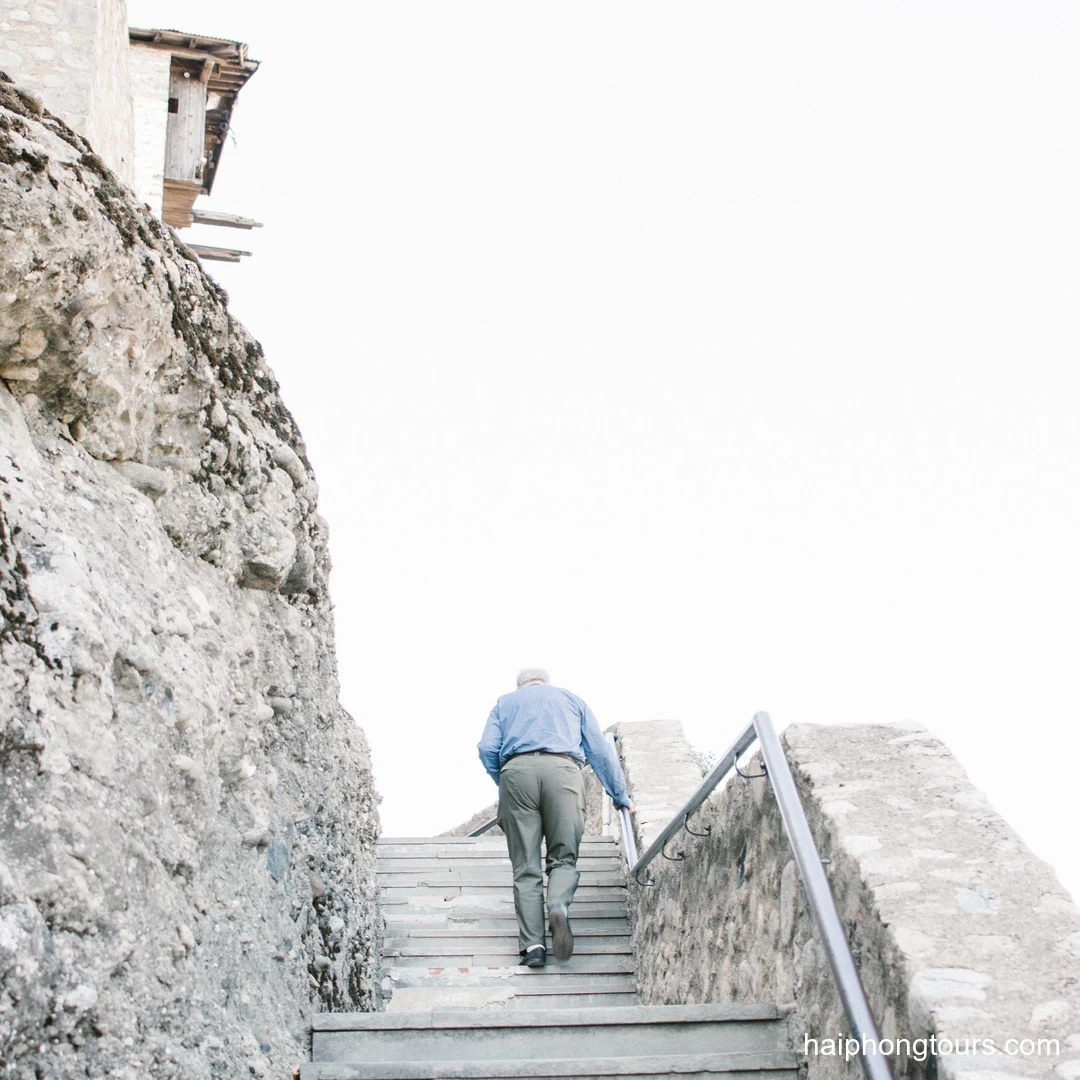
For someone with knee problems, limited stamina or a mobility aid, obtain current entrance-to-hall information before committing. “There is a cable car” is not an accessibility assessment. Ask for photographs of station access, boarding thresholds and the walking section after the upper station. If those cannot be established, choose an alternative cultural stop rather than relying on assistance being available at each obstacle.
Tickets and return times: avoid a misleading total
Published travel pages circulate different Huong Tich cable-car prices, while some search results mix in Hanoi’s Perfume Pagoda tariff. A reliable current operator price list was not available for this guide, so there is no invented all-in ticket figure here.
At the official sales point, obtain a written breakdown for admission, the chosen lower transfer and one-way or return cable-car travel. Check children’s rules separately, including whether they are based on height. If using the reservoir boat, clarify its boarding point, price unit and return arrangement before paying.

Record three times before going up: the last uphill service, the last downhill cable-car service and the finish time of the lower transfer you intend to use. These can matter more than a general “pagoda closing time”. Leave a margin for queues, worship and a slower walk back; the last descent should not be your planned descent.
A practical half-day structure
- Have breakfast before departure. Carry drinking water and a modest snack so that hunger does not determine the length of your visit.
- Arrive early in your chosen visiting window. Set the driver’s meeting point and return allowance, then resolve the internal transport tickets together.
- Keep the main pagoda as the priority. Add the boat or higher walking sections only when the operating conditions and your group’s pace support them.
- Descend before everyone is exhausted. Allow time to return to the car and change damp clothing before lunch or onward travel.
For planning, reserve around four hours at the complex rather than treating the cable-car ride itself as the visit duration. A fit walking group may want longer; a family using the available transport may choose less. This is an itinerary allowance, not an official tour length.
A morning here can stand alone. Combining it with Nguyen Du’s memorial is possible only with a sensible road sequence and the memorial’s separate opening session. Avoid booking both as a rushed checklist after an overnight journey.
Clothing, weather and pilgrimage etiquette
Wear footwear with a secure sole, and bring clothing that covers shoulders and knees in the worship areas. A light layer is useful after sweating on the approach. Keep the day bag small enough to manage easily in a cable-car cabin and on steps.
Early lunar spring brings pilgrimage activity. It can be culturally interesting, but it also changes the experience through queues and groups. Choose that period for the atmosphere, not for a guarantee of quiet. Outside festivals, do not assume a particular shop, boat service or ceremony will be running simply because it appears in festival photographs.
Do not continue onto wet upper steps or an exposed route merely to finish a planned loop. If transport is suspended for weather, ask staff about the approved return arrangements and change the day accordingly. Photograph people at worship only with permission, keep pathways clear and place offerings only where the site permits.
Need help fitting the mountain visit between your northern itinerary and the journey south? Contact Hai Phong Tours with your hotel, onward destination and the amount of walking your group can manage. We can help assess the road plan while keeping attraction tickets and operating conditions clear.