A car to Huu Nghi is only the first part of crossing from Vietnam into China. The useful booking is a complete chain: the correct passenger terminal, documents that work for both countries, enough time for immigration, and a named onward meeting point after you leave the Chinese control area.
For an ordinary foreign traveler using this road route, plan around the main Huu Nghi–Youyiguan passenger crossing near Dong Dang. Do not substitute Dong Dang railway station, Tan Thanh or a freight entrance simply because all appear in the wider border area. Stay in Lang Son the previous night when a long mountain journey would otherwise bring you to the border late.
Know the four names before booking transport
| Name to save | What it means for your journey |
|---|---|
| Hữu Nghị international border gate | The Vietnam-side road passenger crossing you need to specify to your driver. |
| Youyiguan / 友谊关 | The corresponding Chinese checkpoint in the Pingxiang area. This is not Nanning city. |
| Đồng Đăng railway station | A separate rail arrival or international-train process. A domestic train ticket does not carry you through road immigration. |
| Tân Thanh / Puzhai | A different subsidiary corridor with its own passenger eligibility and cargo arrangements. Do not use it as an interchangeable e-visa crossing. |
Save the names in Vietnamese and Chinese, plus screenshots of the agreed pickup points. An English message saying “Friendship Gate” is less useful if the driver is choosing between a tourist monument, a freight road and a passenger-processing building.
For the rail alternative, use the Hanoi–Nanning international train guide. It is a different transport product, not a way to avoid the same two countries’ entry requirements.
Check admission to China and return to Vietnam separately
Start with your passport nationality, document type, purpose of visit and proposed dates. Some travelers qualify for a Chinese visa exemption; others need a visa issued beforehand. The applicable rule is not determined by where you are staying in Vietnam or whether a local day-tour advertisement says “easy border visit.”
Eligible visa-exempt travelers may use Chinese road ports open to foreigners, subject to border inspection and the policy’s conditions. This is not automatic transit eligibility. Keep your accommodation and onward plan available offline.
Huu Nghi is on Vietnam’s official list of checkpoints accepting e-visas. Before entering Vietnam here, read the actual approval: passport number, validity dates, permitted entries and any stated checkpoint conditions. An application receipt is not an approval. A visa that was valid for an earlier entry is not necessarily available for another one.
If you intend to return to Vietnam after a day in China, resolve the return entitlement before leaving. Do not assume a single-entry visa restarts when you cross back. Travelers relying on visa-exempt entry should likewise verify their own eligibility rather than borrowing another person’s experience.
- Carry the original passport and any visa or residence document used for the journey.
- Keep offline copies of approvals, the first Chinese hotel address and the intended return or onward booking.
- Check each child’s documents independently; a family booking does not replace individual admission requirements.
- Ask the relevant immigration authority or consular service about an unusual passport, emergency travel document or complicated immigration history before paying for nonrefundable transport.
Why Tan Thanh is not the same crossing
The wider Huu Nghi border complex includes subsidiary channels, and Tan Thanh is not accurately described as having no passenger activity. However, a passenger channel existing there does not mean it accepts the same travelers and documents as the main gate.
An official bilateral memorandum describes organized Tan Thanh/Puzhai travel for Vietnamese and Chinese holders of border-tourism documents. That does not establish e-visa access for an ordinary third-country passport holder. Book the verified main Huu Nghi passenger crossing and have the exact entrance confirmed. Do not let a shorter map route redirect you to Tan Thanh.
Also distinguish passenger hours from freight-working hours. Notices extending truck clearance or introducing automated freight lanes do not establish when an independent tourist can complete immigration.
Reach the border without turning the morning into a race
Lang Son city is the useful overnight base when you want restaurants, accommodation choices and a short final road leg arranged in daylight. Dong Dang is another option if you have a confirmed room and a clear morning pickup. Neither location removes the need to specify the final passenger entrance.
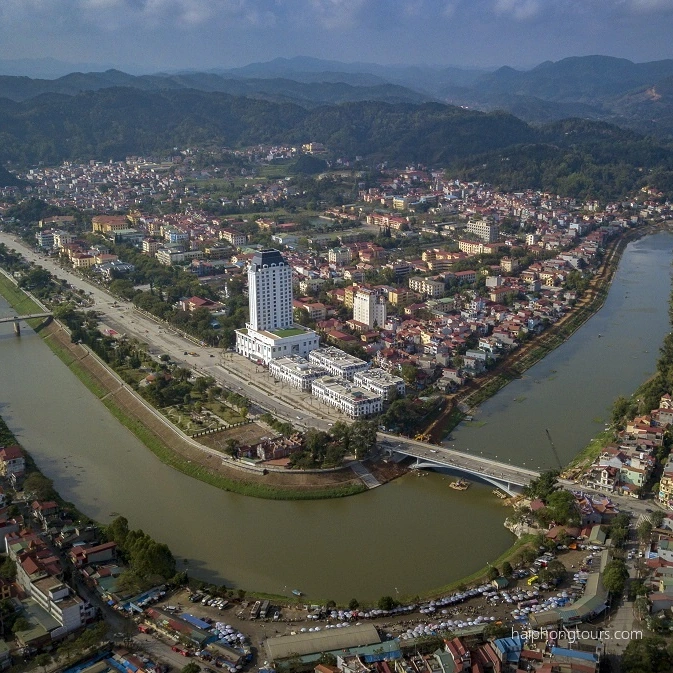
Use the Hanoi to Lang Son transport guide for the intercity stage. A bus terminating in Lang Son city is not a border transfer, while a through cross-border ticket should explicitly identify its border process and Chinese endpoint.
For a private vehicle, agree whether the fare ends at the permitted drop-off, includes waiting, or includes assistance with finding the passenger entrance. A Vietnam-side driver should not be assumed to continue into China. Taking a private vehicle across requires arrangements separate from the passenger’s own permission to enter.

A morning arrival is the more forgiving planning choice. It gives you time to resolve a document question or delayed approach without immediately facing the day’s final processing window. Obtain the current passenger opening and last-acceptance instructions for the actual travel date. This guide does not use cargo notices to promise a tourist closing time.
What happens during the crossing
- Arrive at the authorized passenger approach. Keep your passport accessible and establish where the driver will wait if you cannot proceed.
- Complete departure formalities in Vietnam. Follow the indicated passenger lane and present the documents requested. Do not photograph immigration counters or security installations.
- Move through the controlled crossing as directed. Use the designated walking or local-transfer arrangement. A public map does not tell you which internal route is currently permitted.
- Complete Chinese entry and customs checks. Answer questions about your visit and present supporting details if requested. Follow the officer’s instructions for arrival information and baggage inspection.
- Leave the controlled area before meeting onward transport. The pickup should name the passenger exit or other authorized meeting place, not simply the middle of the border.
This is a practical sequence, not a guarantee of processing time. Queues, group arrivals, document checks and operational changes can alter the visit. Arrange onward tickets with enough flexibility to avoid losing a long-distance connection while you are still in immigration.
China-side transport and the one-hour clock change
China is one hour ahead of Vietnam. If an onward driver says 11:00, write down whether that is China time or Vietnam time. Put both times in the final confirmation, especially when two providers are coordinating a handoff.
Youyiguan, Pingxiang and Nanning are different destinations. Ask whether a quote ends at a Pingxiang hotel, a particular station or bus terminal, or an address in Nanning. Do not book a train solely on the assumption that the checkpoint exit is beside the station you need.
Before losing access to your usual connection, save the Chinese pickup instructions, hotel name in Chinese characters, reservation number and a usable payment plan. Keep a small amount of accessible local spending money; a working card or Vietnamese payment app at your hotel does not prove it will work with a driver on the other side.
Luggage, access needs and a failed-crossing fallback
Pack so that you can move your own bags between processing stages. Ask in advance about assistance if you use a wheelchair, cannot stand in a long queue or travel with several children. A car to the door is not evidence of a step-free route through both terminals.
If you are not allowed to proceed, follow the officers’ instructions and contact your transport provider. Do not attempt an alternative path or a different minor border channel as a workaround. Keep enough money and flexibility for a return to confirmed accommodation while the document issue is resolved through the proper authority.
For a Vietnam-side sightseeing day without crossing, Dong Dang’s temple and town offer a different, simpler purpose. A market visit and a view toward the border are not the same thing as entering China.
Need help fitting the Vietnam-side journey around a confirmed border plan? Contact us with your starting hotel, travel date, group size, luggage and the checkpoint you intend to use. We can discuss the route and timing; immigration authorities decide admission, visas and restricted-area access.