
Mong Cai is worth a stop even when China is not on your itinerary. Its appeal is a working border city: traders opening shops, streets mixing Vietnamese and Chinese food influences, and a commercial center that feels different in the morning and after dinner.
For a first visit, spend the morning around Chợ Trung tâm and Trần Phú, rest during the hottest part of the day, then return for the food-street area around Vườn Trầu and Đào Phúc Lộc. Keep Tra Co beach and any international crossing as separate outings. This guide stays on the Vietnamese side.
Choose a market visit, not a shopping marathon
The central market is also called Chợ 1. It belongs to a larger commercial district containing other numbered markets and shopping centers, so “take me to Mong Cai market” can be an imprecise instruction. Save the pin for Chợ Trung tâm Móng Cái, Trần Phú street and agree on an identifiable entrance with the driver.
For most visitors, one main market and the streets around it are enough. Several buildings selling similar clothing and household goods do not necessarily create a better cultural experience. Spend longer where the trading interests you, then use the rest of the time for a meal or a neighborhood walk.
| Area | Why go | Planning choice |
|---|---|---|
| Chợ Trung tâm / Chợ 1 | The clearest starting point for the city’s commercial identity. | Go in the morning; do not save it for the end of an afternoon beach trip. |
| Trần Phú commercial streets | Shopfronts, browsing and an evening stroll when the pedestrian program operates. | Daytime shopping and a formal car-free evening are different experiences. |
| Vườn Trầu–Đào Phúc Lộc | The established food-street district. | Choose dinner here if food matters more than another market building. |
| Ka Long bridge area | A view of the city’s historic stone-arch landmark. | Use an accessible public viewpoint; follow any bridge restrictions. |
Morning: the central market and nearby streets
Start after breakfast, with small cash and a bag you can keep closed. Official visitor material describes the central market as a morning-oriented trading place. That is a useful reason to go early, but individual stalls and entrances can change; do not rely on an old closing time to fit a last-minute visit.
Give yourself about an hour for a first circuit, then decide whether to continue. That is a suggested visit length, not an entry rule. Browse a few neighboring stalls before negotiating, note the number or location of any shop you may want to return to, and leave loading routes clear.
The market combines tourism with real commerce. Wholesale cartons, repeated designs and merchants discussing stock are part of the setting. This is not a curated craft village, and imported merchandise should not be described as locally handmade without evidence.
Ask before taking close photographs of a trader or a transaction. A wide view of an aisle is less intrusive than pointing a camera at someone’s cash, paperwork or face. If a shopkeeper declines, move on without argument.
What is sensible to buy?
Small, clearly identified items are easier to evaluate than unfamiliar electronics or large purchases. Check the actual piece you are buying: stitching, size, fastening, packaging and whether it matches the display sample. A very low price is not evidence of a genuine brand or a reliable warranty.
For food gifts, look for an identifiable producer, ingredients, storage instructions and expiry information. Consider how the product will travel in the heat and whether your next destination permits it. A sealed package does not automatically make animal or plant products acceptable across an international border.
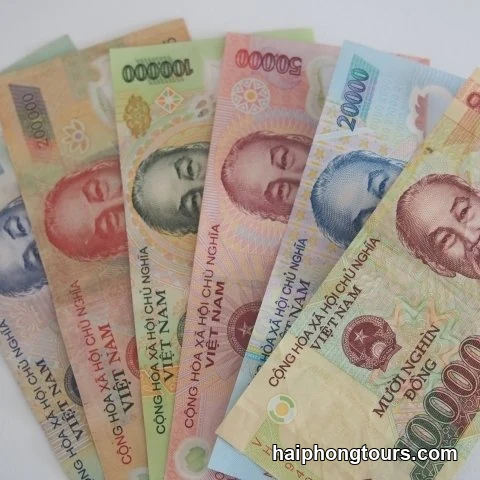
Agree the unit before agreeing the total. Is the price per item, pair, pack or box? Ask about the final amount in Vietnamese dong, including any extra packing. Bargaining should stay friendly; if the price does not suit you, declining politely is enough.
Do not buy wildlife products or objects of unclear origin simply because they are sold openly. For a small visitor purchase, the most useful souvenir is one you understand, can carry and can lawfully take onward.
Lunch and the afternoon break
A bowl of noodles or a rice meal makes more sense than ordering a large seafood spread before several hours of walking. Bún cù kỳ uses a local crab associated with the coastal region; bún hải sản is seafood noodle soup. Ask what is actually in the bowl rather than assuming every version contains the same ingredients.
For straightforward meal addresses, the city’s published restaurant register includes Cơm Thanh Hiền at 6 Triều Dương and Thanh Oanh at 43 Vườn Trầu. Treat these as identifiable places to check locally, not a promise of current opening hours or a personal inspection. If a business has changed, the named streets still help your hotel direct you to an operating alternative nearby.
After lunch, return to the hotel if the heat is uncomfortable. A central overnight gives you the option of seeing two different periods without forcing a full-day march. It is particularly useful after a long bus journey or before a border crossing the next morning.
Evening: Trần Phú and the food streets
The Trần Phú pedestrian program is not the same thing as the daytime market. Its event arrangements can vary, so ask your accommodation whether the car-free evening is running on your date. You can still plan dinner in the surrounding district without promising performances or a particular street closure.
The established food-street address is Vườn Trầu–Đào Phúc Lộc. This is a better instruction than simply asking for “the night market.” Look at current menus, the seating and the kitchen’s willingness to explain portions before choosing a table.
Grilled dishes and seafood are part of the border city’s evening food scene. For two people, order one shared main dish with rice or noodles and vegetables first; add another dish if needed. Ordering several live-seafood items by weight before understanding the portions can make an ordinary dinner unnecessarily expensive.
Ask the server to show the weight and price before cooking. Establish whether preparation, sauces, drinks or a table charge are separate. If you have an allergy, explain it before ordering; a “no seafood pieces” request does not remove seafood stock or fish sauce from a dish.
Choose cooked food you are comfortable eating. There is no obligation to try raw seafood, unfamiliar medicinal products or a specialty just because a menu describes it as traditional.
A short Ka Long landmark stop
Cầu Ka Long is the city’s recognizable stone-arch bridge. It is not Bac Luan I or Bac Luan II, the international passenger-crossing references. Keep those names separate when speaking with a driver.
Consider a brief view from a permitted public approach if the route fits your energy and the current access. Authorities have previously restricted vehicle use while assessing bridge condition. Do not assume an old walking route, a driving map or a photograph proves unrestricted access today.
Stay out of traffic for photographs and do not climb on the structure. Skip the bridge rather than creating a long, exposed walk in poor weather. The market-and-food plan works without it.
A practical half-day or overnight itinerary
If you have one morning
Start with breakfast, visit Chợ Trung tâm, browse the adjacent Trần Phú streets, then have lunch before collecting luggage. Keep your departure pickup outside any crowded loading area. This is the better format if shopping and local trade are the main interest.
If you arrive after lunch
Check in, take a short orientation walk and choose an early dinner around Vườn Trầu–Đào Phúc Lộc. Add the pedestrian streets if the program is operating, then visit the central market the following morning. Do not judge the market district solely by how busy it looks late in the afternoon.
If you have two nights
Use one morning and evening for the city, with a separate daytime outing to Tra Co beach and Sa Vi. The Mong Cai to Tra Co transport guide explains that local road leg. A beach visit does not need to squeeze between two market buildings.

Add Mong Cai to your northern Vietnam route
A private transfer from Hanoi to Mong Cai works well with a city overnight: arrive, check in and choose the food streets, then leave the main market for the following morning. The service page shows about four hours as a route reference, so the market plan should not depend on reaching the city at an exact minute.
If you are arriving from the Ha Giang Loop, use Ha Giang to Mong Cai after returning to your accepted city pickup. Its approximate ten-hour reference makes the arrival evening a time for food and rest. Do the walking circuit the next day rather than fitting a market visit between a long drive and hotel closing time.
For departure, the Mong Cai to Hanoi private transfer can collect at an agreed accessible point. Keep purchases and stored luggage in the final bag count. A private pickup may move about 30 minutes with advance notice to Hai Phong Tours through WhatsApp; a car retained for sightseeing or waiting during a market visit needs a separate arrangement.
Getting around and choosing a hotel
For this itinerary, choose a hotel by its actual route to the central commercial streets, not only the word “Mong Cai” in the listing. Ask about late check-in, luggage storage and the nearest legal vehicle pickup. A Tra Co resort is a different accommodation decision.
Walk compact sections and use a pre-arranged vehicle for longer or uncomfortable links. Pavements can be interrupted by parked vehicles and trading activity. For limited mobility, ask the hotel to identify a manageable entrance and a short walking section rather than promising an entirely step-free market circuit.
If China is next, arrange that as a separate travel day using the Mong Cai–Dongxing border guide. Save the correct terminal details, not just the address of your central hotel.
Would a Mong Cai overnight fit between your northern Vietnam stops? Contact us with your starting point, available nights and whether you prefer markets, food or the coast. We can help you think through a practical Vietnam-side route without turning every stop into a rushed transfer.