
Traveling in northern Vietnam with a dog or cat is possible, but it should be planned as a logistics-first trip. Confirm entry and return documents, airline acceptance, the exact hotel, every ground-transport leg and access at each attraction before buying nonrefundable services.
For most international visitors, the lowest-risk route is Hanoi plus one nearby base reached by a prearranged vehicle. Mountain loops, shared sleeper buses, cruises and protected nature sites add separate rules and animal-welfare risks that should never be assumed from a “pet-friendly” search filter.
Decide whether the trip is suitable for your pet
Consider age, respiratory health, anxiety, heat tolerance, crate experience and the total door-to-door journey. Air travel can be especially difficult for very young, elderly, ill or flat-faced animals. Ask your veterinarian about fitness to travel and destination risks rather than requesting sedatives automatically.
International air-transport guidance discourages routine sedation because it can affect an animal’s ability to respond to stress. Carrier dimensions, ventilation, temperature, hydration and journey duration are welfare issues, not paperwork details.
Complete the document chain before booking
Vietnam’s entry requirements depend on the animal, origin country and current veterinary rules. Your return country may impose additional vaccination, identification, test or waiting-period requirements. Work backward from the return flight so the trip does not create a problem when leaving Vietnam.
- Check the official veterinary authority for the country of departure.
- Ask the airline for the current pet process on the exact flight number and operating carrier.
- Confirm Vietnam entry documents with the competent veterinary authority or an accredited pet-transport professional.
- Check transit-country rules even when you do not plan to leave the airport.
- Verify the requirements for returning home before departure.
- Carry paper originals plus offline digital copies.
A general blog, hotel message or old social-media post is not enough evidence for border entry.
Flying into northern Vietnam
Airline rules differ by aircraft, route and operating carrier. Vietnam Airlines currently publishes cabin, checked-baggage and cargo options for eligible pets. Its cabin conditions include dogs and cats at least 10 weeks old and a combined pet-and-carrier limit of 6 kilograms, with advance registration required. These details can change, and codeshare flights may follow another operator’s rules.
Before payment, obtain written answers to five questions:
- Is the species and breed accepted on this exact flight?
- Will the animal travel in cabin, checked baggage or cargo?
- What is the total weight and carrier-size limit?
- Which health and import documents must be shown at check-in and arrival?
- Can temperature, aircraft type or airport handling change acceptance on the day?
Choose a simple route
Hanoi as the first base
Hanoi provides the widest choice of veterinary clinics, pet supplies and transport, but traffic, heat, narrow pavements and crowded public spaces can be stressful. Choose accommodation near a quieter walking area rather than assuming the Old Quarter is easiest. Ask where the animal can toilet, whether lifts permit pets and whether leaving a pet alone in the room is allowed.
Hai Phong as a second base
Hai Phong can offer a less compressed urban stay and access to the coast, but the same verification rules apply. A central hotel simplifies food and daily needs; a Do Son stay is more car-dependent. Read the Hai Phong area guide before choosing a property.
Mountain and island destinations
Mai Chau or a low-elevation rural stay may work after the property and car operator accept the animal in writing. Sapa, Ha Giang, Cao Bang and other mountain routes add long road hours, sharp temperature changes and fewer backup services. Cat Ba adds ferry or cable-car procedures, island transport and protected-area rules. Do not build a first pet trip around a cruise unless the vessel gives explicit written approval and explains relief, cabin, deck and emergency arrangements.
Ground transport: never assume acceptance
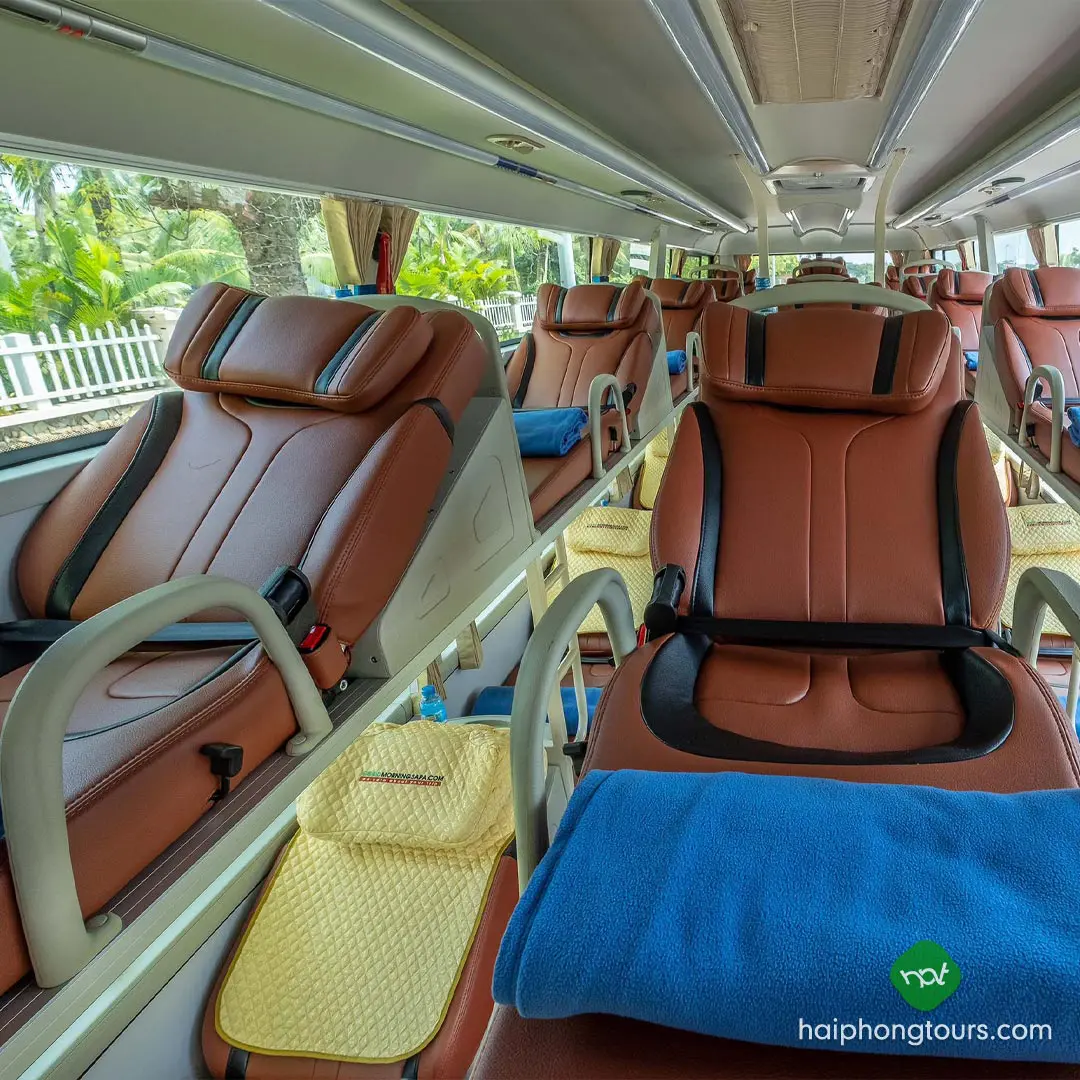
Policies can vary between trains, buses, ferries, taxis and individual drivers. A ticket for a person does not guarantee carriage for an animal. Contact the operator directly and state species, weight, carrier dimensions and whether the animal can remain inside the carrier for the full journey.
A prearranged private vehicle is often the easiest format because stops, airflow and space can be discussed in advance. It is still not automatic: protect the seat, use a secure carrier or harness, agree cleaning expectations and never allow the animal to travel loose near the driver.

Hai Phong Tours recommends obtaining written approval for the exact vehicle before booking a road transfer with your pet.
Taking a small dog or cat on the train
Railway rules allow small pets under specific conditions. The animal and locked carrier together must weigh no more than 7 kilograms, and the carrier must not exceed 35 × 30 × 30 centimeters. It must have a rigid, leakproof base with an absorbent liner. The pet must be healthy and fully vaccinated, with vaccination records available. Station staff check acceptance before boarding.
Staff decide where an accepted animal travels. Live animals are excluded from seated passenger coaches and other passengers’ sleeper compartments. Reserving a private cabin does not by itself settle permission or placement.
Send the exact operator your train details, the combined weight and carrier measurements before paying. Confirm the animal’s location and whether and how you can attend to it. Private carriage policies can differ: Chapa Express does not accept pets.
How to verify a genuinely pet-friendly hotel
- Ask whether dogs, cats or both are accepted and whether size or breed limits apply.
- Request the total fee and deposit in writing.
- Confirm which room type is allocated and whether pets may use the lift and common areas.
- Ask if the animal can stay alone in the room.
- Check for a safe walking and toilet area nearby.
- Confirm cleaning rules, noise policy and damage charges.
- Ask for the nearest clinic that is currently open, then verify it independently.
Booking-platform filters can be outdated or apply only to selected rooms. A direct written reply from the property is more useful.
Two Hai Phong stays to compare with a small pet
Wink Hai Phong Centre, Unscripted by Hyatt, at 135 Dien Bien Phu in Hong Bang Ward, suits a central-city stay with flexible arrival times: its 24-hour stay runs from your check-in time. Pet-friendly rooms accept dogs and cats. For dogs, the published limit is under 7 kilograms each, with a maximum of two pets; the stated pet charge is VND 600,000 per pet per night before tax.

Call before booking to reserve an appropriate room and obtain the full pet-related total, including any deposit or cleaning charge. Cat owners should confirm their animal’s size and conditions directly rather than applying the dog limit automatically. Acceptance in a room does not mean the animal can enter the pool or restaurant.
Somerset Central TD Hai Phong City, in Tower A of TD Plaza in Gia Vien Ward, is worth comparing for a longer stay with a kitchen and in-room laundry. It permits up to two pets per apartment, including dogs and cats, subject to approval. Each must be under 10 kilograms at full-grown size, trained and vaccinated.
Send the breed, weight and vaccination certificate ahead; ask which certificate dates are accepted and request the total pet fee. Outside the apartment, pets must be in a carrier or held by the owner, so bringing a leash alone is insufficient. For either property, arrange the hotel and vehicle separately: acceptance by one does not establish permission for the other.
Daily health and safety
Carry familiar food, collapsible bowls, waste bags, a towel, cleaning supplies, medication and a copy of the vaccination record. Use bottled or otherwise safe drinking water. Check paws after hot pavement and inspect the coat after rural walks. Discuss parasite prevention with a veterinarian before travel.
Avoid contact with free-roaming animals, livestock and wildlife. Keep the animal leashed around traffic, markets, temples and villages. Ask permission before entering restaurants, cafes, religious sites or protected areas, even if the outdoor space looks open.
A realistic five-day starter plan
- Day 1: arrive in Hanoi, clear the veterinary process and take a prearranged vehicle to the hotel.
- Day 2: use a quiet neighborhood routine and recover from the flight.
- Day 3: travel by an approved private vehicle to one verified rural or Hai Phong base.
- Day 4: choose a short outdoor activity where pets are explicitly permitted.
- Day 5: return with a generous buffer before the next flight or international departure.
Do not put a pet on a same-day international arrival, long mountain drive and activity schedule. One stable base and a spare day are more valuable than extra destinations.
Final booking rule
Use four separate confirmations: border documents, airline, accommodation and ground transport. Save each answer offline and recheck shortly before travel. Northern Vietnam can be a rewarding pet trip when the route protects the animal’s welfare; if any link in that chain is unclear, simplify the itinerary or leave the pet with a trusted carer.
Would you like help fitting this experience into your trip? Contact us with your travel dates, starting point, available time and group size. Tell us about walking limits or special interests so we can suggest a practical itinerary.