
Bus 90 connects Noi Bai Airport with Hao Nam beside Cat Linh metro; Kim Ma and Ba Dinh are stops along the way, not the terminus. From T2, city-bound service runs 06:40 to 22:30 and visits T1 before Hanoi. Outbound, Hao Nam departures run 05:00 to 21:10 and reach T1 before the T2 endpoint. The operating pattern is roughly 20 minutes, with some 30-minute gaps. An electronic single ride costs VND 3,000 plus VND 450 per kilometer between entry and exit validation. Cash is calculated from boarding to the terminus and rounded up to the nearest VND 1,000. Choose another vehicle when bags, mobility or a fixed connection make the bus chain difficult.
Bus 90 quick facts
- Current endpoints: Hao Nam bus parking beside Cat Linh metro station and the Noi Bai T2 bus parking area.
- Operator: Yen Vien Bus Enterprise within the Transerco network.
- Published frequency: about 20 minutes. The current chart includes some 30-minute gaps.
- Airport to city: T2, then T1, then the western-central Hanoi corridor and Hao Nam.
- City to airport: Hao Nam, then T1, with T2 as the final airport stop.
- Vehicle: Green Bus 8 electric bus with a low-floor design and disability-support equipment.
- Single-ticket pricing: electronic payment uses VND 3,000 plus VND 450 per kilometer traveled. Cash uses boarding-to-endpoint distance and rounds up to the nearest VND 1,000.
Route 90 is still useful for Kim Ma and Ba Dinh, but Kim Ma is no longer the terminus. A traveler who asks only for the old Kim Ma endpoint can wait at the wrong place. Use Hao Nam beside Cat Linh metro for the city endpoint and name the exact intermediate stop when Kim Ma is your actual destination.
Use the correct Kim Ma and Hao Nam stop
Approaching the city from the airport, Route 90 serves the Cau Giay interchange, 593 to 595 Kim Ma, 116 A5 in the Giang Vo collective housing area, 211 Kim Ma and the front Kim Ma BRT platform before reaching Hao Nam. Choose the stop closest to the actual building entrance. Remaining aboard to Hao Nam can create an unnecessary return trip when a Kim Ma stop is closer.
The airport-bound direction uses the other side of the corridor. Its early sequence includes the Hao Nam endpoint, the Ministry of Health at 138A Giang Vo, opposite 311 Kim Ma and 10 Dao Tan before continuing through Buoi, Lac Long Quan and the airport road. Save the direction-specific stop pin rather than assuming the return stop is across a narrow street.
Hao Nam is the route endpoint beside Cat Linh metro station, but a bus ticket does not include a metro trip. Map the walk between the bus parking area, the metro entrance and the final address. The 05:00 airport-bound bus also leaves early enough that you should confirm any separate feeder connection instead of assuming it will already be operating.
Board Route 90 at T2 or T1
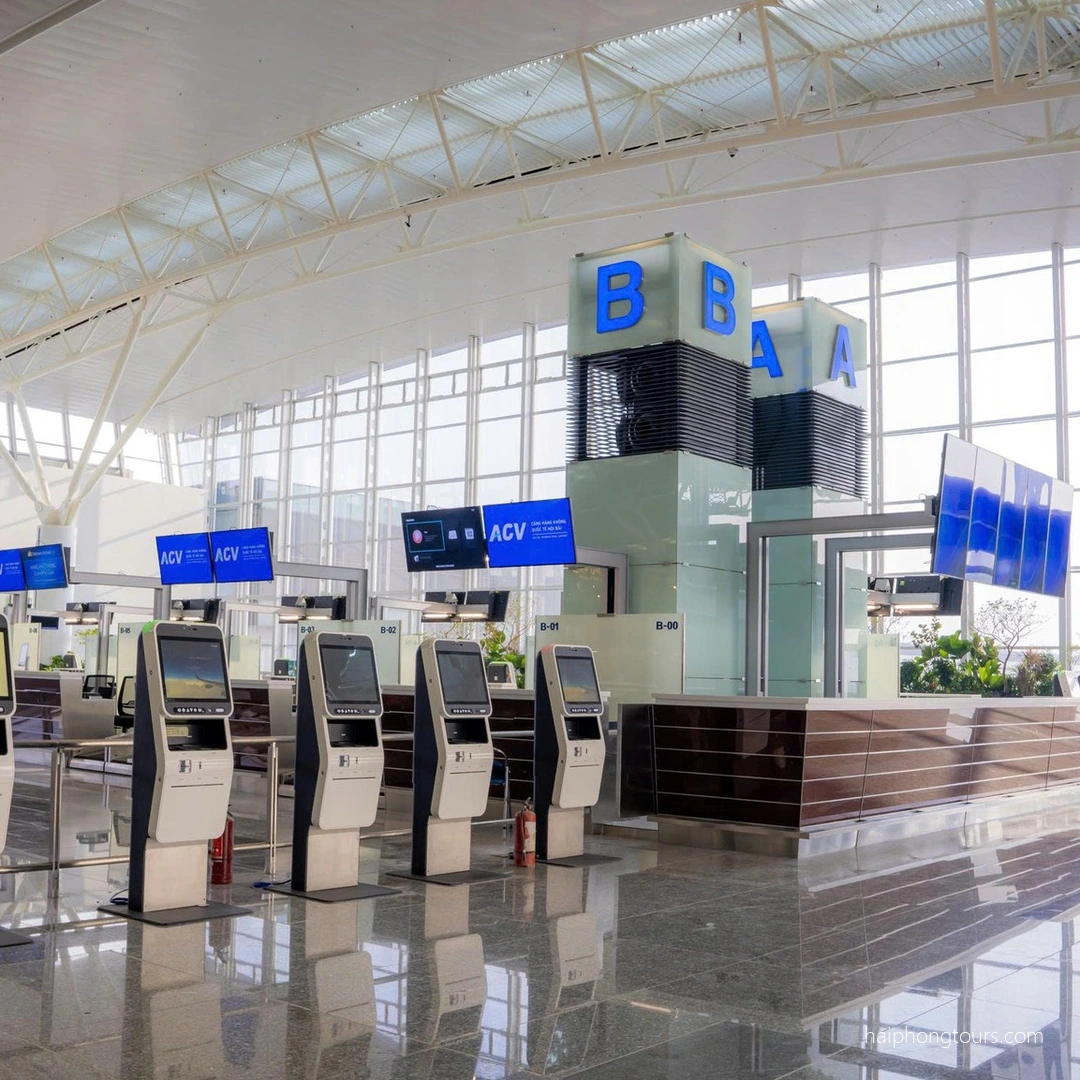
T2 is the origin for the trip into Hanoi. Find the public-bus area only after collecting all checked luggage, then look for route number 90 and destination Hao Nam. The vehicle makes its airport loop and serves the T1 first-floor area next. T1 passengers should use the information desk or Route 90 signage instead of following an old curb pin.
Several public buses share the terminal roadways, so read both the number and the final destination on the arriving vehicle. A bus bound for Cau Giay, Long Bien, My Dinh or the railway station will not follow Route 90’s western corridor. For help locating a stop or arranging access, call Transerco customer service at 1900 1296.

Route 90 endpoint times by direction
Noi Bai T2 to Hao Nam
- First endpoint departure: 06:40 every day.
- Last endpoint departure: 22:30 every day.
- Published frequency: about 20 minutes, with some 30-minute gaps in the current chart.
Hao Nam to Noi Bai T2
- First endpoint departure: 05:00 every day.
- Last endpoint departure: 21:10 every day.
- Published frequency: about 20 minutes, with some 30-minute gaps in the current chart.
The listed clocks apply only at Hao Nam and T2. A passenger waiting at T1, Kim Ma or Giang Vo will see the bus later, and the delay varies with traffic. Recheck Timbus near either edge of the operating day and reach the stop early. The timetable is not a reservation or a protected onward connection.
Plan door to door rather than estimating from the route frequency alone. Start with live road conditions, include the scheduled gap shown for that period, then allow for boarding, unloading and the last walk. If the next ticket or appointment cannot be moved, take an earlier service that leaves a usable recovery option.
How the current fare works
For an electronic single ride, the calculation starts at VND 3,000 and adds VND 450 for each kilometer traveled. Tap or scan at entry and repeat the action when leaving the bus. Without the second validation, the ticket system calculates through to the end of Route 90.
Cash uses a different distance: it measures from your boarding stop all the way to the terminus, including when you get off sooner, and rounds the result upward to the nearest VND 1,000. Ask the onboard staff how to pay before sitting down and retain the receipt or ticket. Bring Vietnamese dong because an overseas card or mobile wallet may not be accepted.
Electric bus, luggage and accessibility
Route 90 uses Green Bus 8 electric vehicles with a 60-passenger design capacity, low-floor boarding and equipment intended to support passengers with disabilities. These features can make boarding easier, but they do not guarantee a level curb, an uncrowded aisle or assistance at every stop. Travelers who need a ramp, wheelchair space or staff help should confirm the actual trip and both curb connections.
Plan baggage around a shared city-bus aisle. A single case that stays under your control can be workable when the vehicle is quiet. Multiple large suitcases, a stroller with bags or bulky equipment can obstruct movement and favor a car instead. Keep passports, payment cards, medicine and electronics in a small bag on your person.
Using Route 90 for an airport departure
From Hao Nam, the bus serves T1 first and finishes at T2. Check the terminal on the airline booking rather than choosing from the words domestic or international alone. Leave at T1 only when the flight uses T1; remain aboard to the T2 endpoint when the flight uses T2.
Work backward from the airline’s required terminal arrival time. Add the wait at Hao Nam or the selected Kim Ma stop, the live road estimate, unloading and the walk to the correct check-in area. A late endpoint departure is not useful if it reaches the terminal after the airline’s bag-drop or check-in deadline.
When another option fits better
Old Quarter hotel guests need a different final route because Bus 90 stays west of that area. Hai Phong Tours lists a private transfer from Noi Bai Airport to the Hanoi Old Quarter for that exact destination. For Hao Nam, Kim Ma or elsewhere in Ba Dinh, obtain a quote using the full building address. Before paying, provide the arrival terminal, passenger total and luggage details.

If the final Route 90 has gone or the address lies well beyond its stops, use the signed airport taxi rank. Read the displayed fare method and show the driver the complete property name plus a map pin. A request for Hanoi center is too broad to identify the correct district or entrance.
Choose Route 90 for the western Hanoi corridor
Route 90 works when the terminal sequence, service window and western stops fit every leg of the journey. Board toward Hao Nam at Noi Bai and toward Noi Bai in the city. If the map, bags, access needs or schedule leave no realistic recovery choice, arrange a door-to-door vehicle.