
Bus 109 links Noi Bai Airport Terminal 1 with My Dinh Bus Station and useful stops along Pham Van Dong and Pham Hung; it does not serve the Old Quarter. The single-trip fare formula is VND 3,000 plus VND 450 per kilometer. Electronic payment uses boarding-to-alighting distance; cash uses boarding-to-endpoint distance and rounding. Buses are scheduled every 20 to 30 minutes. My Dinh departures run 05:00 to 21:00, while T1 departures run 05:33 to 21:03. Use the free airport shuttle between T1 and T2. Choose a direct vehicle for a tight flight or coach, difficult luggage, mobility dependence or a mismatched address.
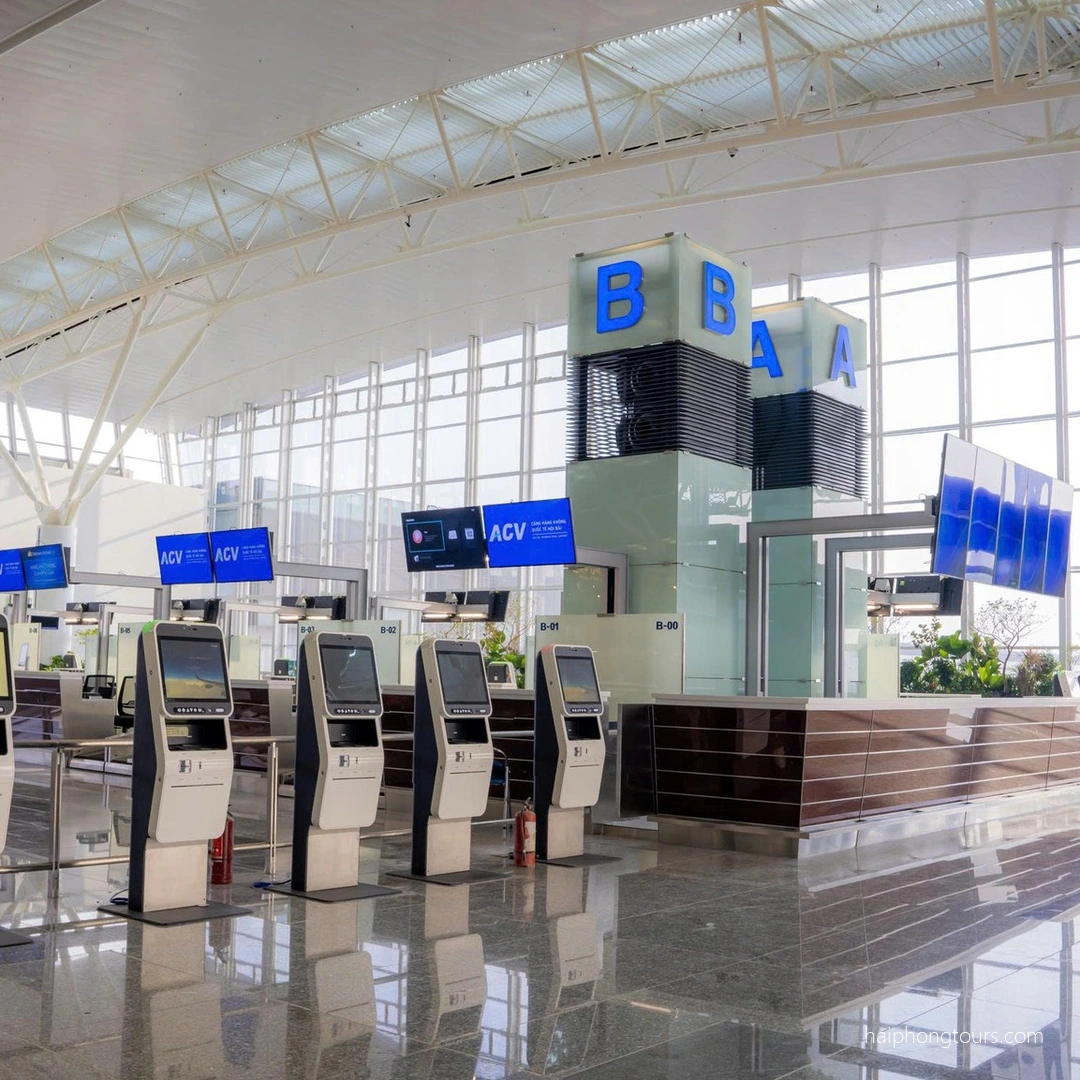
Decide whether Bus 109 matches the whole trip
Bus 109 follows the western Hanoi corridor between My Dinh Bus Station and Noi Bai. It uses Pham Hung, Pham Van Dong, Thang Long Bridge and Vo Van Kiet. This makes it useful for the bus station and for an address close to a listed stop on those roads.
It is a poor match for Hoan Kiem Lake, Hanoi Railway Station or most Old Quarter hotels. A cross-city taxi after the bus can remove the cost advantage and add another uncertain connection. Hai Phong Tours recommends saving the exact hotel, office or coach pickup pin before deciding from the broad area name.
- Single-trip fare: VND 3,000 plus VND 450 per kilometer, with different distance treatment for electronic and cash payment.
- Scheduled interval: 20 to 30 minutes.
- My Dinh route-start window: 05:00 to 21:00 daily.
- Noi Bai route-start window: 05:33 to 21:03 daily from the T1 bus area.
- Airport terminal: treat 109 as a T1 route and use the free airport shuttle for T2.
Use T1 as the Bus 109 airport endpoint
At Noi Bai, board 109 at the T1 bus area. From an international arrival at T2, follow the airport signs for the free NIA Shuttle Bus to T1, then confirm 109 to My Dinh before boarding. Do not use the roadside stop named opposite T2 as a substitute for a terminal pickup.
The free terminal shuttle generally operates from 05:00 until 01:00 the next day. Waiting intervals vary through the day and can be longer late at night, so include the shuttle wait, ride and walk to the 109 stop in the journey. Follow the current NIA Shuttle Bus signs or airport staff directions because curb positions can change.
For the airport-bound trip, remain on 109 to its T1 passenger stop. If your flight uses T2, transfer to the free terminal shuttle and follow the signs into the correct departures area. Decide from the terminal printed in the flight booking or airline notice, not from the airline name alone.
Read the timetable by direction
From My Dinh, scheduled departures begin at 05:00 and end at 21:00. From the T1 bus area, they begin at 05:33 and end at 21:03. The 20-to-30-minute interval is a planning reference, and a route-origin time is not the time the bus reaches an intermediate stop.
Check route 109 in Tìm Buýt or the VinBus route map shortly before walking to the stop. Arrive early near the first or last service, confirm the direction on the vehicle and keep a second transport option available. Traffic on the airport corridor can change the journey time even when the bus leaves its endpoint on schedule.
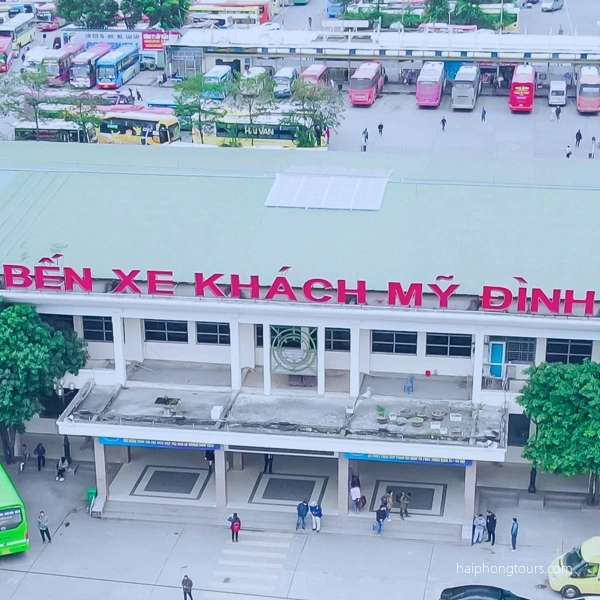
Board at My Dinh or a direction-specific western stop
The city endpoint is the dedicated (A) BX Mỹ Đình – Tuyến 109 stop inside the My Dinh station system at 20 Pham Hung Street. Use this stop when the bus station is the actual destination or when a coach ticket tells you to report inside the official station.
Toward the airport, examples include Bac Ha Building at 30 Pham Van Dong, 655 Pham Van Dong and 36A Pham Van Dong. Toward My Dinh, examples include 138, 542 and 370 Pham Van Dong. These are direction-specific curbs on a wide road, so save the airport-bound stop separately from the one used after arriving in Hanoi.
A ticket or message that says only “My Dinh” does not prove that the coach leaves from the official station. Some operators use a roadside office or another pickup point in the wider district. Confirm the operator name, exact address, counter or bay, reporting time and vehicle details before treating 109 as a same-station connection.
Allow time for an onward coach at My Dinh
My Dinh serves many routes toward northern and northwestern destinations, but operators, counters and departure points change. Reaching the bus-station entrance is only one step. You may still need to find the ticket counter, collect or verify a ticket, locate the correct bay and meet the coach operator’s boarding deadline.
Build the connection backward from the coach’s required reporting time. Add the 109 wait, variable road time, walking inside the station and time to resolve a wrong counter or pickup point. If the margin disappears after a delayed flight or slow baggage reclaim, use a direct vehicle to the confirmed coach pickup instead of relying on the next city bus.
Pay the single-trip fare correctly
The single-trip formula starts at VND 3,000 and adds VND 450 per kilometer. For electronic payment, the system uses the distance from the boarding stop to the alighting stop. Tap the transport card or scan the local transport-account QR code when boarding and again when leaving.
If the exit validation is missed, the electronic system charges to the route endpoint. Keep the card, QR account or payment confirmation available until the trip ends, and do not walk past the validator because the doors are about to close.
For cash, the fare is calculated from the boarding stop to the route endpoint and rounded up to the nearest VND 1,000. Ask the attendant for the exact amount. Do not assume an overseas bank card or phone wallet can fund a Hanoi transport account; confirm an accepted method before taking a seat.
Carry only luggage you can control
Bus 109 is a city bus without a guaranteed suitcase hold or staffed baggage service. Plan to lift every bag, keep the aisle and doors clear, and hold passports, money, medication and electronics in a small bag. One traveler with one manageable suitcase is a better fit than a group with several large cases.
A specific low-floor vehicle, wheelchair space or step-free curb is not guaranteed for a chosen departure. Travelers who depend on accessible boarding should call the Hanoi bus hotline 1900 1296 with route 109, direction, stop and planned time. For My Dinh station or coach information, the station lists 1900 1825, branch 1.

Protect a flight with a complete time buffer
For a flight, work backward from the airline’s recommended airport arrival time and respect the earlier check-in or bag-drop closing deadline. Add the wait for 109, traffic, the T1-to-T2 shuttle when needed, walking into the terminal and time to find the correct counter. The last listed bus is not a safe plan for a tight departure.
Choose an earlier 109 so a later scheduled service can still be a usable backup. If a missed bus or traffic delay removes that margin, change to a direct vehicle. The same logic applies to a coach connection, appointment or other departure that will not wait.
Choose another vehicle when the chain becomes fragile
Bus 109 is strongest for one or two travelers whose destination is My Dinh Bus Station or a mapped western-Hanoi stop, who can wait and walk, and who can handle their luggage. A direct taxi or prearranged car is more practical for an Old Quarter address, a T2 trip with little spare time, limited mobility, several large bags or a coach pickup away from the official station.
Before boarding, confirm four points: the correct 109 direction, the T1 transfer plan if needed, an accepted payment method and enough time for the final walk or onward check-in. That complete chain matters more than the route number alone.