
Prepare a Grand Pioneers onboard account by separating what the booking voucher already covers from services that may be charged during the cruise. The operator’s current terms state that shipboard accounts may be paid by credit card, United States dollars or local currency. That broad statement does not confirm every card brand, exchange practice, fee or terminal condition, so verify the practical details before sailing and carry a workable backup.

The goal is not to predict how much every guest will spend. It is to know which purchases belong on the onboard account, how the ship can accept payment and how you will check the final amount. Keep the booking voucher, confirm accepted methods through the official channel and request an itemized receipt before disembarkation.

Start with the paid voucher
Read the latest booking confirmation line by line. Mark the cabin, meals, activities, transfers and other services explicitly listed as included. Then mark anything the voucher describes as excluded, optional or payable separately. The onboard-account plan should begin with this document rather than a general idea of what a cruise fare usually includes.
If the voucher uses a package name without explaining an inclusion that matters, ask the official booking team for clarification before travel. Save the answer with the voucher. A traveler should not discover at checkout that one person interpreted a service as prepaid while the ship recorded it as an extra.
Do the same for every traveler under the booking. A group may have different cabin or package conditions, and one guest may authorize purchases for another. Decide who will review the account and who may sign or approve a charge. This reduces confusion when several cabin members use one folio.
Confirm the accepted payment method
Grand Pioneers currently publishes credit card, USD and local currency as shipboard-account methods. Contact the official team and ask which card types are accepted on the assigned sailing, whether the physical card is required, which currency the account is presented in and how any conversion or processing fee is shown. Do not assume that a card accepted for the original booking will automatically work onboard.
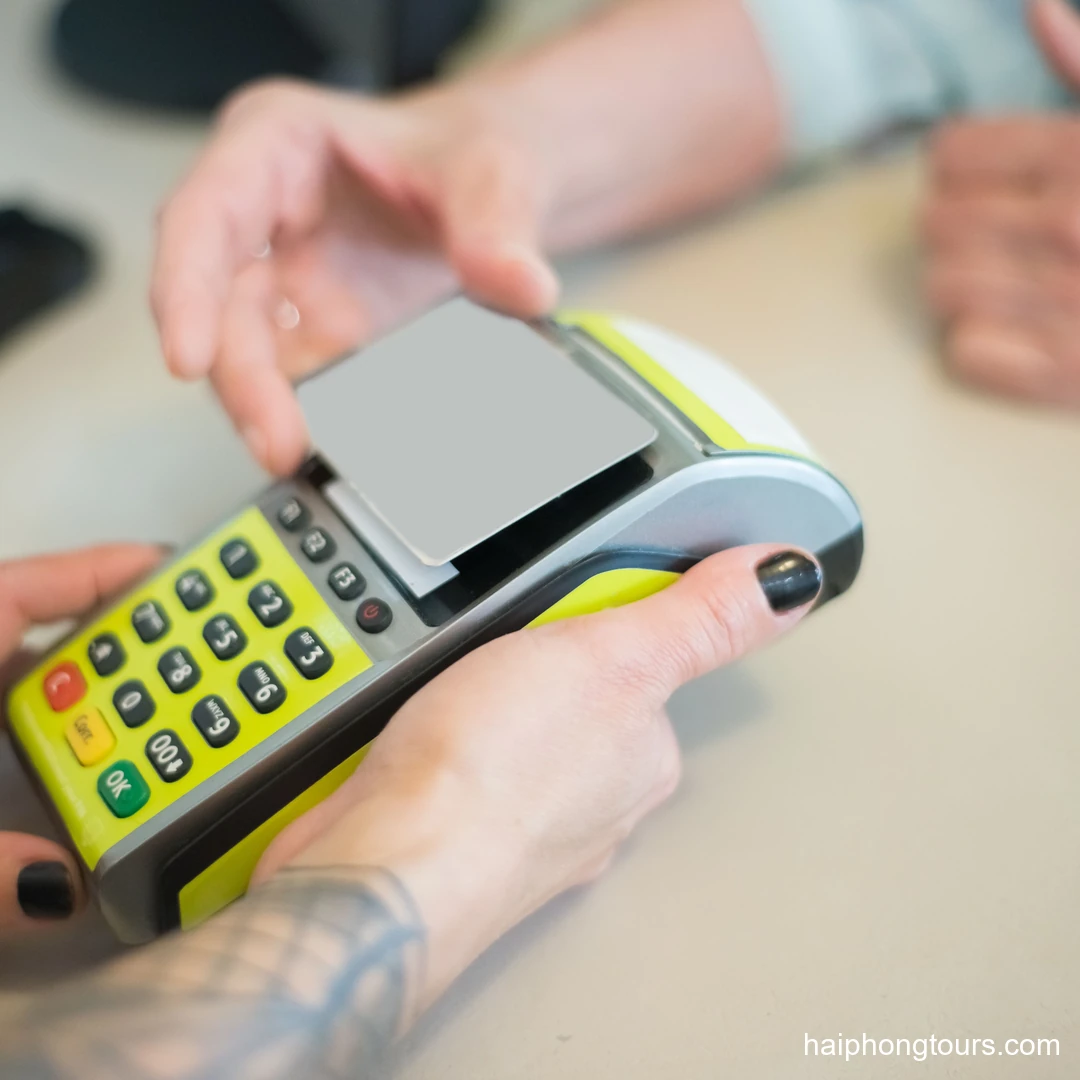
For cash, ask whether both USD and Vietnamese currency can settle the same account and how change is handled. Do not assume a particular exchange rate or that every foreign note will be accepted. The operator’s current instruction for the sailing should control.
For cards, tell the bank about travel if its security process requires that step and verify that the card is active. This is ordinary payment preparation, not a guarantee that the ship’s terminal or connection will be available. Carry a second method that the operator has confirmed rather than relying on one card or one currency.
Keep the onboard account readable
Record each purchase or authorization while it is fresh. A simple note can include the date, service, amount and traveler. Retain any interim slip the ship provides. The purpose is not to challenge every charge; it is to make the final review quick and accurate.
Ask how a charge will appear before approving it when the description is unclear. If more than one cabin is traveling together, state which folio should receive the purchase. Do not move charges between rooms informally and expect the final account to reconcile itself.
Review the folio before the last disembarkation stage. Waiting until the group is leaving the vessel can make a simple question harder to investigate. Compare the list with your notes and the voucher, then ask onboard staff to explain any line that is unfamiliar or appears twice.
What to check on the final receipt
- The guest or cabin connected to the account.
- Each service, quantity and date shown.
- The currency used for the account.
- Any processing or conversion amount disclosed by the operator.
- Credits, corrections or canceled items.
- The payment method and final amount settled.
- A receipt or written confirmation that the account is closed.
If a correction is made, ask for an updated itemized version rather than keeping only the earlier total. Save the receipt offline after the trip. A card statement can confirm that money moved, but it may not explain the shipboard services behind the total.
A practical backup plan
The backup should be a method the operator currently accepts, not simply another card from the same wallet. If the primary plan is a card, confirm whether suitable cash is accepted. If the primary plan is cash, keep an accepted card available for an amount that exceeds the cash estimate. Store methods securely and separately where practical.
Do not carry a large amount without considering personal security. Instead, clarify likely payment needs from the voucher and official team, then choose a proportionate backup. This article does not recommend a specific spending amount because onboard choices and account conditions differ.
Keep the official contact and booking reference available, but understand that the onboard team should address a live shipboard account first. The pre-sailing booking team can clarify accepted methods; it may not be able to reconstruct every purchase in real time.
If a payment method fails
Tell onboard staff promptly and ask which confirmed alternative can be used. Do not keep retrying a card without understanding whether a bank block, terminal issue or incorrect detail is involved. Contact the card issuer through a trusted channel when necessary, while keeping the ship informed.
If the account contains a disputed line, identify that line separately from the payment failure. Ask staff to review the charge and document any correction. A declined card does not establish that the account is wrong, and an account question does not remove the need to settle valid charges.
If the issue remains unresolved by disembarkation, retain the folio, receipt, booking reference and written staff response. Follow up through the official Grand Pioneers channel with a concise description. Do not turn an onboard-account question into an unrelated booking-deposit, scam or refund dispute.
Hai Phong Tours boundary
Hai Phong Tours does not operate Grand Pioneers, maintain its shipboard accounts, process onboard card transactions or decide account corrections. There is no HPT service call to action for this decision. Use the Grand Pioneers voucher, onboard team and official contact channel.
Final payment checklist
- Mark every prepaid inclusion and exclusion on the voucher.
- Confirm accepted card types, USD and local-currency procedure.
- Ask how fees, conversion and currency will appear.
- Carry one confirmed backup method.
- Track purchases by date, guest and cabin.
- Review the folio before the final disembarkation stage.
- Resolve unfamiliar or duplicate lines onboard.
- Retain an itemized receipt showing final settlement.
A workable onboard account is based on documents, not assumptions. Know what the cruise fare already covers, verify how the ship can take payment and check the folio while staff can still investigate it. That preparation makes the final settlement a controlled review instead of a last-minute surprise.
Would you like help fitting this experience into your trip? Contact us with your travel dates, starting point, available time and group size. Tell us about walking limits or special interests so we can suggest a practical itinerary.