
If you are at the wrong Noi Bai terminal for a public bus, first check whether that route will still call your terminal in the citybound direction. Some buses serve both T1 and T2 in a set order, while Routes 17 and 109 should be treated as T1 routes. If you must change terminals, the free NIA shuttle boards on Level 1: T1 to T2 starts from 05:10 to 01:30 and T2 to T1 from 05:00 to 01:20. The ride is scheduled for about 10 to 15 minutes, but listed gaps reach 30 minutes. Recheck the city bus after moving because the terminal shuttle does not protect its last departure.
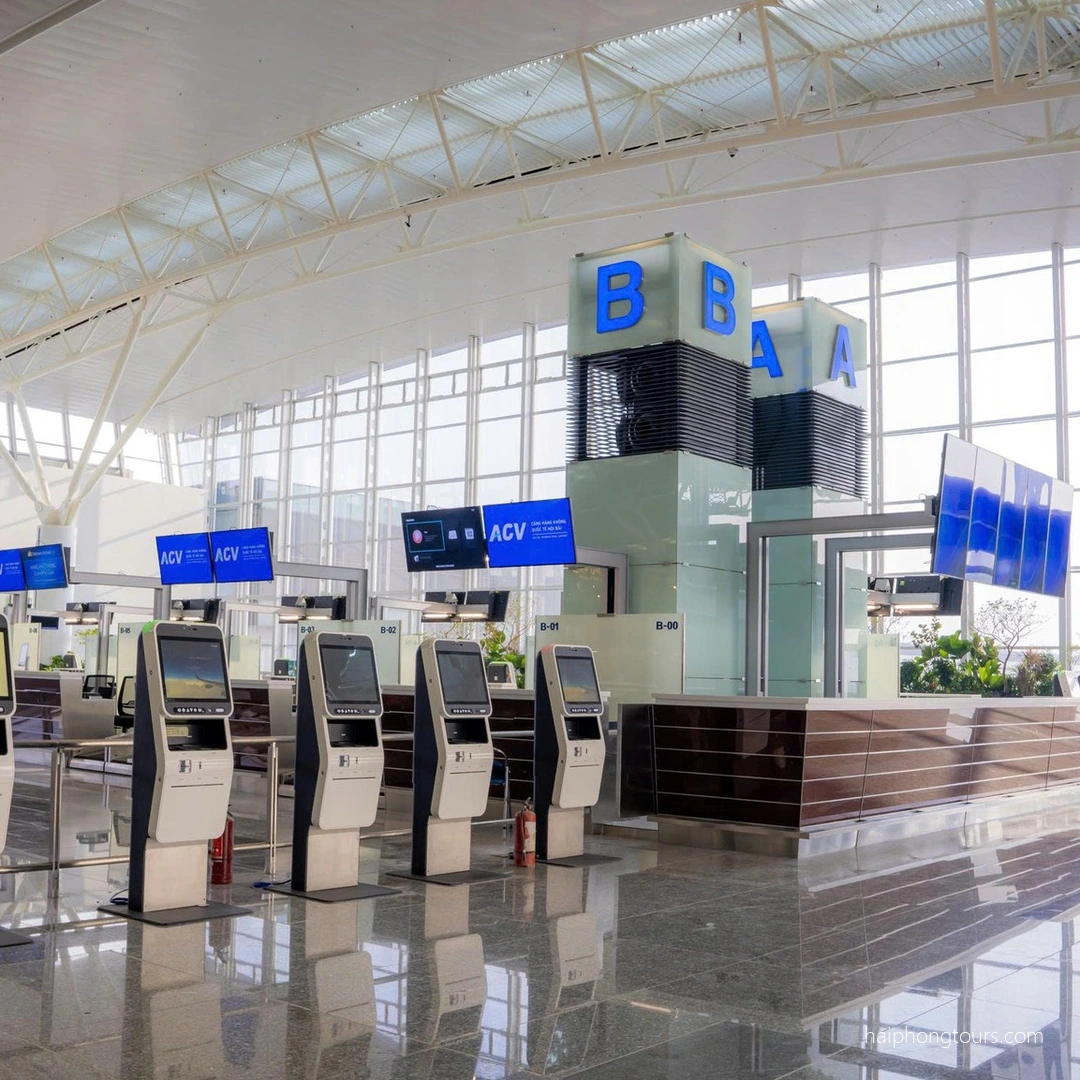
Confirm that you are really at the wrong terminal
Do not change terminals from the route number alone. Check the direction, current terminal sequence and signed boarding point. The Noi Bai public bus comparison separates the routes by Hanoi endpoint and airport call, which is more useful than a generic airport pin.
Routes 17 and 109 use T1 for the airport end. Citybound Route 07 starts at T1 and then calls T2, so a traveler already at T2 may be able to board the same route there. Citybound Routes 86, 90 and E10 start at T2 before T1, while citybound Route 68 starts at T1 before T2. These are route orders, not promises that every bus is still operating when you arrive.
A route-start time belongs to its origin. If a bus starts at the other terminal and calls yours second, its exact arrival at your stop depends on the operating trip. Use the current operator timetable, destination display and airport sign rather than calculating a precise second-terminal time yourself.

Use the NIA shuttle only when a terminal change is needed
- T1 to T2: board at the current signed NIA stop on Level 1, arrive at T2 Level 3, and use the listed 05:10 to 01:30 route-start window.
- T2 to T1: board on Level 1, arrive at T1 Level 2, and use the listed 05:00 to 01:20 route-start window.
- Scheduled ride: about 10 to 15 minutes.
- Listed gaps: about 10 to 30 minutes, without a guaranteed maximum wait.
Both directions board on Level 1, but they arrive on different levels. Do not reverse an arrival level into a boarding instruction. At T2, follow the current NIA signs or ask the information desk because a saved lane or pillar can become obsolete. The detailed T1-T2 shuttle guide explains the direction and late schedule.
Protect the final city-bus departure
Work backward from the city bus, not from the 10 to 15 minute shuttle ride. Include the walk out of arrivals, time to find the signed NIA stop, a possible listed gap, loading, the road ride, unloading and the walk to the city-bus stop. A route with a final start from T1 may be unreachable from T2 even when one more terminal shuttle remains.
Ask airport staff to confirm the current city-bus stop and whether your route is still expected. After reaching the other terminal, check the route number, direction and destination display again. Terminal movement does not confirm that the bus has not departed, and a vehicle with a similar number may serve a different endpoint.
Check the Hanoi endpoint before committing to the move
Reaching the correct airport stop still leaves the city-side decision. Route 86 serves Hanoi Railway Station and central eastern stops, 07 serves Cau Giay, 17 Long Bien, 90 Hao Nam, 109 My Dinh, 68 Ha Dong and Yen Nghia, and E10 Ocean Park. Compare that endpoint with the complete hotel, station, coach office or building address.
If the bus endpoint requires another connection, confirm that stage before leaving the airport. A late arrival at a bus terminal or metro interchange can remove the apparent saving. Travelers with a fixed train, coach or appointment should include the final walk and the onward operator’s boarding deadline.
Move the group and luggage as one plan
Count every traveler and bag before leaving the first terminal and again after the NIA shuttle. Keep passports, phones, medication, money and onward tickets with their owners. With children or several suitcases, give one adult responsibility for people and another for bags so nobody follows a city-bus sign while the rest of the group follows the shuttle sign.
If one person must ask the information desk, keep everyone else at a visible public meeting point. Do not send a child or a traveler needing assistance to search another curb alone. Large luggage, a stroller or mobility equipment can also lengthen loading and the walk to the city-bus bay, so include that time before deciding the chain still works.
Use a staffed fallback when the bus chain fails

If the intended city bus has ended or the terminal change would miss it, stop moving between buildings. Return to an airport information point and arrange an authorized road vehicle or a safe wait for a later service. Give the complete city destination, not only Hanoi, and confirm the vehicle identity, meeting point, fare basis and luggage capacity before entering.
Do not walk along airport service roads or follow an unofficial shortcut between terminals. If the failed bus plan affects a hotel check-in, train, coach or appointment, update that provider with a realistic arrival estimate. Hai Phong Tours recommends changing the onward plan when the verified transport no longer leaves a workable margin, rather than treating the shortest possible terminal transfer as guaranteed.
Follow a simple recovery sequence
- Confirm T1 or T2 and collect every bag.
- Check whether the intended city bus calls the current terminal in your direction.
- Verify its current stop, destination display and remaining service.
- If a terminal change is necessary, include the NIA walk, possible wait and ride.
- Recheck the city bus after reaching the other terminal.
- Use a staffed authorized fallback when the public-bus chain no longer works.