
Choose a charging stop early enough to preserve a practical rerouting buffer if the first station cannot be used.
Build a primary and backup plan
Choose a primary station and a reachable backup before the battery margin becomes tight. Recheck both in the current app, then consider traffic, elevation, weather, cabin use, load and detours without treating any displayed range as a promise.
Arrive with enough buffer to reroute if a charger is occupied, offline, inaccessible or unsuitable. Waiting may be reasonable when another vehicle is nearly finished, but compare that uncertainty with the energy needed to reach the backup.
Never assume a listed station will remain available. Status can change after departure, and a vacant bay can still have a fault, access restriction or connector mismatch.
Prepare a low-battery fallback
If the vehicle cannot safely reach a working compatible charger, stop in a safe lawful place and use the vehicle maker or operator support channel. Follow the vehicle manual and local emergency instructions.
Hai Phong Tours recommends keeping EV charging uncertainty separate from the day’s essential transport plan. The company does not operate the charging network, certify compatibility, control parking, provide technical or roadside decisions, or guarantee a safety outcome.
Plan for arrival energy
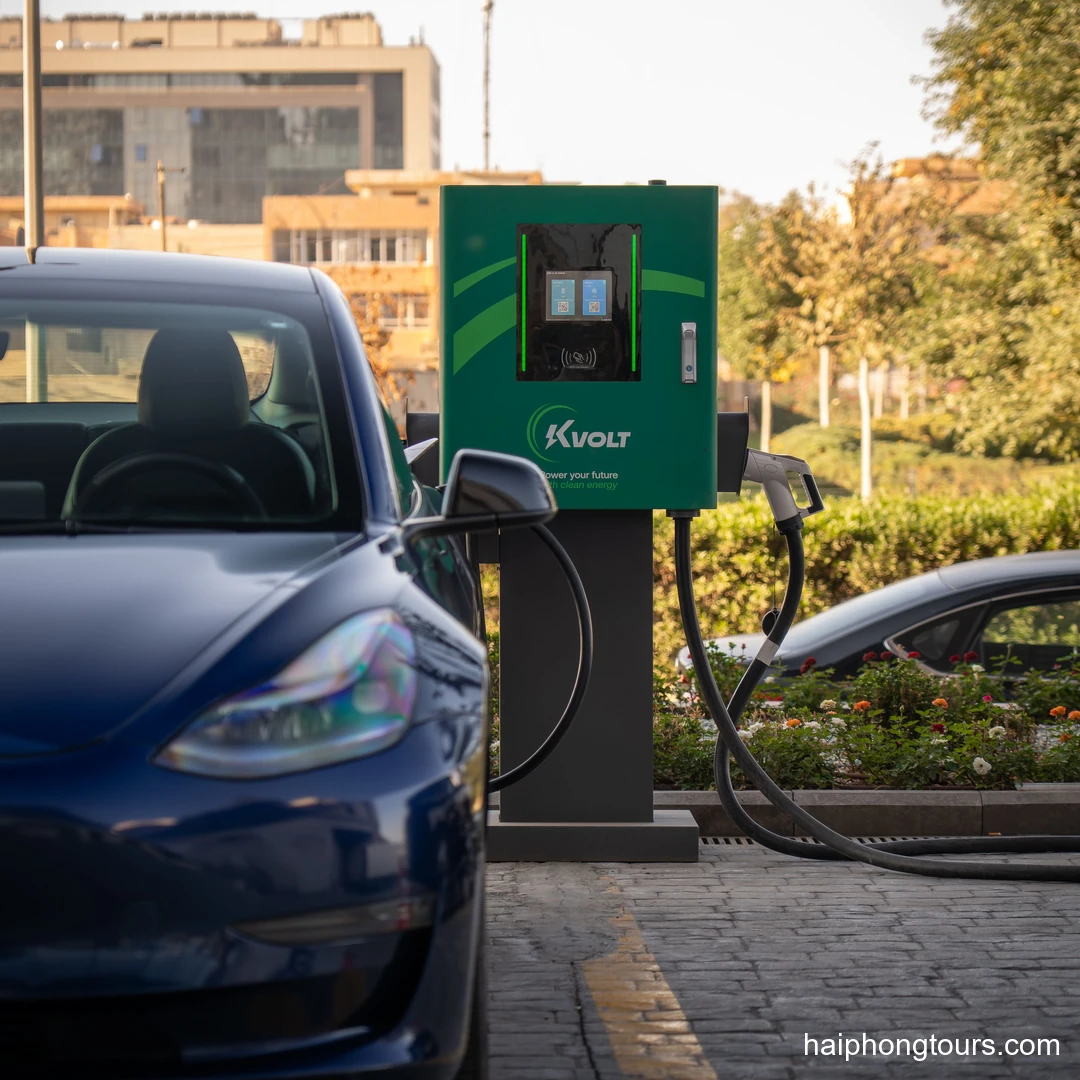
The useful question is how much flexibility remains when you reach the charger. Allow for a wrong entrance, an occupied bay, a fault and a detour to another compatible station. Use the vehicle maker’s guidance and the provider’s knowledge of the exact vehicle rather than a universal percentage from a travel article. Shorten the leg if the backup is no longer reachable.
Would a private car with a driver fit your onward travel better? Contact us with your travel date, pickup, destination, group size and bags to ask about a suitable ground-travel plan and quotation.
