
Yen Tu’s two cable-car lines reduce the ascent, but they do not create a step-free route to Dong Pagoda. Transfers between stations, sloping surfaces, uneven paths and the final summit climb remain important barriers.
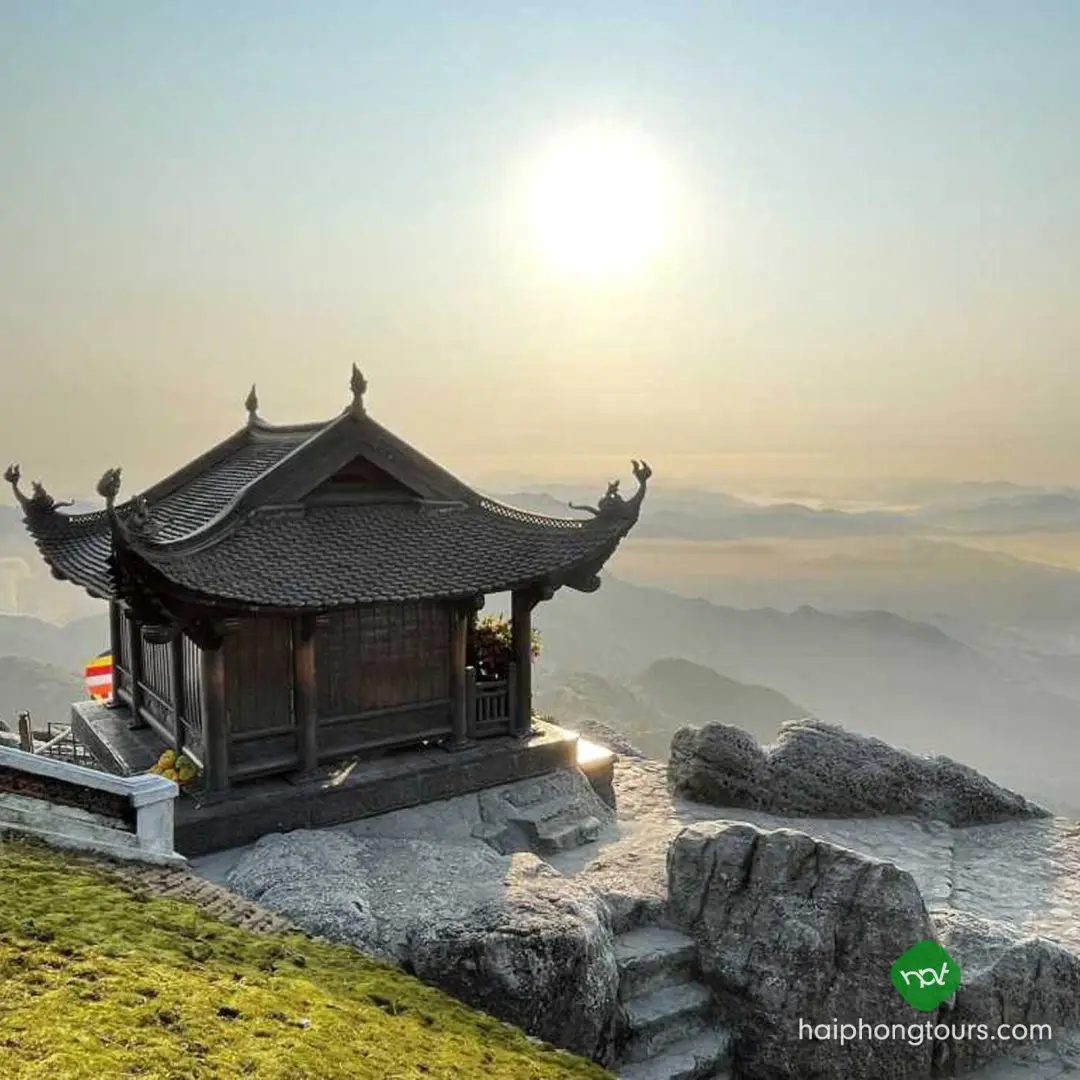
A successful visit does not have to reach the summit. Travelers with limited mobility can choose a lower complex, use one cable-car stage or turn around near the upper Buddha area after checking the real surfaces and assistance available that day.
Understand the route in stages
Lower site and first cable-car line
The lower area includes arrival, ticketing and the approach to the first line. Confirm the distance from vehicle drop-off to the ticket area, whether ramps are continuous, where steps begin and whether staff can assist with boarding.
Transfer between the two lines
The operator describes two cable-car stages rather than one uninterrupted cabin to the top. Ask how far the transfer walk is, whether it includes stairs or steep slopes, how much time is allowed and whether seating and toilets are available between stages.
Upper area and Dong Pagoda
The upper cable car still does not deliver visitors directly to Dong Pagoda. The operator describes the remaining climb as taking more than half an hour. That is operator guidance, not a universal walking time; the effort and duration depend on mobility, crowding, weather and rest needs.
Choose a realistic turnaround point
Decide before arrival what would make you stop: a steep transfer, wet steps, heavy crowds, fatigue or insufficient time for the return. A lower-complex visit can still offer religious and landscape context. Using the first line and returning from the middle section is also a valid plan.
Do not let a prepaid ticket turn into pressure to continue. The return journey uses the same transfers and may become harder when the site is crowded or surfaces are wet.
Questions to ask before buying tickets
- Are both cable-car lines operating, and is any maintenance planned?
- What steps, slopes and walking distances connect the drop-off, ticket office and cabins?
- Can the cabins accommodate a folding mobility aid, and who loads it?
- Where are the toilets, seats and sheltered rest areas?
- Is companion assistance available at boarding and transfer points?
- What is the latest comfortable return time for the route you choose?
Weather and crowding change the difficulty
Rain can make stone and sloping surfaces more difficult. Fog can reduce visibility without removing physical barriers, while festival periods can create queues and limit the space available for a slow transfer. Check the operating notice and weather on the day, then shorten the route when conditions add risk.
Prepare the companion and medication plan
Carry necessary medication for the planned visit plus delay time. Keep water and essential items with the traveler rather than in luggage left in a vehicle. The companion should know the turnaround rule and should not carry a person on unsafe steps.
Choose one of three valid success points
A lower visit around Truc Lam Yen Tu Cultural Center and the base can be complete. One cable-car section to Hoa Yen can be another valid goal. The full two-line ascent toward An Ky Sinh and Dong Pagoda is only the third option, not the default measure of success.
Count every transfer
Ask about vehicle drop-off, electric shuttle, ticket queue, station ramps or stairs, wheelchair acceptance, cable-car entry, the transfer between two lines, toilets and weather shelter. Do not invent lift or ramp coverage; verify the current station arrangement directly.

Measure the door-to-door load, including the descent. Set a turnaround time before fatigue, crowding or weather removes the safe margin.
Use the road transfer only for the road
An exact Hanoi–Yen Tu transfer may solve the matching road direction, but it cannot guarantee mountain access. Confirm any vehicle pickup separately from every on-site surface and assistance question.
Build an access inventory before paying
Ask the current operator about the vehicle drop-off distance, electric shuttle availability, queue seating, station stairs or ramps, wheelchair acceptance and dimensions, toilets and weather shelter. Ask where a companion can assist and whether staff can help with boarding. Record the answer for each stage; a general statement that the site is “accessible by cable car” does not describe the ground between stations.
Carry medication, water and a light weather layer with the traveler rather than in a vehicle left below. If a mobility aid folds, send its dimensions before travel and confirm where it can be stored on the shuttle and cable car. Never assume that a road driver or cable-car ticket includes personal lifting assistance.
Use three valid success points
A lower-site visit around Truc Lam Yen Tu Cultural Center and the Giai Oan area can be a complete day. A second option is one cable-car section and a stop around Hoa Yen. The full two-line ascent toward An Ky Sinh and Dong Pagoda adds transfers, exposed walking and final steps, so it should be selected only when those sections match the traveler’s capacity.
Agree on the turnaround point before the ascent. If the first stage consumes more energy than expected, descend from Hoa Yen rather than treating the summit as the only successful outcome. In rain, dense fog or heavy crowds, the lower complex may offer the safer and more enjoyable visit.
Count the descent in the day
Parking, ticketing, queues, shuttles, station transfers, rest stops and the final walk can take more effort than the cable ride itself. Set a latest descent time that preserves daylight and the return vehicle. The companion should know when to stop without waiting for visible exhaustion or a weather closure.
Transport to Yen Tu solves only the road journey. It does not solve the mountain barriers. Hai Phong Tours recommends confirming the exact pickup point and then separately verifying every on-site transfer, surface and rest facility before committing to the summit route.
Would you like help fitting this experience into your trip? Contact us with your travel dates, starting point, available time and group size. Tell us about walking limits or special interests so we can suggest a practical itinerary.
