
Choose a Ha Long cruise for three generations only when every traveler can complete the same road transfer and boarding chain. Once aboard, split optional cave, island, kayak and rest activities by ability and interest instead of forcing children, parents and grandparents into one pace.
The strongest plan keeps the family together through hotel pickup, port check-in, gangway or tender and return loading, then uses named reunion points for optional activities. Hai Phong Tours recommends judging the least flexible traveler first, because a beautiful cabin cannot repair an unsuitable boarding method.
Build one passenger and equipment list
Record the details that affect operations: child ages where the operator uses age rules, walking and standing limits, stroller or wheelchair dimensions, medicine, dietary needs, nap times, bed needs and luggage. Count every case and mobility item before selecting the vehicle. A vehicle’s maximum seat number does not prove it has cargo space for the same number of passengers.

Assign one lead contact and one backup. The operator, driver and hotel should hold the same passenger count, phone numbers, cabin list and pickup pin. This prevents one branch of the booking from treating a child as an infant while another allocates a full seat or bed.
Keep one road and port chain for the group
Confirm the exact hotel pickup, rest-stop plan, vehicle, passenger port, lounge, report time and boarding method. Ha Long International Cruise Port and Tuan Chau Marina are not interchangeable. Do not split the family between ports or vehicles during the most fragile handoff.
If the family stays in Ha Long city, current HPT port-transfer pages use about 20 km and 30 minutes as a reference to either main port area. Use that only after the cruise operator supplies the correct lounge and required check-in time. Add loading time for a stroller, wheelchair and several cases.
Compare four-hour, six-hour and overnight movement
A private four-hour cruise can reduce time on the water, while a private six-hour route adds activity time. A 7.5-hour scheduled yacht provides a longer fixed program and larger shared facilities. The shorter option is not automatically easier if it compresses cave steps, boarding and lunch into a narrow window.
An overnight creates a cabin for rest but adds cabin access, another meal cycle, morning checkout and possibly a tender or day boat. Compare total movements and recovery periods rather than assuming a second day is slower. Confirm when the cabin opens, whether it remains available during excursions and when it must be vacated.
Choose cabins by deck and function
Ask about connecting cabins, adjacent cabins, triple or family rooms, a single-use cabin for a grandparent and safe child sleeping. A room-type name does not show the deck, stair route, bed layout or door connection. Obtain the actual allocation before paying the balance.
An elevator badge applies only to the decks it reaches and may not cover the tender, gangway or attraction. Trace the path from cabin to dining room, toilets and emergency assembly point. If a traveler cannot use that path, a lower deck or day cruise may be a better choice.
Split activities only after reaching the main vessel
One branch may visit Sung Sot Cave or Ti Top Island while another rests onboard, but this works only when staying aboard is allowed, staff and toilets remain available, and the reunion point is clear. Use a named lounge or dining area and a specific time rather than saying to meet later.

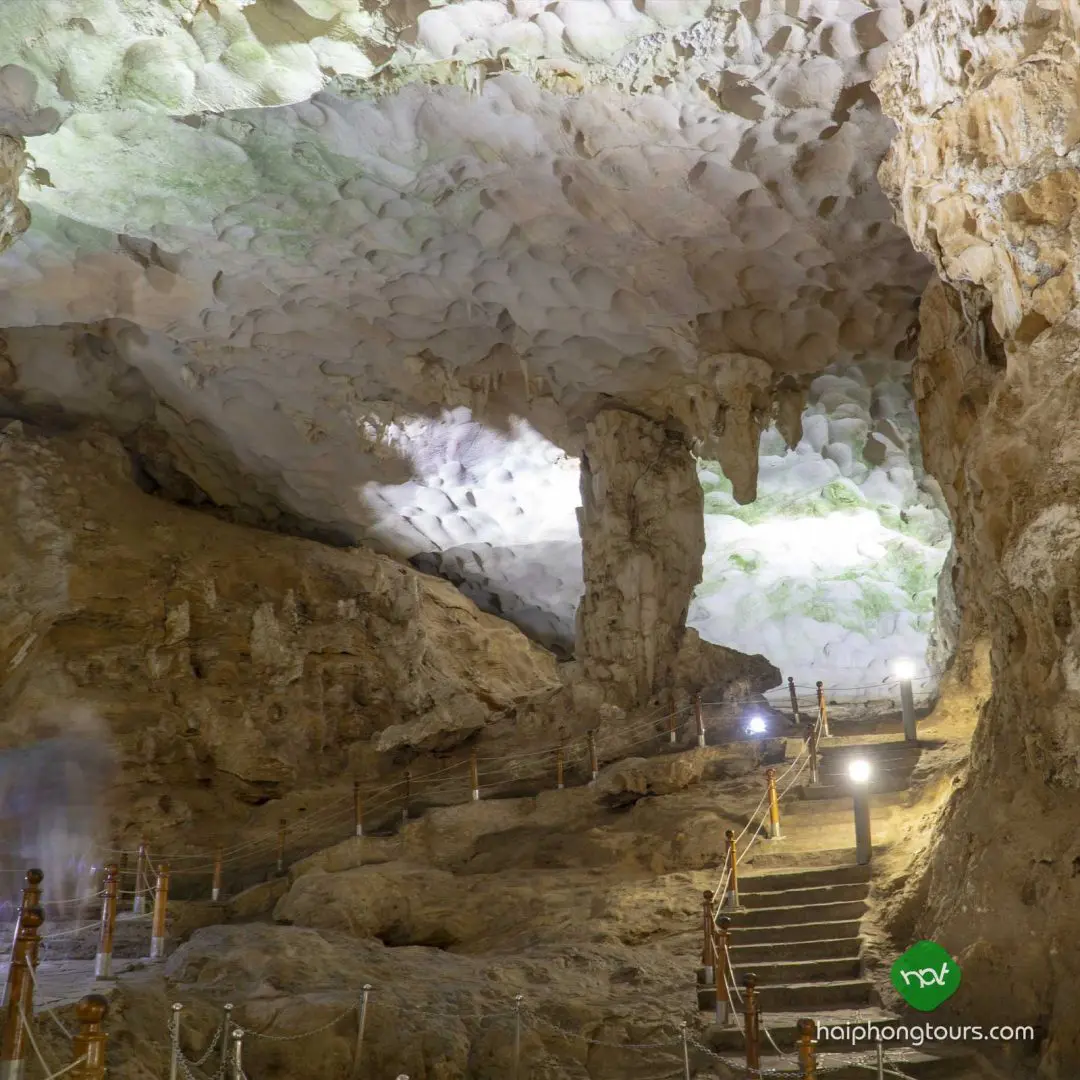
Do not separate a child from the responsible adult, a traveler from required medicine or a mobility-sensitive traveler during an unverified tender transfer. Ask how kayaking, sampans and island stops handle children and nonparticipants. The operator’s supervision rules control the plan.
Map meals, naps and quiet time
Confirm child meals, dietary requests, drinking water and whether an early or late serving is possible. A buffet label does not prove allergen control or that familiar food will be available. Carry essential child food only within the operator’s current rules.
Place nap and rest periods against the real itinerary. A cabin is useful only if the family can enter it during the nap; a loud deck program beside the cabin may change that value. On a day cruise, identify an indoor seated area and ask whether it remains accessible during excursions.
Plan the weather split before the weather changes
Decide which outdoor activities can be removed while the trip remains worthwhile. In heat, preserve cooled recovery blocks; in rain, reduce wet stairs and small-craft transfers; in rough water, let the authority, licensed operator and captain control operations. A weather change should not create an improvised split across unknown boats or ports.
If the cabin allocation, boarding method or vehicle changes, reassess the least flexible traveler before moving. Keep the whole family at the staffed lounge until the operator supplies a safe common chain. A nearby hotel or land day is the better fallback when one member cannot complete the revised boarding route.
Choose optional pace, not separate logistics
This format suits families that accept different activity branches while sharing transport and the main vessel. It is a poor fit when one traveler cannot complete the verified boarding chain or when critical cabin access remains unconfirmed.
Use the Hai Phong Tours Ha Long Bay cruise comparison to review day and overnight formats. The private four-hour and private six-hour options are relevant only when their current route, capacity and movement chain fit the actual family.
 Day Cruise
Halong Bay
Private 4 Hour Halong Bay Day Cruise
 Day Cruise
Halong Bay
Private 6 Hour Halong Bay Day Cruise
Useful guides for your trip
Would you like help fitting this experience into your trip? Contact us with your travel dates, starting point, available time and group size. Tell us about walking limits or special interests so we can suggest a practical itinerary.