
Keep the day below or around Hoa Yen when low cloud makes the upper route unrewarding or wet surfaces do not suit the group. Continue higher only when the next cable-car stage operates, the outdoor path is comfortable and the descent clock still works. Reaching Dong Pagoda is not required for a meaningful Yen Tu visit.
Fog can hide views while the heritage site and cable cars remain open. An official closure or suspension must come from the authority or operator. Do not turn one forecast icon or a photograph from another hour into an operating decision.
Use four checks before leaving the lower area
Check NCHMF for Quang Ninh, the Yen Tu operator, the lower hotel or reception and visible conditions at the station. Ask about cable-car operation, wind, wet stone, queues and the authorized route. Central Ha Long weather or an old summit photograph does not describe every elevation.
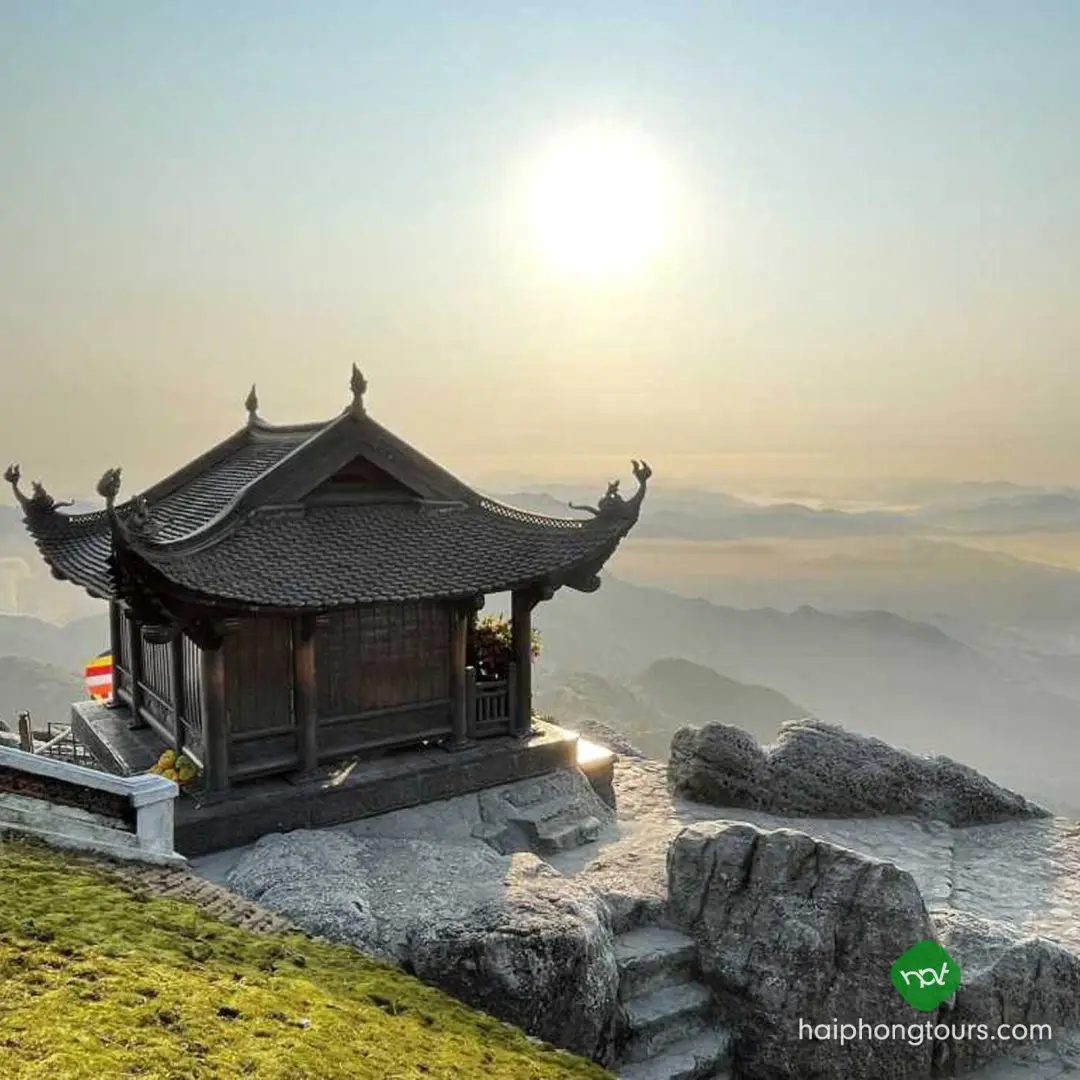
The Yen Tu summit is about 1,068 meters above sea level. The current operator lists cable-car service from 7:00 to 19:00, but the date-specific ticket and notice control. That span is not permission to begin an upper climb near closing.
Use Lan Pagoda and the foothill as the first complete route
Lan Pagoda, the lower heritage landscape, a verified meal and a hosted cultural program can create a useful day without an exposed summit attempt. Confirm current access and do not invent an indoor activity because cloud is present.
Use the lower plan to preserve the visit when a cable-car line is suspended or the group arrives too late for a comfortable ascent. Confirm the lower electric-vehicle or walking link, current ticket counter, toilets and the pickup point before committing. A road driver cannot enter every pedestrian or heritage area.

This lower plan suits a traveler interested in Truc Lam heritage, architecture or worship who does not require a panoramic view. It is also the best fallback when queues, rain or the group’s energy remove the upper system.
Reassess at Hoa Yen after the first cable-car section
The first cable-car stage can support Hoa Yen Pagoda and the Hue Quang Stupa Garden. It still requires station exits, outdoor walking, steps and a return to the system. Ask about wet surfaces and how the slowest traveler manages the path.
Stop here when Hoa Yen already provides the day’s heritage value, visibility worsens or the transfer to the upper system would compress the descent. Do not continue merely because the ticket includes another line.
Families should set a reunion point before anyone continues upward. Keep the responsible adult, child and essential medicine together. Older travelers should have a seated rest before deciding on the second system, because a downhill return still includes station movement and queues.
Treat the upper transfer and statue area as a second decision
The two cable-car lines are not one continuous step-free ride. The traveler may need outdoor movement, stairs and queues between systems before reaching the An Ky Sinh and King-Monk statue area. Fog and wind can increase exposure even while the cabin operates.
Continue only when the station confirms the next stage, the group accepts the surface and the upper area still has value without a distant view. Keep one meeting point so spring pilgrimage crowds or low visibility do not split the group.
Skip Dong Pagoda when the final open-air climb loses value
The final approach to Dong Pagoda remains an outdoor climb above the upper system. Wet stone, wind, crowding and limited visibility all matter. The cabin does not deliver a traveler directly to the summit.
Turn around before the open climb when the only remaining goal is a view hidden by cloud, the surface no longer fits the traveler or the descent margin is weak. Never leave the marked path or stand on steps and barriers for a cloud photograph.
Set the descent clock before ascending
Record the latest turnaround at the lower station. Include walking, queueing between cable-car sections, the lower electric vehicle if used, bag collection, meal and the road pickup. A published 19:00 service end does not mean every upper passenger can begin descending at 18:55.
A road transfer reaches the agreed lower pickup. It does not include waiting through an open-ended fog decision or mountain tickets unless written. Update the driver before the group changes its route.
Match the route to children, older travelers and mobility needs
Ask about step height, handrails, wet stone, toilets, seating and the distance between stations. The Yen Tu accessibility guide explains the cable-car and walking chain in more detail. A cable car reduces part of the climb but does not establish accessibility to Hoa Yen, the statue area or Dong Pagoda.
Keep medication, water, a warm layer and rain protection with the traveler. Do not make a medical judgment about altitude, balance or exertion. Apply personal professional advice and choose the lowest route that satisfies it.
Use a descent-first failure plan
If visibility, wind or surface worsens, descend by the currently authorized route. Contact the lower driver or hotel and remove optional programs. Do not pressure staff to operate a suspended system or use an unsigned shortcut.
If a commercial road leg is needed, book only the exact direction after both pins are fixed.
A local taxi can be adequate for a flexible lower-area visit when the return pickup is confirmed and phone coverage is available. A private car is worth considering when several travelers, luggage, an early start or a fixed onward journey require one named vehicle, but waiting and route changes must still be agreed in writing.

Would you like help fitting this experience into your trip? Contact us with your travel dates, starting point, available time and group size. Tell us about walking limits or special interests so we can suggest a practical itinerary.