
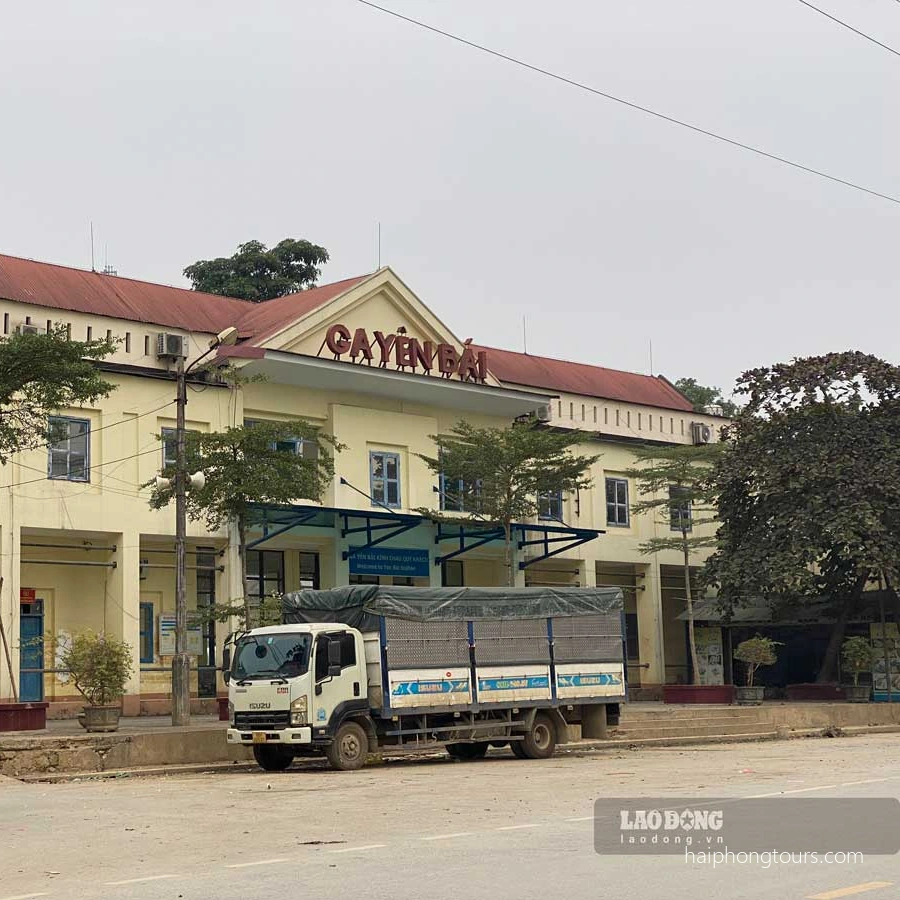
From Yen Bai Railway Station, choose the exact Thac Ba lakeside host, village or operating pier before booking a car. Thac Ba is a large reservoir with many shoreline roads. The lake name alone is not a usable drop-off and may send a driver to the wrong side of the water.
The practical plan links a ticketed Yen Bai arrival to a named accommodation or boat operator, then confirms the return separately. A road transfer does not include a boat trip, legal pier access, luggage storage or a wildlife or island promise.
Prove the Yen Bai rail arrival
Use an issued ticket that names Yen Bai station, the correct train, direction, date and passenger. The Hanoi to Lao Cai corridor serves Yen Bai, but operating days and stop patterns remain train-specific. Check changes through the official railway channel.
Give the road provider the train number and a passenger-ready range after platform exit and baggage collection. Ask which station exit the driver uses, when the plate arrives and how waiting is handled after a rail delay.
If the train arrives too late for a planned boat, contact the lakeside host before leaving the station. Use a land-based arrival evening or move the boat to another day. Do not pressure the driver or boat operator to make up the lost time.
Name the shore, host and pier separately
Ask the accommodation or boat operator for its current map pin, local administrative wording and vehicle approach. Older addresses can use Yen Bai wording while current material may use Lao Cai province. The property pin and contact are more useful than guessing from the province label.
A host in Ngoi Tu or Vu Linh can require a different shoreline road from another lake property. Confirm whether the vehicle reaches reception, stops at a village point or meets a boat elsewhere. A pier used for one operator is not automatically a public arrival for another.
Keep the host contact and destination pin offline. Require the driver to repeat the property or pier name before departure. If the two parties describe different shores, stay at Yen Bai station until the endpoint is resolved.
Separate the car from the lake activity
A licensed taxi can suit a simple property drop-off when the full route and luggage are accepted. A prearranged car is more dependable for a fixed host meeting, several travelers, a late arrival, bulky bags or a return train.

Confirm the provider, vehicle class, passenger and bag capacity, waiting terms, payment and receipt. Ask whether the driver will wait for a reception handover or leave after unloading. The driver is not responsible for arranging an unbooked boat.

For a boat trip, ask the responsible operator about the operating pier, route, expected duration, weather decision, life jackets and final return. Do not buy a road ride to a random waterside pin and expect a licensed boat to be available.
Control luggage at a remote shoreline
Tell the road provider and host the number and size of every suitcase, backpack, stroller or mobility aid. Confirm where luggage is stored during a boat activity and who accepts responsibility. An unattended pier or informal shelter is not secure storage.
Keep identification, tickets, medicine, cash, phones and electronics with you. Use a small day bag on the boat and follow the operator’s seating and weight instructions. Large cases should remain at documented accommodation or in a retained vehicle.
Count bags at Yen Bai station, after unloading and before any return. If a host vehicle completes the final section, record its driver, cargo capacity and reception handover rather than assuming through handling.
Plan for conditions around a reservoir
Wind, rain, visibility and water conditions can change the lake activity. Follow the boat operator and local authority, not only a city forecast. Choose an approved land alternative when boats stop or a pier becomes unsuitable.
Road time can also change with shoreline route, local works or a wrong-pin correction. Build the day around the exact host and avoid a narrow same-day return to the railway. A one- or two-night lake stay is more resilient than a hurried platform excursion.
The Thac Ba Lake travel guide helps compare lake areas and stay styles. Hai Phong Tours does not list this exact station transfer as a product, so the road operator still requires independent confirmation.
Arrange the return before leaving Yen Bai
Ask whether the outward driver waits, returns at a fixed time or ends the service at the host. If it ends, obtain the return provider and pickup point before beginning a boat trip. Do not rely on on-demand supply from an unknown shoreline.
Send a complete driver message before boarding the train: property name, host phone, shoreline pin, passenger count, every bag and whether a boat is already booked. Ask the host to check that message. This two-party confirmation is the simplest way to catch a wrong shore before the car leaves Yen Bai.
Save the North Vietnam transport guide for broader planning, then write the route-specific fallback: another shore approved by the host, a land activity, an extra night or a later verified train.
- Issued ticket naming Yen Bai station.
- Passenger-ready station exit and waiting rule.
- Named Thac Ba host, village and vehicle pin.
- Operating pier and separate boat confirmation.
- Luggage storage and vehicle capacity.
- Return car, weather fallback and later train.
Depart Yen Bai only after the driver and lakeside host name the same shore and endpoint. The lake is the destination area, while the confirmed property or pier is the address that makes the transfer usable.
Would a private transfer make this journey easier? Contact us with your travel date, exact pickup and drop-off, number of travelers and bags. Include any flight, train or cruise deadline so we can assess a suitable plan and quotation.