
From Gia Lam Railway Station, use a licensed taxi or prearranged car to Chùa Bút Tháp, whose formal name is Ninh Phúc Thiền Tự, in the Bút Tháp residential area of Trí Quả. Current provincial information places the pagoda on the south bank of the Đuống River. Send that full identity to the driver, then confirm the public visitor entrance rather than using a district pin.
The issued railway ticket must name Gia Lam and the correct train, direction, date and passenger. A railway corridor or an old timetable does not prove that the selected train stops there. Give the driver a passenger-ready range after platform exit and baggage collection, not only the scheduled arrival.
Choose a taxi or a prearranged return car
A licensed station taxi can suit one or two daytime visitors with light luggage and no fixed return. Before loading, send the full Vietnamese site name, the current gate pin and a staffed landmark. Ask the driver to repeat But Thap Pagoda rather than only the surrounding locality.

A prearranged car is more useful for a group, several cases, a child restraint, reduced mobility, a festival date or a return tied to another train. The written booking should name Gia Lam station, the public pagoda gate, passenger and bag count, waiting terms and the contact used after a rail delay.

Road transport covers the station-to-gate movement only. It does not include a worship service, guide, admission, luggage storage or permission to wait inside the religious site. Keep those decisions separate from the vehicle fare.
Use Ninh Phúc Thiền Tự in Trí Quả as the destination
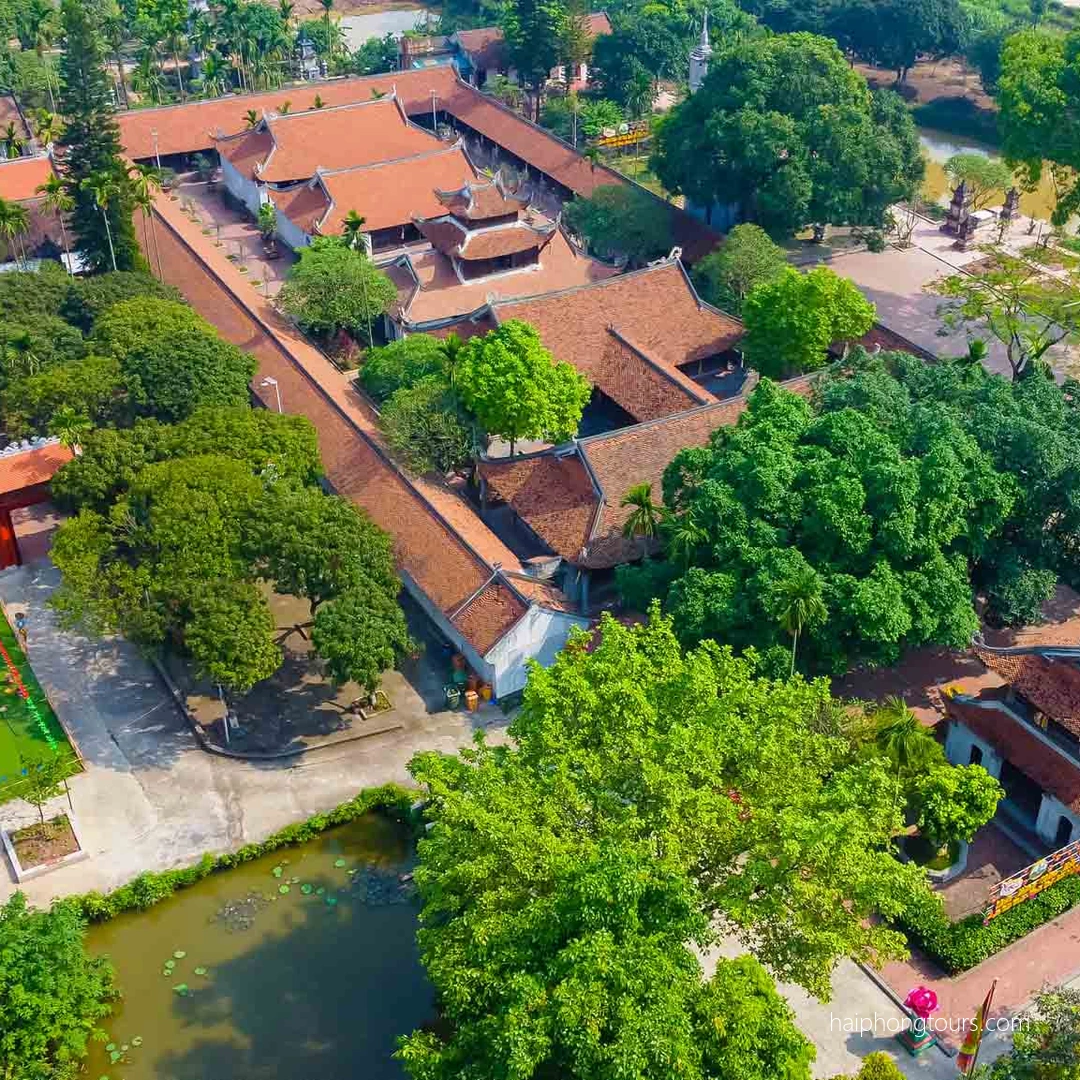
But Thap remains an active religious and festival venue. Provincial material identifies the site as Ninh Phúc Thiền Tự and locates it in tổ dân phố Bút Tháp, phường Trí Quả. It also describes four national treasures at the pagoda. These details distinguish the destination from Chùa Dâu and other nearby heritage stops.
The latest official festival plan stationed emergency staff and a vehicle at the side-gate approach for three event days, showing that special access controls can change normal movement. For event-day routing, contact the Trí Quả public-service center using the current ward directory. Ask for the visitor drop, not access through an emergency gate.
Ask whether the normal public entrance, an event parking area or another signed drop is in use. The response changes whether a taxi is sufficient, a retained car is needed or the visit should start after bags are stored elsewhere. When no event control applies, use the staffed public entrance and do not treat the side-gate emergency position as a passenger pickup.
During worship, a funeral or a procession, follow site instructions and keep voices low. A driver waiting outside does not create priority through controlled space. If the group needs a fixed departure, set the visit cutoff before entering.
Build the station pickup from the issued ticket
Check the ticket through the official railway seller and verify Gia Lam, train, direction, date, passenger identity and any reporting instruction. Keep identification and the ticket accessible. Do not use an article or corridor announcement as a substitute for the issued booking.
Scheduled arrival is not road-ready time. Allow for platform release, stairs or ramps, baggage retrieval and the walk to the agreed public exit. Send the driver an arrival update if the train is late and decide whether the visit or return plan still works.
The rail journey and road booking are not a protected connection. If the train no longer permits a useful visit, move the pagoda plan or use a nearby alternative rather than asking the driver to speed.
Keep luggage and access practical
Count all suitcases, backpacks, mobility aids and child equipment before assigning the vehicle. Confirm usable cargo after everyone is seated. Keep identification, medicine, valuables and one weather layer with the traveler.
Do not assume the pagoda stores luggage. Ask current site staff whether a staffed option exists, or retain the car only when the provider accepts responsibility. A bag left with an informal seller or unattended vehicle is not a safe plan.
Travelers with reduced mobility should ask staff about the public gate, walking surface, thresholds and the closest lawful vehicle point. If festival controls create a longer walk, decide whether the main visit remains suitable before leaving Gia Lam.
Arrange the return before dismissing the car
On-demand taxi supply is not guaranteed by the religious-site source. Ask site staff which licensed dispatch channel serves the public gate, or retain the original car. Record the pickup point and plate rather than telling a future driver only “But Thap.”
If a festival moves vehicles to a remote lot, use the organizer-approved pickup and include the walk in the leave-by time. When no return vehicle is confirmed, shorten the visit and stay at a staffed public point while a licensed car is dispatched.
The traveler should book the railway and road stages independently.
When the gate changes
If the driver cannot find the pagoda entrance, remain in the staffed station area and call current site staff before starting. If traffic control changes after arrival, follow the official remote drop and send that landmark to the return driver.
The transfer is ready only when the issued Gia Lam ticket, public station exit, Ninh Phuc Thien Tu gate, driver, baggage plan, event control and return pickup are recorded. Any missing field changes the decision from a direct visit to a revised or later plan.
Would a private transfer make this journey easier? Contact us with your travel date, exact pickup and drop-off, number of travelers and bags. Include any flight, train or cruise deadline so we can assess a suitable plan and quotation.