
From Bac Giang Railway Station, use a licensed taxi or private car to the official Tay Yen Tu spiritual and ecological complex unless a current public service is directly verified. The destination must specify the central square, cable-car station, ticket office, parking area or accommodation. “Yen Tu” alone can send the driver toward a different attraction.

A public vehicle is the budget option only when its operator confirms the station connection, final stop, operating date, luggage and return plan. An older transport proposal is not evidence that a bus runs today. A reserved vehicle is more practical for a group, bags, reduced mobility, late rail arrival or a fixed visitor schedule.
Start with the issued Bac Giang rail ticket
Check the Vietnam Railways ticket for Bac Giang as the arrival station, train, date and passenger identity. Scheduled arrival is not road-ready time. Allow for platform exit, baggage collection and movement to the public station pickup point.
Send the driver the train number, expected road-ready range and station pin. Ask for a plate or dispatch contact before boarding. If the train is late, update the road provider through the recorded booking channel and decide whether the visitor complex remains practical that day.
Use Vietnam Railways’ official booking and schedule tools for changes. The road provider cannot confirm a rail platform, exchange a ticket or decide that another station is equivalent.
Name the official Tay Yen Tu complex
The official Tay Yen Tu site identifies the destination as the Tay Yen Tu spiritual and ecological tourism complex in Tay Yen Tu township, Son Dong area, Bac Giang. It maps several distinct visitor points, including the central square, cable-car station, ticket office, parking area and electric-cart stop.
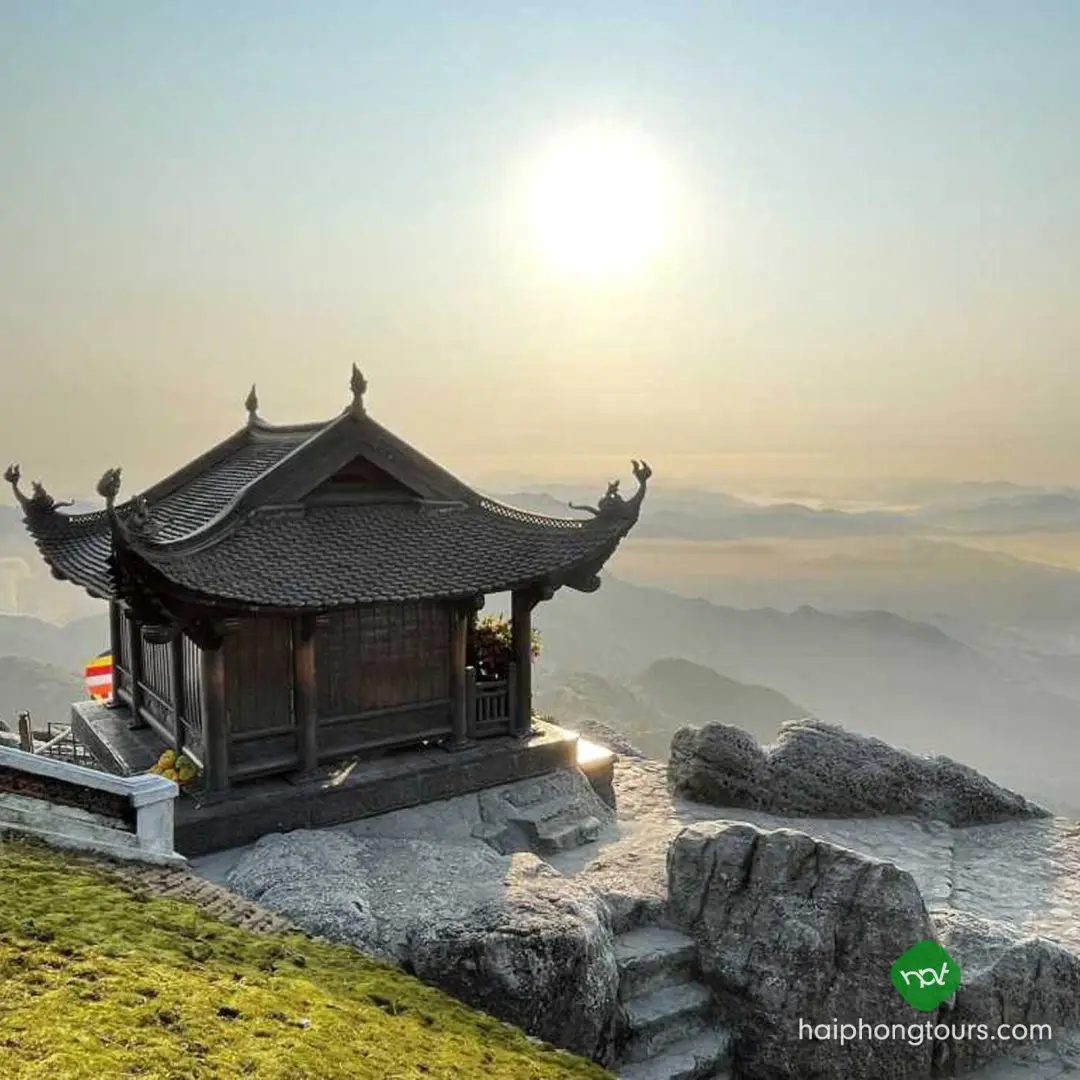
Select the point that matches the visit. A day visitor using the cable car may need the ticket office or lower station, while a guest staying nearby needs the accommodation entrance. Send the official site pin or ticket instruction to the driver and require the booking to repeat “Tay Yen Tu spiritual and ecological tourism complex.”
This is not the same as East Yen Tu in Quang Ninh or another temple carrying the Yen Tu name. If a driver or map result points elsewhere, stop and correct the booking before leaving Bac Giang.
The official map places Chua Ha in the lower complex and connects onward visitor areas toward the cable-car station and Chua Thuong. A passenger going only to the lower temple may need a different vehicle drop and visit duration from someone continuing by cable car.
Use public transport only after a live operator check
To use a bus, identify the operator, current route, station-to-boarding transfer, final stop, operating date and luggage rule. Also confirm how the traveler returns if the visit finishes late.
If the service departs from a bus station or roadside point, add a licensed taxi from the railway station. Record both pins and the time needed to transfer luggage. A bus advertised for Son Dong district does not automatically stop at the Tay Yen Tu ticket office.
When those fields cannot be verified, use a licensed taxi or private car. The absence of a proven direct bus is a reason to simplify the plan, not to invent a public route.

Check visitor and cable-car operation
The official complex website and ticket portal are the correct channels for visitor operation, cable-car availability and ticket information. Check them on the travel date, then confirm the intended arrival point. A cable-car closure can change the usefulness of a same-day trip or the time needed on site.
Festival days can bring traffic controls, parking changes and long internal queues. Ask the official complex or the booked accommodation which vehicle point applies. The driver may need to use the parking area while passengers continue by electric cart or on foot.
Do not ask the road provider to promise cable-car operation. The transport booking covers the road journey, while the complex controls tickets, internal transport and visitor access.
Choose vehicle capacity and accessibility
Count suitcases, backpacks, strollers, wheelchairs and other aids before selecting a vehicle. For a day trip, keep only necessary items accessible. For an overnight stay, confirm whether the vehicle reaches the accommodation or stops at the public parking area.
Travelers with reduced mobility should ask about the distance and surface from vehicle drop to the central square, ticket office and cable-car station. Confirm electric-cart operation through the complex and do not assume it runs whenever the road vehicle arrives.
Mountain weather can change visibility and walking conditions. Bring rain protection and medication in a personal bag. A safe driver should not recover a late train by speeding on the approach roads.
Plan the return before leaving the station
Ask the driver whether the booking is one way, round trip or a waiting service. For a one-way trip, identify the return operator and last usable pickup before starting. A visitor who finishes after an unverified public service may have no safe road option.
If the train arrives too late for useful visitor time or cable-car operation, stay in Bac Giang and travel the next day. If weather or festival control closes the relevant facility, change the visit through the official ticket channel and revise the road booking.
The route is ready only when the rail arrival, public or private operator, official complex pin, internal visitor point and return plan are all written.
Would a private transfer make this journey easier? Contact us with your travel date, exact pickup and drop-off, number of travelers and bags. Include any flight, train or cruise deadline so we can assess a suitable plan and quotation.