
Leaving Bai Dinh Pagoda for a fixed train requires two deadlines: the time to stop sightseeing and the time to meet the road vehicle. The complex is large, and its published electric-car options are part of internal visitor movement. An internal electric-car stop is not automatically the place where an onward driver can collect you.
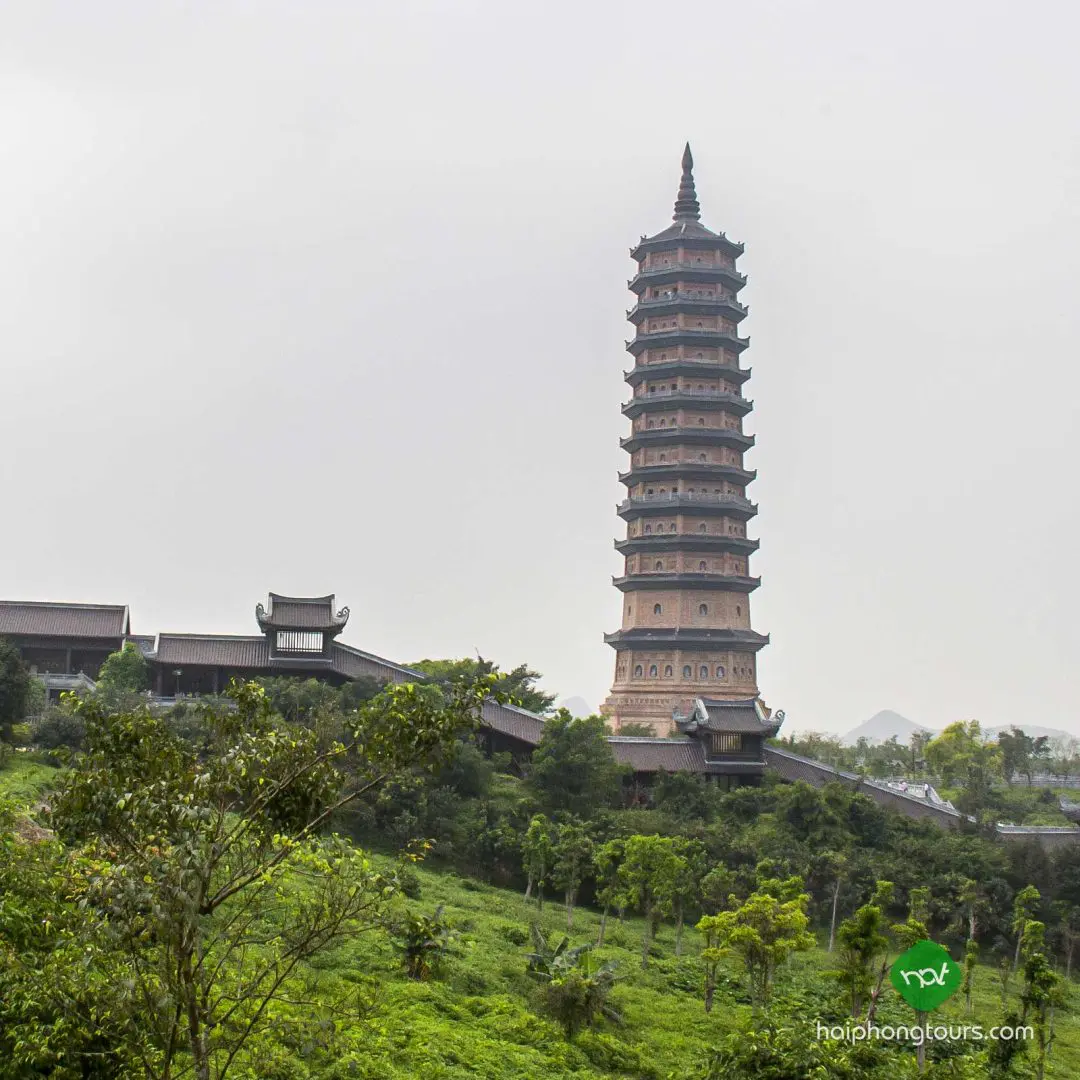
Before the visit, confirm the current internal exit method, the road-accessible pickup pin, and a vehicle that accepts your train deadline. Give the provider the booked train details and the railway’s current reporting requirement. Hai Phong Tours does not operate Bai Dinh, its internal transport, Vietnam Railways, Ninh Binh Railway Station, or a third-party car; no exact Bai Dinh-to-station product is verified.
Map the handoff as two separate legs
The first leg is from your last sightseeing point to the complex exit. It may involve walking, a current electric-car option, or another visitor process confirmed on the day. The second leg is the road transfer from the accepted pickup point to Ninh Binh Railway Station. Do not combine them into one optimistic journey time.
Ask the attraction contact or current visitor staff which internal stop serves the exit you need. Then ask where ordinary road vehicles can meet passengers. Save both pins with different labels, such as “internal exit” and “driver pickup,” so they are not confused in messages.
Send only the road-accessible pin to the onward driver, together with the name of the complex and a place description. Ask the driver to confirm that the vehicle can stop there. A map marker inside the grounds may be useful to visitors but unusable for the road pickup.
Create a hard station deadline
Check the train number, date, departure time, station, passenger identity, and ticket through the current official record. Review the railway’s passenger guidance and note the reporting requirement that applies. The station arrival deadline should come from those facts, not from an informal rule remembered from another train.
Give the driver the required station arrival and ask for a pickup time that accounts for current conditions and the exact road pickup. Add time to walk from the vehicle drop-off, handle luggage, locate the passenger entrance, and complete any current ticket or identity procedure.
Now work backward through the internal leg. Include time to finish the last site segment, reach the correct internal transport point, wait under the current visitor arrangement, and move to the road car.
Choose the last sightseeing segment deliberately
Do not begin a distant or open-ended final segment merely because the train seems several hours away. Compare the segment with the hard sightseeing cutoff and the current exit method. If the remaining margin is unclear, stay closer to the confirmed exit.
Tell all travelers where and when to regroup. A large complex makes a vague “meet at the entrance” instruction risky. Use one named point and one phone contact. If the party splits, appoint a lead in each group and set an earlier regrouping time than the final departure.

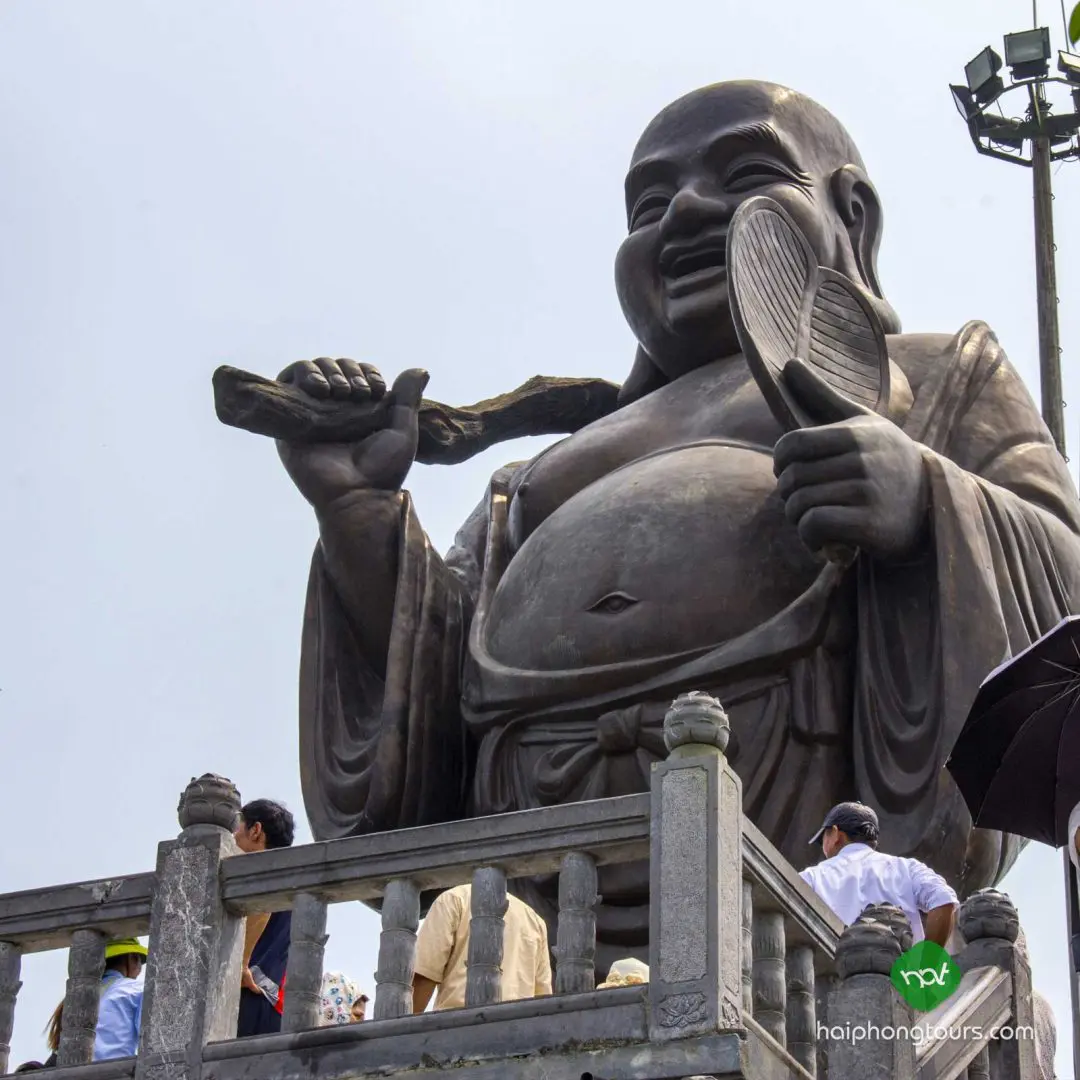


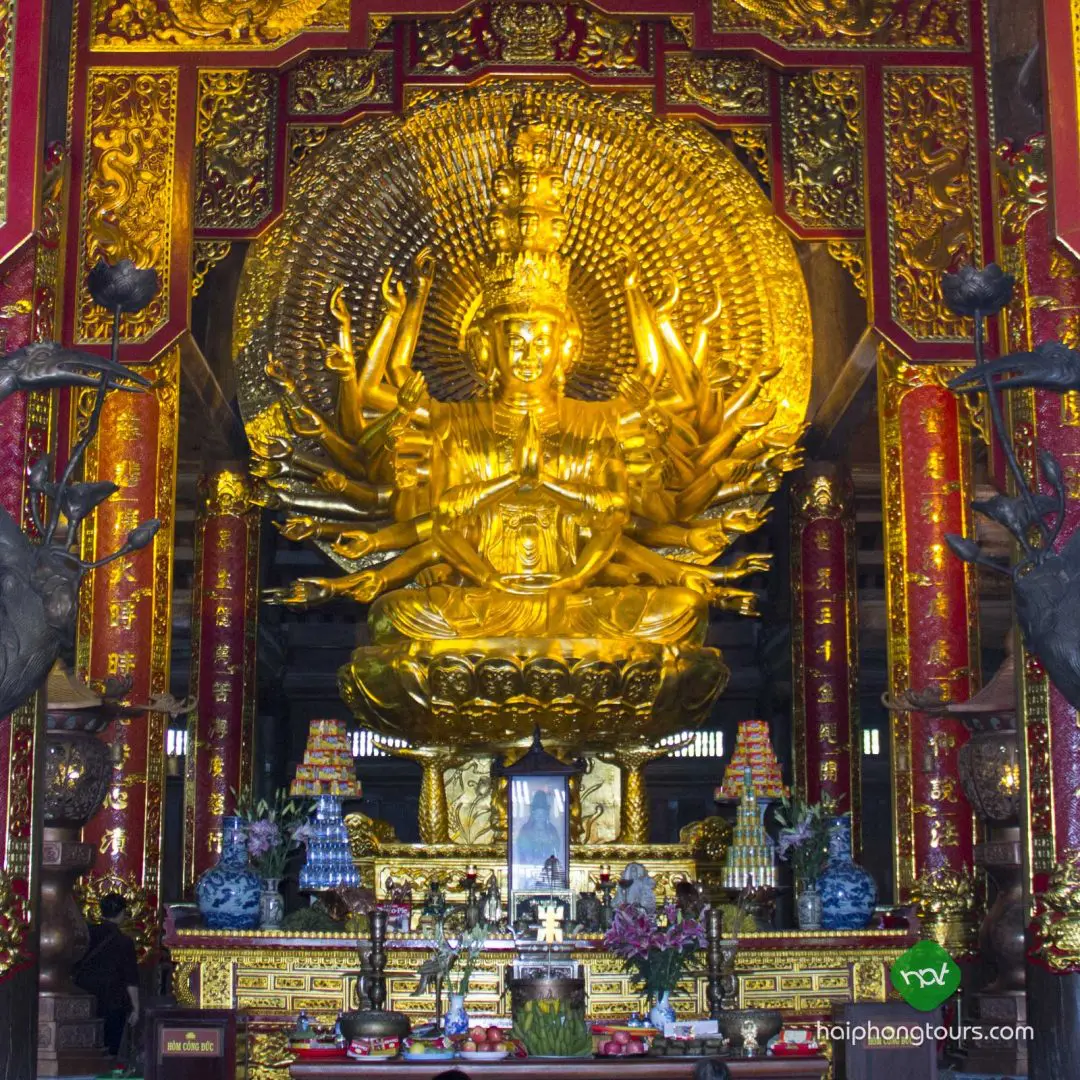
A large bronze drum beneath a bell at Bai Dinh Pagoda. The outdoor Maitreya statue at Bai Dinh Pagoda. A gilded seated Buddha inside a hall at Bai Dinh Pagoda. Rows of stone arhat statues along a Bai Dinh Pagoda corridor. A gilded many-armed statue inside Bai Dinh Pagoda.
When the cutoff arrives, stop the visit. Do not add another internal ride, shop, or meal before reaching the car. The station buffer is reserved for transport and passenger processing, not additional sightseeing.
Use electric-car information correctly
Bai Dinh’s published visitor information includes electric-car options, but current availability, route, stops, and access must be confirmed for your visit. Do not assume a ticket, queue position, or special exception. Ask which option leads to the exit associated with your road pickup.

Mobility needs should be disclosed when the plan is made. If someone cannot manage the walking required between an internal stop and the road car, ask the attraction and vehicle provider what can be accepted. The existence of internal transport does not establish step-free or door-to-door access.
Keep a walking fallback only if every traveler can use it and staff confirm the route. Otherwise, set an earlier sightseeing cutoff that protects time for the current internal option.
Coordinate luggage and vehicle loading
Decide whether luggage stays in the onward vehicle, at an accommodation, or with the group. If the car waits with luggage, confirm the arrangement and driver identity before leaving valuables. If bags must be collected elsewhere, that stop belongs in the station plan.
Report the number of travelers and every large or bulky item to the provider. Enough seats do not guarantee enough luggage space. Keep the train ticket, identification, medication, phones, and charging equipment with the passengers during the attraction visit.
At the pickup point, count passengers and bags before departure. Show the driver the station pin and train details. Do not rely on a spoken destination alone when a fixed departure is involved.
Handle failures without unsafe rushing
If internal movement is delayed, contact the driver immediately and provide the revised time at the road pickup. Ask whether the station deadline can still be protected. If not, stop adding pressure and move to the railway fallback.
If the driver is at a different point, compare both pins before moving the group. It may be safer for the driver to relocate through the road network than for passengers to carry luggage across an uncertain section. Follow the responsible provider’s instruction and keep everyone together.
Tourist-assistance channels can support visitors with attraction questions, but they are not a replacement for pre-booked transport. If the train becomes unattainable, contact the railway through its official process to determine the ticket’s position. Do not assume that another train, change, or refund is automatically available.
Departure checklist
- Verify the live train, ticket identity, station, and reporting requirement.
- Confirm the current internal exit method and electric-car information.
- Save separate pins for the internal exit and road pickup.
- Pre-book a vehicle that accepts the exact road pin and train deadline.
- Set a hard cutoff for the last sightseeing segment.
- Arrange luggage storage or collection within the plan.
- Regroup before the cutoff and keep essential documents accessible.
- Use official railway guidance if the train can no longer be reached.
The key is to protect the internal-to-road handoff before planning the final temple segment. Once the exit method, road pin, driver, and train reporting deadline are aligned, the group can enjoy the visit without treating the station transfer as a last-minute search.
Useful guides for your trip
Would a private transfer make this journey easier? Contact us with your travel date, exact pickup and drop-off, number of travelers and bags. Include any flight, train or cruise deadline so we can assess a suitable plan and quotation.