
Cau Giay Metro Station and Long Bien Railway Station are separate facilities connected by city roads, not by a protected rail interchange. Cau Giay is the operating eastern endpoint of the elevated Line 3 section. Long Bien is the constrained national-rail passenger station near the bridge, not the bus interchange.
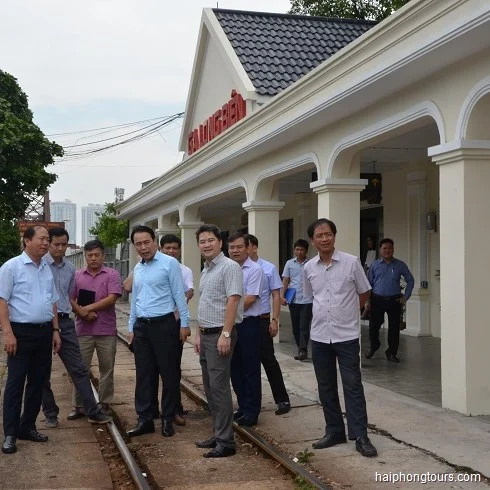
Only the issued national-rail ticket proves that your train boards at Long Bien. Confirm that first. Then choose between a recorded direct vehicle and a fully checked city route, allowing enough time to reach the correct railway entrance without unsafe rushing.
Check the rail ticket before leaving Cau Giay
Read the train code, date, boarding station and reporting requirement from the current ticket. The words Long Bien need to appear as the valid origin or be confirmed by the ticketed seller. Do not assume that all trains stop there or that Hanoi Railway Station and Long Bien can be exchanged freely.
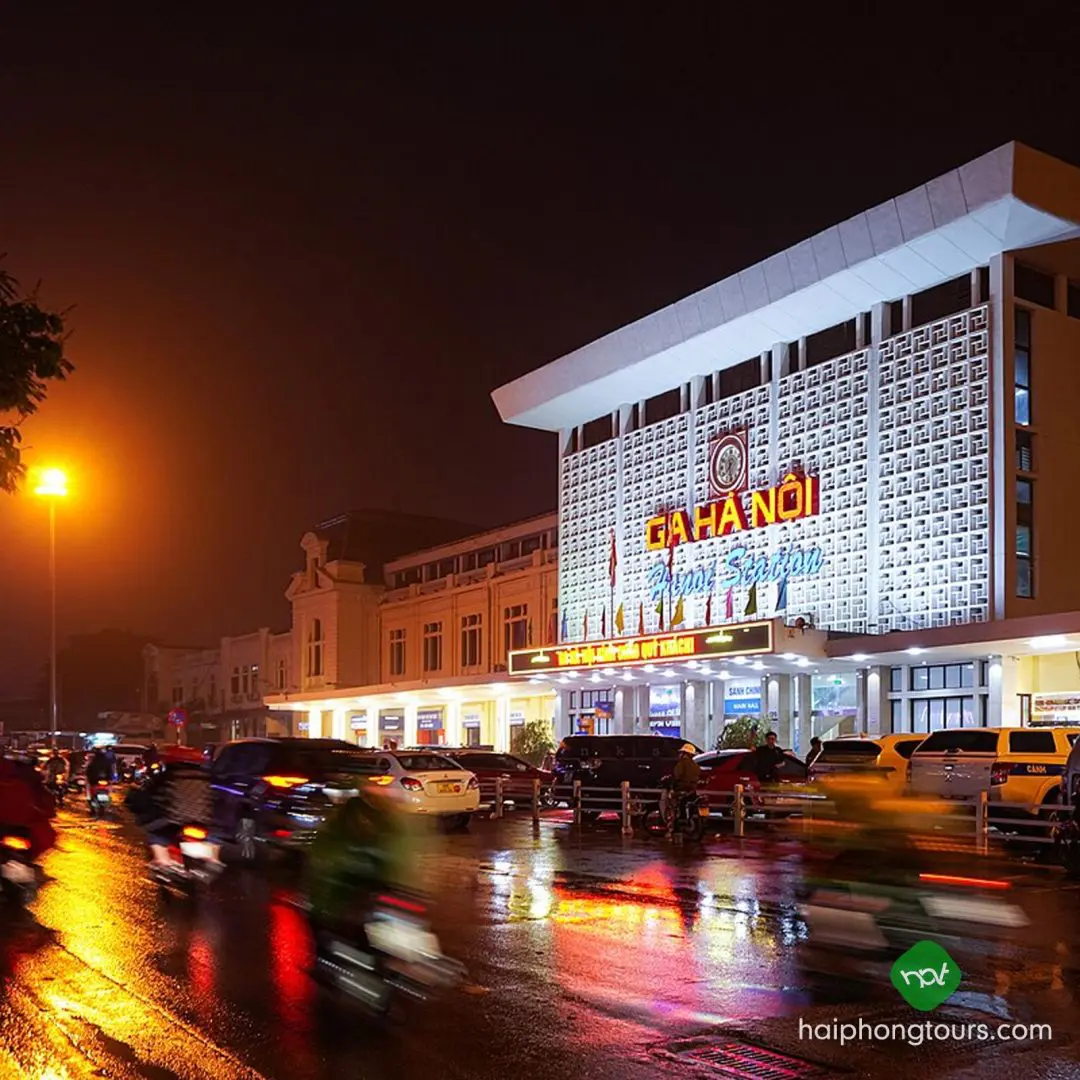
If the ticket is wrong or uncertain, resolve it while you still have time at Cau Giay. The ticketed seller or railway staff controls any permitted change or refund. A delay on the metro, city route or taxi is not automatically treated as railway-caused disruption.
Build the leave-by time backward from the railway reporting time. Include metro exit, reaching a legal pickup or city stop, road traffic, the constrained Long Bien approach, entrance correction and platform access. Keep a margin for a wrong pin because the bus interchange and bridge are common sources of confusion.
Leave Cau Giay from a signed operating exit
Passenger service on Line 3 currently uses the eight elevated stations between Nhon and Cau Giay. Cau Giay is the eastern operating endpoint. Follow the station’s current signs rather than an itinerary that assumes an open underground continuation toward the city center.
Photograph the exit and share a live pin if a driver is collecting you. Meet at a legal staffed point and match the recorded plate before loading. Do not promise a fixed exit number or lift path; ask Hanoi Metro staff which route is open and suitable on the day.
With a wheelchair, stroller, several cases or a traveler who cannot use stairs, confirm the complete path from platform to curb. A working lift somewhere inside the station does not establish that every part of the road handoff is step-free.
Choose a complete connection to Long Bien
Direct recorded road vehicle
Give the destination as Long Bien Railway Station passenger entrance. Add the train code and reporting time to the booking notes, but do not ask the driver to decide the platform. Railway staff controls passenger entry and platform direction.
A direct car or recorded taxi is especially useful for a fixed train, early or late travel, several bags, limited mobility, poor weather, low phone signal or a group. Confirm cargo space and keep the booking, driver and plate details until boarding is complete.
Verified city transport
A public city route can suit a flexible traveler with light luggage. Verify every stop, road direction, change and final walk on the travel day. Do not freeze a bus number or fare, and do not accept Long Bien bus interchange as an equivalent final stop.
The last walk matters because the railway approach is constrained. If the city route leaves you at the bridge, interchange or an uncertain roadside point, it is not a complete rail connection. Change to a recorded vehicle or ask railway staff for the safe passenger approach.
Protect luggage and the group near the bridge
Keep the party together as you approach Long Bien. Do not split people between a bridge landmark, bus area and rail entrance. Keep the rail ticket, identity documents, medication and valuables with the traveler who will board.
Count bags before leaving Cau Giay, after any city change and before entering the railway area. Confirm coach-size cases or mobility equipment with the road provider. When a public route requires repeated lifting, direct road travel may be the safer practical choice even if the map distance looks short.
At Long Bien, follow railway staff instruction for the passenger entrance, platform and available assistance. Do not enter restricted track or bridge areas to save time, and never ask a driver to stop where railway or road staff prohibit it.
Make the risk decision early
Use public transport when the full route is current, luggage is manageable and the ticket allows a large reporting buffer. Preserve enough time to correct one wrong stop without losing the train.
Use direct road transport when the train is fixed, the station approach is unfamiliar or a delay would have a serious consequence. Switch early; waiting for certainty until the last minutes encourages unsafe movement and gives the railway seller fewer recovery options.
Hai Phong Tours treats the exact Cau Giay exit and Long Bien railway identity as the two non-negotiable handoff details. No Hai Phong Tours service is listed for this exact urban transfer, and this guidance does not make the independent city leg part of the railway ticket.
If the connection starts to fail
- Long Bien is not on the ticket: Contact the seller and go to the valid boarding station rather than asking a driver to improvise.
- The pickup pin is unclear: Remain at the signed Cau Giay exit, resend the live location and match the vehicle record.
- The route ends at the bus interchange: Redirect to the confirmed railway passenger entrance and reassess the train margin.
- The reporting margin is lost: Ask the ticketed seller about a later valid train or current refund result. Do not pressure a driver to speed.
- The rail entrance is inaccessible for the group: Ask railway staff for the current assisted path and follow their safety instruction.
Before departure
- Ticket names Long Bien, with the correct train code, date and reporting time.
- Cau Giay exit and legal pickup or first city stop are confirmed.
- The route ends at Long Bien Railway Station, not the bus interchange or bridge.
- Luggage, cargo and accessibility needs are practical for every stage.
- A later train or Hanoi stay is available if the independent city transfer fails.
Would a private transfer make this journey easier? Contact us with your travel date, exact pickup and drop-off, number of travelers and bags. Include any flight, train or cruise deadline so we can assess a suitable plan and quotation.
